
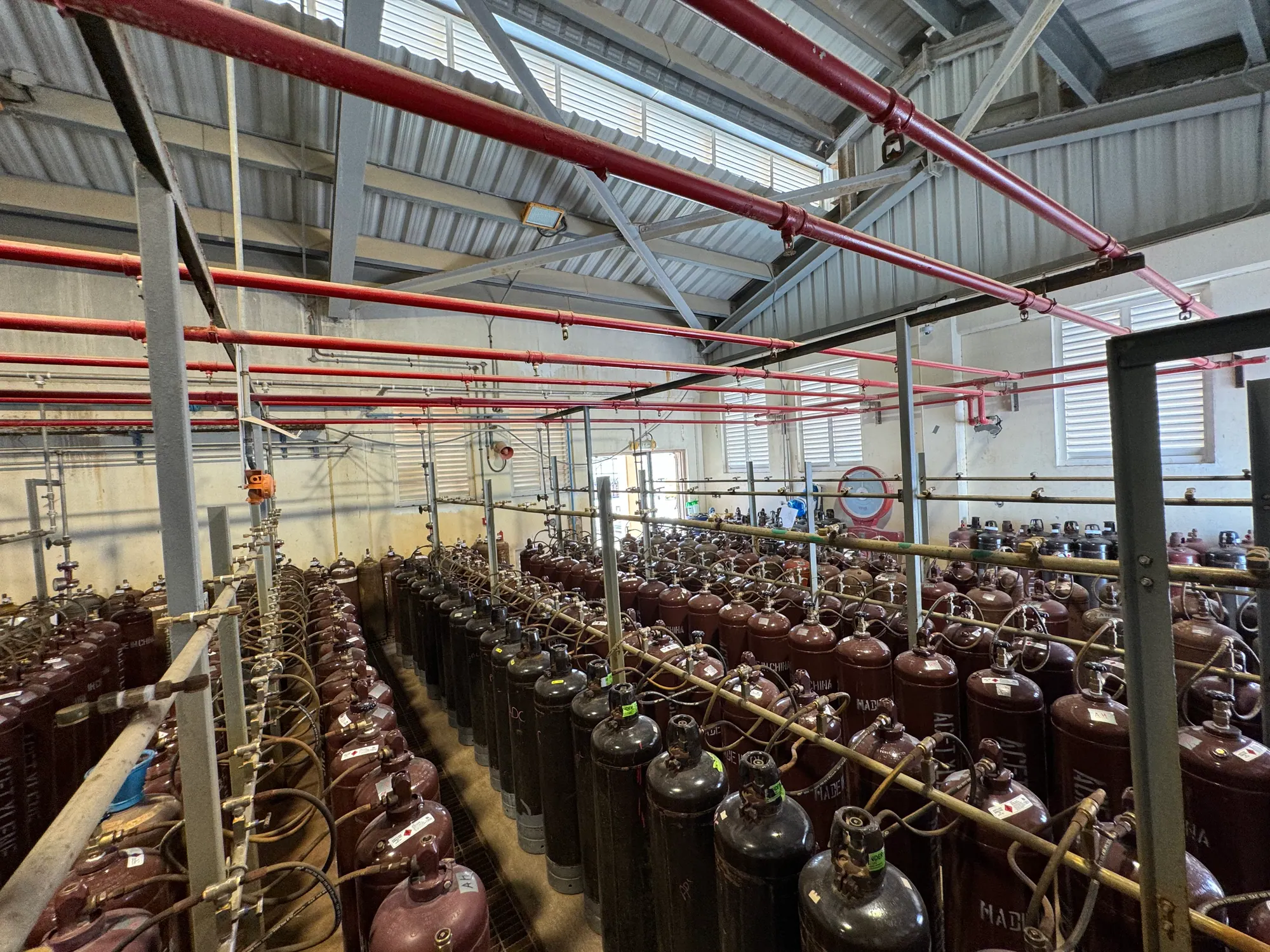
Our hero product
Acetylene, made and understood here since 1947
KIGL fills dissolved acetylene at Guwahati and builds the plants that generate it. That is an unusual combination, and it is why everything below goes further than a product page: the gas, the three grades, the plants, the Indian Standards behind them, and the handling rules that exist because acetylene can explode without meeting air at all.
- Years making acetylene
- 3
- Purity grades, to 99.99 %
- 25
- Pages on acetylene here
The gas
Three grades, and the difference between them is the purification the gas has been through and — at the top of the range — the solvent it is dissolved in.
- Dissolved acetylene gas (DA) to IS 308, filled at our Guwahati works Dissolved acetylene gas to IS 308 at ≥98 % purity, acetone-charged porous-mass cylinders. Cylinder and cascade supply from three KIGL filling stations.
- High purity acetylene at 99 % — the grade between industrial and analytical High purity acetylene at 99 % from KIGL, for work where industrial dissolved acetylene is not clean enough but analytical grade is more than the job needs.
- Ultra-high-purity acetylene — 99.99 %, dissolved in DMF, for atomic absorption spectroscopy UHP acetylene at 99.99 % purity dissolved in DMF, with phosphine and hydrogen sulphide below 10 ppm. Made in India by KIGL for AAS and analytical laboratories.
The standards behind it
Acetylene is governed by more standards than any other gas we fill, because the cylinder holds a solid and a solvent as well as a gas. This is the part of the subject almost nobody publishes, and the part a purchase officer actually has to quote.
| Standard | What it governs |
|---|---|
| IS 7312 · IS 8433 | IS 7312 governs the dissolved acetylene cylinder: the porous mass, the acetone charge and the two-yearly inspection that no other gas cylinder needs. |
| IS 8471:2003 · IS 14814:2023 | What IS 8471:2003 covers, why acetylene generators need a standard of their own, and how it works with the IS 14814 code of safety on a real plant. |
| IS 308 · IS 7312:2018 | IS 308, IS 7312, IS 8433, IS 16271 and IS 11006 explained — the specification, cylinder, testing and filling standards for dissolved acetylene in India. |
| IS 8451:2018 · IS 8433:2017 | How often a gas cylinder must be retested in India, which standard applies to which gas, what requalification involves, and why acetylene runs a shorter cycle. |
| IS 308 : 2024 · IS 7312 | IS 308 is the Indian Standard for dissolved acetylene. What it specifies, the impurity limits it sets, and the four other standards that go with it. |
Handling, buying and using it
Written for the person holding the cylinder rather than the person running the plant. Every figure on these pages is traced to a standard, a manual or our own specification.
- Acetylene decomposition: why it can explode with no oxygen present Acetylene can explode with no oxygen present at all. What decomposition is, what triggers it, and why every acetylene rule you follow exists because of it.
- Acetylene or LPG for cutting: where each one actually wins Acetylene pierces faster and cuts thin plate cleaner; LPG costs less per cubic metre and suits long straight cuts. How to choose, and what changes on safety.
- Acetylene pipelines: the one number that governs everything Acetylene pipelines are governed by IS 15190: 155 kPa g, DN 50 bore, and a pressure class set by your widest pipe. Why bore, not pressure, is the limit.
- Acetylene supply across the North-East: what the geography does to it Acetylene supply across Assam and the North-East: what the terrain does to delivery, why cascades beat single cylinders, and how to plan around monsoon.
- Buying acetylene: what to check before you accept the cylinder What to check before you accept an acetylene cylinder, what a test certificate should say, and the questions that separate suppliers worth using.
- Choosing an acetylene grade: industrial, high purity and ultra high purity Industrial acetylene to IS 308 at 98 %, high purity at 99 %, ultra high purity at 99.99 % in DMF. Which grade your process needs, and what it buys.
- Handling and storing acetylene cylinders: the rules that matter Storing, moving and drawing from an acetylene cylinder safely: upright storage, the 0.62 bar g limit, the one-seventh rule, and what to do if one gets hot.
- Operating and maintaining an acetylene gas plant: a practical guide Operating parameters, daily checks and maintenance schedules for an acetylene gas plant, from a manufacturer that both builds them and runs them daily.
- Sizing an acetylene plant against real demand, not peak demand Match plant capacity to real cylinder demand, not to peak. How to convert cylinders per day into cubic metres per hour, and why oversizing costs you.
- What acetylene is used for, and why nothing else does the same job Acetylene burns near 3,100 °C with oxygen, the hottest common industrial flame. Where that matters: cutting, welding, hardfacing, flame heating and analysis.
- Why acetylene is dissolved in acetone, and what the porous mass does Acetylene decomposes explosively under pressure alone. Dissolving it in acetone held in a porous mass is what makes a cylinder possible — here is how.
Plants, pipelines and safety devices
We build the generating plant as well as filling the gas. Below a certain steady demand cylinders remain cheaper — and we will say so.
- Acetylene gas plants — designed, built and commissioned in India since 1947 Acetylene gas plant manufacturer since 1947. Carbide-to-cylinder plants built to IS 8471 and IS 14814, supplied and commissioned across India by KIGL.
- KIGL-DA-100 acetylene gas plant — built for continuous operation The KIGL-DA-100 acetylene generator, nominal 100 Nm³/h. The largest plant KIGL builds, for continuous generation, cascade filling and commercial gas supply.
- KIGL-DA-25 acetylene gas plant — the smallest plant worth owning The KIGL-DA-25 acetylene generator, nominal 25 Nm³/h — the entry point to making your own acetylene instead of buying cylinders, and how to tell if it pays.
- KIGL-DA-50 acetylene gas plant — the workhorse of the range The KIGL-DA-50 acetylene generator, nominal 50 Nm³/h, built around a two-stage reciprocating acetylene compressor. The plant most KIGL customers actually run.
- Acetylene pipelines — low pressure, no copper, arrestors at both ends Industrial acetylene pipelines from KIGL — why no copper may touch the gas, why the line runs at a fraction of a bar, and why draw-off decides cascade size.
- Flashback arrestors to IS 11006 Required on every acetylene take-off, manufactured at our Kolkata works.
Hazard data
Why buy acetylene from a company that also builds the plant
The impurities that matter in acetylene — phosphine and hydrogen sulphide — come from the calcium carbide, not from the process, and they are removed by the purification train on the generating plant. A plant with tired purifiers keeps producing gas that looks entirely normal while carrying more of both into cylinders. The damage lands on your equipment, which is exactly why it goes unnoticed for so long.
KIGL designs and builds that purification train, and runs one. When something is wrong with your gas, the person answering has stood in front of the generator that made it and answered to an inspector about it. That is the whole argument, and it is not one most suppliers can make.