
Gases
Nitrous oxide (N₂O) supply for medical and industrial use
Nitrous oxide (N₂O) is used for anaesthesia and analgesia in medicine, often as a 50:50 mixture with oxygen, and as an oxidiser in industry. Medical grade is a licensed medicine to Indian Pharmacopoeia standard. KIGL supplies nitrous oxide rather than producing it. Stored as a liquid and measured by weight.
- Supplier
- KIGL’s role
- Indian Pharmacopoeia
- Pharmacopoeial standard
- Licensed medicine under the Drugs and Cosmetics Act
- Regulatory basis (medical)
- UN 1070
- UN number
- 2.2 with 5.1 oxidiser subsidiary risk
- Transport class
What nitrous oxide is
Nitrous oxide (N₂O) is a colourless gas with a faintly sweet odour, used in medicine for anaesthesia and analgesia and in industry as an oxidiser.
Two properties govern how it is handled, and both surprise people:
It is stored as a liquid. Like carbon dioxide, N₂O liquefies under its own vapour pressure at ambient temperature. Cylinders are filled and measured by weight, and the pressure gauge is not a contents indicator — it holds steady while liquid remains, then falls away sharply.
It is an oxidiser, despite being non-flammable. N₂O does not burn, but at elevated temperature it decomposes and releases oxygen, so it supports combustion vigorously. In practical terms it should be treated with the same discipline as an oxygen cylinder: no oil, no grease, no ignition sources nearby.
Medical use
Anaesthesia and sedation in operating theatres and dental practice; analgesia in labour and delivery, usually as a 50:50 oxygen mixture; and pre-hospital pain relief in ambulance and emergency care.
Medical nitrous oxide is a licensed medicine, produced under drug licence, filled into dedicated cylinders and released against the Indian Pharmacopoeia monograph. Industrial-grade N₂O must never be substituted, in any circumstance.
KIGL supplies nitrous oxide; we do not produce it. Unlike our medical oxygen, which we manufacture ourselves, nitrous oxide reaches you through us from a licensed producer. We say so because it affects what we can commit to on lead time, and because you should know exactly where your medical gas originates.
Industrial use
As an oxidiser in certain combustion and propulsion applications; in semiconductor manufacture; and in atomic absorption spectroscopy, where a nitrous oxide-acetylene flame burns hotter than air-acetylene and allows determination of refractory elements that a cooler flame cannot dissociate. For that application, pair it with ultra-high-purity acetylene.

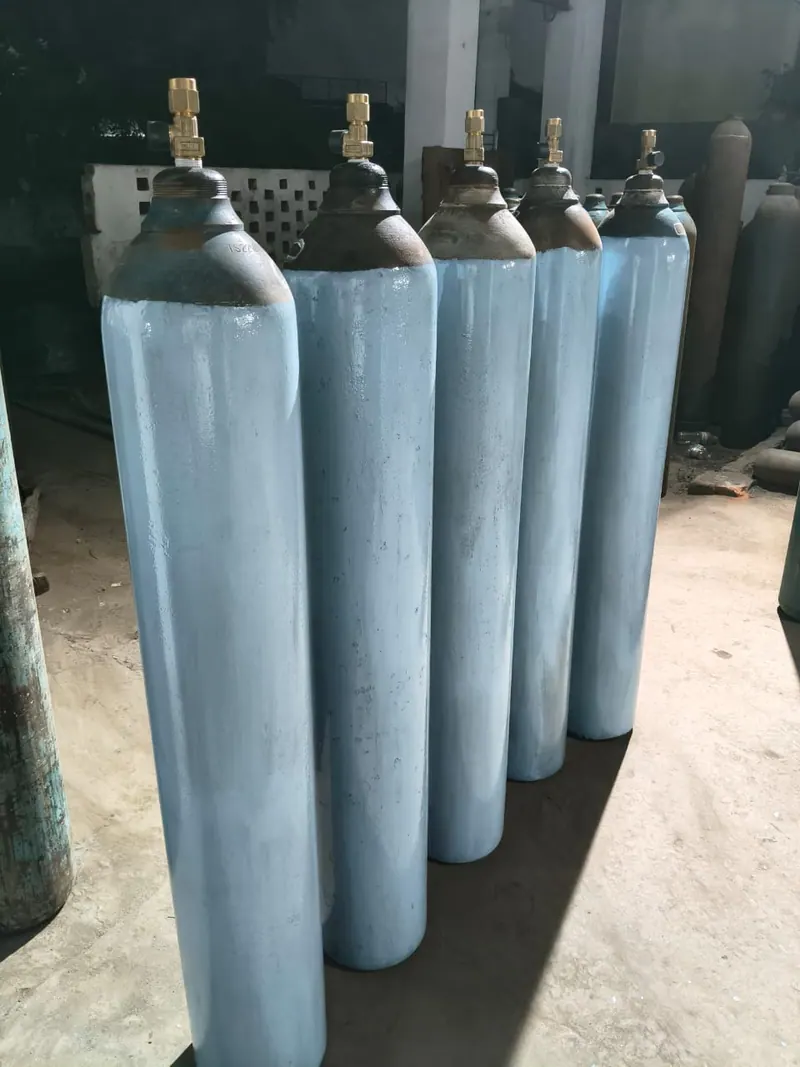
Inside the cylinder filling shed, every cylinder secured upright in rows
Guwahati works · agent network
Safe handling
Handling
- Treat as an oxidiser. Keep oil, grease and hydrocarbons away from valves and fittings.
- Weigh cylinders to determine contents. Do not rely on the gauge.
- Store upright, secured, ventilated, away from heat and combustible material.
- N₂O is heavier than air and will accumulate at low level in poorly ventilated spaces.
- In theatre, scavenging is required — chronic occupational exposure carries recognised health effects for staff.
Full detail is in our nitrous oxide safety data sheet.
Supply and control
Nitrous oxide is subject to misuse, so legitimate customers should expect supply against verifiable end use. We apply that check deliberately. It protects the integrity of the supply chain, and it protects the clinical and industrial users who depend on it.
Cylinder supply from our filling operations, with batch documentation for medical grade.
Why KIGL
Why buy nitrous oxide from KIGL
We have worked in industrial and medical gas since 1947, and four generations of the same family have answered for it. Nitrous oxide we supply from a licensed producer rather than making it ourselves, which is why we are precise about lead times. Where it matters most is the handling: the gas does not burn, and that single sentence is what gets people into trouble, because it will feed a fire vigorously all the same.
Specification
Nitrous oxide — full specification
| Property | Value | Basis |
|---|---|---|
| KIGL’s role | Supplier — nitrous oxide is not produced by KIGL | Company position |
| Pharmacopoeial standard | Indian Pharmacopoeia (IP) | Indian Pharmacopoeia Commission |
| Regulatory basis (medical) | Licensed medicine under the Drugs and Cosmetics Act | — |
| UN number | UN 1070 | ADR 2025 |
| Transport class | 2.2 with 5.1 oxidiser subsidiary risk | ADR 2025 |
| State in cylinder | Liquid under its own vapour pressure | Physical property |
| Contents measured by | Weight, not pressure | Physical property |
| Chemical formula | N₂O | — |
| Grade, medical | Indian Pharmacopoeia | IP monograph |
| Grade, industrial | Industrial purity | — |
| Appearance | Colourless gas, faintly sweet odour | Literature |
| Oxidising properties | Supports combustion — behaves as an oxidiser | GHS |
| Relative vapour density (air = 1) | ≈1.53 — heavier than air | Literature |
Documents
Nitrous oxide — safety and technical documentation
Questions
Nitrous oxide — frequently asked questions
Is nitrous oxide flammable?
No, but that is misleading in practice. N₂O does not burn, yet it decomposes at high temperature to release oxygen and will therefore support combustion vigorously — it behaves as an oxidiser. Materials that burn slowly in air burn fast in nitrous oxide. Treat it with the same caution as an oxygen cylinder: no oil, no grease, no ignition sources.
How do I tell how much is left in the cylinder?
By weight. N₂O is stored as a liquid, so the pressure gauge reads vapour pressure and stays roughly constant until the liquid is exhausted, then drops abruptly. Weigh the cylinder and compare against the tare weight stamped on it. Relying on the gauge is how a theatre runs out mid-procedure.
What is Entonox and do you supply it?
Entonox is a ready-mixed 50:50 nitrous oxide and oxygen blend used for analgesia, particularly in labour and emergency care. Contact us with your requirement and we will confirm what we can fill — do not assume from this page that it is available.
Can industrial nitrous oxide be used medically?
No. As with oxygen, the difference is the licence, the dedicated cylinders, the batch record and the pharmacopoeial release specification, not simply the purity figure. Using industrial N₂O on a patient is unlawful and unsafe.
Why is nitrous oxide supply controlled?
Because it is subject to misuse. Legitimate medical and industrial customers should expect supply against a verifiable end use, and we apply that check. It protects the supply chain and it protects you.
What are the industrial uses?
As an oxidiser in certain combustion and propulsion applications, in semiconductor manufacture, and as a fuel-flame component in atomic absorption spectroscopy, where the nitrous oxide-acetylene flame reaches temperatures air-acetylene cannot.
Read next
Enquiries
Request a quotation for nitrous oxide
State the gas or equipment, the quantity or capacity, and your location. KIGL will confirm the grade, the cylinder or plant size, and whether the location can be served from Noonmati, or through our agent network.