
Equipment
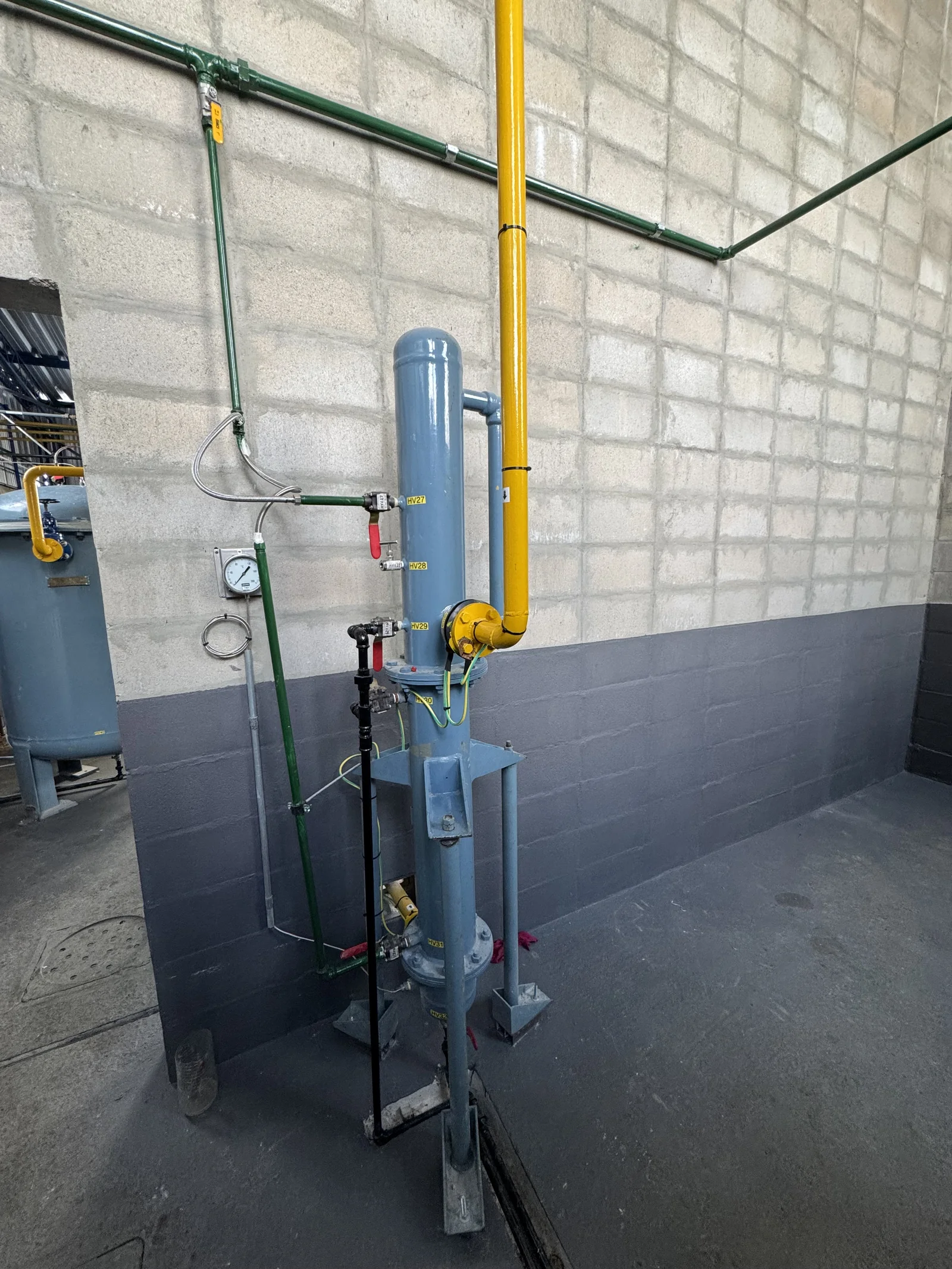
Acetylene cooler-condenser and scrubber — the first and last wet stages
The cooler-condenser is the first stage after the generator. It drops the gas from as high as 70 °C, condensing most of the water it carries. The scrubber then washes out ammonia and any purifying-mass carryover before the high-pressure drier. Both are wet stages, and they bracket the chemical cleaning between them.
Written and checked by KIGL technical staff · Reviewed by Devendra Kumar Garg, Founder and Chairman
- First stage after the generator
- Cooler-condenser position
- Up to the 70 °C generator ceiling
- Gas temperature entering
- After the chemical purifier
- Scrubber position
- Removes ammonia and purifying-mass carryover
- Scrubber duty
- IS 308 : 2024 limits
- Output specification served
On this page 8 sections
Two wet stages, at opposite ends of the cleaning train #
Between the generator and the cylinder there are two vessels that work with water rather than chemistry, and they sit at either end of the chemical cleaning.
The cooler-condenser is first, immediately after the generator. The scrubber is late, after the chemical purifier and before the high-pressure drier. Neither is glamorous, and both are among the first things to be neglected on an ageing plant.
The cooler-condenser #
Gas leaves the generator hot and saturated. The generator's own ceiling is 70 °C, and the gas can arrive at the cooler-condenser close to it.
The physics here is simply that hot gas holds more water than cool gas. Dropping the temperature drops the saturation point, and the difference condenses out and drains away. That is the whole duty, and it is why this stage protects everything behind it: the moisture removed here is moisture the low-pressure drier never has to take up, and the purifier never has to cope with.
When it under-performs, the failure shows up two stages downstream. The drier charge is spent early. The purifier floods. And a purifier that has flooded two or three times tends to end up bypassed, which is how a plant quietly stops meeting IS 308 while every vessel is still bolted in place.
The scrubber #
The scrubber washes ammonia out of the gas, and catches any purifying mass carried over from the purifier upstream.
The ammonia comes from the carbide. Commercial calcium carbide is smelted from lime and coke in an electric furnace, and nitrogen taken up in that furnace leaves calcium cyanamide and related nitrides behind in the product. Those hydrolyse along with the carbide itself, so ammonia arrives in the gas stream as a matter of course rather than as a fault.
IS 308:2024 does not set a numerical ammonia limit the way it does for phosphine and hydrogen sulphide. The scrubber is there because ammonia in the gas is a problem for the cylinder and the solvent, not because a table says so.
Acetylene cooler-condenser, filled and despatched from KIGL's own works.
Guwahati works · agent network
How the stages line up #
| Order | Stage | Removes | Page |
|---|---|---|---|
| 1 | Generator | — | Generators |
| 2 | Cooler-condenser | Heat, bulk water | This page |
| 3 | Low-pressure drier | Moisture | Driers |
| 4 | Chemical purifier | PH₃, H₂S | Purification |
| 5 | Scrubber | Ammonia, carryover | This page |
| 6 | Compressor | — | Compressors |
| 7 | High-pressure drier | Final moisture | Driers |
Maintenance is shift work, not annual work #
Both vessels are wet, both collect condensate and solids, and both are on the daily checklist rather than the yearly one. The drains are the whole job.
The audit record on this is unambiguous. Where plants were found producing off-specification gas, the cause was rarely a vessel that had failed. It was a drain nobody opened, a charge nobody replaced, and then a bypass somebody fitted. The maintenance schedule exists to make that sequence visible before it reaches the third step.
Supply, spares and commissioning #
KIGL builds the cooler-condenser and the scrubber as stages of a complete KIGL-DA plant, and also supplies either vessel on its own for plants of other makes. Both are sized from the drawings of the existing plant rather than from a catalogue. The cooler-condenser is sized against the gas volume and the inlet temperature, which can reach the 70 °C generator ceiling. The scrubber is sized against the gas volume at the point it sits, which is after the chemical purifier and before the high-pressure drier.
To quote for either vessel alone, KIGL needs the plant's rated output in Nm³/h and the process flow drawing or schematic showing where the vessel sits in the train. It also needs the inlet and outlet connection sizes and positions, and the cooling water flow and temperature available at site. Where the existing scrubber is charged with something other than water, that charge must be stated, because this page does not assume one.
Replacing a cooler or a scrubber changes the approved plant, and that is a licensing question before it is an engineering one. The amended drawing goes to PESO and is approved before the new vessel is commissioned; KIGL does not commission a replacement stage against an unamended licence. The PESO licence guide lists the forms and the order they are filed in.
The work is supervised rather than taken over. KIGL supervises erection and commissioning and trains the operators on the plant itself, while the civil work, the utilities and the labour stay with the buyer.
Specification
Acetylene cooler-condenser — full specification
| Property | Value | Basis |
|---|---|---|
| Cooler-condenser position | First stage after the generator | KIGL-DA series operating manual |
| Gas temperature entering | Up to the 70 °C generator ceiling | KIGL-DA series operating manual |
| Scrubber position | After the chemical purifier and before the high-pressure drier | KIGL-DA series operating manual |
| Scrubber duty | Removes ammonia and any purifying-mass carryover | KIGL-DA series operating manual |
| Output specification served | IS 308 : 2024 limits of 0.01 per cent PH3 and 0.02 per cent H2S | IS 308 : 2024, Table 1 |
| Both stages | Wet — water-washed, with drains that are worked every shift | KIGL-DA series operating manual |
| Gas temperature entering the cooler | Up to the 70 degrees Celsius generator ceiling | KIGL-DA series operating manual |
| Built for plant sizes | KIGL-DA-25, DA-50 and DA-100, and other makes sized from drawings | KIGL plant range |
Questions
Acetylene cooler-condenser — frequently asked questions
What does the cooler-condenser do?
It takes the heat out of generator gas and condenses most of the water the gas is carrying. Gas can leave the generator at anything up to the 70 °C ceiling, saturated with moisture. Dropping its temperature drops how much water it can hold, so the bulk of that moisture falls out here rather than loading the low-pressure drier.
Why is there a scrubber as well as a purifier?
They remove different things. The chemical purifier takes out phosphine and hydrogen sulphide, which are the impurities IS 308 puts numerical limits on. The scrubber washes out ammonia, and catches any purifying mass carried over from the purifier. Gas that skipped the scrubber would carry both into the high-pressure drier and then the cylinder.
Where does the ammonia come from?
From nitrides in the calcium carbide. Commercial carbide is made in an electric furnace from lime and coke, and nitrogen picked up there leaves calcium cyanamide and related nitrides in the product. These hydrolyse along with the carbide and give ammonia in the gas stream. Indian carbide's impurity profile is covered under [phosphine in acetylene and Indian carbide](/guides/phosphine-in-acetylene-and-indian-carbide).
What maintenance do these two stages need?
Draining, mainly, and it is shift work rather than annual work. Both are wet vessels, both accumulate condensate and sludge, and both have drains on the daily checklist. The [daily, weekly, monthly and yearly tasks](/guides/acetylene-plant-daily-weekly-monthly-yearly-tasks) guide puts each drain on its own interval.
What happens if the cooler-condenser is not doing its job?
Everything downstream is overloaded. The low-pressure drier takes moisture it was not sized for and its charge is spent early, the purifier floods, and once a purifier has flooded a few times somebody bypasses it. That chain is how a plant ends up producing gas that no longer meets IS 308 while every individual vessel still looks fitted.
Does the scrubber water need treating before disposal?
It carries dissolved ammonia and alkaline solids, so it goes to the plant's effluent arrangement rather than to a storm drain. Lime sludge from the generator is the larger disposal question on an acetylene plant, and that is covered separately under [carbide lime sludge handling](/guides/carbide-lime-sludge-handling-and-disposal).
References
Bureau of Indian Standards.
- IS 308:2024, Fourth RevisionDissolved acetylene (gas) — Specification (2024)
- The Kamrup Industrial Gases Limited. (2026). Company information and manufacturer's data [Company statement].
Read next
Enquiries
Request a quotation for acetylene cooler-condenser
State the gas or equipment, the quantity or capacity, and your location. KIGL will confirm the grade, the cylinder or plant size, and whether the location can be served from Noonmati, or through the agent network.