
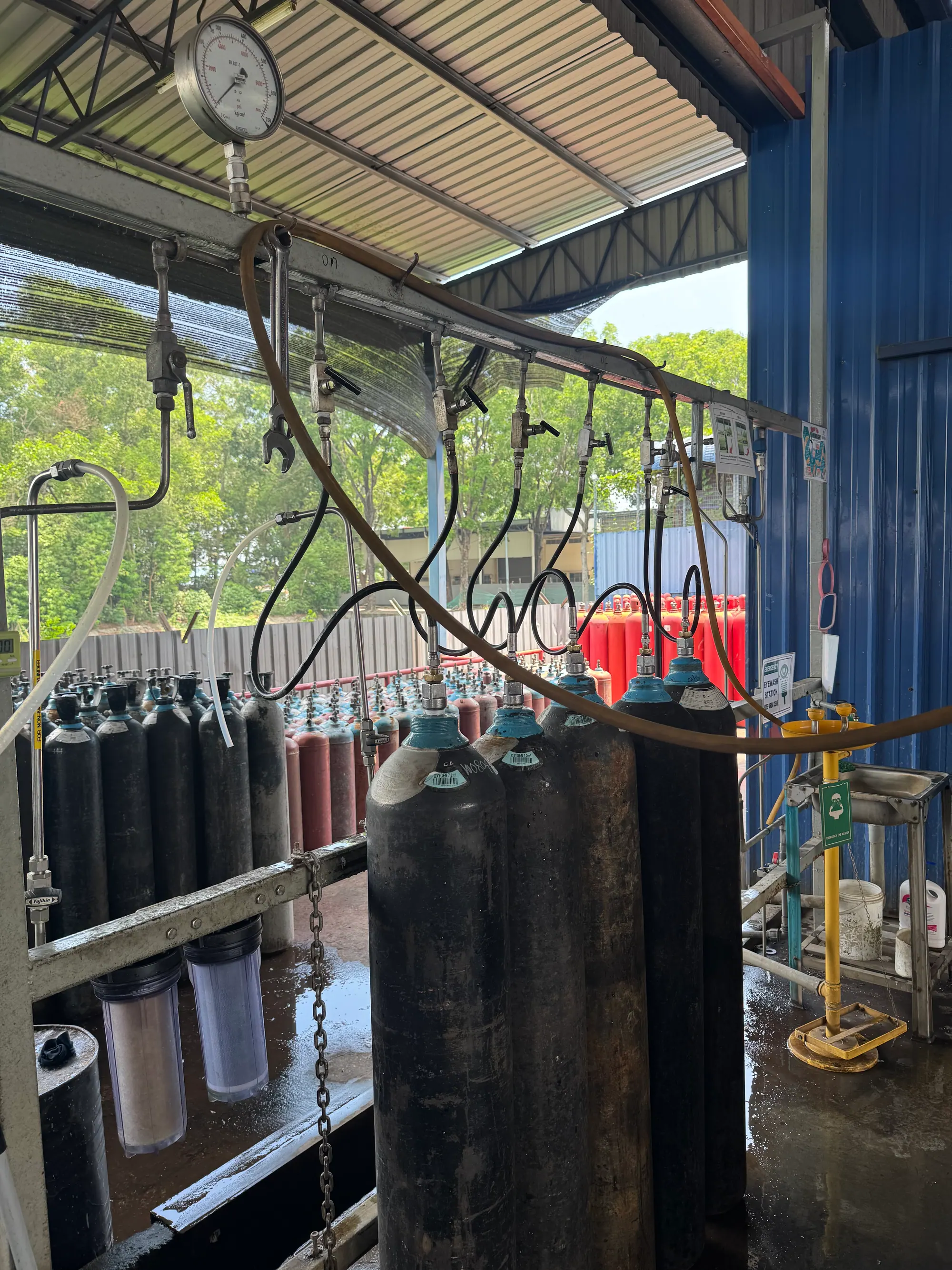
Gases
Multi-component gas mixtures — up to ten components, blended to ±5 %
KIGL blends custom gas mixtures containing up to ten components, to a tolerance of ±5 % of each specified concentration. That covers welding shielding gases, process and inerting blends, and instrument mixtures. Specify your components, concentrations and balance gas, and we confirm what is achievable before you order.
₹200 – ₹3,100 per Nm³ Indicative. Your quotation is the figure that counts — price moves with quantity, cylinder size, contract term and delivery.
- 10
- Maximum components per mixture
- ±5 % of each specified concentration
- Blend tolerance
- EN ISO 14175
- Welding mixture classification
- Cylinders
- Supply form
- IS 15122
- Indian guidance on mixtures
Ten components, ±5 %
Most gas mixture requirements are simple: argon with a little CO₂, or a ternary welding blend. Some are not. Process gases, research atmospheres and instrument mixtures can run to many components, and most regional suppliers will quote for two or three and decline the rest.
We blend up to ten components in a single cylinder, each landing within ±5 % of the concentration you specify. Ask for 20 % CO₂ and you get between 19 % and 21 %.
Where ±5 % is the right tolerance
Welding shielding gases
Arc behaviour is not sensitive at the five per cent level — the difference between 18 % and 22 % CO₂ is not something a welder can detect. Argon-CO₂, argon-oxygen and argon-helium blends all sit comfortably here.
Process and inerting blends
Controlled atmospheres for heat treatment, packaging and furnace work.
Leak testing and tracer gases
Helium or hydrogen in a nitrogen balance.
Bump testing and function checks on gas detectors, where you are confirming that the instrument responds rather than establishing its absolute accuracy.
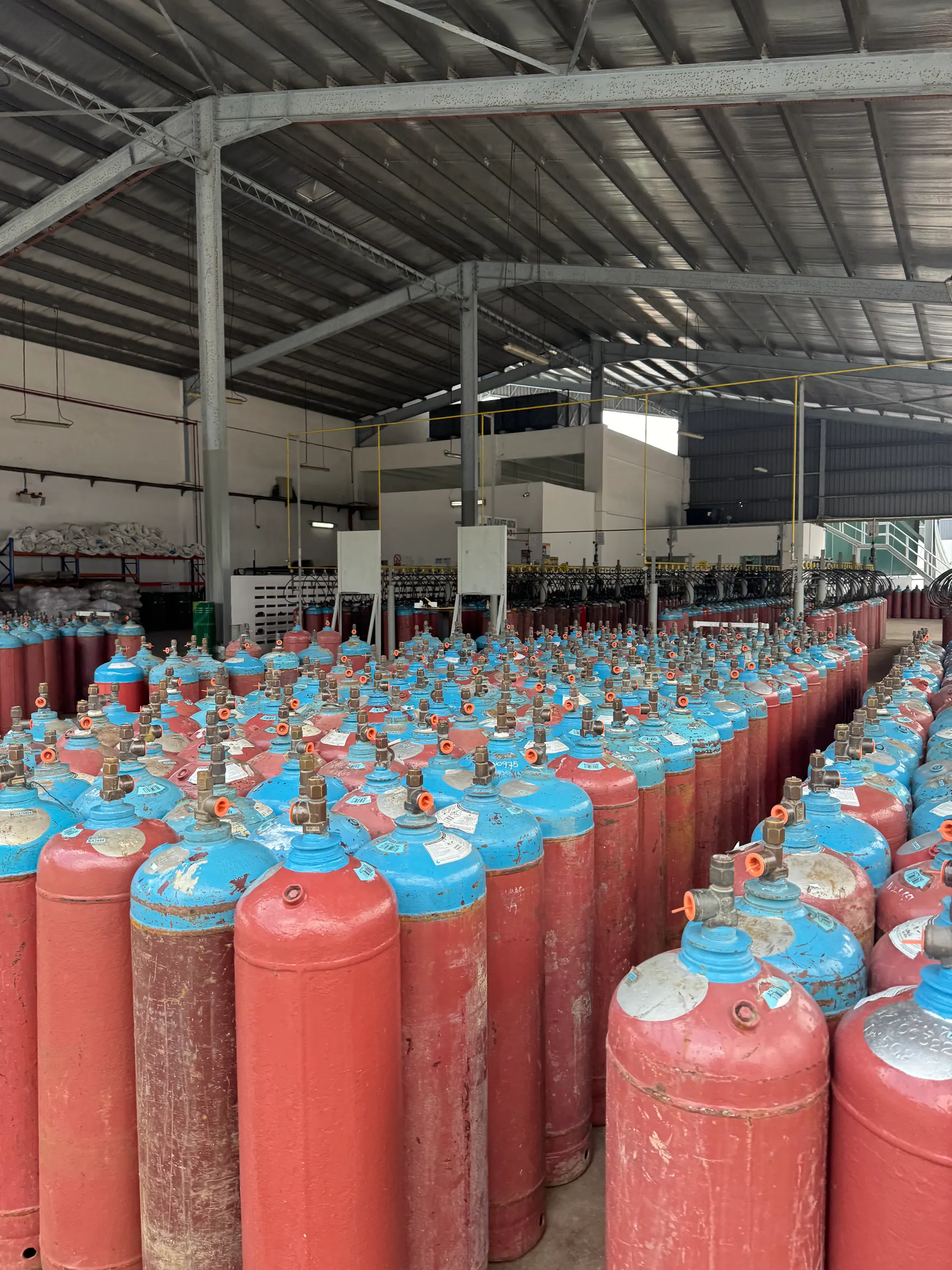
Cylinder storage hall, stock segregated by gas as the standards require
Guwahati works · agent network
Where it is not
We would rather lose the order than mislead you here.
A primary calibration standard — the kind used to establish the accuracy of an accredited measurement — typically needs to be an order of magnitude tighter than ±5 %, gravimetrically prepared to ISO 6142, analytically verified to ISO 6143, certified to ISO 6141, and supplied in a surface-treated cylinder with a stated uncertainty. That is a different product at a different cost.
If your requirement says “calibration gas” but the application is a bump test or a process check, our ±5 % blends are almost certainly what you need and will cost considerably less. If you genuinely need a certified standard for an accredited measurement, tell us and we will say plainly whether we can meet it.
Common welding mixtures
Argon-CO₂ — the workhorse for MIG on carbon and stainless steel. Lower CO₂ gives a smoother arc, less spatter and a better bead; higher CO₂ gives deeper penetration at lower cost.
Argon-oxygen — small oxygen additions stabilise the arc and improve wetting on stainless.
Argon-helium — for aluminium and thick non-ferrous sections, where helium’s higher thermal conductivity gives a hotter, broader arc.
The classification framework is EN ISO 14175. Tell us the material, thickness and transfer mode and we will specify the blend rather than sell you whatever is standard.
Ordering
Send us the components and target concentrations, the balance gas, the cylinder size, and what the mixture is for. If you are switching supplier, the existing cylinder label is usually enough.
We will confirm what we can achieve before you commit — including telling you if a simpler or cheaper blend would do the same job.
Why KIGL
Why buy mixtures from KIGL
We have manufactured industrial gas since 1947, and the group holds a seat on the Bureau of Indian Standards gas cylinders committee. A mixture is only as good as the record behind it, so we will tell you plainly whether the job needs a certified calibration standard or a working-tolerance welding mixture. It is frequently the cheaper of the two, and we will still say so.
Specification
Multi-component gas mixtures — full specification
| Property | Value | Basis |
|---|---|---|
| Maximum components per mixture | 10 | KIGL blending capability |
| Blend tolerance | ±5 % of specified concentration | KIGL blending capability |
| Welding mixture classification | EN ISO 14175 | — |
| Supply form | Cylinders, blended to order | KIGL product range |
| Indian guidance on mixtures | IS 15122 | Bureau of Indian Standards |
| Components per mixture | Up to 10 | KIGL blending capability |
| Common welding mixtures | Argon-CO₂, argon-oxygen, argon-helium | EN ISO 14175 |
| Balance gases available | Argon, nitrogen, helium, air | — |
Questions
Multi-component gas mixtures — frequently asked questions
How many components can you put in one mixture?
Up to ten. Most requirements are two or three — argon with CO₂, or a ternary welding blend — but process, research and instrument applications sometimes need considerably more, and we can build those. Send the full specification including the balance gas and we will confirm feasibility before you commit.
What does ±5 % tolerance actually mean?
Each component lands within five per cent of the concentration you specified. Ask for 20 % CO₂ and you receive between 19 % and 21 %. For welding, inerting, process and leak-test work that is comfortably tight enough — arc behaviour and process performance are not sensitive at that level.
Is ±5 % good enough to calibrate an instrument?
Usually not. A primary calibration standard typically needs to be an order of magnitude tighter than ±5 %, gravimetrically prepared, analytically verified and supplied in a surface-treated cylinder with a stated uncertainty. Our ±5 % blends suit bump testing, function checks and process use. If you need a certified calibration standard for an accredited measurement, tell us and we will say honestly whether we can meet it.
Which argon-CO₂ mixture should I use for MIG welding?
It depends on material and thickness. Lower CO₂ gives a smoother arc, less spatter and a better bead on thin material and stainless; higher CO₂ gives deeper penetration and costs less, which suits heavier carbon steel. Tell us the material, thickness and transfer mode and we will specify rather than sell you a default.
Can you match a mixture I currently buy elsewhere?
Usually. Send the existing specification or the cylinder label with the component concentrations and balance gas, and we will confirm whether we can match it within our ±5 % tolerance.
How long does a mixture stay accurate in the cylinder?
For stable components at normal concentrations, a long time. Reactive components at low concentration can drift as they adsorb onto the cylinder wall, and that is the main limit on shelf life. If your application is sensitive to drift, tell us and we will advise on re-ordering intervals rather than let you use a mixture past its useful life.
Read next
Enquiries
Request a quotation for multi-component gas mixtures
State the gas or equipment, the quantity or capacity, and your location. KIGL will confirm the grade, the cylinder or plant size, and whether the location can be served from Noonmati, or through our agent network.