
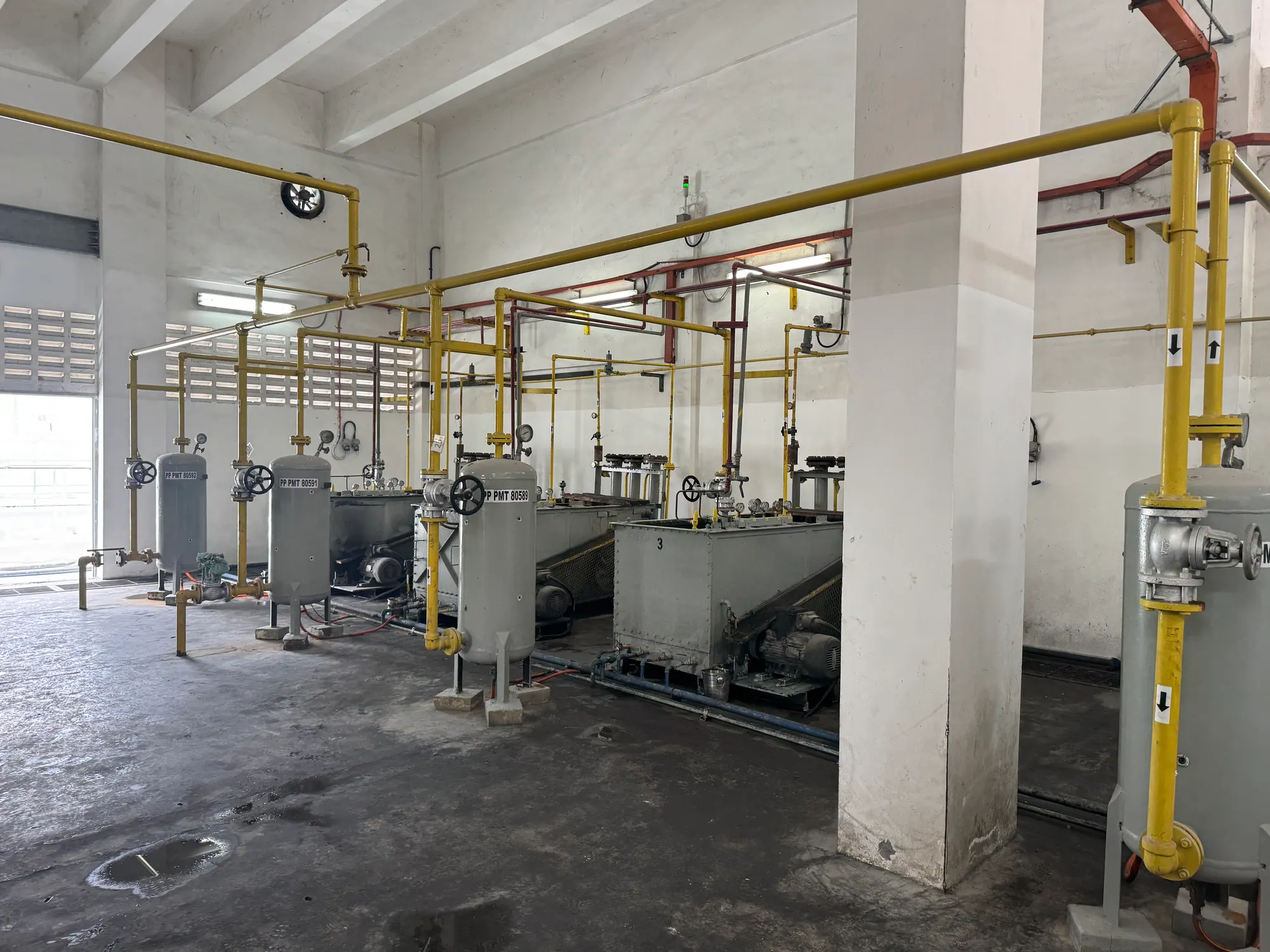
Equipment
PSA oxygen plants — on-site oxygen generation
A PSA oxygen plant makes oxygen on site by passing compressed air through a zeolite molecular sieve that adsorbs nitrogen and lets oxygen through. Two vessels alternate, one producing while the other regenerates. Typical purity is 93 to 95 %, which is the grade recognised for medical oxygen concentrators.
₹20,00,000 – ₹2,00,00,000 per plant Indicative. Your quotation is the figure that counts — price moves with quantity, cylinder size, contract term and delivery.
- Pressure swing adsorption over a zeolite molecular sieve
- Principle
- Compressed air
- Feed
- 93
- Typical purity
- Oxygen 93 % is a recognised pharmacopoeial grade
- Medical grade recognised
- Electricity for the air compressor
- Running cost driver
How a PSA plant works
Compressed air is passed through a vessel packed with a zeolite molecular sieve. The sieve adsorbs nitrogen preferentially and lets oxygen pass, so the gas leaving the vessel is oxygen-rich.
The sieve fills up. So the plant runs two vessels in alternation: one producing oxygen at pressure while the other is depressurised, releasing the trapped nitrogen to atmosphere and regenerating itself. They swap continuously. That pressure cycling is the “pressure swing” in the name.
There is no feedstock other than air. The only running cost of substance is the electricity driving the air compressor.
Why the purity stops in the mid-nineties
This is the question every buyer asks, and the answer is a genuine physical limit rather than a design shortcut.
The molecular sieve separates nitrogen from oxygen well. It cannot separate argon from oxygen — for adsorption purposes the two behave too similarly. Air contains about 0.93 % argon, and essentially all of it comes through with the product.
That puts a practical ceiling around 93–95 % oxygen, with the balance argon and residual nitrogen. Getting past it means cryogenic air separation, which is a fundamentally different plant at a fundamentally different scale and cost.
Anyone quoting you a PSA plant at 99.5 % is either describing something other than PSA or is mistaken.
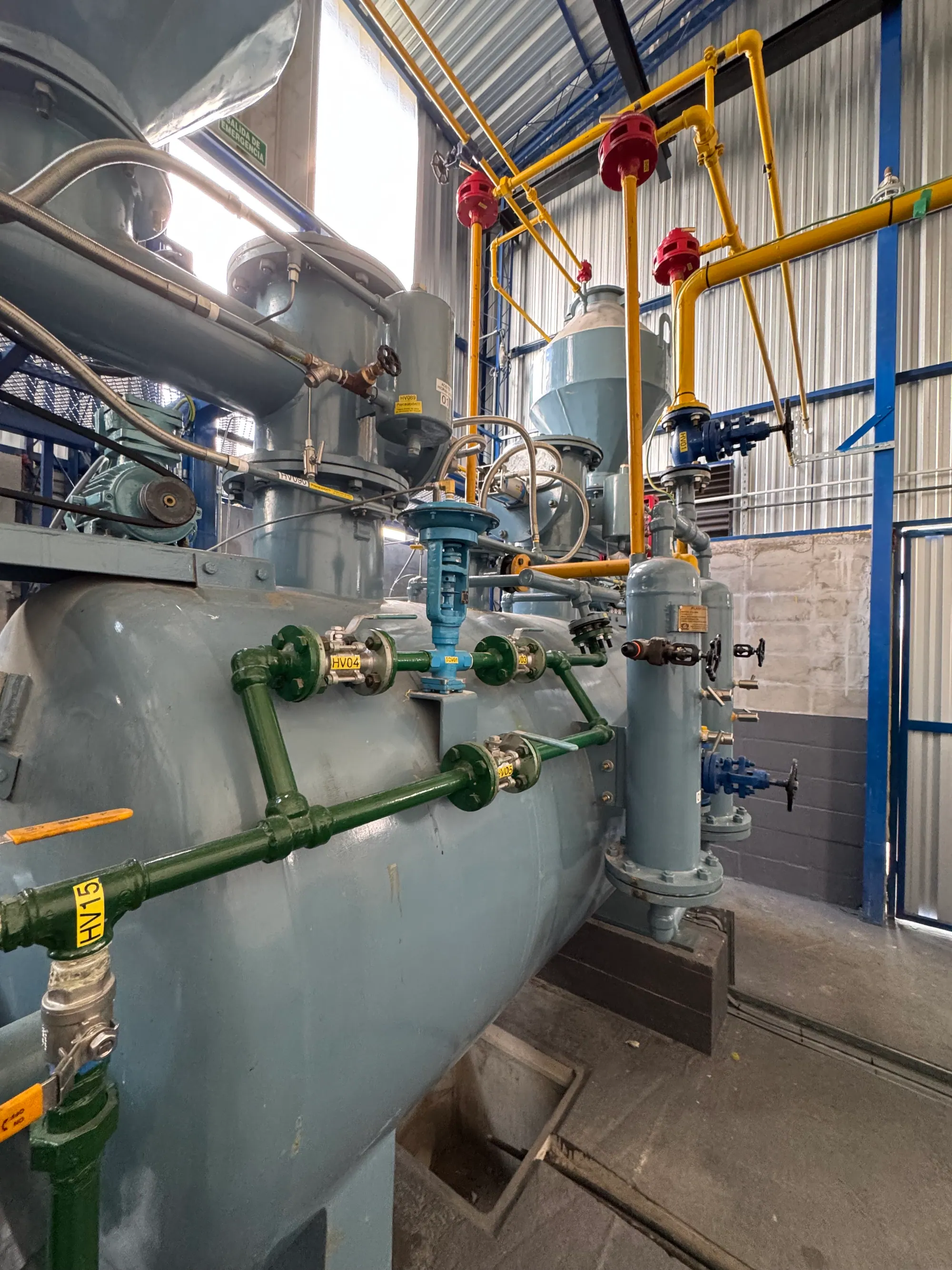
Process pipework and valve manifold on a KIGL-built industrial gas plant
Guwahati works · agent network
Where PSA makes sense
Hospitals with steady oxygen demand, particularly where cylinder logistics are the constraint rather than the cost. It removes delivery dependence — which mattered enormously during COVID-19, when regional cylinder supply, not national capacity, was the binding constraint on care.
Industrial users with continuous demand: metal processing, glass, water treatment, aquaculture.
Remote sites where cylinder delivery is slow or unreliable.
It makes less sense where demand is intermittent, where power is unreliable or expensive, or where consumption is low enough that cylinders are simply cheaper.
The two things that determine whether it works
Air treatment. Moisture and oil destroy a molecular sieve bed, and the bed is the most expensive component in the plant. Upstream drying and filtration are not accessories — they set the life of the sieve. Neglected air treatment is the most common reason PSA plants fail early.
Backup. A PSA plant stops when the power stops. Any installation serving a critical load, and a hospital certainly is one, needs cylinder backup with automatic changeover. We would rather design that in than have you discover it during an outage.
Psa oxygen plants supplied, installed and commissioned
We manufacture PSA oxygen plants — and PSA nitrogen plants — alongside plant, installation, commissioning, operator training and ongoing maintenance support. The same basis on which we have built acetylene plants since 1947.
Equipment ships anywhere in India, including all seven North-East states, West Bengal, Uttar Pradesh, Madhya Pradesh, Chhattisgarh, Bihar and Odisha.
Tell us your consumption profile, your power situation and your backup requirement, and we will size it properly rather than quote a catalogue model.
Specification
PSA oxygen plants — full specification
| Property | Value | Basis |
|---|---|---|
| Principle | Pressure swing adsorption over a zeolite molecular sieve | — |
| Feed | Compressed air — no other consumable | — |
| Typical purity | 93 – 95 % O₂ | PSA process characteristic |
| Medical grade recognised | Oxygen 93 % is a recognised pharmacopoeial grade | Pharmacopoeial monograph — confirm Indian status |
| Running cost driver | Electricity for the air compressor | — |
| Process | Pressure swing adsorption, twin adsorber | — |
| Adsorbent | Zeolite molecular sieve | — |
| Feed gas | Compressed, dried, filtered air | — |
| Product purity | Typically 93 – 95 % O₂ | Process characteristic |
| Balance | Argon and residual nitrogen | Process characteristic |
| Turndown | Output can be matched to demand | — |
Questions
PSA oxygen plants — frequently asked questions
Why does a PSA plant produce 93–95 % oxygen rather than 99 %?
Because the molecular sieve separates nitrogen from oxygen but cannot separate argon from oxygen — argon and oxygen have very similar molecular characteristics for this purpose. Air is about 0.93 % argon, and essentially all of it stays with the product. That sets a practical ceiling in the mid-nineties. Reaching 99 %+ requires cryogenic separation, which is a fundamentally different and far larger plant.
Is 93 % oxygen acceptable for medical use?
"Oxygen 93 %" is a recognised pharmacopoeial grade in its own right, distinct from the 99 %+ monograph, and it is the basis on which oxygen concentrators and hospital PSA plants operate. Whether a given installation satisfies Indian regulatory requirements depends on the plant, its validation and the licence held — confirm this for your specific case rather than assuming.
Should a hospital install a PSA plant or take cylinder supply?
It depends on consumption, reliability requirements and what happens when the power fails. A PSA plant removes delivery dependence and can be cheaper per cubic metre at steady high demand, but it needs electricity, compressed air, maintenance and a cylinder backup for outages. Most hospitals end up with both. We will work through the numbers with your engineering team rather than push one answer.
What does a PSA plant cost to run?
Almost entirely electricity for the air compressor — there is no consumable feedstock. That makes power tariff and compressor efficiency the dominant economics, and it makes a PSA plant look very different in a location with reliable cheap power than in one without.
How long does the molecular sieve last?
Years, provided the feed air is properly dried and filtered. Moisture and oil are what destroy a sieve bed, so air treatment upstream is not an accessory — it determines the life of the most expensive component in the plant. Neglected air treatment is the most common cause of premature PSA failure.
Can a PSA plant fill cylinders?
With a booster compressor and the appropriate filling arrangement, yes — but cylinder filling is a licensed activity under the Gas Cylinders Rules, 2016, and the plant, the booster and the filling installation all have to satisfy it. Discuss this before assuming it is included.
Read next
Enquiries
Request a quotation for PSA oxygen plants
State the gas or equipment, the quantity or capacity, and your location. KIGL will confirm the grade, the cylinder or plant size, and whether the location can be served from Noonmati, or through our agent network.