
Guide
Interlocks and alarms on a carbide-to-water acetylene plant: what trips why it fails safe, and how to prove it works
A carbide-to-water acetylene plant has 4 generator trips (low water level, high water level, high temperature and low instrument air), each of which stops the carbide feed, plus compressor low and high pressure switches. On KIGL plants all are air-operated and fail safe; on air failure every motor except the agitator stops.
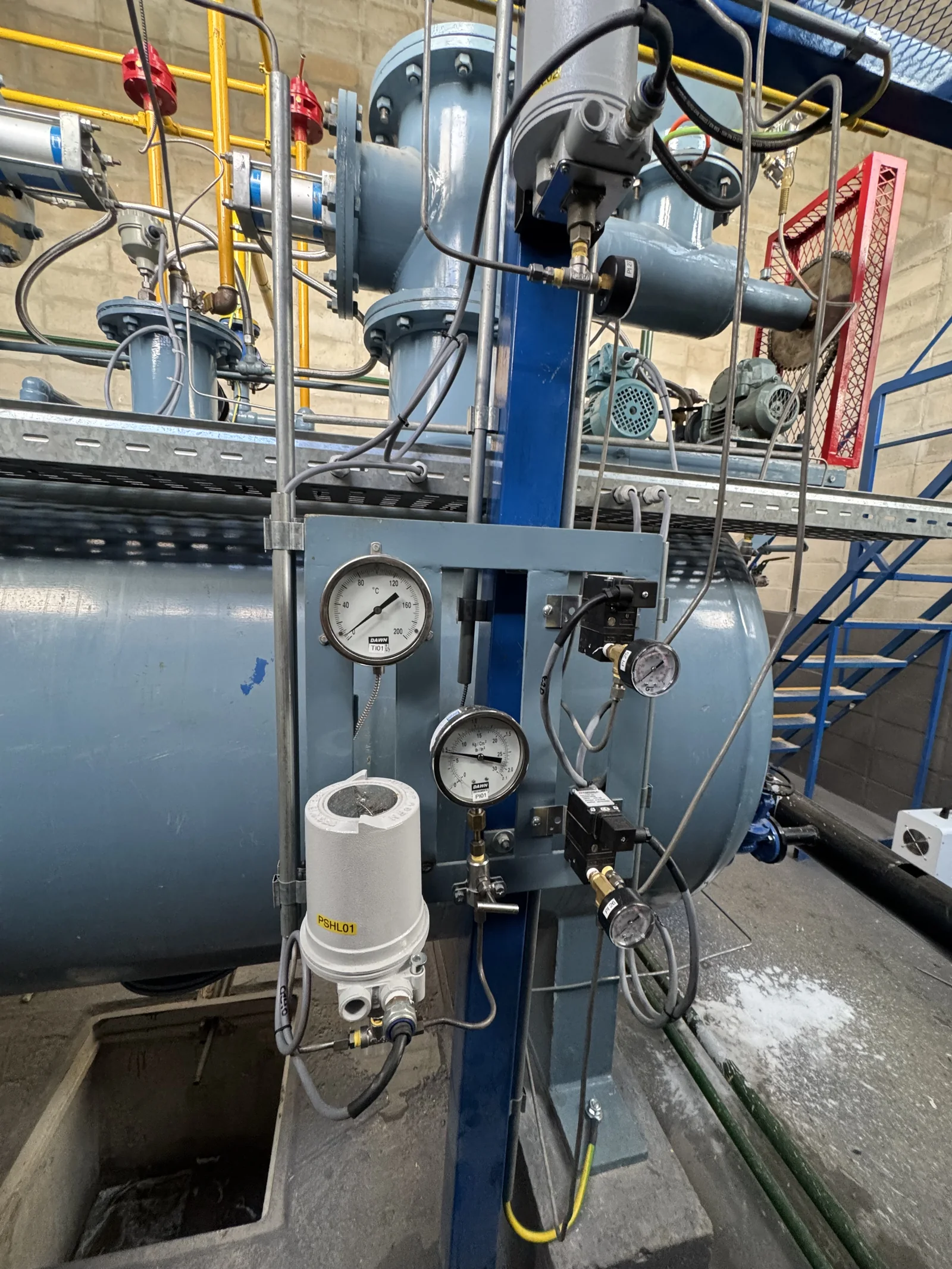
- Generator trips
- 4 trips: low water level
- Fail-safe design
- All safety devices are air-operated; on instrument-air failure all motors except the agitator stop
- Feed pressure switches
- Hopper feed switches at 0.7 to 0.74 and 0.88 to 0.92 kg/cm²g; maximum generation pressure 0.92 kg/cm²g
- Compressor protection
- Low-pressure switch stops the compressor before suction falls below 0.1 kg/cm²g; no valve allowed between the high-pressure switch and the compressor
- Gasholder plants
- Compressor tripped automatically when the gasholder bell falls to a set level at least 30 cm above its rest position
An acetylene generator holds a reaction that releases about 429 kcal for every kilogram of carbide, a gas with a minimum ignition energy of about 0.02 mJ, and a tank of lime slurry that can set like cement. The interlocks exist so that when any of the conditions holding those in balance is lost, the carbide stops before an operator has to notice. On KIGL plants they are simple, few and air-operated, and the design rule is that a failure of the protection itself leaves the plant safe.
What trips the generator
| Trip | What it protects against | Action |
|---|---|---|
| Low water level | Carbide falling into too little water, with no heat sink and a hot spot under the feed | Alarm; control circuit trips; carbide feed stops |
| High water level | Water reaching the carbide valve and screw feed, generating gas inside the feed housing; loss of gas space | Alarm; control circuit trips; carbide feed stops |
| High temperature | A reaction running hotter than the 70 °C ceiling, usually a low water ratio or a failed water valve | Alarm; control circuit trips; carbide feed stops |
| Low instrument air | Loss of the energy that operates every valve and trip | Alarm; all motors except the agitator stop |
Level is measured by a differential-pressure transmitter, not a glass gauge; KIGL generators carry no glass level gauges at all, and the reading is confirmed by hand at the upper and lower level check valves, which should give gas and water respectively. The temperature is sensed by an RTD. The panel's trip lamp shows which fault has acted; the hooter can be acknowledged but the lamp stays lit and the feed will not run until the condition is cleared.
Pressure switches and the hopper changeover
Generation is controlled, not tripped, by pressure. Each hopper's screw feed is started and stopped by a pressure switch: one set at 0.7 to 0.74 kg/cm²g and the other at 0.88 to 0.92 kg/cm²g, with the panel interchanging the switch connections on changeover so that only one hopper is ever on line. The maximum generation pressure is 0.92 kg/cm²g. When a hopper runs empty, pressure falls, the second hopper starts automatically and the first is recharged in manual, then returned to auto.
The carbide valve between each hopper and the tank is a soft rubber seat held closed by a spring; screw-feed rotation drives a hydraulic pump whose pressure overcomes the spring and opens it. Stop the feed and the hydraulic pressure bleeds away and the spring closes it. The hydraulic relief is set at 12 kg/cm²g. The hopper vent valve is mechanically interlocked so that the lid can be opened only when the vent is open.
Relief valves are not part of control. IS 8471:2003 requires a generator to run at 130 % of its rated capacity without its generating-chamber relief valve venting when use is stopped (clauses 19.3 and 19.6), and clause 11.6 forbids any shut-off valve between a relief device and the generator. Relief is the reserve; the switches and the trips do the work.
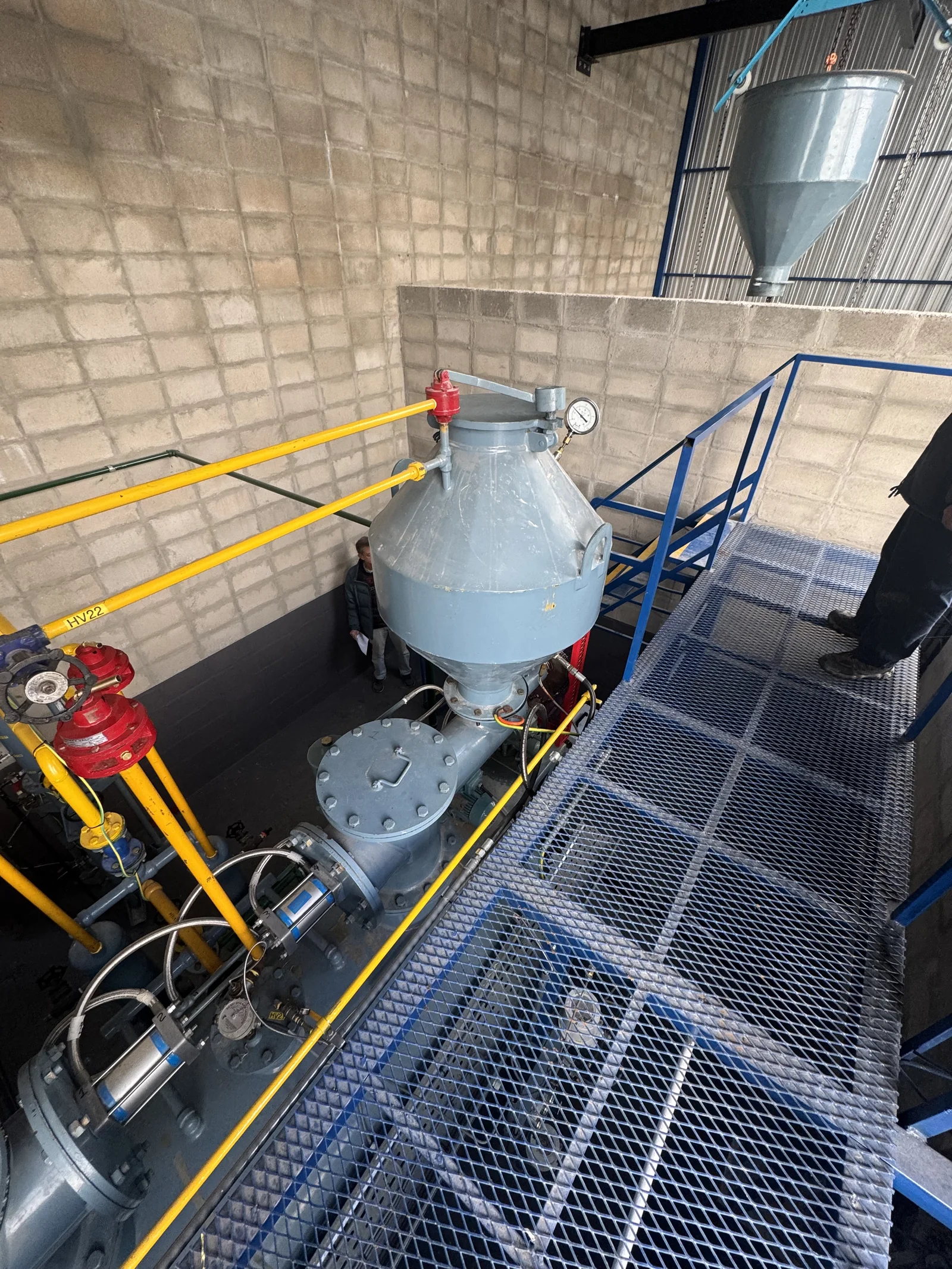
Why everything is air-operated
The trips, the water inlet valve and the slurry drain valve are operated by instrument air, and every one is arranged so that losing air sends it to its safe state. The water inlet valve opens on rising temperature and spring-closes on air loss; the carbide valve closes on its spring; and the electrical circuit stops all motors except the agitator when the air-pressure switch drops. A minimum of 2 kg/cm² on the regulator discharge is confirmed before every start.
The agitator is excepted on purpose. After a trip the danger is a settled lime bed that coats the next charge and makes hot spots, so the agitator runs intermittently on its timer, 24 hours a day, trip or no trip.
Compressor interlocks
The compressor has its own low and high pressure switches. The low-pressure switch stops it before suction falls below 0.1 kg/cm²g and will not let it start until suction is back to 0.2; this is the protection against pulling a vacuum on the generator and drawing air in, and it is tested at the end of every shift by letting the machine stop on it at shutdown. The high-pressure switch stops the machine at the charging maximum, and the manual is explicit that no valve may sit between its connection and the compressor; otherwise a closed valve can isolate the switch from the pressure it is meant to see. Each stage also has a safety valve venting through the compressor vent piping.
On plants that use a low-pressure gasholder instead of generator-pressure control, the 1968 C.P.I. code required the compressor to be stopped automatically when the bell fell to a set level at least 30 cm above its rest position, before air could be drawn into the circuit, and the bell to be checked periodically for free movement.
Emergency stop
An emergency stop at the generator room exit door stops all charging equipment; the reset and pilot light are on the master control panel outside the generating area. The C.P.I. code asked for stop buttons near every exit of the compressor building and in the immediate vicinity of the generating room, because the first action in any incident is to stop compressors and generators feeding gas into the high-pressure system. See the emergency response guide.
Rules that matter
An untested interlock is a belief. KIGL's checklists test each at a set frequency:
Proving the interlocks work
- Every shift compressor low-pressure switch, by letting it stop the machine at shutdown.
- Every shutdown instrument-air failure circuit, by closing the supply and letting the bell ring.
- Weekly low water level, by draining through the low-level valve until the bell rings and confirming the screw feed will not run; if no alarm, clean or replace the transmitter diaphragm.
- Monthly high water level, by raising the level through the bypass; temperature trip, by switching the controller to manual and lowering its setting below the reading.
- After any work on the transmitter, slurry valve or level instruments the high-level test again.
- Yearly the complete alarm and drain-valve control system, every trip function-tested from sensor to final element and recorded.
The setting rule that most often goes wrong is the temperature alarm. It must sit a few degrees above the water controller's set point, so the controller acts before the trip. Set below the controller, the plant trips on every warm hopper and somebody eventually defeats it.
What audits find
Across five carbide-to-water plants audited by the KIGL group, the control panel was found modified beyond its schematic at four of five, which means no interlock on it could be certified to trip; the correct answer was to restore or redraw and re-certify the panel before restart, with no partial fix. Other findings, each from at least one plant: the compressor low-pressure switch jumpered; generator high-pressure setpoints raised well above the maker's maximum, identically on more than one generator; a level transmitter scaled with lime and reading low, so the trips and slurry valve were working from a false level; a transmitter swapped for an incompatible one so the plant ran in manual; and the hopper changeover left permanently in manual, which is evidence of a panel fault, not an operating choice. At one plant with excellent logs and housekeeping, the pressure switches had been removed. Interlocks are invisible when they are missing, which is why they are tested on a schedule and protected by a permit-to-modify.
Rules that matter
Rules to apply
- Four generator trips, two compressor switches, one emergency stop: know where each is and test it on schedule.
- Never bypass, jumper or re-set an interlock without a signed permit; restore the maker's settings.
- Calibrate the level transmitter and descale its element; confirm level by hand at the check valves.
- Keep the temperature alarm above the controller set point and at or under the 70 °C ceiling.
- After any trip, find the cause before resetting; the troubleshooting register lists them. The KIGL plant range is supplied with the panel schematic for exactly this reason.
Interlocks — frequently asked questions
What interlocks does an acetylene generator have?
On a KIGL carbide-to-water generator: low water level, high water level, high temperature and low instrument air. Each rings the alarm, trips the control circuit and stops the carbide feed, and the feed will not restart until the fault is cleared and acknowledged. Separately, two pressure switches start and stop the screw feeds, and the compressor carries its own low and high pressure switches.
What does fail safe mean on an acetylene plant?
That losing the energy which holds a device open makes it go to its safe position. The carbide valve is spring-closed and held open only by hydraulic pressure; the water inlet valve is spring-closed and opened by air; the trips are air-operated. Lose instrument air and every motor except the agitator stops, which leaves the plant in its safe state without anyone acting.
Why does the agitator keep running when everything else stops?
Because the risk after a trip is settling, not generation. Carbide already in the tank must stay suspended and wetted, and the lime must not form a bed that coats the next charge. The agitator runs intermittently on its timer, 24 hours a day, including after a trip.
How often should acetylene plant alarms be tested?
The low water level alarm weekly, by draining until the bell rings and proving the screw feed will not run. The high water level alarm and the temperature trip monthly. The instrument-air alarm at every shutdown, by shutting the supply and letting the bell ring. The compressor low-pressure switch at the end of every shift. The whole chain once a year, sensor to final element, recorded on a sheet.
How should the high-temperature alarm be set?
Above the water controller, never below it. KIGL's manual sets the temperature alarm a few degrees above the set point of the inlet water controller, so the controller has a chance to act before the trip does. If the alarm is set below the controller, the plant trips on every warm hopper and operators are tempted to bypass it. The generator temperature ceiling is 70 °C.
Can an interlock be bypassed to keep production running?
No, and audits show why. Across five carbide-to-water plants that the KIGL group audited, interlocks had been jumpered, switches removed, setpoints raised above the maker's maximum or the hopper changeover locked in manual. Every one removed a protection without anyone noticing it had gone. The audits' main governance recommendation was a permit-to-modify: no field change without a signed, engineered permit.
References
- Bureau of Indian Standards. (2003). Acetylene Generators — Requirements (IS 8471:2003, First Revision).
- Bureau of Indian Standards. (2023). Acetylene — Code of Safety (IS 14814:2023, First Revision).
- European Industrial Gases Association. (n.d.). Acetylene Generation (EIGA Doc 237).
- Occupational Safety and Health Administration. (n.d.). Oxygen-fuel gas welding and cutting (29 CFR 1910.253).
Enquiries
Request a quotation
State the gas or equipment, the quantity or capacity, and your location. KIGL will confirm the grade, the cylinder or plant size, and whether the location can be served from Noonmati, or through the agent network.