
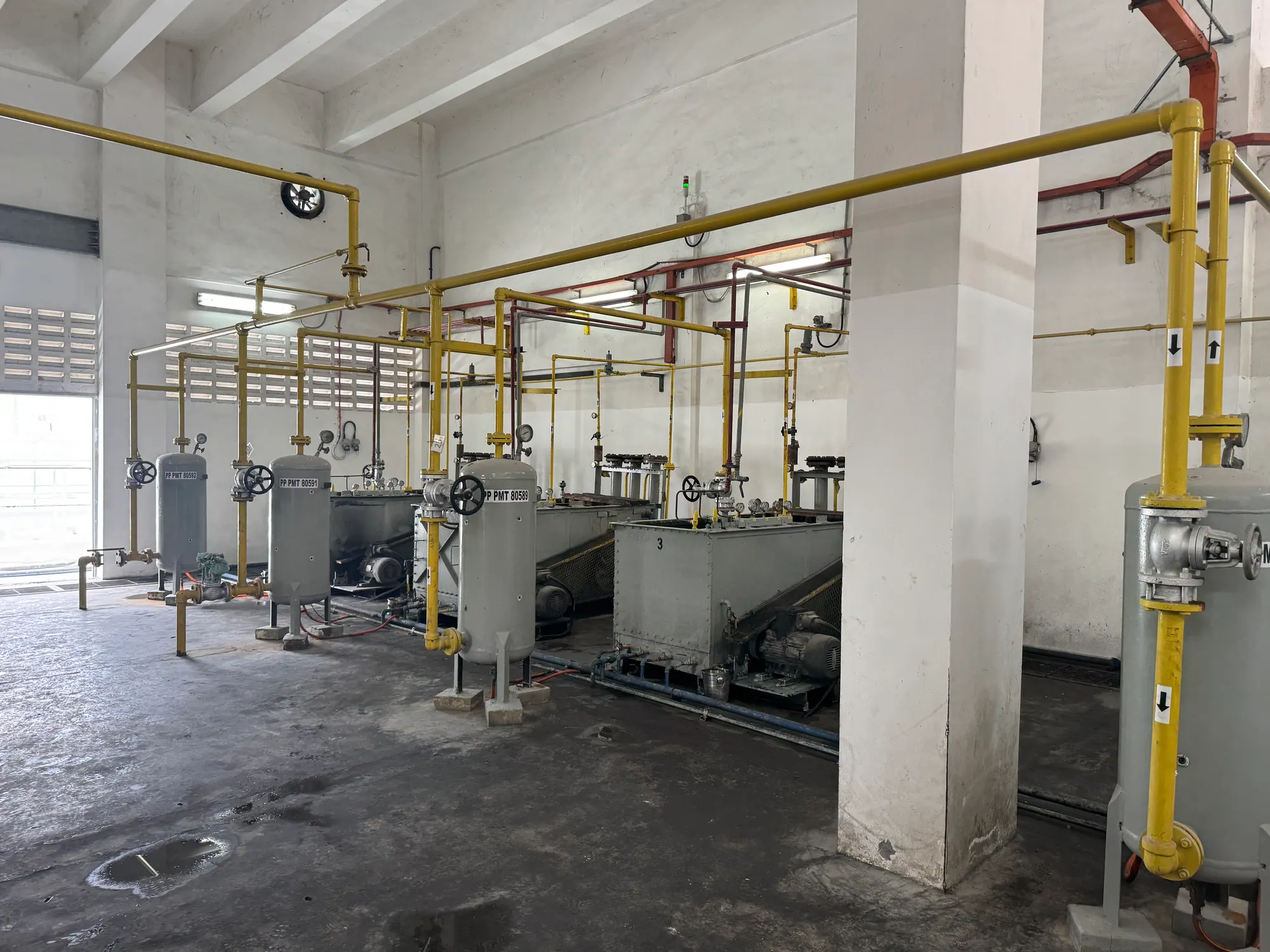
Equipment
Medical gas pipeline systems — from the manifold to the bedside
A medical gas pipeline system carries oxygen and other medical gases from a central manifold to terminal units at the bedside, through zone valves and alarms. It is a regulated installation in its own right, not plumbing. KIGL supplies the gas and the pipeline, from 1 manifold to every outlet.
₹500 – ₹1,200 per installed sq ft Installation only — pipe, fittings, valves and manifolds are charged separately. Indicative. Your quotation is the figure that counts — price moves with quantity, cylinder size, contract term and delivery.
- A regulated medical device installation
- What it is
- Manifold
- Scope
- Medical oxygen to Indian Pharmacopoeia specification
- Gas supplied
- IS 3745:2024 pin-index
- Valve at the cylinder end
- The pipeline is the last thing between a manifold and a patient
- Why it matters
What medical gas pipeline systems are, and where they are used
A medical gas pipeline system takes gas from a central source — a cylinder manifold, a PSA oxygen plant, or both, and distributes it through the building to terminal units at the bedside, theatre and ICU.
Between those two ends sit the parts that make it a regulated installation rather than plumbing: distribution pipework of controlled cleanliness, zone valves so a ward can be isolated without shutting the hospital, alarms for pressure and supply failure, and terminal units that only accept the correct gas-specific probe.
It is the last thing between a manifold and a patient. That framing decides everything else.
Why it is not a plumbing job
Three things separate this from any other pipework in the building.
It carries a licensed drug
Medical oxygen is regulated under the Drugs and Cosmetics Act, not as an industrial gas. The purity that leaves our filling station has to still be there at the outlet.
A wrong connection is a fatal event, not a fault
The entire design — pin-index at the cylinder, gas-specific probes at the terminal — exists so that the wrong gas physically cannot be delivered. This is why cross-connection testing dominates commissioning, and why any adaptor that defeats a gas-specific connection has no legitimate use.
It cannot simply be switched off
Zone valves, alarms and reserve supply exist because maintenance, extension and failure all have to happen while patients are still breathing.
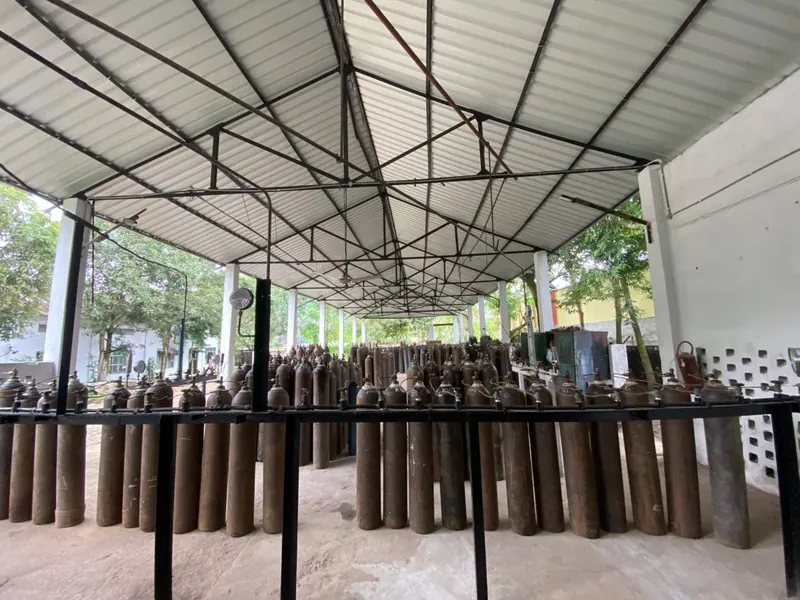
Inside the cylinder filling shed, every cylinder secured upright in rows
Guwahati works · agent network
Safe handling
Pressure testing is the least of it. A system should not be accepted until it has been proved for:
What commissioning has to prove
- Cross-connection — every outlet delivering the gas it is labelled for, verified at the outlet
- Purity at the terminal unit, not just at the source
- Flow and pressure under simulated peak demand, not at idle
- Alarm operation — including the alarms nobody wants to test
- Zone isolation — that closing a zone valve isolates what the drawing says it does
Keep the certificates. They belong in the same file as your drug licence, and they are what an inspector asks for first.
Where the gas comes from
We manufacture medical oxygen to Indian Pharmacopoeia specification and fill it into cylinders with IS 3745 pin-index valves. That means one party is accountable from the specification of the gas to the outlet at the bed.
Where a hospital buys the pipeline from one contractor and the gas from another, the argument about whose problem a purity or pressure complaint is tends to start at the worst possible moment. It is worth avoiding at the procurement stage.
Existing systems
Most hospitals we visit do not need a new system. They need someone to look properly at the one they have. Systems extended ward by ward over fifteen years, without anyone holding a view of the whole, are the norm rather than the exception.
We inspect, service and maintain existing installations, including systems we did not put in. See medical gas standards for the regulatory picture, and contact us to talk about a survey.
How we work on a pipeline
Two routes, and the choice is yours. We design and install: survey, drawings, materials, installation, testing and commissioning, with the system handed over complete. Or we supply and supervise: we provide the design, the pipework and the components, and our engineer supervises while your own contractor installs. The second is often the faster route on a live site where a contractor is already mobilised, and it costs less; the first leaves one company accountable for the whole system.
Why KIGL
Why bring a hospital system to us
We manufacture the medical oxygen and we install the pipework that carries it, so one company stays accountable from the cylinder to the terminal unit. We have worked in industrial and medical gas since 1947. On a hospital system the test we hold ourselves to is not that it was commissioned correctly but that it can be shown to have been, because the commissioning file is what an inspector will ask for and what protects the hospital.
Specification
Medical gas pipeline systems — full specification
| Property | Value | Basis |
|---|---|---|
| What it is | A regulated medical device installation, not a plumbing system | KIGL technical |
| Scope | Manifold, distribution pipework, zone valves, alarms, terminal units | KIGL technical |
| Gas supplied | Medical oxygen to Indian Pharmacopoeia specification | — |
| Valve at the cylinder end | IS 3745:2024 pin-index, so a wrong connection is physically impossible | BIS MED-16 compendium |
| Why it matters | The pipeline is the last thing between a manifold and a patient | KIGL technical |
| System scope | Manifold to terminal unit | KIGL technical |
| Gas specification | Indian Pharmacopoeia medical oxygen | Indian Pharmacopoeia monograph |
| Cylinder valve | IS 3745:2024 yoke-type pin-index, 200 bar at 15 °C | Bureau of Indian Standards |
| Cylinder colour coding | IS 3933 — medical, not IS 4379 | Bureau of Indian Standards |
| Services | Design, installation, commissioning, testing, AMC | KIGL |
Questions
Medical gas pipeline systems — frequently asked questions
Is a medical gas pipeline just pipework?
No, and treating it as pipework is how hospitals get into trouble. It is a regulated installation carrying a licensed drug directly to patients, with zone isolation, alarms, purity and pressure requirements at the outlet, and a documentation trail that an inspector will ask to see. A general plumbing contractor is not the right party to install one.
What does commissioning actually involve?
Far more than pressure testing. The system has to be proved for cross-connection, purity at every outlet, flow and pressure under simulated peak demand, correct alarm operation and correct zone isolation. Cross-connection testing is the one that matters most — an oxygen outlet delivering the wrong gas is the failure mode the whole design exists to prevent.
Why is the pin-index connection so important?
Because it makes a wrong connection physically impossible at the cylinder end. IS 3745 specifies pin positions that differ by gas, so a yoke configured for one medical gas cannot seat on another’s cylinder. Any adaptor that defeats it defeats the entire safety system. There is no legitimate reason to fit one.
Can you supply the gas as well as the pipeline?
Yes, and that is the point of coming to us. We manufacture medical oxygen and we install the system that distributes it, so there is one party accountable from the specification of the gas to the outlet at the bed. Where a hospital has a pipeline from one supplier and gas from another, the argument about whose problem it is tends to start at the worst moment.
Do you maintain systems you did not install?
Yes — inspection, servicing and annual maintenance contracts on existing installations, including systems that have been extended piecemeal over the years. Extensions done ward by ward without a system view are the most common thing we find wrong.
What about PSA oxygen plants feeding the pipeline?
A PSA plant can feed a pipeline, and after 2021 many Indian hospitals installed one. The questions to settle are the validation and documentation for your drug licence file, and what happens when the plant is down — the cylinder manifold is the answer to the second, and it should not be an afterthought.
Read next
Enquiries
Request a quotation for medical gas pipeline systems
State the gas or equipment, the quantity or capacity, and your location. KIGL will confirm the grade, the cylinder or plant size, and whether the location can be served from Noonmati, or through our agent network.