
Guide
Sizing an acetylene plant against real demand not peak demand
Size an acetylene plant on steady daily output, not the busiest week. Convert cylinders filled per day into cubic metres per hour across the shift length you actually run, add a margin for filling losses, and check carbide, water and power can sustain it. KIGL builds three standard models, from 25 to 100 Nm³/h.
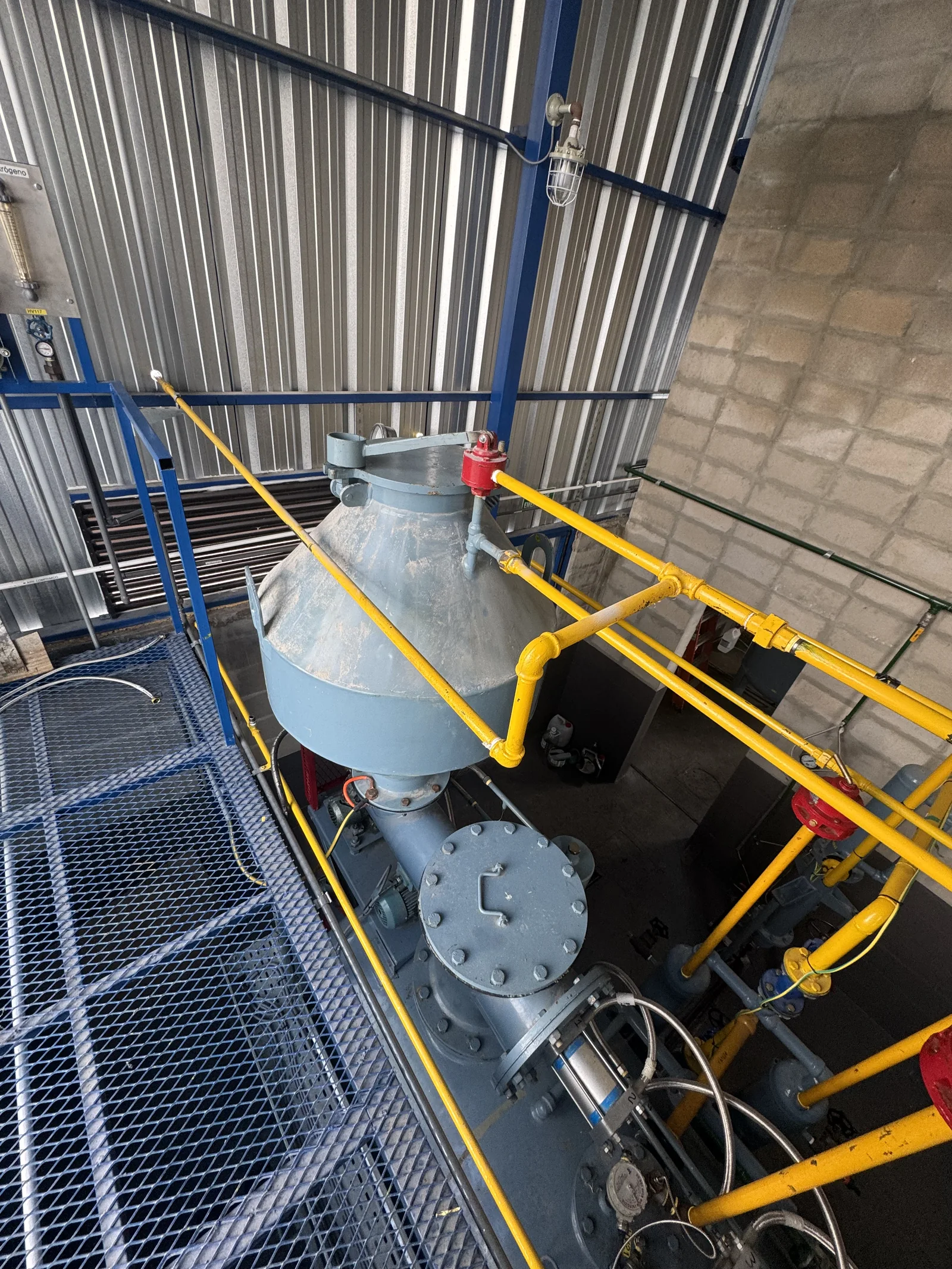
- Standard models
- KIGL-DA-25
- Sizing basis
- Steady daily output across the shift actually worked
- Generation pressure band
- 0.2
- Maximum gas temperature
- 70 °C
- Carbide granulometry
- 4
Start from what you actually fill
The number that sizes an acetylene plant is not the one people usually quote. It is not the busiest week last year, and it is not what the works might need one day.
It is steady daily output across the hours you genuinely run.
That distinction is the whole guide. Almost every badly sized plant we are asked to look at was sized against a peak that occurs a few times a year, and the owner is then carrying a machine, a licence and an operator for a demand that arrives on a handful of days.
The conversion
- Cylinders filled in a normal day — from your own records, not an estimate
- × gas per cylinder — giving total cubic metres per day
- ÷ hours actually run — the shift you work, not the hours the gate is open
- + a margin for filling and purge losses
That gives cubic metres per hour, which is the unit a generator is rated in. Sizing exactly to the calculated figure leaves nothing for the day something takes longer than it should.
Step three is where the arithmetic usually goes wrong. A plant that is nominally available twelve hours a day is not generating for twelve hours: carbide changeovers, hopper refills, slurry discharge and the settling time cylinders need after filling all come out of that window. Use the hours the generator is actually making gas, which is a number your logbook knows and your memory does not.
Where the standard draws its lines
IS 8471 classifies generators by capacity, and the boundaries are worth knowing before you talk to anyone, because they change which rules apply to your installation rather than merely which machine you buy.
Portable generators are capped — limited output, and a limited carbide holding capacity. Above that a generator is stationary, and stationary machines divide again into small and large at 5 m³/h. Every plant in the KIGL-DA range is a large stationary generator by that definition, which is the category most industrial users land in as soon as they are filling seriously.
The standard also rules a whole design out. Displacement-type generators, where acetylene is made by intermittent contact between water and carbide suspended in a basket, are stated not to be considered satisfactory. If one is offered to you at an attractive price, that is the clause to ask about.
Why oversizing is the expensive mistake
A plant sized to the peak spends most of the year idle, while carrying:
- the capital
- the maintenance regime
- the licence and inspection burden
- the operator time
- the floor space
None of that scales down when the plant is doing nothing. Size to steady demand and cover peaks from cylinder stock, which is exactly what stock is for.
There is a second cost that is easier to miss. A generator run far below its rated output cycles more and sits idle longer between cycles, and an acetylene plant does not enjoy sitting idle: slurry settles, the agitator has to be timer-driven to stop it seizing, and a machine that is rarely at working temperature gets its condensate and drying stages neglected because nothing appears to be wrong. An oversized plant is not simply an expensive plant; it is a harder plant to keep in good order.
What has to keep up
A generator is not the whole plant, and the rest of the chain has to match it:
| Element | Question |
|---|---|
| Carbide supply and storage | Can you hold and feed enough, graded 4–50 mm? |
| Water supply | Available at 1.5 × operating pressure, continuously? |
| Power | Sized for the compressor, not just the generator? |
| Purification and drying | Rated for the higher throughput? |
| Filling capacity | Can the bay actually package what the generator makes? |
| Cylinder stock | Enough cylinders in circulation to absorb the output? |
A generator larger than the filling bay behind it makes gas nobody can package. It is a common and frustrating way to spend capital, and it is invisible until commissioning.
The one most often forgotten is the last. Cylinders are not a consumable but a circulating asset: every cylinder is either being filled, in stock, with a customer, or coming back. Raise output without raising the fleet and the plant simply waits for empties.
Carbide grading changes what you get
Material graded 4 to 50 mm reacts predictably. Outside that band:
- Fines react too fast, spiking pressure and temperature
- Oversized lumps react incompletely, so carbide leaves in the slurry and yield falls
Poor grading makes a correctly sized plant behave like an undersized one, and since carbide dominates production cost, it shows up in the cost per cubic metre as well as in the output.
The tell is in the slurry. Unreacted carbide leaving with the discharge is carbide you bought, paid to handle, and never turned into gas. If consumption per cylinder is creeping up while output holds, look at the grading and at the agitator before you look at the generator.
If you have undersized
The generator gets pushed toward the top of its band, which means pressure approaching 0.92 kg/cm²g and temperature approaching 70 °C. Neither is a place to operate continuously.
Both of those are KIGL's own operating limits, and both sit below what the standard permits. IS 8471 caps gas at the generator outlet at 75 °C, and any external part of the machine at 80 °C at 130 % of rated capacity. Running against our limit therefore still leaves margin against the standard's, which is the point of setting it there. It is not margin to be spent.
The answer to being short of gas is never to raise the setpoint. The full operating envelope is on acetylene plant operation and maintenance.
Which model
KIGL builds three standard machines — KIGL-DA-25, KIGL-DA-50 and KIGL-DA-100 — and the choice follows the numbers rather than a preference.
Tell us cylinders per day, hours run, cylinder size, and how much the demand varies, and we will tell you which one fits. We will also tell you if the answer is that a plant is not warranted yet. Below a certain steady demand, buying cylinders remains cheaper, and that is a conversation worth having before the capital is committed rather than after.
Sizing an acetylene plant against real demand — frequently asked questions
How do I convert cylinders per day into plant capacity?
Take the cylinders you actually fill in a normal day, multiply by the gas each holds, and divide by the hours you genuinely run — not the hours the works is open. That gives cubic metres per hour, which is the number a plant is rated in. Then add a margin for filling and purge losses rather than sizing exactly to the calculation.
Should I size for my busiest month?
No, and this is the expensive mistake. A plant sized to the peak idles for most of the year while carrying its full capital, maintenance and licensing cost. Size to steady demand and cover peaks from cylinder stock, which is what stock is for.
What else has to keep up with the plant?
Carbide supply and storage, water supply at 1.5 times operating pressure, power, cylinder stock, and the filling capacity to actually put the gas into cylinders. A generator larger than the filling bay behind it produces gas nobody can package, which is a common and frustrating way to waste capital.
Does carbide grading affect the plant I need?
It affects what the plant delivers. Material graded 4 to 50 mm reacts predictably. Fines react too quickly and spike pressure and temperature; oversized lumps react incompletely and leave carbide in the slurry, so yield falls. Poor grading makes a correctly sized plant behave like an undersized one.
What happens if I undersize?
You run the generator harder than its band, which pushes pressure and temperature toward their limits — 0.92 kg/cm²g and 70 °C — and that is not a place to operate continuously. The correct response to being short of gas is never to raise the setpoint.
Which model should I choose?
That depends on the numbers above rather than on a preference. Tell us cylinders per day, hours run, cylinder size and how much the demand varies, and we will say which of the three fits — and whether a plant is warranted at all, since below a certain steady demand cylinder supply remains cheaper.
Enquiries
Request a quotation
State the gas or equipment, the quantity or capacity, and your location. KIGL will confirm the grade, the cylinder or plant size, and whether the location can be served from Noonmati, or through our agent network.