
Guide
Buying acetylene: what to check before you accept the cylinder
Before accepting an acetylene cylinder, check five things: the shoulder stamping and test date, the tare weight against the delivered weight, the valve and thread condition, the paint and label, and the test certificate. Retest is every 2 years; a cylinder out of test or short of acetone is one you should not sign for.
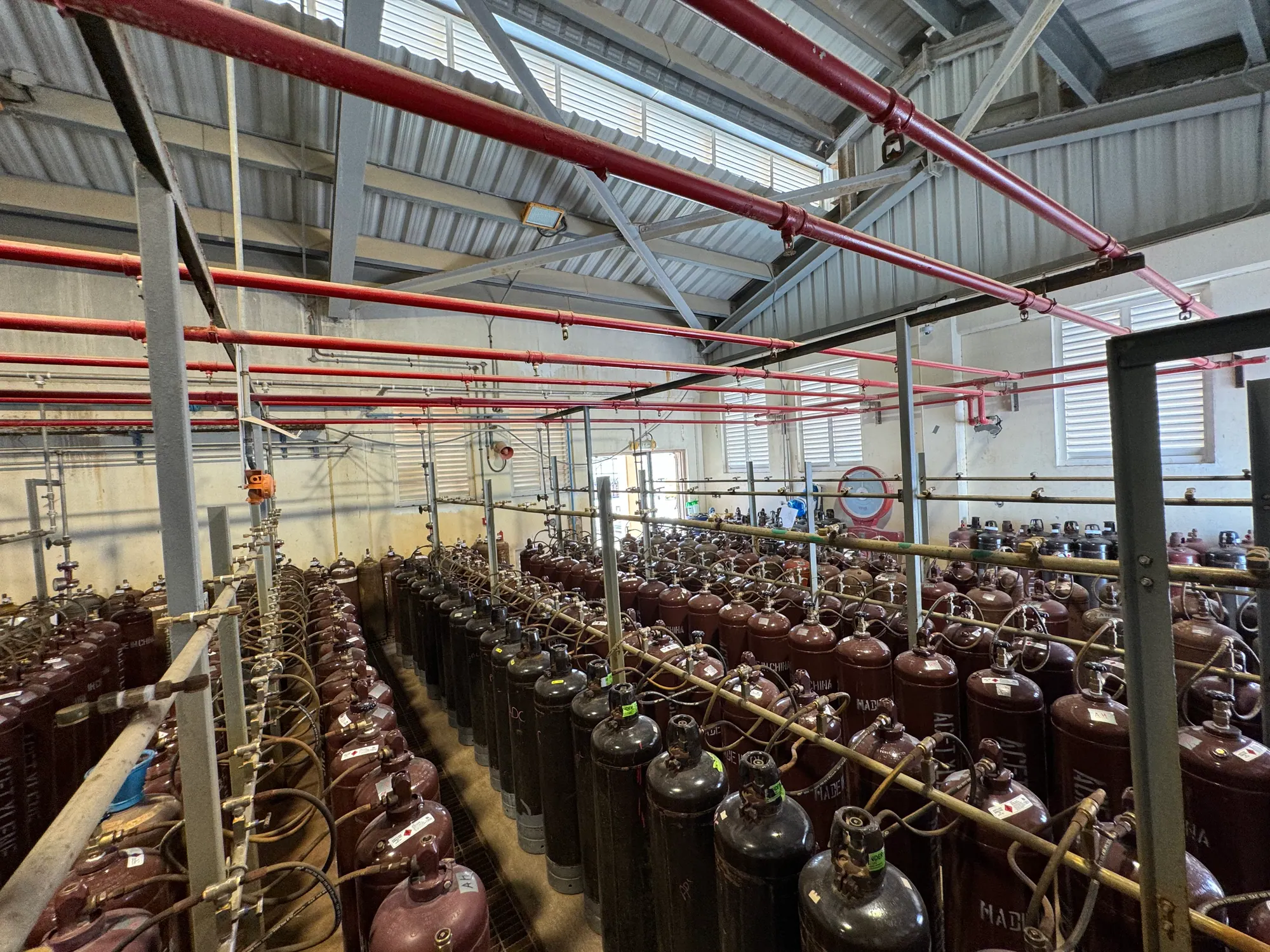
- Retest interval to check
- 2 years
- Contents verified by
- Weight against the stamped tare
- Minimum purity to expect
- ≥98 % C₂H₂ to IS 308
- Identifying colour
- Maroon
- What a certificate should carry
- Measured values and the method
Five things, before you sign
An acetylene cylinder arrives on a truck and somebody signs for it, usually quickly. These five checks take under a minute and are the difference between a good fleet and somebody else's problem.
1. The shoulder stamping and test date
Dissolved acetylene cylinders are inspected on a two-year cycle in group practice. The procedure comes from IS 8433, which is itself drawn from ISO 10462, the international standard for acetylene cylinder periodic inspection — so a supplier following it is following international practice, not a local shortcut. The interval itself is set by the Gas Cylinders Rules, not by IS 8433 — not the five years that applies to compressed gases.
That interval is shorter because the inspection covers the porous mass and the acetone charge as well as the steel, as set out on IS 7312.
If the date has passed, do not accept the cylinder. A supplier delivering out-of-test acetylene is telling you how the rest of their fleet is managed.
2. The weight, against the tare
The gauge cannot tell you what is in the cylinder — it reads the vapour pressure of the acetone, which stays roughly constant regardless of contents.
Subtract the stamped tare weight from the delivered weight. That difference is your acetylene.
Do this on a sample of deliveries and keep the figures. If they run consistently short, you have something concrete to raise rather than an impression.
3. The valve and thread
- Thread undamaged
- Correct left-hand fuel-gas thread
- Valve turns freely without excessive force
- No evidence an adaptor has been fitted
Damaged threads and improvised adaptors are the clearest sign of a cylinder fleet being handled badly somewhere upstream, and they travel.
4. Paint, label and identification
Acetylene is maroon under IS 4379.
A cylinder that has been overpainted, has an obscured band, or carries stamped markings that disagree with its colour is a cylinder whose identity is in doubt. Do not work out which one to believe. Quarantine it and send it back.
5. The certificate
Ask for the batch test certificate, and then read what it actually says.
| A certificate worth having | A certificate worth nothing |
|---|---|
| States measured purity | Restates ≥98 % from IS 308 |
| Names the method used | Names no method |
| Gives impurity levels found | Gives the standard's limits |
| Identifies the batch | Generic, undated |
This single distinction tells you more about a supplier than any amount of sales conversation.
Three questions worth asking any acetylene supplier
"Where is this filled, and do you fill it yourselves?"
Many sellers of acetylene in India are distributors. That is not disqualifying, but you should know whether the person you can call has any control over the gas.
"Can I have the batch test certificate?"
And then: does it carry measurements?
"What is the purification train, and when was it last serviced?"
Phosphine and hydrogen sulphide come from the calcium carbide and are removed by purification. Tired purifiers keep producing gas that looks normal and quietly carry more of both into cylinders. The damage lands on your equipment, not theirs — which is exactly why it goes unnoticed for so long.
A supplier who answers all three straightforwardly is unusual. Keep them.
What KIGL does
Dissolved acetylene is filled at our own Guwahati works to IS 308, into cylinders built and requalified to IS 7312 and IS 8433.
We also build the plants that generate acetylene, which means the purification train that determines your gas quality is equipment we design as well as run. When something is wrong with your gas, the person answering has stood in front of the generator that made it.
Buying acetylene — frequently asked questions
What is the single most important thing to check?
The test date stamped on the shoulder. Dissolved acetylene cylinders are inspected on a two-year cycle in group practice, against five for ordinary compressed gases — the interval is set by the Gas Cylinders Rules, while IS 8433 sets the inspection procedure. An out-of-test acetylene cylinder is a serious matter, because that inspection covers the porous mass and the acetone charge, and because the mass makes an ordinary pressure test of the shell impossible. If the date has passed, do not accept it.
How do I know I have received the gas I paid for?
Weigh it. The pressure gauge reads the vapour pressure of the acetone and cannot tell you the contents. Subtract the tare weight stamped on the shoulder from the delivered weight and you have the acetylene. If that figure is consistently short across deliveries, you have a supplier problem worth raising.
What should a test certificate actually say?
Measured values and the method used to obtain them. A certificate stating purity and impurity levels actually determined is evidence. One that restates the limits from IS 308 without a single measurement is a formality with a letterhead. The difference tells you a great deal before you ever have a problem.
What should I check on the valve?
That the thread is undamaged, that it is the correct left-hand fuel-gas thread, that the valve turns freely without excessive force, and that there is no evidence of an adaptor having been fitted. Damaged threads and improvised adaptors are the clearest sign of a fleet being handled badly somewhere upstream.
Does the paint condition matter?
More than it looks. Maroon identifies the cylinder under IS 4379, and a cylinder that has been overpainted, has an obscured band, or carries markings that disagree with its colour is a cylinder whose identity is in doubt. Quarantine it and return it rather than working out which marking to believe.
What questions separate a good supplier from a poor one?
Ask where the gas is filled and whether they fill it themselves. Ask for the batch test certificate and see whether it carries measurements. Ask what the purification train is and when it was last serviced. A supplier who answers all three straightforwardly is unusual, and worth keeping.
Enquiries
Request a quotation
State the gas or equipment, the quantity or capacity, and your location. KIGL will confirm the grade, the cylinder or plant size, and whether the location can be served from Noonmati, or through our agent network.