
Equipment
Acetylene purification systems — purifier, driers and scrubber that bring generator gas to IS 308
An acetylene purification system removes phosphine, hydrogen sulphide, ammonia and moisture from generator gas. KIGL's train — cooler-condenser, low-pressure drier, chemical purifier, scrubber and high-pressure drier — brings the gas inside the IS 308:2024 limits of 0.01 % PH₃ and 0.02 % H₂S. Fitted to every KIGL-DA plant; sized for other plants from drawings.
- IS 308 : 2024
- Output specification
- ≤0.01 % v/v
- Phosphine limit met
- ≤0.02 % v/v
- Hydrogen sulphide limit met
- Cooler-condenser
- Purification stages
- 400 kg purifying mass
- Purifier charge, KIGL-DA-70 class
What an acetylene purification system does
Gas leaving a carbide generator is hot, wet, and carries whatever the carbide brought with it. Calcium phosphide and calcium sulphide in the carbide react with water exactly as the carbide does, and the result is phosphine and hydrogen sulphide in the acetylene. Neither is wanted in a cylinder. Both are toxic, both attack the brass in regulators and valves, and both corrode steel cylinders from the inside over years of refilling.
IS 308 : 2024 caps phosphine at 0.01 % by volume and hydrogen sulphide at 0.02 % by volume in dissolved acetylene. The purification system is the part of an acetylene gas plant that gets the gas under those caps and keeps it there.
The five stages between generator and compressor
- Cooler-condenser. Gas leaves the generator at up to 70 °C, saturated with water. The condenser drops the temperature and knocks out the bulk of the moisture as liquid.
- Low-pressure drier. A calcium chloride bed takes out the water the condenser could not. Dry gas is what the purifier needs; a wet purifying mass goes soggy, its pressure drop climbs, and it stops working.
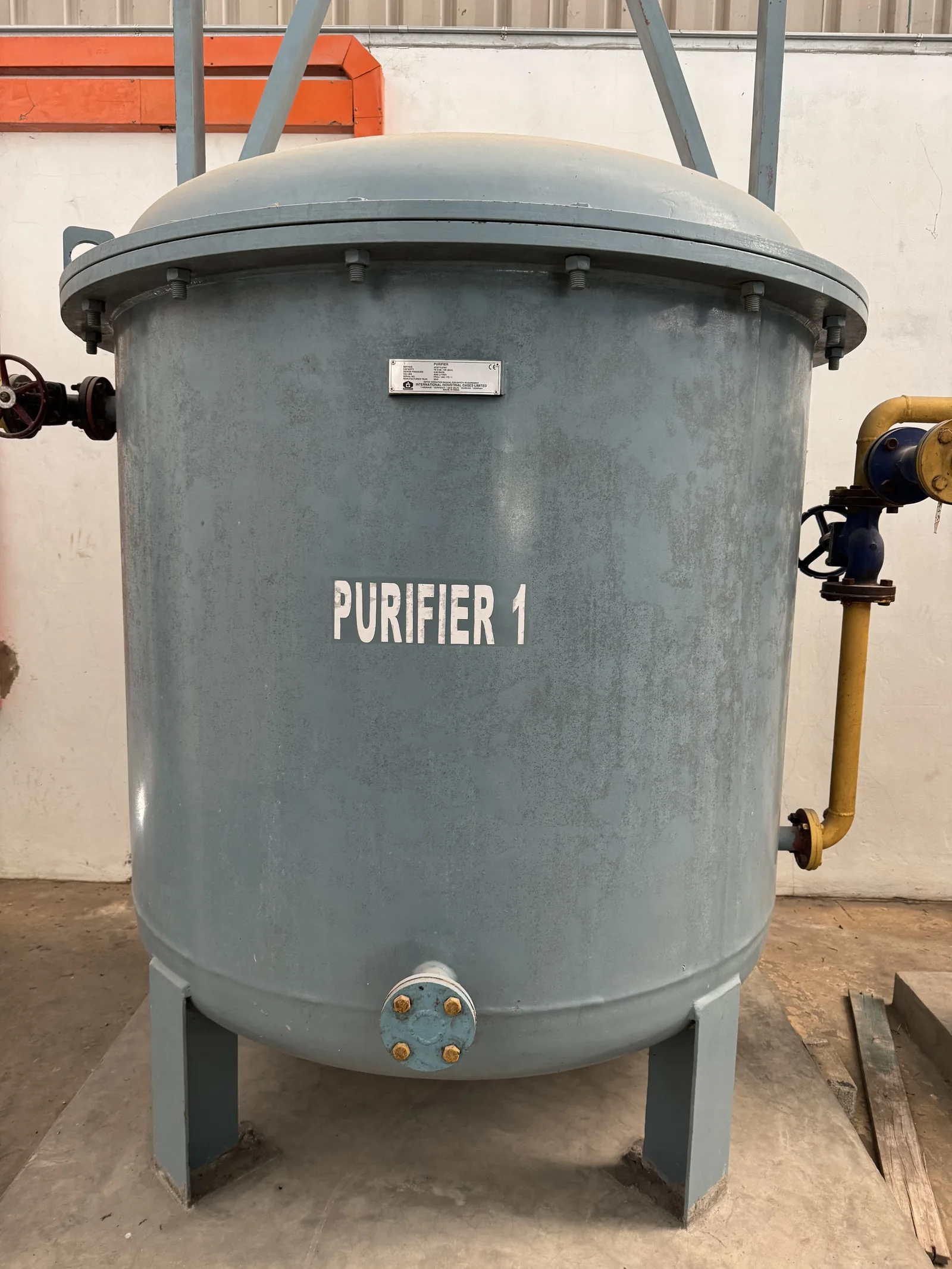
- Chemical purifier. The gas passes up through a vessel charged with purifying mass. The mass oxidises phosphine and hydrogen sulphide to solid phosphate and sulphate, which stay in the bed. A KIGL-DA-70 class plant carries a 400 kg charge.
- Scrubber. A wet clean-up stage downstream of the purifier catches any acid traces the mass releases, and gives a final wash before compression.
- High-pressure drier. After the acetylene compressor, a second calcium chloride bed polishes the gas to the dryness the cylinder needs. Water that reaches the cylinder dilutes the acetone and slowly reduces how much gas the cylinder can hold.
Every vessel is built without copper or high-copper alloys in contact with the gas, because acetylene forms explosive acetylides with copper. Purging is with nitrogen only, as IS 14814 requires.
Why purification decides the quality of your acetylene
Two plants with the same generator can fill very different gas. The difference is almost always the purifier: its size against throughput, the condition of its charge, and whether the gas reaching it is dry.
An undersized or exhausted purifier lets phosphine through. The first sign is usually a customer complaint about a regulator seizing or a cylinder valve corroding; the second is weld metal picking up phosphorus. By then the plant has filled hundreds of cylinders out of specification.
KIGL sizes the purifier against the plant's rated output with margin, and the operating manual that ships with every plant gives the batch-test schedule and the regeneration point. The test is the silver nitrate method that IS 308 itself specifies, so what you measure at the manifold is what an inspector would measure.
Safe handling
The purification stage is compromised in service more often than any other part of an acetylene plant, and in the same ways each time.
What goes wrong with purifiers in service
- The purifier bypassed Usually because it flooded, and bypassing it let the plant keep running. Every cylinder filled since then carries whatever phosphine the carbide brought in.
- Water flooding the purifier Usually a missing check valve ahead of the scrubber, so water runs back into the purifying mass and turns it to sludge. The fix is a valve; the damage is a season of out-of-specification gas.
- A purifier rated below the generator A single purifier sized for a smaller plant, overloaded from the day the generator is uprated. Throughput is the sizing basis, not the vessel that happened to be available.
- The low-pressure drier choked Operating rule from the manual: keep the drier bypass about a quarter open at all times, so the bed cannot over-pressurise or choke the gas path.
- The high-pressure drier with no drain A missing terminal drain valve or inclined drain line means water sits in the bed. The manual's own warning is that a void in the drier bed is an explosion risk, and water that passes through goes into the cylinders' acetone.
- No test Plants that never run the silver nitrate test have no way of knowing when the charge is spent, and change it by the calendar or not at all.
Each of these is a maintenance-of-design failure, not a design defect. KIGL's operating manual gives the test, the regeneration point and the drain schedule that keep the train working, and KIGL supplies the check valves, drains and driers that a plant found without them needs.
Purification and the three acetylene grades
The standard train described here produces industrial acetylene gas at ≥98 %, the grade used for cutting, welding and flame heating. It removes the named impurities, not the inert gases. Nitrogen, oxygen and small amounts of methane and hydrogen arrive with the carbide and the generator water and pass straight through a chemical purifier.
The 99 % high purity and 99.99 % ultra-high-purity grades go further. Both pass through KIGL's own purification system, designed and manufactured in-house in India, which takes phosphine and hydrogen sulphide down to parts-per-million levels rather than merely inside the IS 308 maxima of 100 ppm and 200 ppm. Both are dissolved in DMF rather than acetone, so less solvent leaves the cylinder with the gas. The acetylene grades guide sets out which grade which application needs.
Acetylene purification systems for existing plants
Every KIGL-DA plant ships with its purification train as part of the plant. The same purifier, driers and scrubber are supplied for acetylene plants KIGL did not build, and the process starts with the drawings. We review the plant's schematics end to end, from the generator through cooling, drying, compression and filling, so that the purification stage is sized against the gas that actually reaches it rather than against a nameplate. Then we specify the train, match it to the existing pipework, and supply, erect and commission it.
This is how KIGL approaches every plant enquiry: as an end-to-end solution for the works, not as a part number. Send the plant's drawings, its rated capacity and, if you have one, a recent gas analysis, and we will tell you what the gas needs and what it will take.
Purification designed and built in India
The purification system KIGL supplies is its own design, manufactured in-house in India rather than bought in as a package and badged. That matters in three practical ways.
It can be sized to your plant rather than to a catalogue
A purifier is specified against throughput, carbide grade and the gas that actually reaches it, and a design we own is one we can change.
Spares come from the people who made it
A proprietary unit from an importer is a long lead time and a freight bill. Ours are made at the works that designed them.
It is proven on our own gas
The same purification KIGL sells is the purification that produces its 99 % high purity and 99.99 % ultra-high-purity acetylene, with phosphine and hydrogen sulphide held to parts-per-million levels. We are the first customer of our own equipment.
Acetylene purification systems, filled and despatched from our own works.
Guwahati works · agent network
Why KIGL
Why buy an acetylene purification system from KIGL
Because we run them. KIGL fills dissolved acetylene daily at its own Guwahati works through the same purification train it sells, and has built acetylene plant since 1947. The family has sat on the Bureau of Indian Standards committees that draft the acetylene standards, including the IS 308 limits this equipment exists to meet. When a purifier question comes in, it reaches someone who has recharged one.
Specification
Acetylene purification systems — full specification
| Property | Value | Basis |
|---|---|---|
| Output specification | IS 308 : 2024 (Dissolved Acetylene) | Bureau of Indian Standards |
| Phosphine limit met | ≤0.01 % v/v (100 ppm) as PH₃ | IS 308 : 2024, Table 1 |
| Hydrogen sulphide limit met | ≤0.02 % v/v (200 ppm) as H₂S | IS 308 : 2024, Table 1 |
| Purification stages | Cooler-condenser, LP drier, chemical purifier, scrubber, HP drier | KIGL-DA series operating manual |
| Purifier charge, KIGL-DA-70 class | 400 kg purifying mass | KIGL-DA series operating manual |
| Drying medium | Calcium chloride, two stages | KIGL-DA series operating manual |
| Purge medium | Nitrogen only — never air | IS 14814 |
| Impurities removed | PH₃, H₂S, NH₃, AsH₃ traces, moisture | Chemical purifier and driers |
| Phosphine in product gas | ≤0.01 % v/v | IS 308 : 2024, silver nitrate method |
| Hydrogen sulphide in product gas | ≤0.02 % v/v | IS 308 : 2024, silver nitrate method |
| Low-pressure drying | Calcium chloride bed, before the compressor | KIGL-DA operating manual |
| High-pressure drying | Calcium chloride bed, after the compressor | KIGL-DA operating manual |
| Purifier regeneration | In situ, air regeneration between charges | KIGL-DA operating manual |
| Materials in contact with gas | No copper or high-copper alloys | IS 14814 |
| Fitted to | KIGL-DA-25, DA-50 and DA-100 plants; other plants after review of their schematics | KIGL product range |
Questions
Acetylene purification systems — frequently asked questions
Why does acetylene need purification at all?
Because the calcium carbide it is made from is not pure. Calcium phosphide and calcium sulphide in the carbide react with water alongside the carbide itself and give phosphine and hydrogen sulphide in the gas. Both are toxic, both corrode brass and steel in cylinders and regulators, and both carry into weld metal. IS 308 caps them, and the purifier is what gets the gas under the cap.
What does an acetylene purifier actually remove?
Phosphine (PH₃) is the main target, followed by hydrogen sulphide (H₂S), with ammonia and traces of arsine behind them. In a wet carbide-to-water generator most of the ammonia and sulphur are already washed into the lime slurry, so the purifier's real job is phosphine. Moisture is handled separately by the two drier stages.
How do I know the purifier is still working?
Test the gas, not the calendar. IS 308 gives the silver nitrate method for phosphine and hydrogen sulphide, and a batch check at the filling manifold tells you whether the purifying mass is exhausted. A rising reading at steady throughput means the charge is spent. KIGL's operating manual gives the regeneration schedule and the point at which the mass is replaced.
Can KIGL supply a purification system for a plant it did not build?
Yes. We first check the plant's schematics end to end — generator type, rated output, the existing cooling, drying and compression stages, and a recent gas analysis if you have one — and then size the purifier, driers and scrubber against that plant rather than against a catalogue. The connections are matched to your existing pipework. KIGL supplies the complete train, not a vessel on its own.
Does purification raise the purity of the gas?
It removes the named impurities rather than the inerts. Nitrogen, oxygen and a little methane and hydrogen come in with the carbide and the generator water and pass straight through a chemical purifier. Industrial dissolved acetylene after purification is sold at ≥98 %; the 99 % and 99.99 % grades need further treatment beyond the standard train.
Why is the purifier purged with nitrogen and not air?
Acetylene forms a flammable mixture with air from 2.5 % to 82 %, so purging with air can make an explosive atmosphere inside the very vessel being cleaned. Nitrogen displaces the acetylene without forming a combustible mixture. The purifier is regenerated with air only after it has been fully purged of acetylene with nitrogen.
Read next
Enquiries
Request a quotation for acetylene purification systems
State the gas or equipment, the quantity or capacity, and your location. KIGL will confirm the grade, the cylinder or plant size, and whether the location can be served from Noonmati, or through our agent network.