
Gases
High purity acetylene at 99 % — the grade between industrial and analytical
High purity acetylene is KIGL’s 99 % grade, sitting between industrial dissolved acetylene at 98 % to IS 308 and ultra-high-purity acetylene at 99.99 % in DMF. It exists for work where industrial gas is not clean enough but analytical grade is more than the application needs. Made in India since 1947.
₹600 – ₹800 per Nm³ Indicative. Your quotation is the figure that counts — price moves with quantity, cylinder size, contract term and delivery.
- 99 % C₂H₂
- Purity
- Between industrial DA
- Position in the range
- IS 7312
- Cylinder standard
- UN 1001
- UN number
- Maroon
- Cylinder colour
Where this grade sits
KIGL makes acetylene in three grades:
| Grade | Purity | Solvent | Typical use |
|---|---|---|---|
| Industrial dissolved acetylene | 98 % (IS 308) | Acetone | Cutting, welding, brazing, flame heating |
| High purity | 99 % | — | Work needing cleaner gas than industrial grade |
| Ultra-high purity | 99.99 % | DMF | Atomic absorption spectroscopy, analytical work |
Most acetylene sold in India is the industrial grade, and for most work that is the right answer. The analytical grade exists for instruments. This grade exists for the gap between them: where industrial gas is causing a measurable problem, but a laboratory specification is more than the job needs and more than it should cost.
What purity actually buys you
With acetylene, the headline percentage is the least interesting number.
Industrial dissolved acetylene is made from calcium carbide, and the carbide brings phosphine and hydrogen sulphide through with the gas. Those two impurities are what cause the practical problems: deposits on the work, a flame that will not sit still, contamination of anything sensitive downstream. The difference between grades is mostly the difference in those contaminants, not the 1 % of headline purity.
That is why the ultra-high-purity grade is specified on its phosphine and hydrogen sulphide limits rather than on its purity alone, and why the grade is specified against the fault observed rather than selected from a list.
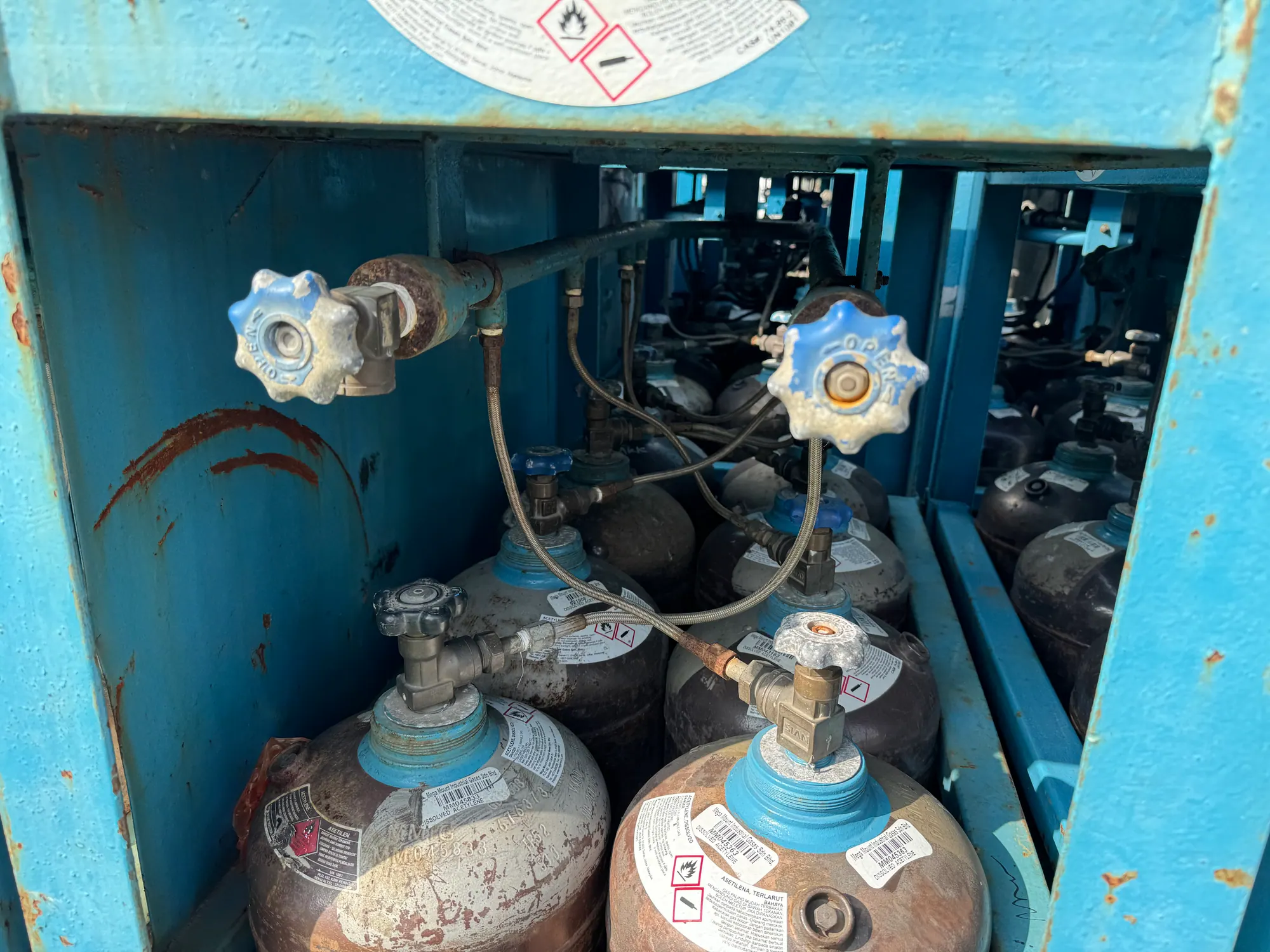
An acetylene cylinder cascade, manifolded to a single regulated take-off
Guwahati works · agent network
Safe handling
Purity changes what comes out of the cylinder. It changes nothing about how you handle it.
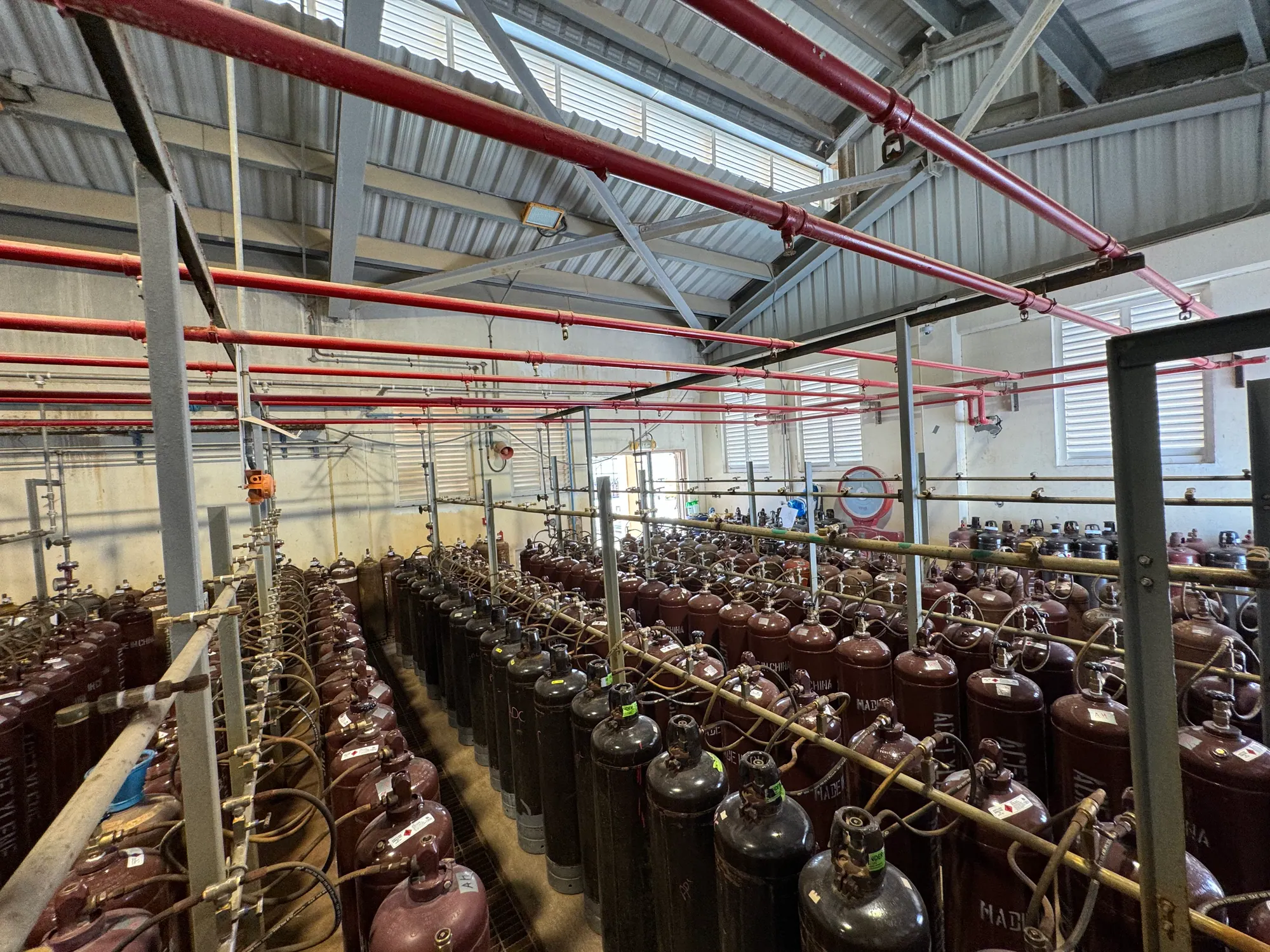
All acetylene is dissolved — held in solution in a solvent, absorbed into a porous mass filling the cylinder, because acetylene decomposes explosively under pressure with no oxidant present at all. There is no compressed acetylene and no liquid acetylene, at any purity, from anyone.
So the rules do not move:
Everything about handling is the same
- Upright, in storage, transport and use. A cylinder that has been horizontal stands for an hour before use.
- Open the valve slowly. Never crack it to blow out dust.
- Flashback arrestors and non-return valves at both the regulator and the torch.
- No oil, no grease, anywhere in the system.
- No copper or high-copper alloys — acetylene forms explosive copper acetylides.
- Do not over-draw. Exceeding the safe withdrawal rate pulls solvent out with the gas. Where a high continuous rate is needed, use a cascade rather than a bigger cylinder.
Full hazard information is in the acetylene safety data sheet, and the regulatory picture is on acetylene standards.
The cylinder will not tell you the grade
Every acetylene cylinder in India is maroon under IS 4379:1981, whatever grade is inside. Colour identifies the gas. It has never identified the grade, and it never will.
If your process is purity-sensitive, that matters more than it sounds. Two maroon cylinders standing side by side can be 98 % and 99 % gas, and nothing about the paint distinguishes them. Read the label, keep the delivery documentation, and do not let grades mix in an uncontrolled store.
High purity acetylene cylinder sizes and supply across India
Filled at our own works in Guwahati (Assam), in cylinders and cascades, and supplied beyond its delivery radius through a network of agents across Uttar Pradesh, Madhya Pradesh, West Bengal, Assam, Odisha and other states. We have manufactured acetylene since 1947 and we build the plants that generate it, which means when you tell us the problem you are having with your current gas, you are talking to someone who knows where in the process it came from.
Enquiries are specified against the application and the fault observed. Contact KIGL.
Specification
High purity acetylene — full specification
| Property | Value | Basis |
|---|---|---|
| Purity | 99 % v/v | KIGL product specification |
| Position in the range | Between industrial DA (98 %, IS 308) and UHP (99.99 %, DMF) | KIGL product range |
| Cylinder standard | IS 7312 | Dissolved acetylene cylinders |
| UN number | UN 1001 | ADR 2025 |
| Cylinder colour | Maroon | IS 4379:1981 |
| Filling stations | Guwahati works, and a network of agents | KIGL |
| Chemical formula | C₂H₂ | — |
Documents
High purity acetylene — safety and technical documentation
Questions
High purity acetylene — frequently asked questions
When should I choose 99 % over industrial 98 %?
When the contamination in industrial grade is causing you a problem you can measure — a flame that will not hold, deposits on the work, or a downstream instrument drifting — but you do not need analytical-grade gas. KIGL specifies against the stated application and the fault observed, which is a sounder basis than the gas you have. That is a better basis for the decision than a number on a page.
What is the difference between this and ultra-high-purity acetylene?
Ultra-high-purity acetylene is 99.99 % and is dissolved in DMF rather than acetone, in dedicated cylinders that never see industrial service, with phosphine and hydrogen sulphide cut to single-digit ppm and a certificate of analysis for each batch. It is built for atomic absorption spectroscopy. If you are running an instrument, that is the grade you want.
Is it still dissolved acetylene?
Yes. Every acetylene grade is dissolved in a solvent held in a porous mass, because acetylene decomposes explosively under pressure with no oxidant present at all. There is no such thing as compressed or liquid acetylene at any purity. The handling rules are identical across all three grades — upright, no copper, no oil, arrestors fitted, do not over-draw.
Does the cylinder look any different?
No. All acetylene cylinders are maroon under IS 4379, whatever the grade inside. Colour identifies the gas, never the grade. If your process is purity-sensitive, the paint will never tell you what you need to know — the label and the batch documentation will.
Can I use my existing acetylene equipment with it?
Yes. Regulators, hoses, flashback arrestors and torches rated for dissolved acetylene are rated for this grade too. What changes with purity is what comes out of the cylinder, not what it connects to. Keep the same discipline: acetylene-rated equipment throughout, no copper, no oil or grease, and arrestors at both the regulator and the torch.
How do I know I actually received 99 % gas?
Ask for the documentation with the delivery and keep it with your batch records. This is a reasonable thing to ask any gas supplier for, and a supplier who cannot produce it is telling you something. It matters more here than on industrial grade, because a purity you are paying extra for is a purity you should be able to evidence.
Read next
Enquiries
Request a quotation for high purity acetylene
State the gas or equipment, the quantity or capacity, and your location. KIGL will confirm the grade, the cylinder or plant size, and whether the location can be served from Noonmati, or through our agent network.