
Guide
What acetylene is used for and why nothing else does the same job
Acetylene burns at around 3,100 °C in oxygen, the highest flame temperature of any common fuel gas. That heat, concentrated in a small cone, is why it is chosen for oxy-fuel cutting, welding, brazing, flame hardening, hardfacing and thermal spraying. At 99.99 % purity it also fuels atomic absorption spectroscopy.
- Flame temperature with oxygen
- ≈3
- Specification
- IS 308
- Free acetylene at the point of use
- 0.62 bar g
- Flammability range in air
- 2.5 % to 82 %
- Analytical grade
- 99.99 % in DMF
One property explains all of it
Acetylene burns at roughly 3,100 °C in oxygen, the highest flame temperature of any common industrial fuel gas. Just as important, the acetylene primary cone is short and sharply defined, so the heat arrives concentrated in a small zone rather than spread across the workpiece.
Hot and tight. Every application below follows from those two words.
Welding, cutting and joining
Oxy-acetylene welding and brazing
The flame is the heat source, so no electricity is required. That keeps oxy-acetylene in daily use for repair work, site work, thin section, and anywhere a power supply is inconvenient.
Profile and plate cutting
The concentrated cone brings steel to ignition temperature faster than a cooler flame, so pierce time is shorter and the heat-affected zone narrower. In profile cutting, where a single job may involve dozens of pierces, that difference decides the economics, which is why acetylene holds its ground against gases that are cheaper per cubic metre.
Gouging and scarfing
Removing weld defects and surface material without cutting through.
Flame straightening
Controlled local heating to pull distortion out of a fabrication, which depends entirely on putting heat exactly where it is wanted and nowhere else.
Surface and thermal treatment
- Flame hardening of wear surfaces — gear teeth, rails, shafts
- Hardfacing, depositing a wear-resistant layer
- Thermal spraying of metal and ceramic coatings
- Flame cleaning and descaling before painting or further work
- Carbon coating of moulds and dies
Each needs heat delivered fast to a surface without soaking the part. A cooler flame has to put more total energy into the workpiece to achieve the same surface effect, usually the opposite of what the job wants.
Analysis and chemistry
Atomic absorption spectroscopy. An air–acetylene or nitrous oxide–acetylene flame is the standard atomiser in AAS. This is a different product from the cutting gas: 99.99 %, dissolved in DMF rather than acetone, because acetone carry-over that a torch never notices will appear in the results. See ultra-high-purity acetylene.
Chemical synthesis. Acetylene remains a feedstock in parts of the chemical industry, a legacy of the Reppe chemistry built around it.
Matching the grade to the job
| Grade | Purity | Solvent | For |
|---|---|---|---|
| Industrial dissolved acetylene | ≥98 % (IS 308) | Acetone | Cutting, welding, brazing, flame heating |
| High purity | 99 % | Acetone | Where industrial is not clean enough |
| Ultra high purity | 99.99 % | DMF | AAS and analytical work |
Buying the analytical grade for a cutting torch wastes money. Using industrial grade on an instrument ruins results. If you are unsure which side of that line you are on, tell us what the gas is doing and we will say which grade it needs.
What has to go with it
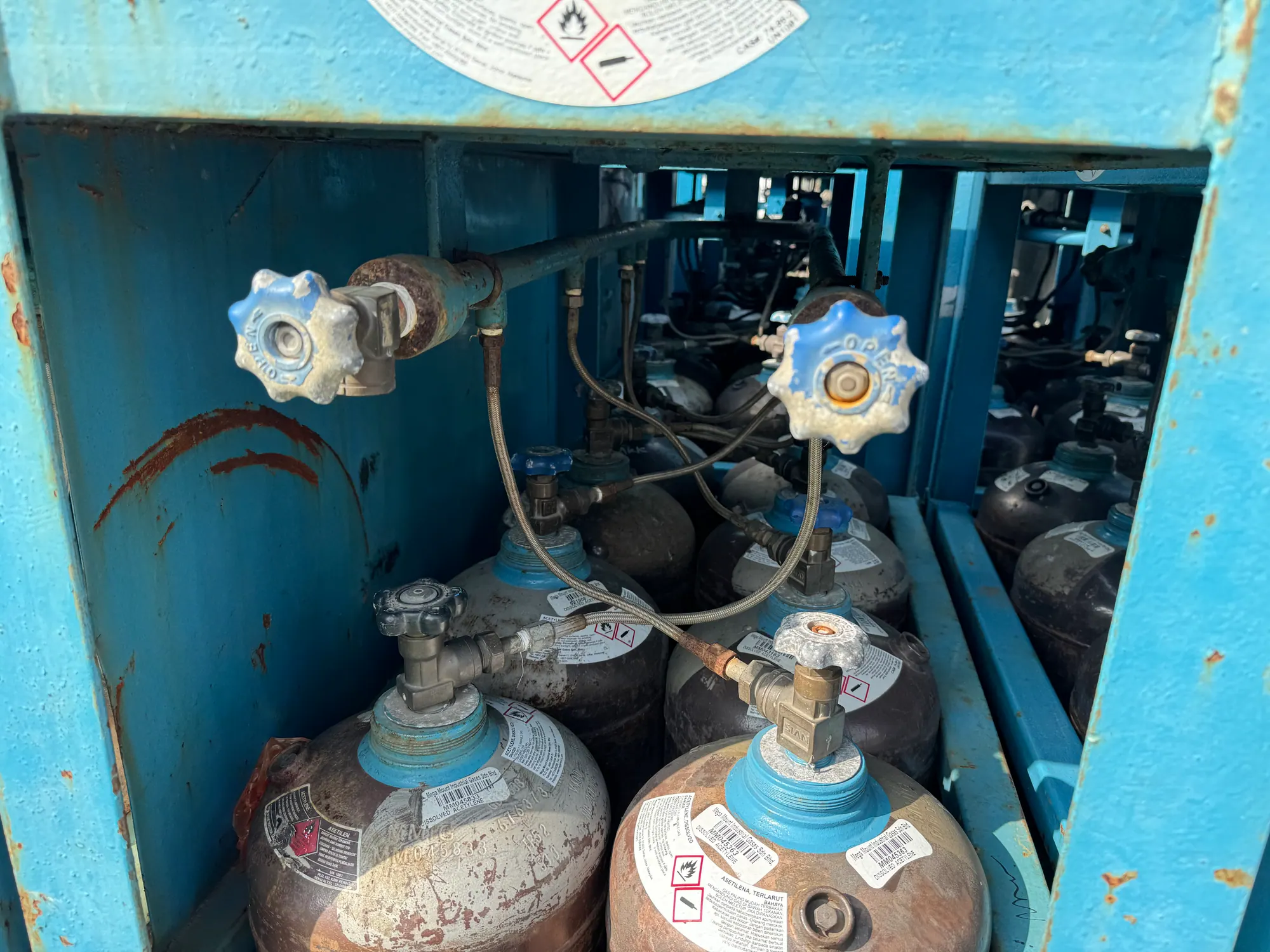
Acetylene is not a gas to run casually. It ignites across a 2.5 % to 82 % range in air, the widest of any common industrial gas, and free acetylene above 0.62 bar g, the normal limit under IS 14814 : 2023, can decompose explosively on its own.
Every installation therefore needs flashback arrestors at the regulator and the torch, acetylene-rated equipment throughout, no copper in contact with the gas, and the handling discipline set out on handling acetylene cylinders.
What acetylene is used — frequently asked questions
Why use acetylene instead of a cheaper fuel gas?
Flame temperature and how the heat is delivered. Around 3,100 °C with oxygen is the hottest common industrial flame, and the acetylene primary cone concentrates that heat into a small, sharply defined zone. Cheaper gases burn cooler and spread the heat, giving slower pierce times and a wider heat-affected zone.
What is acetylene used for in welding?
Oxy-acetylene welding and brazing of steels and alloys, where the flame is the heat source and no electricity is needed. It stays in daily use for repair work, site work, thin section and anywhere power is inconvenient. The same equipment does flame straightening and localised heating.
Why is acetylene preferred for cutting thick plate?
Pierce time. The concentrated primary cone brings steel to ignition temperature faster than a cooler flame, so the cut starts sooner and the heat-affected zone is narrower. In profile cutting, where one job may involve dozens of pierces, that difference dominates the economics even though the gas costs more per cubic metre.
What are the surface-treatment uses?
Flame hardening of wear surfaces, hardfacing, thermal spraying, flame cleaning and descaling, and carbon coating of moulds and dies. All of them need high heat delivered to a surface quickly without soaking the whole part, which is exactly what a hot, tight flame does.
Is acetylene used outside metalworking?
Yes. Ultra-high-purity acetylene at 99.99 %, dissolved in DMF rather than acetone, is the fuel for atomic absorption spectroscopy, and acetylene remains a feedstock in chemical synthesis. The analytical use needs a far cleaner gas than any torch, which is why it is a separate product.
Can I use industrial acetylene in an AAS instrument?
No. Industrial grade to IS 308 is ≥98 % and carries acetone, phosphine and hydrogen sulphide at levels irrelevant to a torch and ruinous to an instrument. Use the ultra-high-purity grade in DMF. Equally, buying analytical grade for a cutting torch simply wastes money.
Enquiries
Request a quotation
State the gas or equipment, the quantity or capacity, and your location. KIGL will confirm the grade, the cylinder or plant size, and whether the location can be served from Noonmati, or through our agent network.