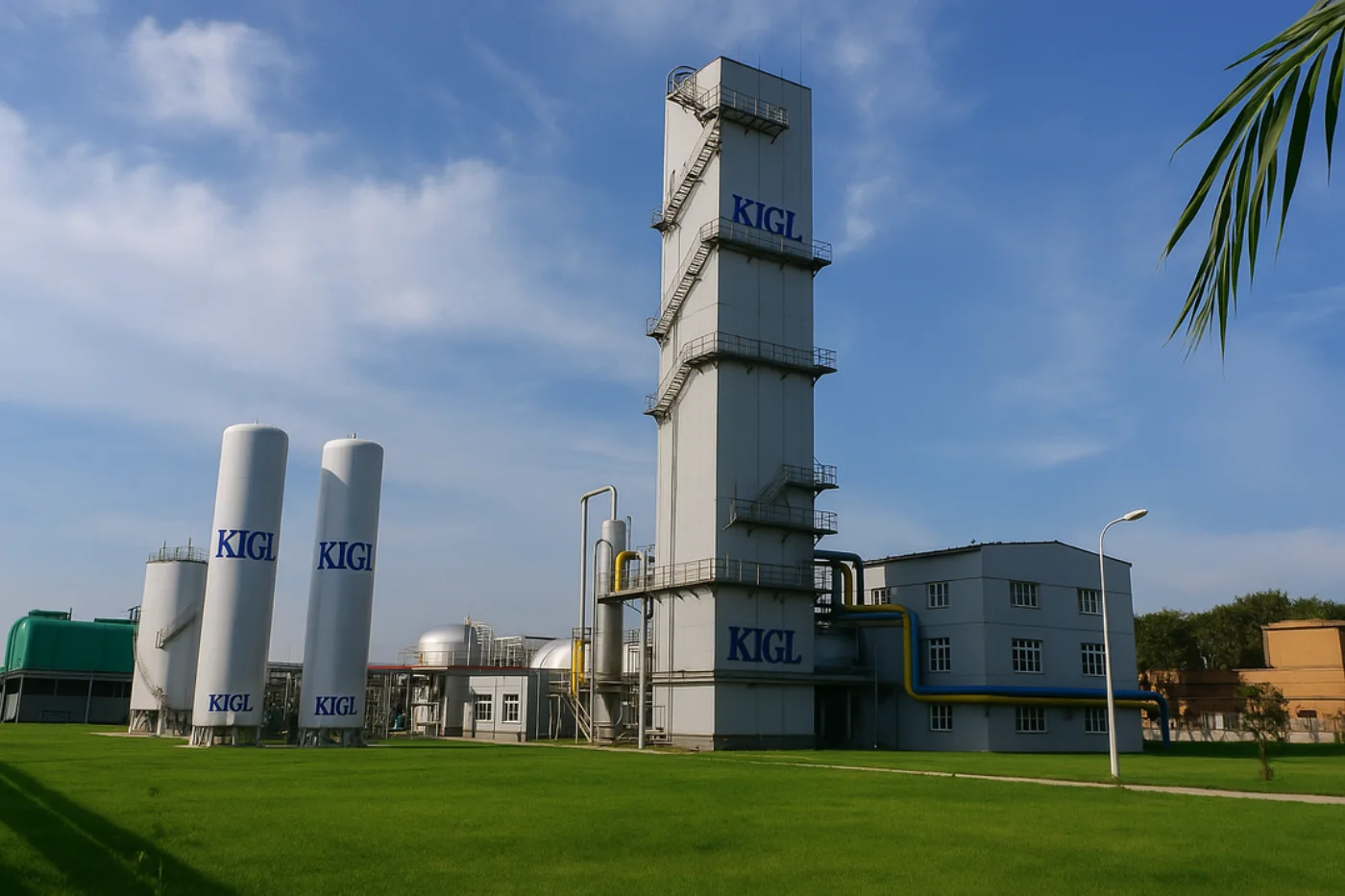
Industrial gas plant exterior with a distillation column and bulk storage vessels

Mission & Vision

Industrial gas is a necessity of manufacture, not a convenience

No works cuts, welds, heats or breathes without it. A country that intends to manufacture must be able to obtain gas of a known purity, at a known price, on a known day — and prove all three afterwards. Building that certainty for Indian industry is the work this company was founded to do in 1947, and it is still the work.

The mission

Five commitments, and how to hold us to them

A mission that cannot be checked is decoration. Each undertaking below is followed by the test — the thing a customer can actually do to see whether we are keeping it.

  1. Gas that meets its specification

    Every gas is filled to the Indian Standard that governs it, and supplied with the documentation to evidence it.

    How to checkAsk for the batch documentation with the delivery. A purity figure you cannot verify is a number, not a specification.

  2. Pricing that holds

    Rates quoted openly and carried from one order to the next, without adjustment against urgency.

    How to checkCompare the rate on a routine order with the rate when you need gas the same week. It is the same rate.

  3. Delivered to the point of use

    Cylinders to the door and empties collected, across Assam, West Bengal, Uttar Pradesh and the states served beyond them.

    How to checkAvailability decides whether a plant runs. Judge us on the delivery you did not have to chase.

  4. Safety compliance before anything else

    PESO-approved filling, cylinders tested and requalified on schedule, equipment specified for the gas it carries.

    How to checkCheck the test date stamped on the cylinder shoulder. Nothing leaves a KIGL works that we would not accept back into it.

  5. Within reach of every manufacturer

    Small works supplied on the same terms and to the same standard as national accounts.

    How to checkA fabricator in Assam needs the same oxygen purity as a refinery does. The specification does not scale with the order.

Where the purpose comes from

A pioneer of dissolved acetylene manufacture in India

Under Kanhiya Lal Garg, The Industrial Gases Limited was among the first companies to establish industrial gas manufacture at scale in India, when almost all of it was imported. It brought dissolved acetylene production into the country and built the trade around it — the generators, the filling plant, and the flashback arrestors that made the gas safe to use in an Indian workshop.

At its height the business supplied North East India and export markets across the Middle East. The division of the company in 1988 carried that engineering lineage into The Kamrup Industrial Gases Limited.

Manufacturing since
1947
Years unbroken
79
Works
3
Customers
450+

The documented record, with the founder's archive ›

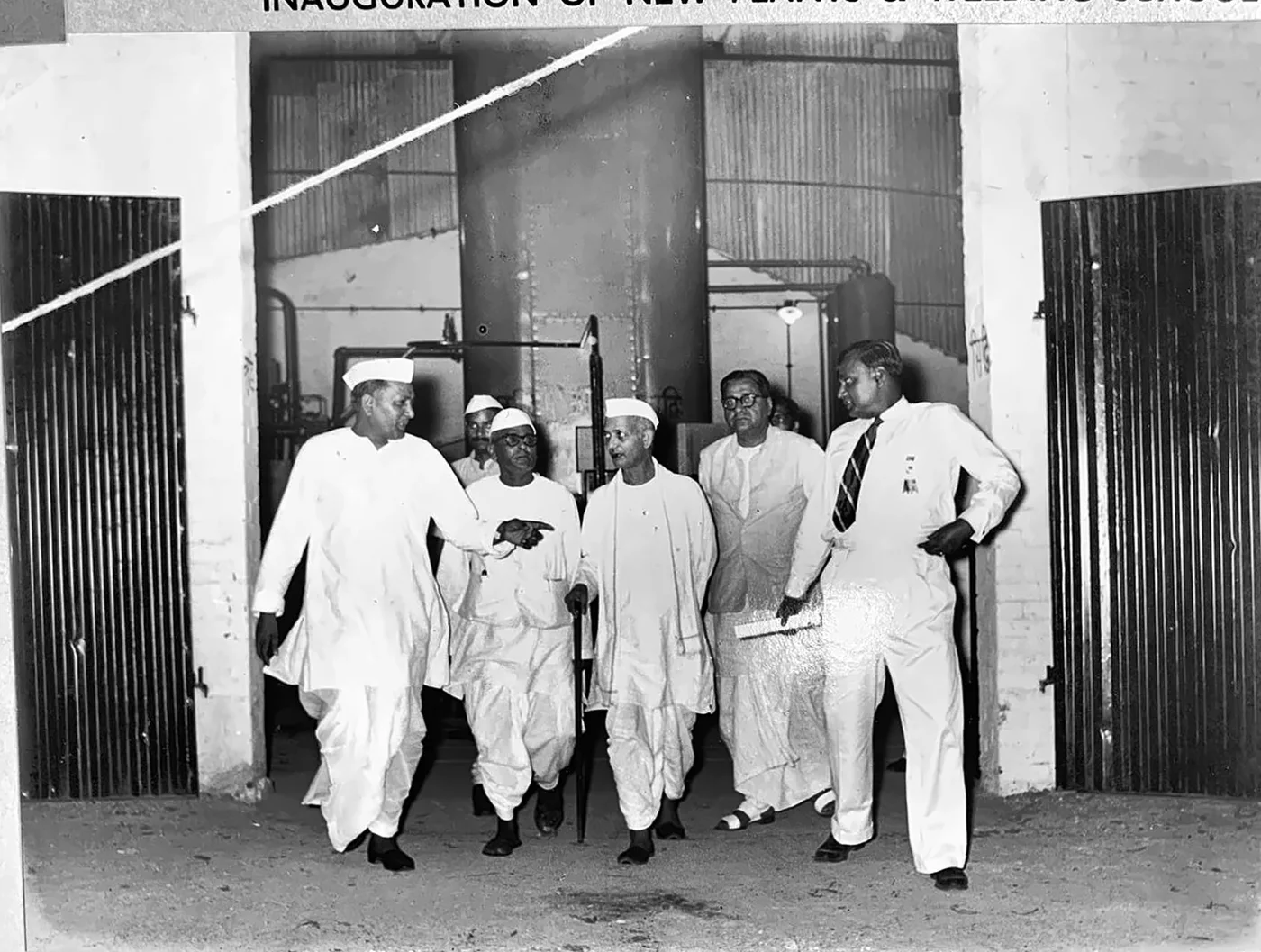
Lal Bahadur Shastri, then Union Minister for Railways and Transport and later Prime Minister of India, with Kanhiya Lal Garg and other ministers inspecting the new plant of The Industrial Gases Limited at Kanpur, 5 August 1956
Lal Bahadur Shastri — then Union Minister for Railways and Transport, later Prime Minister of India — with K. L. Garg and other ministers, inspecting the new plant at Kanpur on 5 August 1956.

Where the commitments are tested

Two customers where an interruption cannot be made good

Indian Railways

The connection runs back further than the contract. The Kanpur plant was inaugurated in 1956 by Lal Bahadur Shastri, then Union Minister for Railways and Transport. Nine years later, on 21 April 1965, the company contracted to supply the Diesel Locomotive Works at Varanasi — oxygen and acetylene from a plant operated inside the railway complex itself. Rolling stock is built and maintained with gas; freight and passenger mobility follow from it.

Recorded in the Calcutta High Court and in Supreme Court Civil Appeal 4249 of 2007.
The border forces

KIGL has supplied India's border and defence organisations continuously, in wartime and in ordinary service, for more than seventy years. This is the account where continuity matters most, because a supply missed cannot be made good afterwards.

Customers include the Border Roads Organisation, DRDO and the Indian Air Force.

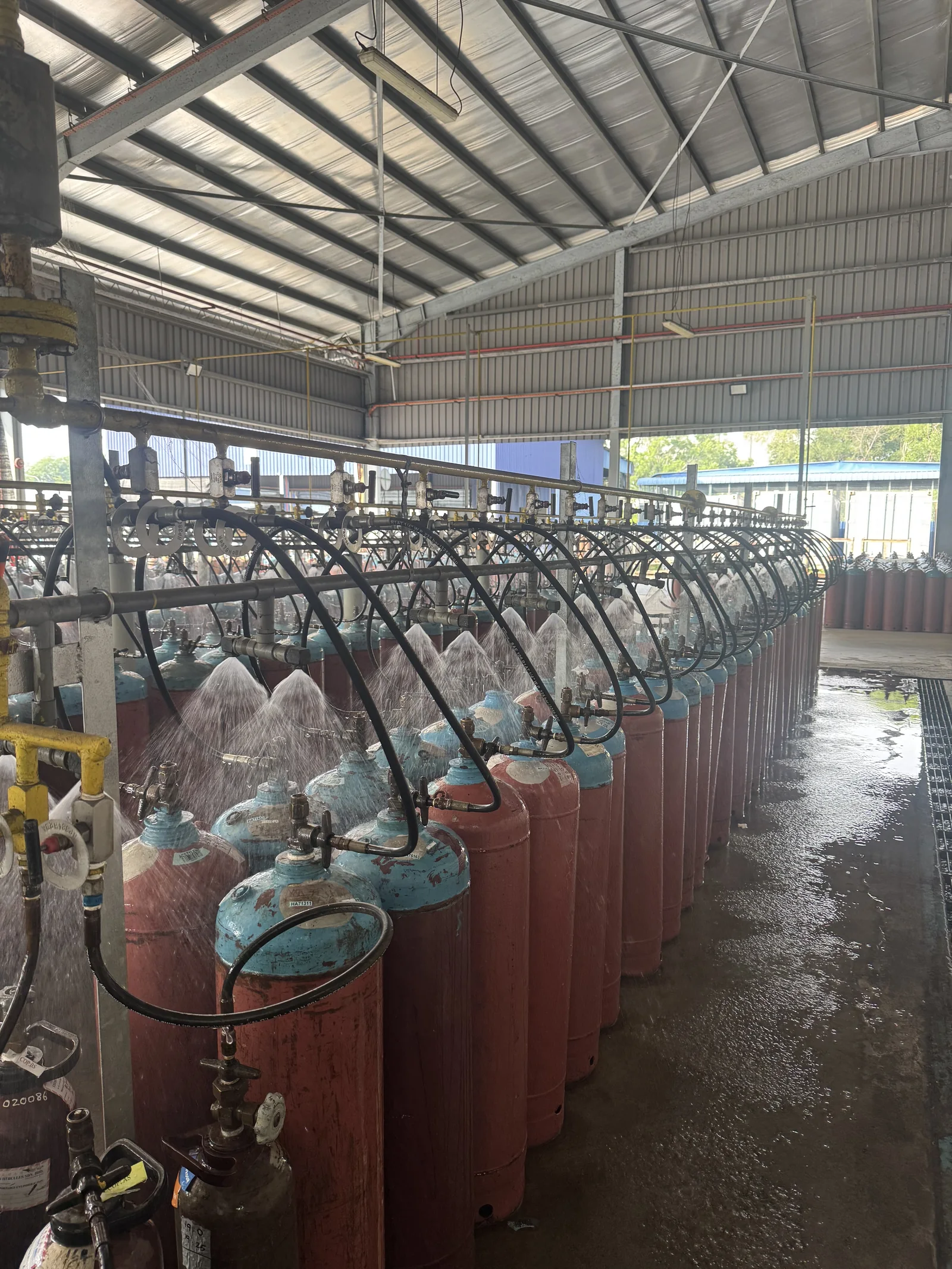
Rows of dissolved acetylene cylinders coupled to the filling manifold in a KIGL filling hall
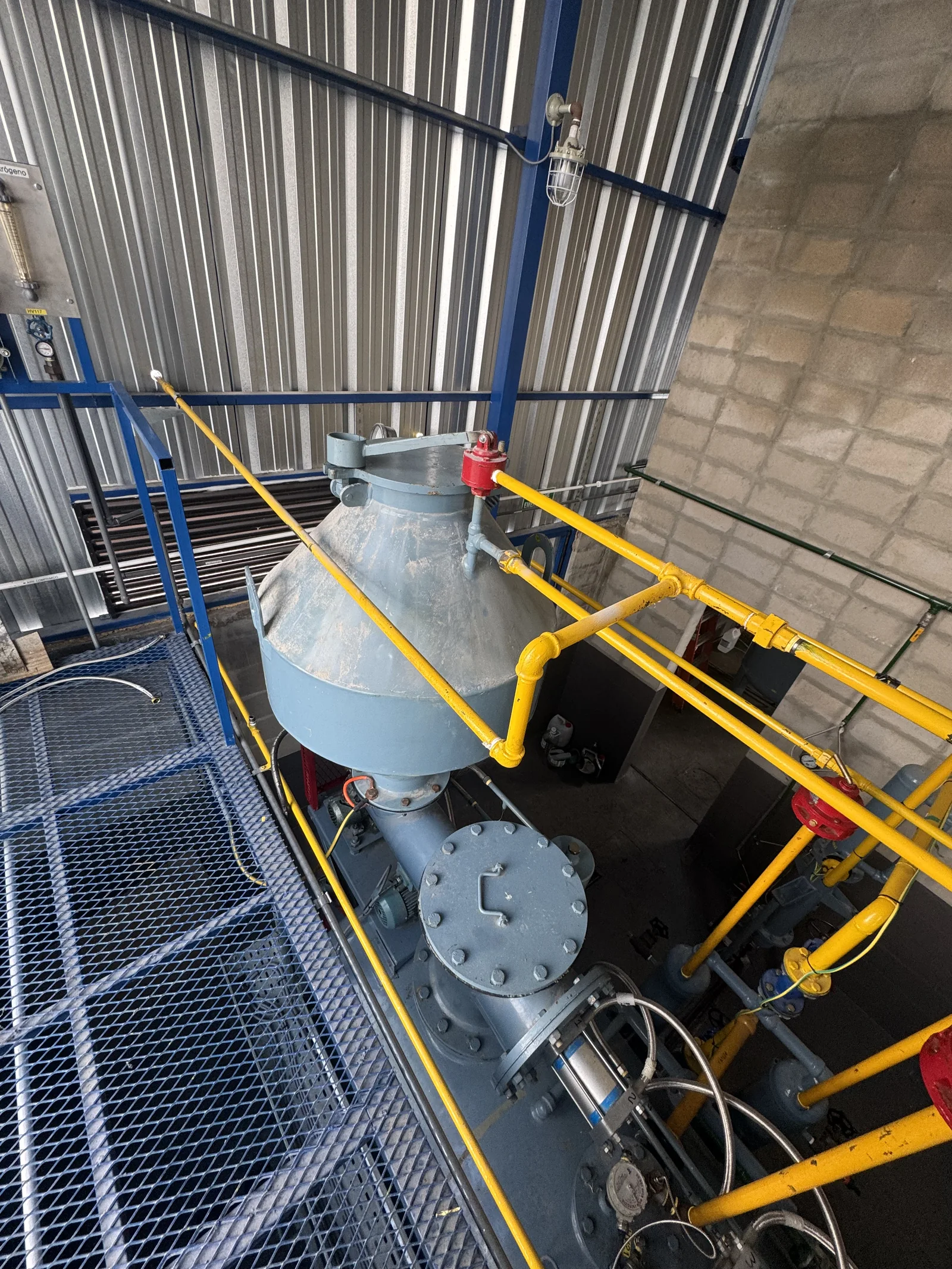
Top view of an acetylene generator showing the carbide hoppers and charging ports

Today

Building again, under the fourth generation

The Assam works have been restarted and rebuilt, and the business is growing across India and into export markets — pursued with better instruments than the company has had before: measured process control, traceability from fill to invoice, and delivery performance that is recorded rather than promised.

We are proud of what four generations built. We are more interested in what the fifth decade of that work looks like.

Discuss a supply requirement