
Guide
The acetylene plant shift log: what is recorded every hour what each reading should show, and why yield per kg is the number to watch
An acetylene plant shift log records about 40 readings every hour across 12 stages, from carbide per hopper and generator level, temperature and pressure to every compressor stage and manifold pressure. At shift end it records carbide, water, cylinders, purity, silver nitrate pass or fail and yield per kg, which moves weeks before any alarm.
- Scope
- About 40 parameters across 12 plant stages
- End-of-shift totals
- Cylinders filled
- Water ratio check
- 6 to 8 litres of water per kg of carbide; weekly water within 7.5 times weekly carbide
- Yield bands
- 300 l/kg target for 25 to 50 mm carbide; a single shift below about 291 l/kg
- Gas density for yield
- 1.1716 kg/m³ at 0 °C and 1 atm; volume equals net acetylene mass divided by 1.1716
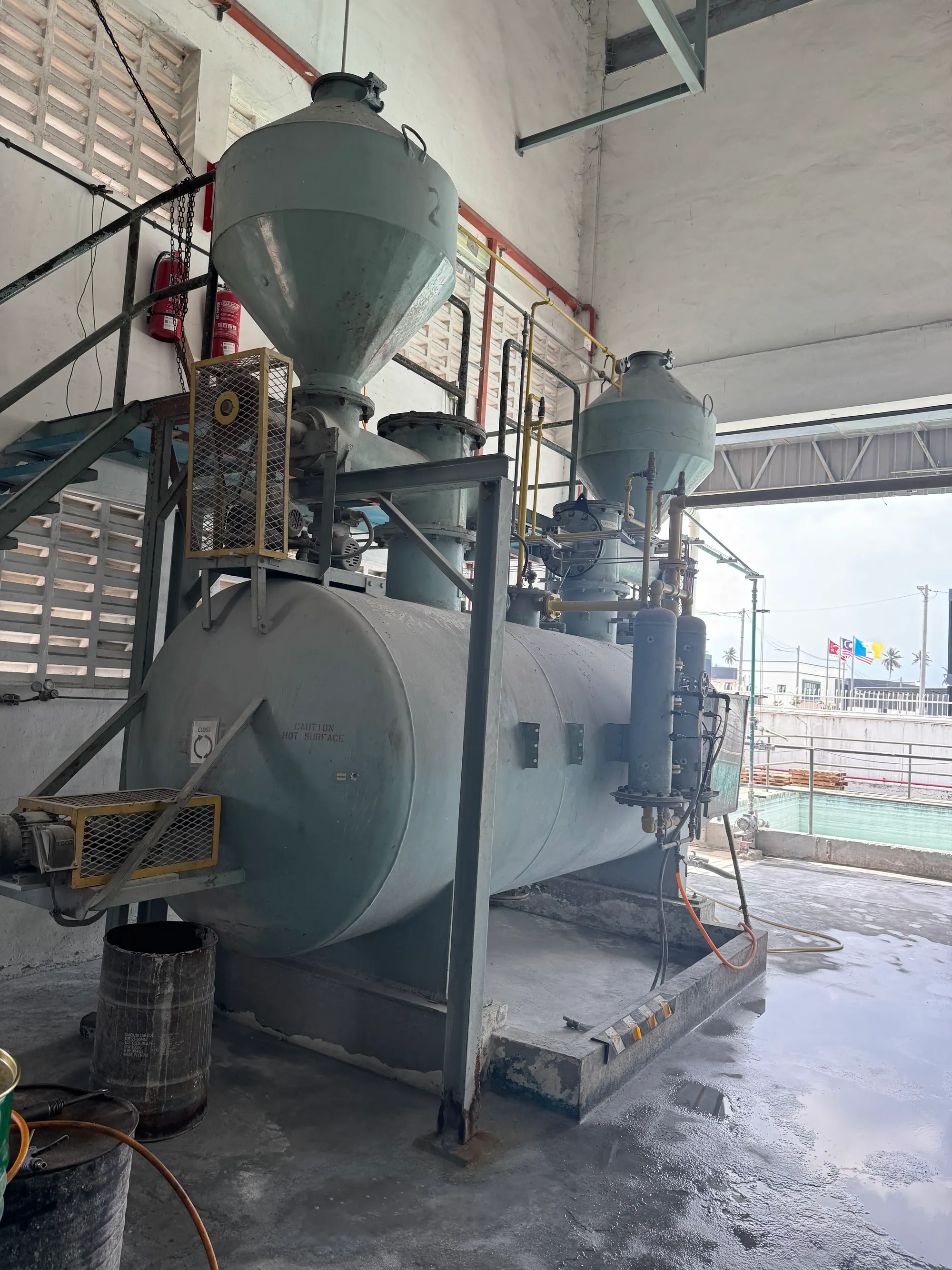
A carbide-to-water acetylene plant fails slowly. The yield drifts down a few litres per kg, the pressure drop to the compressor creeps up, a hopper takes a little less water than the last one, and weeks later something trips. The hourly shift log is the instrument that turns those drifts into dates. KIGL's log sheet records about 40 parameters across 12 stages, 12 times in a day shift, and closes each shift with the one number that summarises the plant's health: cubic metres of acetylene per kilogram of carbide.
What is recorded every hour
The sheet runs in process order, each stage followed by a remarks row. The normal bands below are from the KIGL plant operation manual.
| Stage | Hourly readings | What normal looks like |
|---|---|---|
| Hoppers | Carbide charged, kg, hopper 1 and hopper 2 | Matches the hoist weigh-in; only one hopper on line |
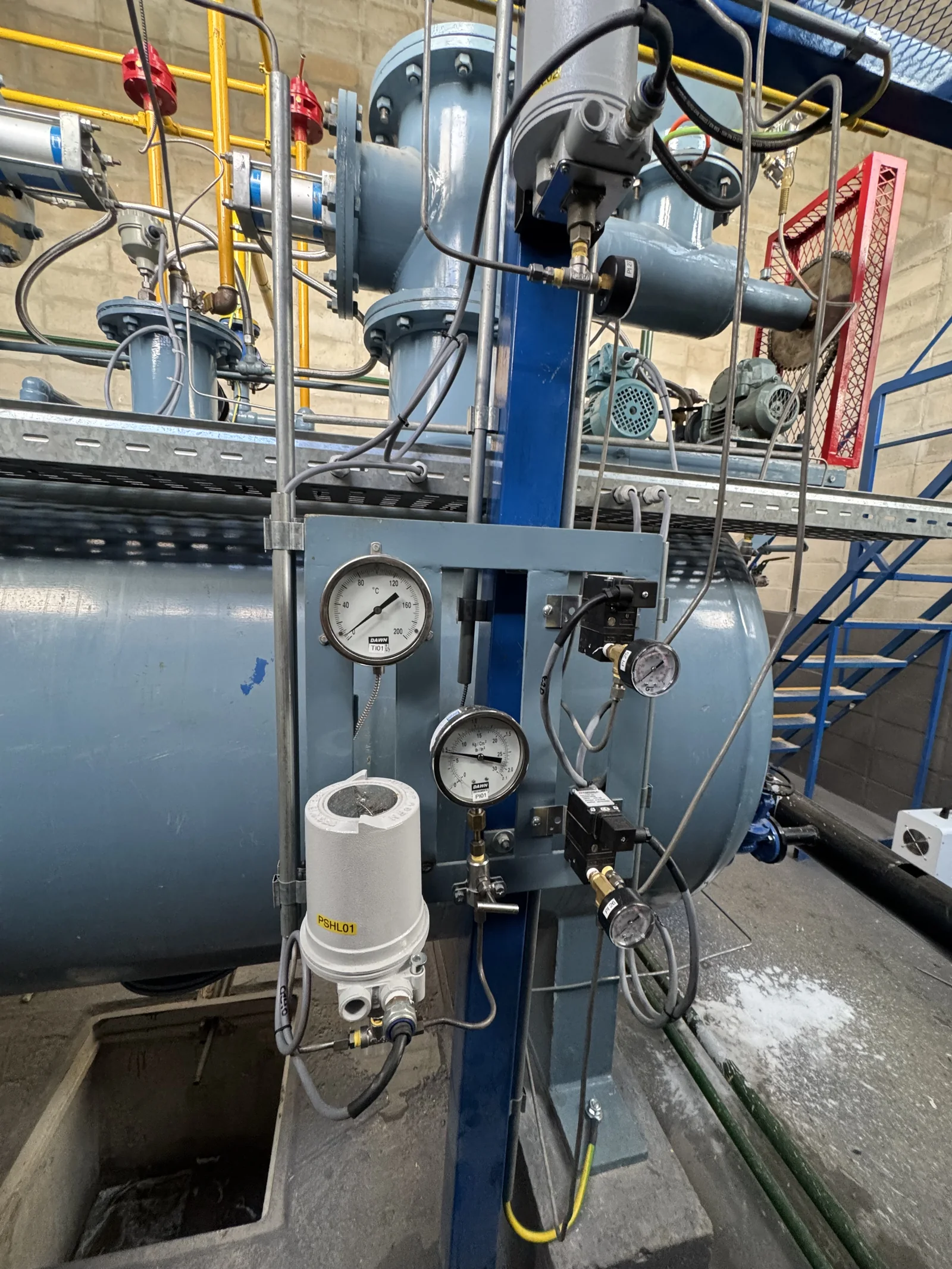
| Generator | Instrument air pressure; water level, mm; temperature, °C; pressure, kg/cm²g; hydraulic pressure, hopper 1 and 2 | Air at least 2 kg/cm²; temperature under the 70 °C ceiling; pressure within 0.2 to 0.92 kg/cm²g; hydraulic pressure rising to open the carbide valve, never above the 12 kg/cm²g relief |
| Wet flashback arrestors | Pressure, arrestor 1 and 2; water-level check, Y/N | Steady against generator pressure; a reading 0.21 kg/cm²g below normal points to a sludge-filled inlet pipe; water at the level valve |
| Cooler condenser | Gas temperature; water-level check | Gas as near room temperature as the cooling water allows |
| Low pressure drier | Drain purged, Y/N | Condensate drained until gas appears |
| Purifier | Pressure; temperature; drain purged | 0.1 to 1.3 kg/cm²g; close to ambient; no warm spots |
| Scrubber | Water-level check; drain purged | At level |
| Compressor | Suction; oil; each stage pressure; tank water temperature | Suction within the band on the approved drawing; oil 0.2 to 0.8 above suction; tank under 35 °C and within 5 °C of inlet |
| High pressure drier | Drain purged | Purged each hour |
| Molecular sieve battery, where fitted | Drain purged; water temperature; regenerated, Y/N | Drain purged; regeneration recorded; water circulating |
| Manifold | Manifold 1, 2 and 3 pressure | Up to 24 kg/cm²g; progress checked at 21 |
The Y/N rows matter as much as the numbers. They prove that the hourly drains were opened, which is the only defence against water accumulating in arrestors, driers and the purifier.
What is recorded at the end of the shift
- Number of cylinders filled.
- Carbide charged, kg, total for the shift.
- Water consumed, litres, from the water meter.
- Gas purity, %, at start and end of shift, by acetone absorption.
- Absorption, %.
- Yield, m³ per kg of carbide.
- Silver nitrate test, pass or fail.
- Name and signature of the operator.
Alongside it, the hopper recharging log records, for each charge, the time, hopper number, kg charged, water-meter reading and litres used, tank temperature, level and pressure; and the cylinder filling record gives each cylinder's serial number, stencil weight, actual weight, gauge pressure, residual gas, acetone added, full and net weight and normal cubic metres.
Water ratio from the log
Each hopper's water-to-carbide ratio is computed from the water-meter difference across the charge and the kg weighed in. The band is 6 to 8 litres per kg, never below 6.0, and the weekly water total must stay within 7.5 times the weekly carbide. A low hopper ratio prompts a 1 °C reduction in the temperature controller's set point, a high one a 1 °C increase, with a hard ceiling of 70 °C. The water ratio guide explains why the band exists; the log is how it is kept.
Yield: the single best early-warning number
Yield per kg is computed every shift because it moves first. A falling yield means wet or dusty carbide, a flooded purifier, a leak, or a generator running outside its water band, and it moves weeks before any of those trips anything.
The calculation is only meaningful if residual gas is deducted:
- For each cylinder, new acetylene in kg = weight after filling minus stencil tare minus residual acetylene, the residual read from the manual's residual-gas chart by residual pressure, temperature and cylinder size.
- Normal cubic metres = new acetylene in kg divided by 1.1716 kg/m³, the density at 0 °C and 1 atm.
- Shift yield = total normal cubic metres divided by total kg of carbide charged.
KIGL's procedure reads the result against the carbide's expected figure, 300 l/kg for 25 to 50 mm grade on KIGL's published schedule. A single shift more than 3 % below, about 291 l/kg, triggers a retained carbide sample, a soap test of joints and a check of arrestor water; three such shifts in a row stop the plant for the troubleshooting sequence. A figure above about 320 l/kg on ordinary carbide is treated as a defect, because it almost always means the residual is not being deducted. Counting gross weight minus stencil as production was found at one audited plant and is one of the commonest errors in DA operation; it hides exactly the faults the yield figure exists to reveal.
Rules that matter
Three comparisons do most of the work:
Reading the log for trends
- Pressure drop, generator to compressor suction Normally about 0.21 kg/cm²g. A drop of that much again at the arrestor gauge means sludge in the arrestor line; a gradual rise over months points to lime build-up in the cooler outlet or a blinding purifier. One audited plant showed 0.3 kg/cm² between generator and suction, flagged as very high.
- Hopper water ratio against generator temperature Temperature rising at a constant ratio means fouled spray nozzles or warm feedwater; ratio falling at constant temperature means the controller is fighting a failing water valve.
- Stage pressures against suction A high first-stage reading at normal suction indicates the second-stage valves are leaking; the compressor guide gives the full reading.
The registers that sit beside the log
The hourly sheet is one of several controlled records. KIGL's manual and audit practice expect, at minimum: the purifier record (repacking dates and quantities, dates out of and back into service, fan hours and maximum air temperature, every purity result); a maintenance log book recording every repair, which is what makes a recurring fault visible; the daily, weekly, monthly and yearly checklists with satisfactory and non-satisfactory columns; a calibration register for every gauge, transmitter and switch; an earthing register; and a carbide batch inspection record. Without them, the log can say that something changed but not why.
Discipline that makes the log worth keeping
The operator signs every shift, the supervisor counter-signs, and the plant manager reviews the week. KIGL's audits of carbide-to-water plants of several makes found the hourly log absent, blank, or limited to generator pressure and temperature at three of five sites. Complete records are not enough on their own either: one audit found a plant's generator pressure switches removed or adjusted, which is the reminder that a log records only what the instruments say. Calibrate them; the maintenance calendar carries the checks.
Rules that matter
Rules to apply
- Log every stage every hour, including the Y/N drain rows; a blank row is a finding.
- Compute the water ratio at every hopper charge and the yield every shift, residual deducted.
- Investigate a yield 3 % low and distrust one that is too high.
- Sign, counter-sign, review weekly, and keep the purifier records open for inspection at any time.
— frequently asked questions
What should be recorded in an acetylene plant shift log?
Every stage, every hour: carbide charged per hopper; instrument air pressure, water level, temperature and pressure of the generator; hydraulic pressure for each hopper; pressure and a water-level check on each wet flashback arrestor; cooler temperature; drain purges on the low and high pressure driers, purifier and scrubber; purifier pressure and temperature; compressor suction, oil and each stage pressure and tank water temperature; and every manifold pressure.
How is acetylene yield per kg of carbide calculated?
Weigh every cylinder in and out. New gas in each cylinder is weight after filling minus stencil tare minus the residual acetylene already in it, read from the residual-gas chart by residual pressure, temperature and cylinder size. Divide by 1.1716 kg/m³ for normal cubic metres, sum for the shift and divide by kg of carbide charged. Forgetting the residual is the commonest error and inflates yield.
Why is a very high yield a warning sign?
Because carbide cannot give more gas than its CaC₂ content allows. A 300 l/kg grade is about 82 % CaC₂; figures above about 320 l/kg on ordinary carbide nearly always mean the residual gas in returned cylinders is being counted as new production. That error hides poor carbide, water ratio drift, leaks and a blocked purifier, which is precisely what the yield figure exists to reveal.
How often should the log be signed and reviewed?
The operator signs every shift, a supervisor counter-signs, and the plant manager reviews the week. Incomplete logging, either generator readings only or no hourly log at all, was found at three of five plants KIGL has audited; a log that is not kept or not read cannot show the drift that precedes a fault.
Which readings give the earliest warning?
Yield per kg, the water-to-carbide ratio per hopper, and the pressure drop between the generator and compressor suction. The drop across arrestors, cooler, driers, purifier and scrubber is normally about 0.21 kg/cm²g; a rising figure means sludge, a choked drier or a blinding purifier. All three move gradually and are visible only if the hourly figures are recorded and compared.
Is the compressor oil pressure really logged every hour?
Yes, and a blank oil-pressure row is itself a finding. Oil pressure must sit within the band set by the compressor maker, which KIGL's manuals give as 0.2 to 0.8 kg/cm²g above suction; anything below it is a fault. At one plant audited, no oil pump was fitted to any compressor, so the row could only ever have been blank or invented.
References
- Bureau of Indian Standards. (2003). Acetylene Generators — Requirements (IS 8471:2003, First Revision).
- Bureau of Indian Standards. (2024). Dissolved Acetylene (Gas) — Specification (IS 308:2024, Fourth Revision).
- European Industrial Gases Association. (n.d.). Acetylene Plant Design and Operation (EIGA Doc 241).
Enquiries
Request a quotation
State the gas or equipment, the quantity or capacity, and your location. KIGL will confirm the grade, the cylinder or plant size, and whether the location can be served from Noonmati, or through the agent network.