
Gases
Synthetic air and compressed air in cylinders
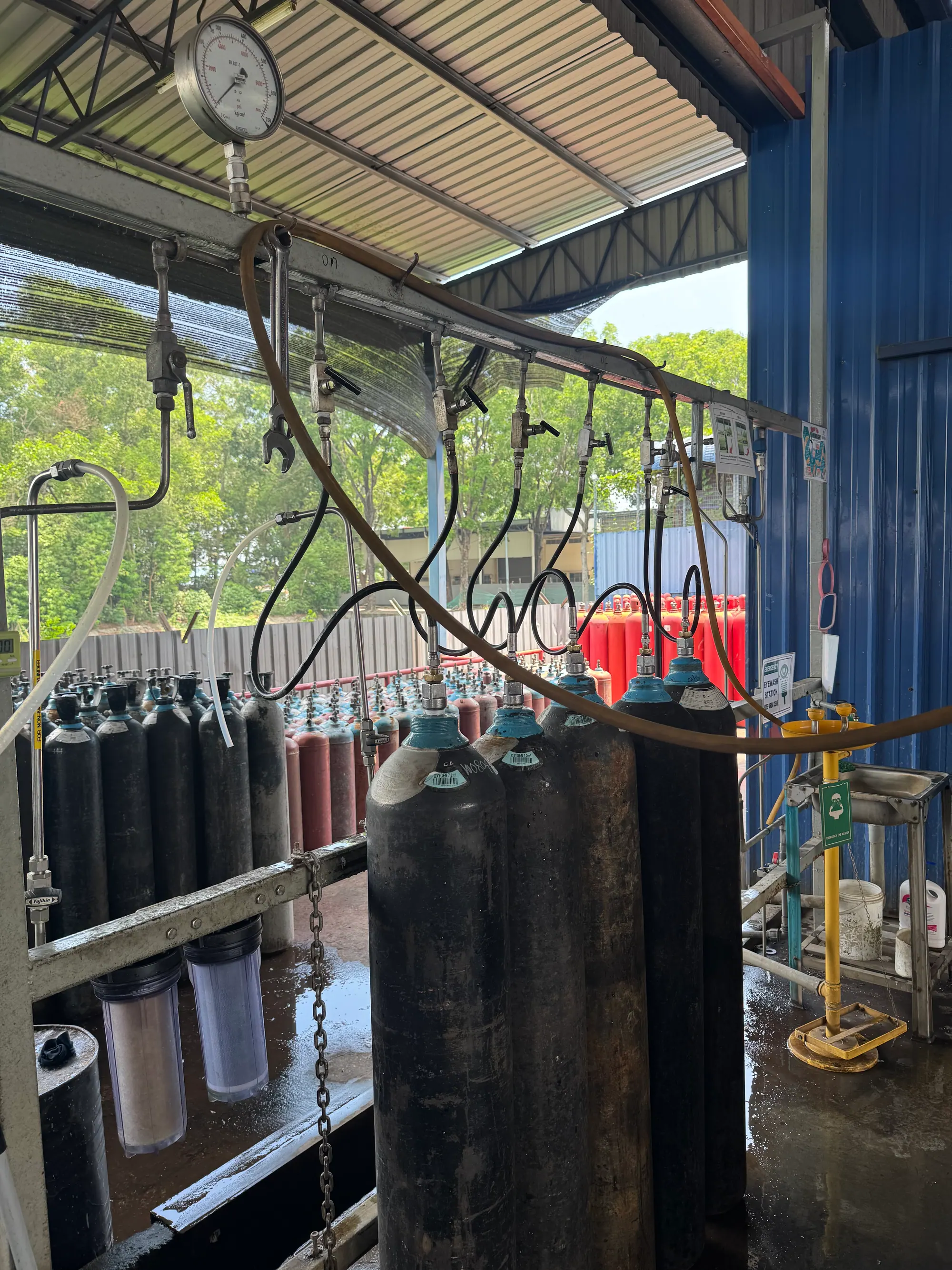
Synthetic air is oxygen and nitrogen blended to roughly 21 % and 79 %, made deliberately rather than compressed from the atmosphere. That matters because atmospheric air carries moisture, hydrocarbons and particulate. KIGL supplies synthetic air in cylinders where composition and cleanliness must be known.
₹40 – ₹50 per Nm³ Indicative. Your quotation is the figure that counts — price moves with quantity, cylinder size, contract term and delivery.
- ≈21 % oxygen
- Composition
- Blending pure oxygen and nitrogen
- Made by
- UN 1002
- UN number
- Cylinders
- Supply form
- Known composition
- Key advantage over atmospheric air
Made, not captured
Compressed atmospheric air is whatever was in the room, squeezed into a cylinder — along with its humidity, its hydrocarbons, whatever the compressor contributed, and whatever was in the air that day.
Synthetic air is built instead: pure oxygen and pure nitrogen blended to approximately 21 % and 79 %. The composition is specified rather than inherited, and because it never passes through a compressor there is no oil path and no hydrocarbon carry-over.
For a pneumatic drill, none of this matters and a compressor is far cheaper. For an instrument whose reading depends on the gas, it is the entire point.
Where cylinder air earns its cost
Analytical instruments
Flame ionisation detectors and similar instruments need air of known, repeatable composition — variability in the gas shows up directly as variability in the result.
Calibration and zero gas
Establishing an instrument baseline requires air whose composition you can state.
Locations without power or a compressor
Field work, remote sites, temporary installations.
Applications where compressor oil is unacceptable — cleanroom, pharmaceutical and certain food-contact uses.
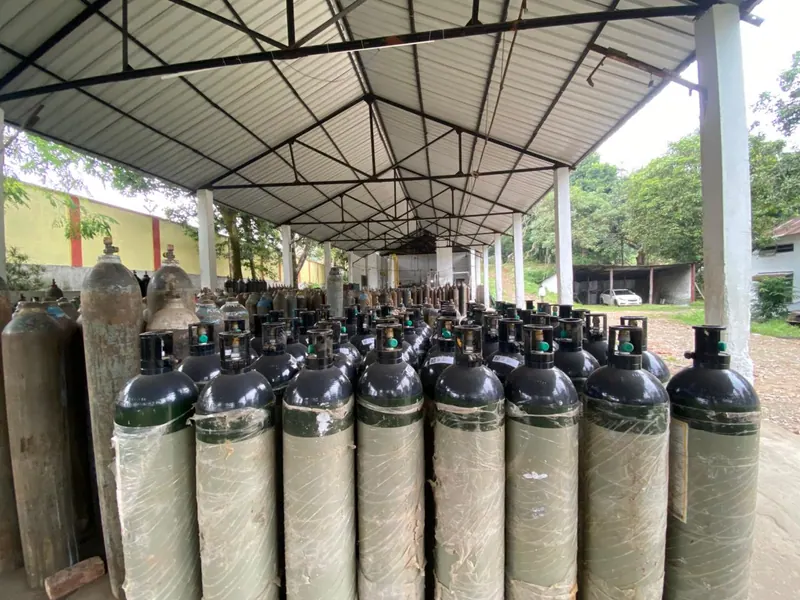
Filled industrial gas cylinders, ranked upright in the yard for despatch
Guwahati works · agent network
Where it does not
If you need volume for tools, actuators, conveyors or general plant air, buy a compressor. Cylinder air is dramatically more expensive per cubic metre and there is no sensible case for it at volume. We would rather say that than sell you cylinders you do not need.
Two substitutions to avoid
Do not purge flammable systems with air. Air is 21 % oxygen, so purging with it can create precisely the explosive mixture you are trying to eliminate. Use nitrogen. On acetylene equipment this is mandatory, not advisory.
Do not confuse air with oxygen in either direction. Air is not a therapeutic or process substitute for oxygen, and oxygen is emphatically not a substitute for air — oxygen-enriching a workspace makes ordinary materials burn violently.
Breathing air
Air for respiratory protective equipment is a separately specified product with its own purity limits and testing regime. Do not assume any cylinder of air is suitable for breathing apparatus. If that is your application, say so explicitly when you enquire and we will confirm what we can supply to the required specification.
Compressed air cylinder sizes and supply across India
Cylinders, blended to specification against the stated application and composition.
Why KIGL
Why buy compressed air from KIGL
We have filled cylinders in Assam since 1947, under PESO licence. Compressed air is the gas people assume needs no specification, which is exactly why it is worth agreeing one: plant air, instrument air and breathing air are three different products, and only one of them is safe to breathe. Tell us the duty and we will confirm the grade in writing before anything is filled.
Specification
Synthetic air — full specification
| Property | Value | Basis |
|---|---|---|
| Composition | ≈21 % oxygen, ≈79 % nitrogen | Synthetic air specification |
| Made by | Blending pure oxygen and nitrogen | KIGL product specification |
| UN number | UN 1002 | ADR 2025 |
| Supply form | High-pressure cylinders | KIGL product range |
| Key advantage over atmospheric air | Known composition, no moisture or hydrocarbon carry-over | — |
| Oxygen content | ≈21 % | Blend specification |
| Nitrogen content | Balance | Blend specification |
| Moisture | Low — blended from dry component gases | — |
| Hydrocarbon content | Negligible — no compressor oil path | — |
Documents
Synthetic air — safety and technical documentation
Questions
Synthetic air — frequently asked questions
What is the difference between synthetic air and compressed atmospheric air?
Synthetic air is built from pure oxygen and pure nitrogen to a known composition. Compressed atmospheric air is whatever was in the room, squeezed — including its moisture, its hydrocarbons and any oil carried over from the compressor. For instrument calibration, laboratory work and anything where composition or cleanliness matters, only synthetic air gives you a defined product.
Should I buy cylinders of air instead of running a compressor?
Usually not. If you need volume for pneumatic tools, a compressor is far cheaper per cubic metre and cylinders make no economic sense. Cylinder air exists for the cases a compressor cannot serve: known composition, guaranteed cleanliness, portability, or a location with no power. Where compressed atmospheric air is required, a compressor is the correct answer and KIGL will say so.
Is this breathing air?
Breathing air for respiratory protective equipment is a separately specified product with its own purity requirements and testing regime. Do not assume any cylinder of air is suitable for breathing apparatus. Tell us explicitly if that is the application and we will confirm whether we can supply to the required specification.
What is it used for in laboratories?
Flame ionisation detectors and other analytical instruments need a supply of air whose composition and cleanliness are known and repeatable, because variability appears directly in the results. Zero air and instrument air grades exist for exactly this reason.
Can I use compressed air instead of nitrogen for purging?
Not for flammable systems. Air is 21 % oxygen, so purging a flammable system with air can create the explosive mixture you are trying to remove. Use [nitrogen](/nitrogen-gas). On acetylene equipment, nitrogen purging is mandatory.
Can compressed air be substituted for oxygen?
Never, in either direction. Air is not a substitute for oxygen in any therapeutic or process application, and oxygen is emphatically not a substitute for air — oxygen-enriching a workspace makes ordinary materials violently flammable.
Read next
Enquiries
Request a quotation for synthetic air
State the gas or equipment, the quantity or capacity, and your location. KIGL will confirm the grade, the cylinder or plant size, and whether the location can be served from Noonmati, or through our agent network.