
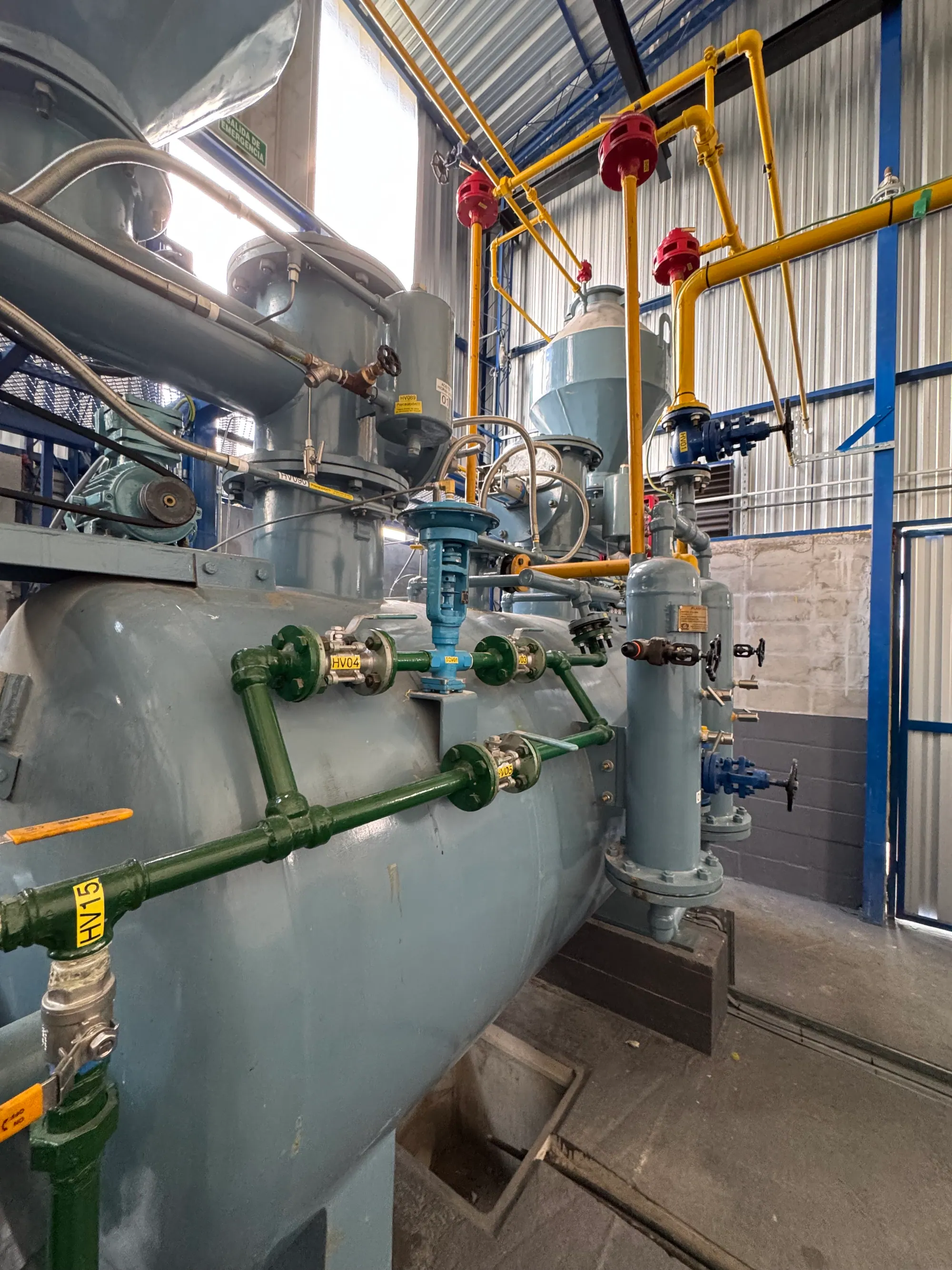
Equipment
Industrial gas pipelines — reticulated supply to every point of use
An industrial gas pipeline takes gas from a central cylinder cascade to every point of use, removing cylinder handling from the shop floor. Oxygen and acetylene need opposite precautions, which is why 1 pipeline design cannot serve both. KIGL supplies the gas and the pipework.
₹500 – ₹1,200 per installed sq ft Installation only — pipe, fittings, valves and manifolds are charged separately. Indicative. Your quotation is the figure that counts — price moves with quantity, cylinder size, contract term and delivery.
- Cylinders moved to every workstation
- What it replaces
- A central cylinder cascade
- Source
- No copper or high-copper alloy anywhere in contact with the gas
- Acetylene line rule
- Degreased throughout
- Oxygen line rule
- Flashback arrestors at the regulator and at the torch
- Devices per take-off
What industrial gas pipelines are, and where they are used
An industrial gas pipeline takes gas from a central cylinder cascade and distributes it to every point of use — welding bays, cutting tables, laboratory benches, process connections — so nobody has to move a cylinder to the work.
The cascade sits in one properly designed, ventilated and access-controlled place. The shop floor gets an outlet.
What a fixed pipeline actually buys you
Handling
Most cylinder injuries happen while a cylinder is being moved, not while gas is being used. A pipeline removes almost all of that movement.
Waste
Part-used cylinders accumulate around a site and quietly stop being used. Cascade supply draws them down properly.
Wrong-gas connections
An outlet at the bench carries one gas. A cylinder trolley carries whatever was on it.
Consumption you can see
Central supply makes usage measurable, which is the first step to sizing anything correctly, including working out whether an on-site acetylene plant would pay.
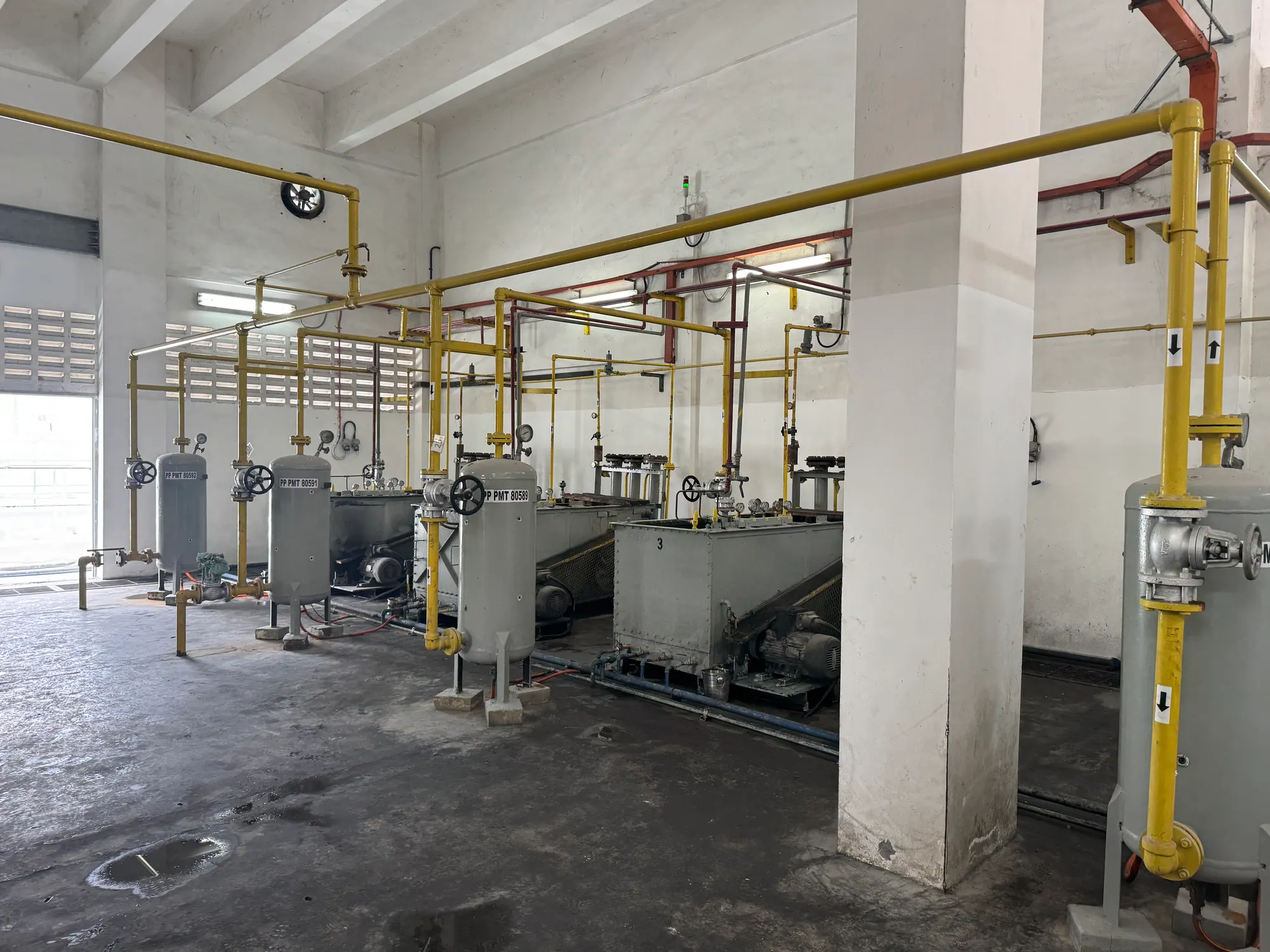
Gas plant room, pressure vessels and skids along the service run
Guwahati works · agent network
The two disciplines are opposites
This is the part that matters, and the part a general fabrication contractor gets wrong.
Acetylene lines must contain no copper — or high-copper alloys — anywhere in contact with the gas. Acetylene forms explosive copper acetylides. Ordinary pipe-fitting practice reaches for brass fittings without thinking, and the result looks perfect on the day.
Oxygen lines must be degreased and kept that way. Oil, grease or solvent residue in a high-pressure oxygen system can ignite from the heat of compression alone — no spark, no flame — and the resulting fire consumes the fitting itself.
One line must avoid a metal. The other must avoid a contaminant. They are not the same job, they do not use the same materials, and they should not be given to someone who thinks they are.
Flashback arrestors: two per line, both lines
At the regulator and at the torch, on the fuel gas line and the oxygen line.
The most common shortfall we find is a single arrestor at the manifold and a system described as protected. It is not: everything downstream of that one device is unprotected, and a flashback does not start at the manifold. See flashback arrestors and the standards behind them.
By gas
- Oxygen pipelines — cleanliness, velocity, and why “it was fine before” is not evidence
- Acetylene pipelines — materials, pressure, and draw-off limits
For hospitals, a medical gas pipeline is a different regulated discipline again. See medical gas pipeline systems.
Existing systems
We survey, modify, extend and maintain pipelines we did not install. Worth doing before you extend one: an extension inherits every fault in the original, and doubles the length of pipe those faults apply to. Contact us for a survey.
How we work on a pipeline
Two routes, and the choice is yours. We design and install: survey, drawings, materials, installation, testing and commissioning, with the system handed over complete. Or we supply and supervise: we provide the design, the pipework and the components, and our engineer supervises while your own contractor installs. The second is often the faster route on a live site where a contractor is already mobilised, and it costs less; the first leaves one company accountable for the whole system.
Why KIGL
Why bring the pipework to us
We fill the gases that will run through it, we build the plant that makes them, and the group holds a seat on the Bureau of Indian Standards gas cylinders committee. A pipeline is the part of a gas installation nobody revisits: it goes into a ceiling void and is lived with for decades. We have been in gas since 1947, and we are still called back to lines we installed long ago, which is the only test of pipework that means very much.
Specification
Industrial gas pipelines — full specification
| Property | Value | Basis |
|---|---|---|
| What it replaces | Cylinders moved to every workstation, and the handling injuries that come with them | KIGL technical |
| Source | A central cylinder cascade, sized against measured consumption | KIGL technical |
| Acetylene line rule | No copper or high-copper alloy anywhere in contact with the gas | KIGL technical |
| Oxygen line rule | Degreased throughout — no oil, grease or hydrocarbon residue | KIGL technical |
| Devices per take-off | Flashback arrestors at the regulator and at the torch, on both lines | IS 11006:2011 / KIGL practice |
| Typical source | Cylinder cascade | Sized against measured consumption |
| Gases reticulated | Oxygen, acetylene, argon, nitrogen, mixtures | KIGL |
| Acetylene — prohibited material | Copper and high-copper alloys | Forms explosive copper acetylides |
| Oxygen — cleanliness | Degreased, oxygen-clean throughout | KIGL practice |
| Flame arrestors | IS 11006:2011 | Bureau of Indian Standards |
| Services | Design, installation, commissioning, AMC | KIGL |
Questions
Industrial gas pipelines — frequently asked questions
Why put in a pipeline instead of moving cylinders?
Because moving cylinders is where the injuries and the losses are. A reticulated system takes the cylinder handling off the shop floor, keeps the cascade in one properly designed and ventilated place, cuts the number of part-used cylinders sitting around, and makes it far harder for someone to connect the wrong gas because the outlet at the bench only carries one.
Can one pipeline carry different gases?
Never in the same pipe, and the two lines are not built the same way. Acetylene must have no copper anywhere in contact with the gas; oxygen must be degreased to a standard and kept free of any hydrocarbon. Those are opposite disciplines, and a contractor who treats them as one job is the risk you are trying to design out.
What is the single most common mistake you see?
A pipeline installed by a general fabrication contractor using ordinary pipe-fitting practice — copper or brass in the acetylene line, and oil-contaminated fittings in the oxygen line. Both look completely fine on the day of installation. Both are serious hazards, and neither is visible without knowing to look.
Where do the flashback arrestors go?
At the regulator and at the torch, on both the fuel gas and the oxygen line — two devices per line. Fitting one at the manifold and calling the system protected is the shortfall we see most often. See our flashback arrestors page for what the devices actually do.
Do you supply the gas as well?
Yes. We fill oxygen, acetylene, argon, nitrogen and mixtures at our own works, so the same party sizes the cascade, installs the pipework and keeps it supplied. That also means the cascade is sized against your measured consumption rather than a guess.
Can you work on an existing pipeline?
Yes — survey, modification, extension and maintenance, including systems we did not install. A survey is worth doing before extending an existing line, because extensions inherit whatever was wrong with the original.
Read next
Enquiries
Request a quotation for industrial gas pipelines
State the gas or equipment, the quantity or capacity, and your location. KIGL will confirm the grade, the cylinder or plant size, and whether the location can be served from Noonmati, or through our agent network.