
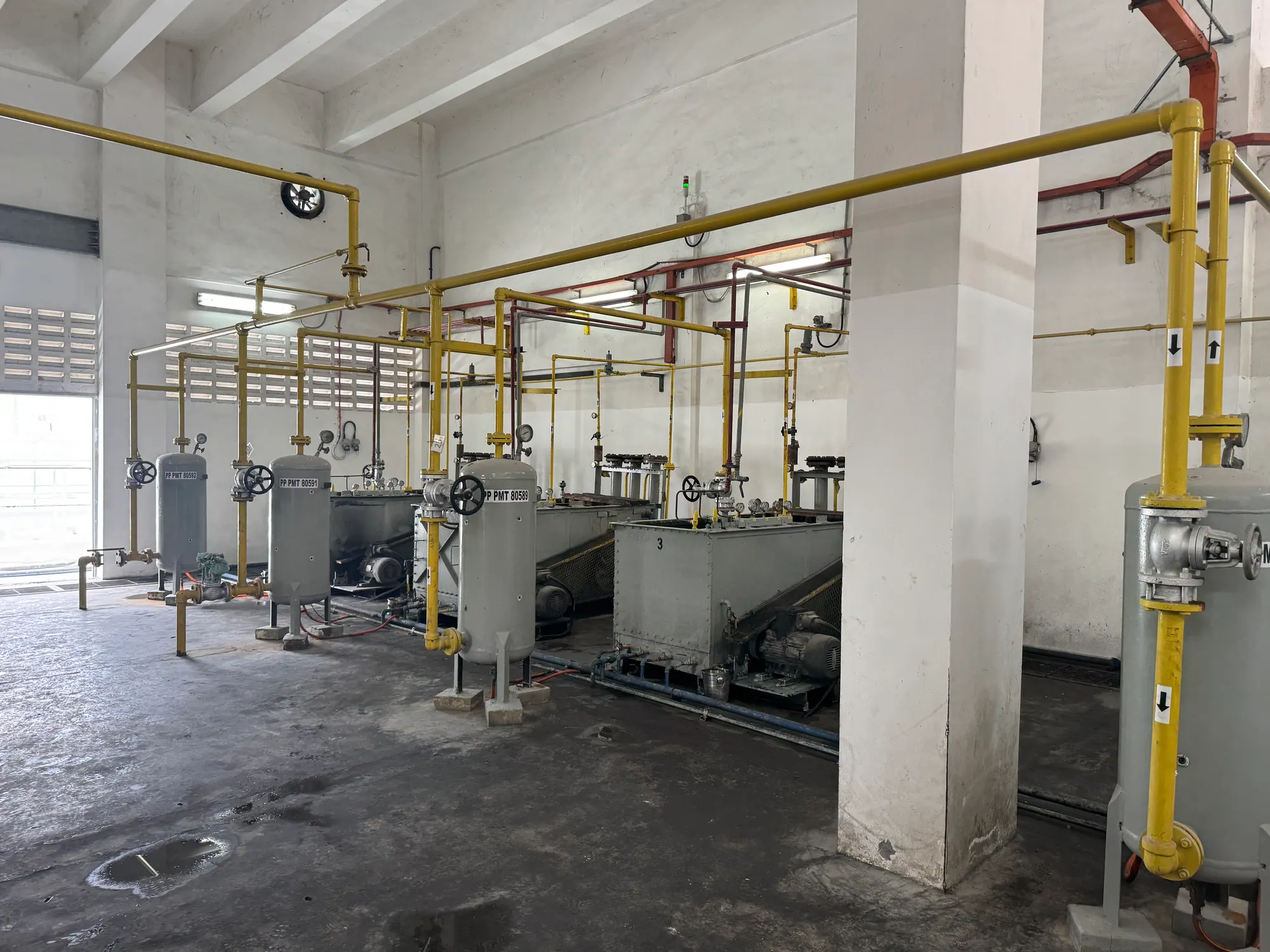
Equipment
KIGL-DA-100 acetylene gas plant — built for continuous operation
The KIGL-DA-100 is the largest acetylene plant KIGL builds, nominally 100 Nm³/h. It is specified for continuous generation and cascade filling rather than intermittent use, and runs in the same 0.2–0.92 kg/cm²g band as every plant we make. Supplied internationally as well as across India.
₹70,00,000 – ₹1,10,00,000 per plant Indicative. Your quotation is the figure that counts — price moves with quantity, cylinder size, contract term and delivery.
- 100 Nm³/h
- Nominal capacity
- Continuous generation and cascade filling
- Intended duty
- 0.2
- Generation pressure band
- Nitrogen
- Purge medium
- IS 308 for the gas
- Governing standards
KIGL-DA-100 acetylene gas plant — 100 Nm³/h specification
The KIGL-DA-100 is the largest acetylene plant we build — nominally 100 Nm³/h — and it is specified for continuous generation rather than intermittent use.
That distinction matters more than the capacity figure. A plant built for continuous duty assumes it will not be stopped for routine attention: carbide charging, sludge handling and maintenance access are arranged around keeping it running. Buying a large plant and then running it continuously without that specification is a well-worn route to a plant that spends its life stopped.
Why acetylene generation pressure does not rise with capacity
Generation pressure: 0.2–0.92 kg/cm²g, ceiling 1.05 kg/cm²g — the same as the KIGL-DA-25 and KIGL-DA-50.
This surprises people, so let us be explicit: the operating pressure is set by the chemistry, not by the capacity. Acetylene decomposes explosively under pressure with no oxidant present at all, so every carbide generator ever built runs in the same low band. A bigger plant makes more gas per hour. It does not make gas at higher pressure, and any supplier suggesting otherwise should be asked to explain themselves.
Purge with nitrogen. Never air. Unchanged at every size, for the same reason at every size.
Continuous duty and commercial cylinder filling
Three situations, in our experience:
Continuous industrial consumption — a works where acetylene is on the critical path and an outage stops production. Here the plant is bought for availability as much as for cost.
Commercial cylinder filling — supplying gas to others. This is a different business from generating for your own use, and the plant is the easy part. It brings cylinder ownership, periodic testing and requalification, filling records, inspection at filling under IS 16271, and its own licensing. We fill cylinders ourselves, so we can be specific about what you are taking on.
Replacing an ageing plant — where the decision is really about what happens during the changeover.
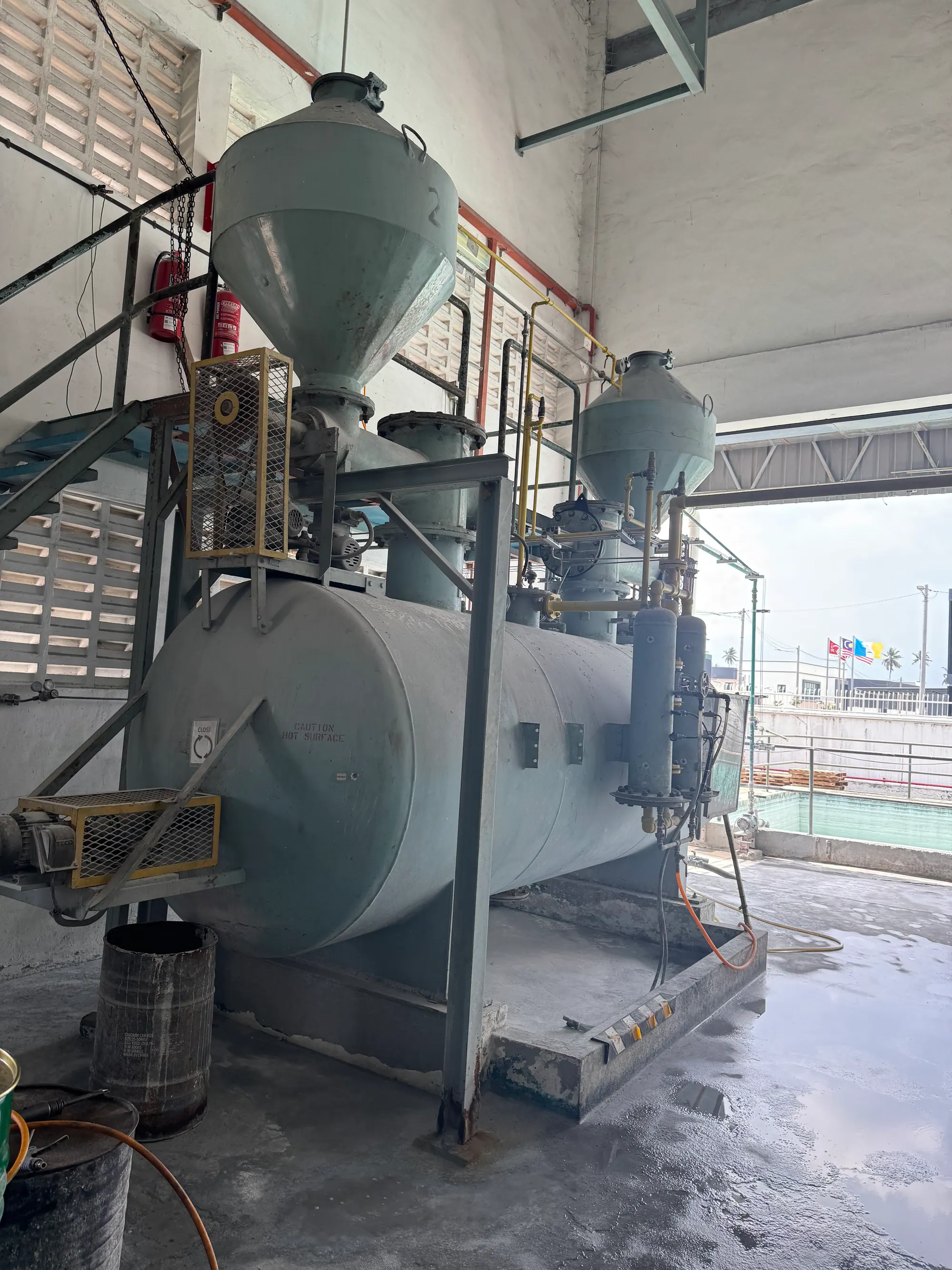
Acetylene plant vessels and compressor, pipework colour-coded by service
Guwahati works · agent network
Specifying redundancy on a 100 Nm³/h acetylene plant
The right question is not “what redundancy is standard” but “what does an unplanned outage cost us?”
If the answer is a stopped line or customers you cannot supply, that conversation belongs at the design stage. It is far cheaper to specify for it than to retrofit after the first failure, and it is the single most common regret we hear on plants this size.
Acetylene plant export, commissioning and re-commissioning
We have supplied, commissioned and re-commissioned acetylene plant outside India, and we carry out plant audits and operator training on site. Two points worth knowing on export projects:
- Cylinder standards do not travel. Cylinders built to an EN or DOT standard are not automatically acceptable under the Indian Gas Cylinders Rules, and Indian cylinders are not automatically acceptable elsewhere. This catches out companies importing an equipment package with cylinders included.
- Re-commissioning a plant that has been standing is its own discipline. It is not a job for a general mechanical contractor, and we would much rather be called before a restart than after one.
Why KIGL
Why buy the KIGL-DA-100 acetylene plant from KIGL
Acetylene since 1947. Our own filling station and cylinder fleet. Contribution to the BIS committees that write the Indian standards for acetylene cylinders and generators.
We make the gas, we build the plant, and we help write the rules — which means the person advising you on a plant this size has also had to run one, fill cylinders from it, and answer to an inspector about it. See the operation and maintenance guide for what that involves day to day.
Specification
KIGL-DA-100 acetylene gas plant — full specification
| Property | Value | Basis |
|---|---|---|
| Nominal capacity | 100 Nm³/h | Model designation |
| Intended duty | Continuous | KIGL technical |
| Generation pressure band | 0.2–0.92 kg/cm²g, 1.05 kg/cm²g ceiling | KIGL-DA operating manual |
| Purge medium | Nitrogen | KIGL-DA operating manual |
| Governing standards | IS 308 for the gas, IS 7312 for the cylinders it fills | Bureau of Indian Standards |
| Built since | 1947 | KIGL |
| Generation pressure, normal band | 0.2–0.92 kg/cm²g | KIGL-DA operating manual |
| Generation pressure, ceiling | 1.05 kg/cm²g | KIGL-DA operating manual |
| Feedstock | Calcium carbide | — |
| Gas specification produced | IS 308 dissolved acetylene | Bureau of Indian Standards |
Questions
KIGL-DA-100 acetylene gas plant — frequently asked questions
What makes a plant "continuous duty" rather than just larger?
Capacity is the headline; duty is the engineering. A plant specified for continuous generation is built around the assumption that it will not be stopped for routine attention — carbide charging, sludge handling and maintenance access are arranged so the plant keeps running. Buying a large plant and running it continuously without that specification is how plants end up standing idle for the wrong reasons.
Is this the plant for a commercial gas filling business?
It is the size we would discuss for one, yes. Filling cylinders commercially is a different undertaking from generating gas for your own use: it brings cylinder ownership, testing and requalification, filling records, and its own licensing. We do all of that ourselves across three stations, so we can tell you what the plant is and is not the hard part of.
Do you supply outside India?
Yes. We have supplied, commissioned and re-commissioned acetylene plant internationally, and we carry out plant audits and operator training on site. Export projects bring their own requirement set — cylinders built to an EN or DOT standard are not automatically acceptable under the Indian Gas Cylinders Rules, and the reverse also applies.
Why is the generation pressure the same as the smaller plants?
Because it is set by the chemistry, not the capacity. Acetylene decomposes explosively under pressure with no oxidant present, so every carbide generator regardless of size runs in the same low band — 0.2–0.92 kg/cm²g with a 1.05 ceiling. A bigger plant makes more gas per hour; it does not make gas at higher pressure.
What redundancy should we specify?
Ask the question the other way round: what does an unplanned outage cost you? If the answer is a stopped production line or customers you cannot supply, the redundancy conversation should happen at the design stage, not after the first failure. That is a project-specific discussion and KIGL specifies redundancy against the stated duty rather than to a standard configuration.
Can you take over an existing plant?
Yes — we audit, service and re-commission plants of other makes, including plants that have been standing for some time. Re-commissioning a plant that has sat idle is its own discipline, and it is not a job to give to a general mechanical contractor.
Read next
Enquiries
Request a quotation for KIGL-DA-100 acetylene gas plant
State the gas or equipment, the quantity or capacity, and your location. KIGL will confirm the grade, the cylinder or plant size, and whether the location can be served from Noonmati, or through our agent network.