
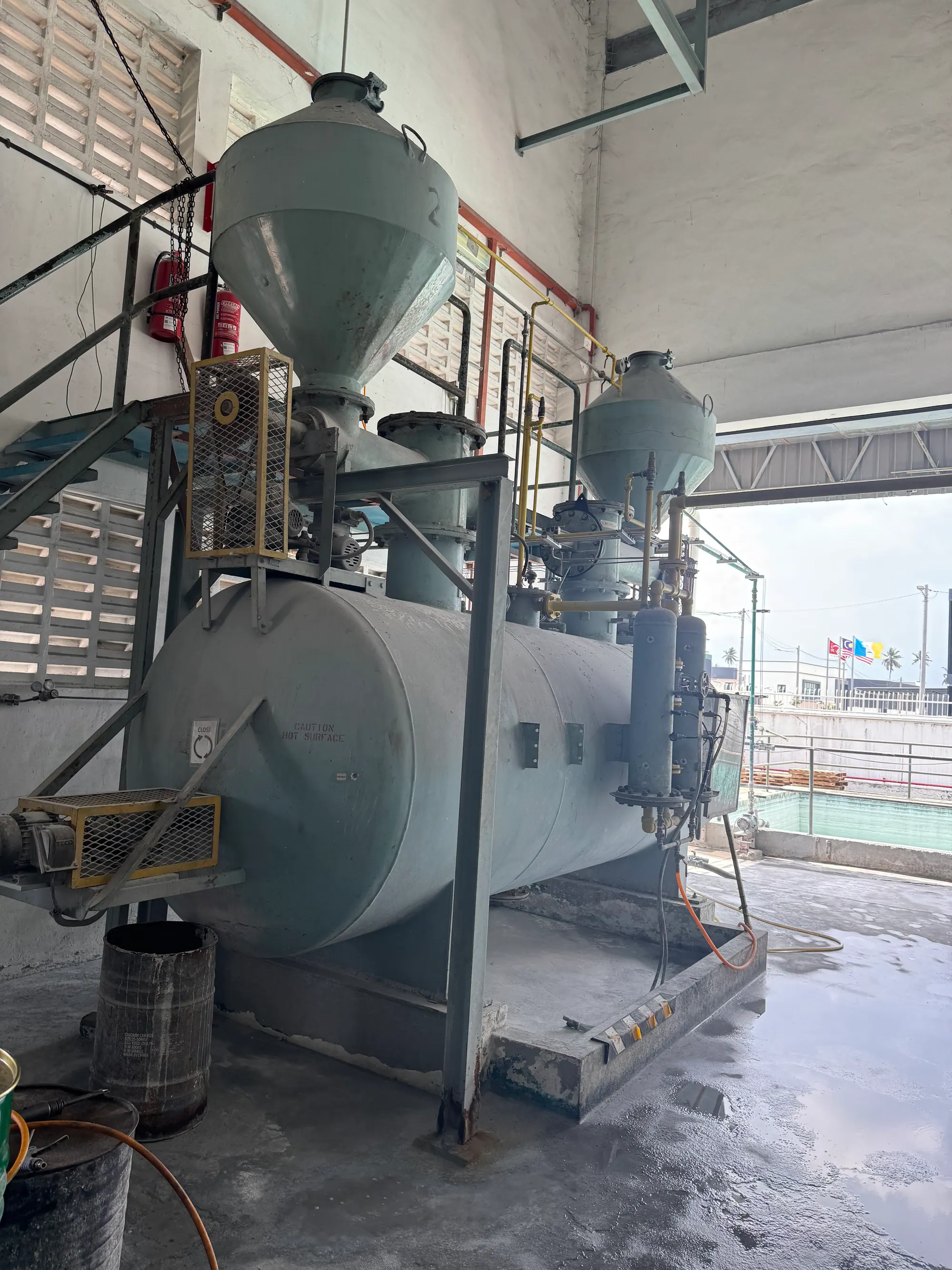
Equipment
KIGL-DA-50 acetylene gas plant — the workhorse of the range
The KIGL-DA-50 is the middle plant in the KIGL acetylene range, nominally 50 Nm³/h, and the size most of our customers run. It is built around a 2-stage reciprocating acetylene compressor and operates in the same 0.2–0.92 kg/cm²g generation band as every plant we build.
₹55,00,000 – ₹65,00,000 per plant Indicative. Your quotation is the figure that counts — price moves with quantity, cylinder size, contract term and delivery.
- 50 Nm³/h
- Nominal capacity
- Ingersoll Rand 15 T2
- Compressor
- 0.2
- Generation pressure band
- Nitrogen
- Purge medium
- IS 308 for the gas
- Governing standards
KIGL-DA-50 acetylene gas plant — 50 Nm³/h specification
The KIGL-DA-50 is the middle plant in our acetylene range, nominally 50 Nm³/h, and it is the size most of our customers actually run. Enough capacity for continuous fabrication work and for filling cylinders for your own use, without the civil works and staffing of the largest plant.
The acetylene compressor: Ingersoll Rand 15 T2, two-stage
Most plant pages stop at a capacity figure. Here is something more useful.
The DA-50 configuration is built around an Ingersoll Rand 15 T2, a two-stage reciprocating acetylene compressor. We hold its clearances, torque settings and maintenance intervals, because we run these machines in our own filling works as well as supplying them.
That has a practical consequence worth stating plainly, because it is the most common expensive mistake on this plant:
If it is knocking, it is the piston head, the connecting rod, or the gudgeon pin bush — in roughly that order. It is very rarely the crankshaft. Crankshaft is where people jump first, and it is where an unnecessary strip-down and a long outage begins.
Stop the machine and call us before you open it up.
Acetylene generation pressure and nitrogen purging
Generation pressure: 0.2–0.92 kg/cm²g, ceiling 1.05 kg/cm²g.
Acetylene decomposes explosively under pressure with no oxidant present at all. That is why an acetylene generator runs at a fraction of a bar while every other gas plant on your site runs at tens. The band is not caution; it is the envelope the machine is designed to hold, and every interlock and relief exists to keep it there.
Purge with nitrogen. Never air. Air puts oxygen into a vessel about to contain acetylene, and acetylene-air mixtures are flammable across an exceptionally wide range. It is the first thing we teach an operator and the last thing we let them forget.
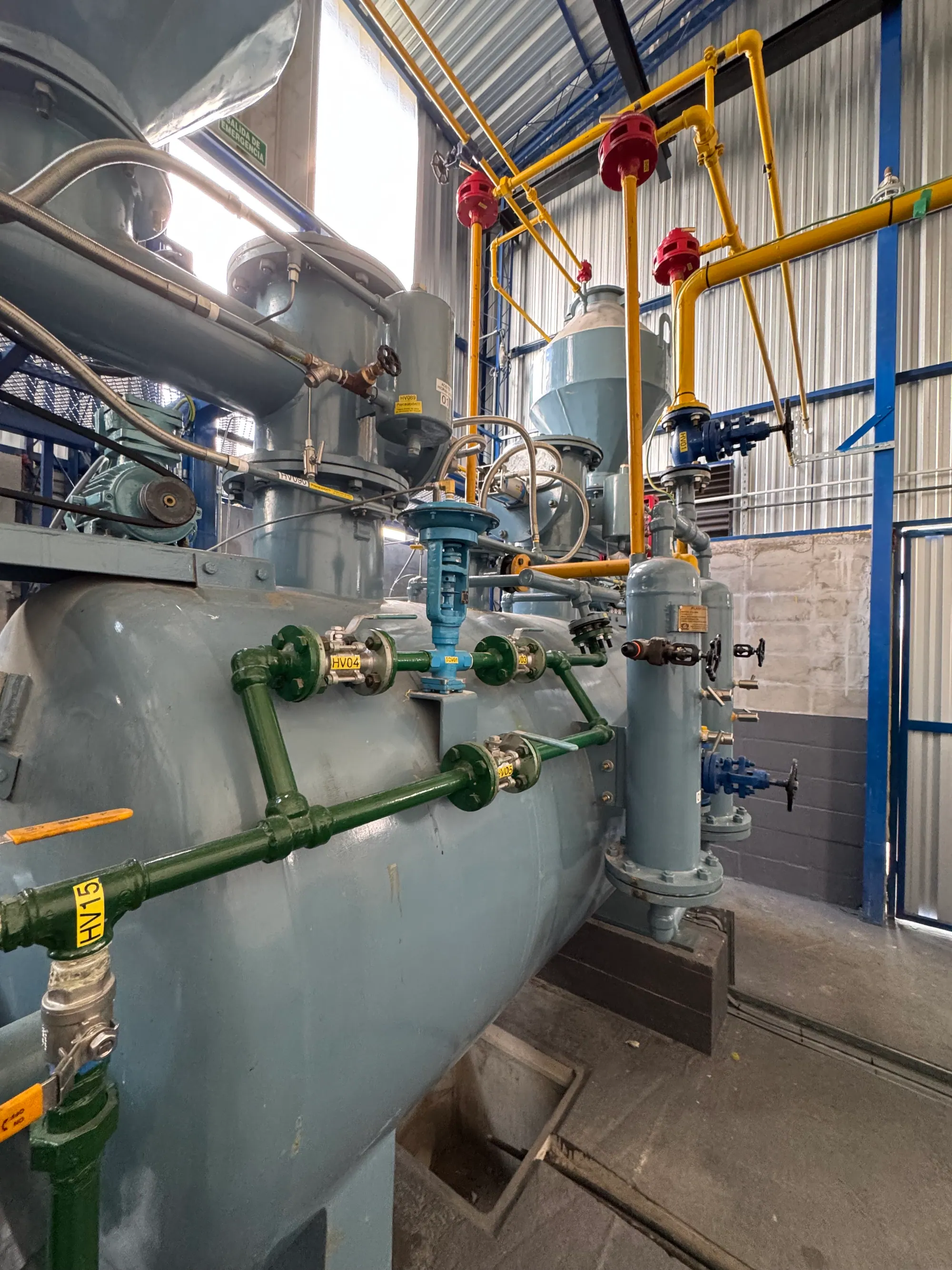
Process pipework and valve manifold on a KIGL-built industrial gas plant
Guwahati works · agent network
KIGL-DA-25, KIGL-DA-50 and KIGL-DA-100 compared
| Model | Nominal capacity | Typically suits |
|---|---|---|
| KIGL-DA-25 | 25 Nm³/h | A works that has outgrown buying cylinders |
| KIGL-DA-50 | 50 Nm³/h | Continuous fabrication, filling your own cylinders |
| KIGL-DA-100 | 100 Nm³/h | Continuous operation and cascade filling at volume |
The generation chemistry and the operating envelope are identical across all three. What changes is throughput, the size of the civil works, and how much redundancy you get. Do not choose on capacity alone — choose on whether you can run out.
PESO licence, civil works and operator training
An acetylene plant is a licensed installation, not a machine. Compliant building, separation distances, PESO licence, trained operators, a maintenance regime, and a carbide supply relationship. On a plant this size the generator is often not the largest line in the project.
We commission it, we train your operators, and we maintain plants we did not build, including plants of other makes and plants that have been standing. See the operation and maintenance guide for what running one actually involves.
Why KIGL
Why buy the KIGL-DA-50 acetylene plant from KIGL
Acetylene since 1947. Our own filling station and cylinder fleet. Contribution to the BIS committees that write the Indian standards for acetylene cylinders and generators. Very few suppliers anywhere make the gas, build the plant, and help write the rules — and when a plant misbehaves, the useful voice on the phone is one that has run the same machine.
Specification
KIGL-DA-50 acetylene gas plant — full specification
| Property | Value | Basis |
|---|---|---|
| Nominal capacity | 50 Nm³/h | Model designation |
| Compressor | IR 15 T2, 2-stage reciprocating | KIGL maintenance records (DA-50 configuration) |
| Generation pressure band | 0.2–0.92 kg/cm²g, 1.05 kg/cm²g ceiling | KIGL-DA operating manual |
| Purge medium | Nitrogen | KIGL-DA operating manual |
| Governing standards | IS 308 for the gas, IS 7312 for the cylinders it fills | Bureau of Indian Standards |
| Built since | 1947 | KIGL |
| Generation pressure, normal band | 0.2–0.92 kg/cm²g | KIGL-DA operating manual |
| Generation pressure, ceiling | 1.05 kg/cm²g | KIGL-DA operating manual |
| Feedstock | Calcium carbide | — |
| Gas specification produced | IS 308 dissolved acetylene | Bureau of Indian Standards |
Questions
KIGL-DA-50 acetylene gas plant — frequently asked questions
What compressor does the KIGL-DA-50 use?
The DA-50 configuration runs an Ingersoll Rand 15 T2 — a two-stage reciprocating acetylene compressor. We hold the clearances, torque figures and maintenance intervals for it, because we maintain them in our own filling works as well as at customer sites. That matters when you need a part or a setting at short notice.
The compressor is knocking. What is it?
In our experience on this machine, knocking is the piston head, the connecting rod, or the gudgeon pin bush — in roughly that order of likelihood. It is very rarely the crankshaft, which is where people tend to jump first and where the expensive misdiagnosis lives. Stop the machine and call us before you strip it.
Why is the generation pressure kept so low?
Because acetylene decomposes explosively under pressure with no oxidant present at all. The working band of 0.2–0.92 kg/cm²g with a 1.05 ceiling is not conservatism, it is the operating envelope the whole machine is built to hold. Every interlock and relief on the plant exists to keep it there.
Why must purging use nitrogen rather than air?
Purging with air puts oxygen into a vessel that is about to contain acetylene, and acetylene-air mixtures are flammable across an exceptionally wide range. Nitrogen purging is the rule, not a refinement, and it is the single item we most emphasise in operator training.
How does this compare with the KIGL-DA-25 and KIGL-DA-100?
The 25 is the entry plant for a works that has outgrown cylinders. This one is the workhorse — enough capacity for continuous fabrication work and for filling cylinders for your own use. The 100 is for continuous operation and cascade filling at volume. The generation chemistry and the operating envelope are identical across all three; what changes is throughput and how much redundancy you get.
Do you support plants you did not build?
Yes. We audit, service and re-commission acetylene plants of other makes, including plants that have been standing. We would rather look at a neglected plant than read about it afterwards.
Read next
Enquiries
Request a quotation for KIGL-DA-50 acetylene gas plant
State the gas or equipment, the quantity or capacity, and your location. KIGL will confirm the grade, the cylinder or plant size, and whether the location can be served from Noonmati, or through our agent network.