
Guide
Maintenance and hot work in an acetylene plant: stop purge, repair, purge again
Maintenance in an acetylene plant follows one sequence: stop the plant, isolate and depressurise, purge the section with nitrogen or a water flush, gas-test below the 2.2 % lower flammable limit, repair with non-sparking tools that are not copper alloys, then purge the air out again before acetylene returns.
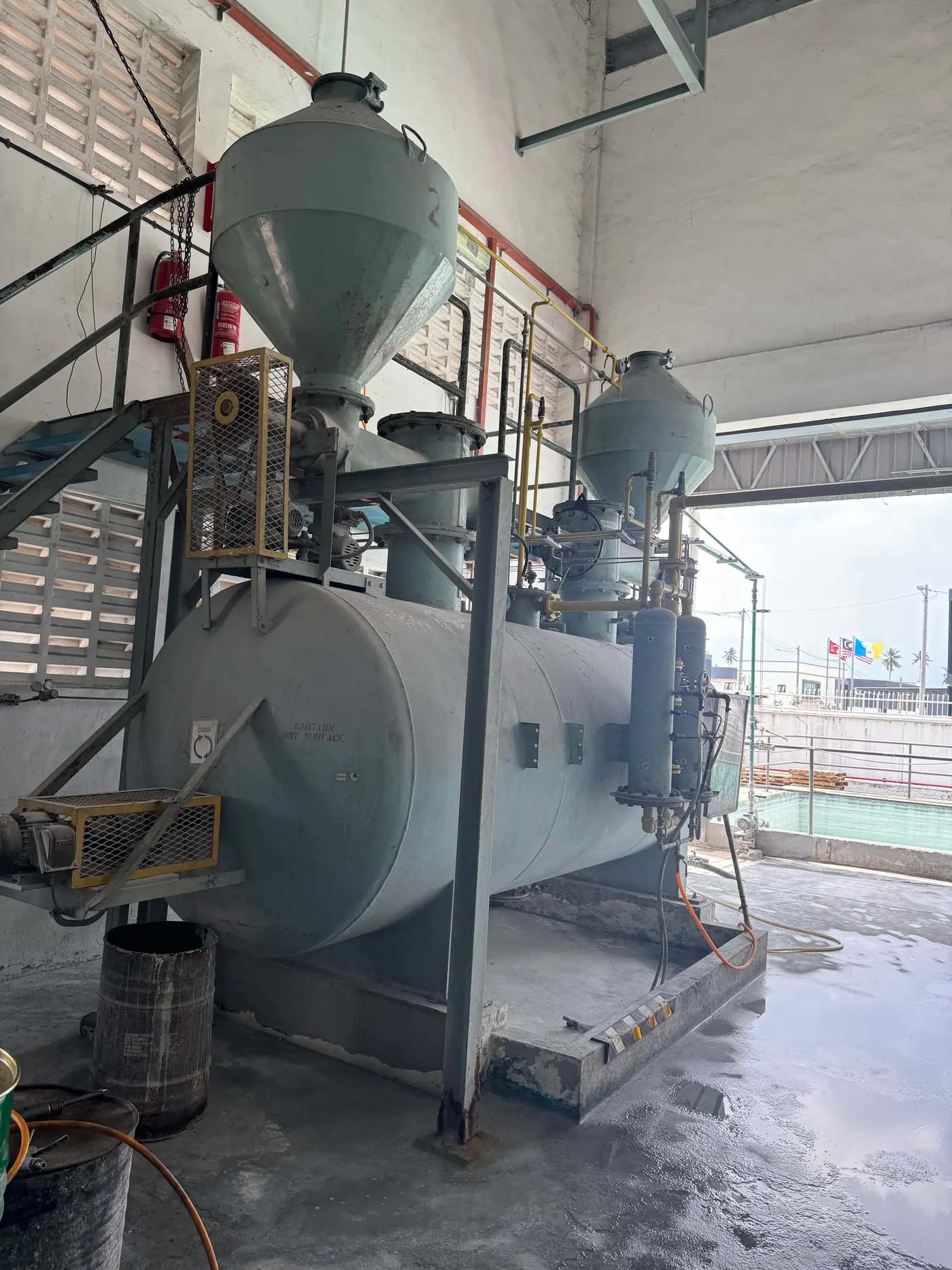
- Repair rule
- Never repair while the plant is operating; stop
- Tools
- Containers
- Ignition by hot surfaces
- Acetylene initiated by a clean surface at about 425 °C and by powdered material at about 280 °C; heat by hot fluids
- Exclusion distance
- No smoking or open flame within 15 m of the charging plant
- Post-incident rule
- After an explosion has occurred
Most acetylene plant accidents do not happen while the plant is making gas. They happen when it is being opened, cleaned, repaired or modified: a chamber unbolted with acetylene still inside, a steel tool striking a steel flange, a weld run on a pipe nobody purged, a part replaced with one that looks the same but is not. The rule that prevents nearly all of them is in KIGL's manual in one line: never repair while the plant is operating. Everything below is how to apply it.
Why maintenance is the dangerous time
During operation an acetylene plant is full of acetylene and nothing else, which is safe from fire if not from decomposition. During maintenance air gets in, and acetylene with air is flammable from about 2.2 % upward (the KIGL manual figure; IS 14814:2023 gives 2.5 %) with a minimum ignition energy of about 0.02 mJ, far below a static discharge from a person. The incident record compiled by S. A. Miller (1965) includes a generator chamber that exploded during dismantling when a residual acetylene-air mixture was ignited by impact sparks, described as a typical hazard; another generator exploded while being transported carelessly. Both were maintenance and handling events, not operating ones.
Heat matters as well as sparks. Acetylene is initiated by a clean surface at about 425 °C and by powdered material, rust or scale at about 280 °C, as compiled by S. A. Miller (1965). That is why acetylene vessels are never warmed with a flame or an electric heater, why the KIGL building specification allows only steam, hot water or indirect heating with the boiler in a separate gas-tight room, and why the surface temperature of motors and light fittings in the plant is limited.
The sequence: stop, purge, repair, purge
| Step | What it means in practice |
|---|---|
| Stop | Hopper switches off; compressor stopped on its low-pressure switch; carbide hoppers run empty if the generator is to be opened |
| Isolate | Close the section's inlet and outlet valves slowly so air is not drawn in; lock out every energy source, electrical, hydraulic, pneumatic and stored mechanical |
| Depressurise | Vent through the dedicated vent lines to outside; never to the room |
| Purge | Nitrogen or a water flush, never carbon dioxide: EIGA Doc 237/21 cl 6.1 prohibits CO₂ as a purge gas because of static. Older KIGL manuals and the C.P.I. (1968) also list CO₂; the governing rule is nitrogen |
| Gas test | Calibrated detector below the lower flammable limit, monitored continuously while work goes on |
| Repair | Non-sparking, non-copper tools; tools wetted with oil or water; rubber or rawhide hammers; wooden paddle inside the generator |
| Test | Pressure test with nitrogen only, never air or acetylene; soap solution on joints |
| Purge again | Nitrogen until the outgoing gas holds not more than 2.5 % oxygen (IS 15190 Part 1 cl 12.6.3), then acetylene purge cycles before return to service |
The purge after repair is the step most often skipped. A repaired section full of air connected back to a plant full of acetylene is a mixture waiting for a pump or a valve to compress it. The start-up and purging guide gives the cycles.
Tools and materials
IS 14814:2023 clause 7.3.4 says containers, pipes, valves and fittings of copper or copper alloys, brass and bronze included, should not be used in acetylene filling and storage premises. That is stricter than the 70 % copper limits of European and Indian cylinder-valve rules, and it sits uneasily with the 1968 C.P.I. code, which allowed wood or brass tools for scraping hardened lime from generator walls. KIGL's manual takes the cautious line for tools: a wooden paddle only inside the generator, never a metal tool or scraper that might spark; rubber or rawhide hammers; spark-resistant tools wetted with oil or water. Drums of carbide are opened only with tools designed not to spark.
Replacement parts are a materials question too. The reason for the copper rule is acetylide, which forms on copper-rich surfaces and detonates on friction or impact; see copper and acetylene. Audits of plants of several makes have found copper pipe in a compressor vent line, plastic tube on a crankcase, a glass tube on a scrubber and a gauge in a plastic box. Plastic ruptures or melts and glass shatters, and either releases gas that cannot be stopped until the plant is shut down. Only rated metal parts of the specified material go back in.
Rules that matter
The yearly tank clean is the largest routine job, and its steps exist for safety:
Opening the generator
- Let both hoppers run empty on the last shift, so no carbide is left to react with air and moisture.
- Close the arrestor outlet valves, switch off the hopper, fill with water and agitate to thin the sludge, vent through the safety valve handle, drain fully.
- Remove the flexible coupling between agitator and gearbox and isolate the control panel, so nothing can start with hands inside.
- Ventilate the room thoroughly, as the C.P.I. code required during cleaning of generators and inspection of driers and purifiers.
- Flush with a hose; scrape with a wooden paddle; clear spray nozzles, feed-tube ends and the riser.
- Wear protective clothing, goggles, rubber boots, gloves and a rubber apron; carbide lime is caustic and is washed off skin with fresh water.
- Close up with new gaskets, refill, purge all air through the safety and hopper vent valves, soap-test, refit the coupling.
The discharged sludge still contains dissolved acetylene, about 0.5 to 1 % of the plant's make (Hölemann et al., 1959). It goes to a vented outdoor pit and is held at least ten hours in not less than four times its bulk of water before any discharge, so that it cannot evolve gas into a confined space.
Hot work near the plant
Smoking and any open flame, welding and cutting included, are excluded within 15 m of the charging plant under KIGL's building specification, and the main control panel sits 15 m from the generator building. Hot work that must be done inside that zone is done under a written hot-work permit with the affected section stopped, purged and gas-tested, continuous detection running, a fire watch, extinguishers at hand and the permit signed off on completion. Wherever possible the part is removed, purged and taken to a safe area instead. OSHA's 29 CFR 1910.252 fire-prevention rules give the same structure for hot work generally.
Electric hoists over generators are a hazard in themselves. One audited plant had a hoist with a history of sparking above a generator; the remedy was a pneumatic hoist.
After an incident
The C.P.I. code's rule is the right one: after an accident in which an explosion has occurred, or is believed to have occurred, the installation is carefully inspected and tested before it is put back into service. Soot is the signature of decomposition. KIGL's investigations treat soot below the design water line of a wet arrestor as proof that it ran dry, replace soot-contaminated pipe rather than cleaning it, and check every safety valve that the decomposition products passed through. The troubleshooting guide covers the lesser faults.
Modification is maintenance too
The commonest finding across five plants KIGL has audited was not a missed repair but an unrecorded change: an arrestor replaced with a plain flame arrestor that has no non-return valve, a safety valve swapped for one with no manual lever, a rigid coupling where a flexible one was specified, a panel rewired. Each part looked right; each removed a safety function. The answer is management of change: no change to an acetylene plant without a written, signed authorisation, recorded in the maintenance log book.
Rules that matter
Rules to apply
- Never repair while running. Stop, isolate, depressurise, purge, test, repair, test, purge.
- Non-sparking tools, no copper alloys, wooden paddle inside the tank.
- Gas-test continuously; pressure-test with nitrogen only.
- Hot work only under permit, outside 15 m or with the section purged and monitored.
- Inspect before restart whenever an explosion is even suspected.
- Change nothing without a permit-to-modify. The maintenance calendar lists what to check, and KIGL supports plants of any make on site.
Maintenance — frequently asked questions
Can an acetylene leak be repaired while the plant is running?
No. KIGL's manual is explicit that leaks are never rectified while the plant is running. Stop the plant, isolate and depressurise the section, purge it with nitrogen or a water wash (EIGA Doc 237 prohibits CO₂ as a purge gas because of static), repair it, then purge the air out again before acetylene is admitted. A leak is found by its garlic smell and confirmed with soap solution, never with a flame.
Are brass tools allowed in an acetylene plant?
Treat them with caution. IS 14814:2023 clause 7.3.4 says containers, pipes, valves and fittings of copper and copper alloys, including brass and bronze, should not be used; it does not itself set a tool rule. The 1968 C.P.I. code permitted wood or brass for scraping lime from generator walls. KIGL's manual specifies a wooden paddle only inside the generator, never metal tools, and spark-resistant tools, rubber or rawhide hammers and tools wetted with oil or water elsewhere.
How is hot work done near an acetylene plant?
Under a written hot-work permit, with the plant section stopped, purged and gas-tested continuously below the lower flammable limit, a fire watch posted, extinguishers at hand and at least 15 m from the generator and charging plant. Where the job is on acetylene equipment itself the equipment is removed to a safe area after purging wherever possible.
Why must a generator be purged before it is opened?
Because a generator stopped and drained still holds acetylene in its gas space, in the sludge and in pockets around the feed tubes. Opening it lets air in and creates exactly the mixture that ignites on an impact spark. The incident record compiled by S. A. Miller (1965) includes a generator chamber exploding during dismantling from a residual acetylene-air mixture ignited by impact sparks, described as a typical hazard.
How should acetylene equipment be pressure tested after repair?
With nitrogen only before acetylene is admitted, never with air and never with acetylene, raising pressure gradually and checking joints with soap solution. KIGL's post-erection test on a generator is 1.5 times working pressure, done with nitrogen and followed by a purge with dry nitrogen; IS 8471:2003 cl 4.4 sets generator test pressure at 200 % of design pressure.
When does the plant need inspection before restart after an incident?
Whenever an explosion has occurred or is believed to have occurred anywhere in the installation. The C.P.I. code set that deliberately low threshold. Soot anywhere in the gas path, a lifted safety valve, a burst disc, a hot spot or an unexplained bang are all reasons to strip and inspect, and soot-contaminated pipe sections are replaced rather than cleaned and reused.
References
- Bureau of Indian Standards. (2003). Acetylene Generators — Requirements (IS 8471:2003, First Revision).
- Bureau of Indian Standards. (2023). Acetylene — Code of Safety (IS 14814:2023, First Revision).
- European Industrial Gases Association. (n.d.). Acetylene Generation (EIGA Doc 237).
- Occupational Safety and Health Administration. (n.d.). Welding, cutting and brazing — fire prevention and hot work (29 CFR 1910.252).
Enquiries
Request a quotation
State the gas or equipment, the quantity or capacity, and your location. KIGL will confirm the grade, the cylinder or plant size, and whether the location can be served from Noonmati, or through the agent network.