
Guide
Acetylene or LPG for cutting: where each one actually wins
Acetylene burns near 3,100 °C against roughly 2,800 °C for LPG with oxygen, and its primary cone is tighter, so it pierces faster and leaves a narrower heat-affected zone. LPG costs less per cubic metre and suits long continuous cuts on thick plate. Pierce count usually decides which is cheaper.
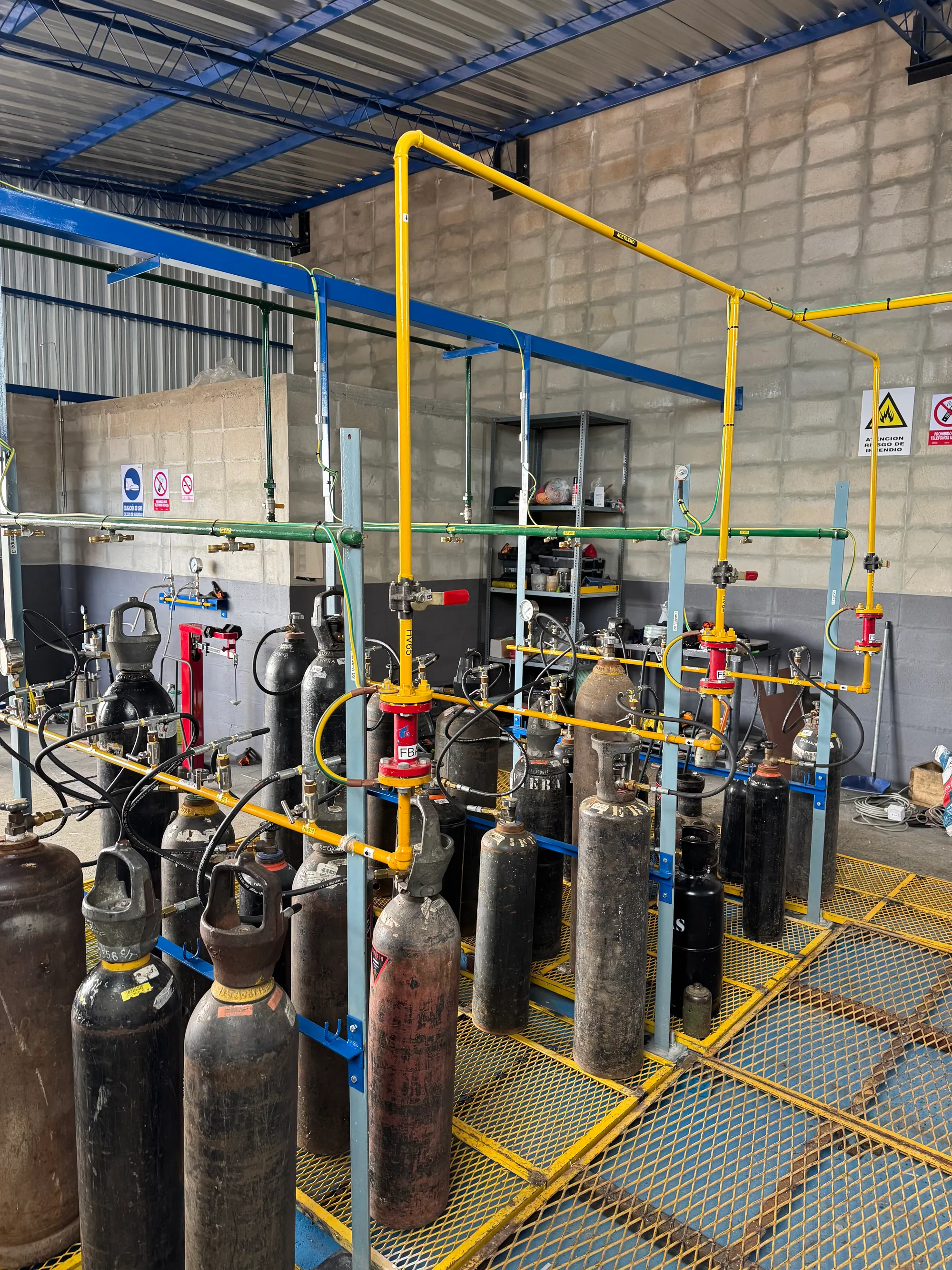
- Acetylene flame temperature in oxygen
- ≈3
- Acetylene flammability range in air
- 2.5 % to 82 %
- Free acetylene at the point of use
- 0.62 bar g
- Acetylene cylinder colour
- Maroon
- LPG cylinder colour
- Signal red
The honest answer
Neither gas is better. They are different tools, and the job decides.
Acetylene burns hotter and tighter. LPG costs less and burns cooler over a wider area. If your work is full of pierces, acetylene usually finishes cheaper despite costing more per cubic metre. If it is long straight cuts on thick plate, LPG often wins.
Anyone who tells you one gas is simply better has not asked what you are cutting.
The physical difference
| Acetylene | LPG / propane | |
|---|---|---|
| Flame temperature with oxygen | ≈3,100 °C | ≈2,800 °C |
| Primary cone | Short, sharply defined | Broader, more diffuse |
| Heat concentration | High | Lower, spread wider |
| Oxygen needed per unit of fuel | Lower | Higher |
| Cost per cubic metre | Higher | Lower |
| Flammability range in air | 2.5 % – 82 % | Narrower |
| Density vs air | Slightly lighter | Heavier — pools low |
Where acetylene wins
Pierce time
This is the real argument. A hotter, tighter cone brings the plate to ignition temperature sooner, so the cut starts sooner. On a job with fifty pierces, fifty small savings add up faster than the price difference in the gas.
Thin material
The narrower heat-affected zone matters most where there is least metal to absorb it. Less distortion, better edges.
Edge quality
Concentrated heat rounds the top edge less. If the cut face is finished, that is worth paying for. If it will be machined anyway, it is not.
Anything but cutting
Brazing, flame hardening, hardfacing, thermal spraying and flame straightening all depend on heat concentration, and the case for acetylene there is not close.
Where LPG wins
Gas cost
Substantially cheaper per cubic metre. On high-volume, low-pierce work that is the dominant number.
Long continuous cuts on thick plate
Once the cut is running, the temperature advantage matters much less than it did at the pierce.
Storage simplicity
LPG is an ordinary liquefied gas. No porous mass, no solvent, no one-seventh draw-off rule, no sub-bar pressure ceiling.
The number people forget
LPG needs more oxygen per unit of fuel than acetylene. Because oxygen is usually the larger part of an oxy-fuel gas bill, part of the LPG saving comes straight back as oxygen consumption. Compare total gas cost per metre cut, including oxygen and including pierce time — not cylinder price against cylinder price.
Safety differs, it does not improve
Neither gas is the safe one. They are dangerous differently:
- Acetylene carries a heat of combustion of 312 kcal/mol (IS 14814 : 2023 cl 4.3.12) — the figure behind the hottest flame in industrial use — and ignites from 2.5 % to 82 % in air — almost any leak that mixes with air will burn — and can decompose explosively with no oxygen present at all, which is why free acetylene is held below 0.62 bar g. No other fuel gas does that.
- LPG is heavier than air. It flows downhill and collects in pits, trenches, drains and basements, where it can sit for a long time waiting for an ignition source.
Both need flashback arrestors at the regulator and the torch. Neither tolerates the other's equipment: nozzles, regulators and hoses are gas-specific, and swapping the cylinder without swapping the kit is how people get hurt.
Choosing
Ask three questions:
- How many pierces per job? Many → acetylene. Few → LPG.
- How thick, and how long are the cuts? Thin or short → acetylene. Thick and long → LPG.
- Is the cut face finished? Yes → acetylene. Machined later → either.
And if you also braze, flame-harden or spray, you will need acetylene on site regardless, which usually settles the argument on its own.
Tell us what you cut, how thick, and how many pierces a shift, and we will tell you which gas costs you less — including when the answer is not the one we sell more of.
Sources
Acetylene or LPG — frequently asked questions
Which gas cuts faster?
It depends on which part of the cut you mean. Acetylene pierces faster, because its hotter, tighter primary cone brings the steel to ignition temperature sooner. Once the cut is running, the difference in travel speed is much smaller. So the more pierces a job has, the more acetylene wins; on long straight cuts the gap narrows considerably.
Is LPG cheaper overall?
Per cubic metre, yes, and by a wide margin. Whether the job is cheaper is a different question. LPG needs more oxygen per unit of fuel, so oxygen consumption rises and part of the saving goes back. Add pierce time and, on high-pierce-count work, acetylene can finish ahead despite costing more to buy.
Can I use my acetylene equipment with LPG?
No. The gases need different nozzles, different regulators and different hose materials, and the mixing ratios are not comparable. Cutting nozzles in particular are designed around a specific fuel gas and will not perform — or be safe — with another. Change the equipment, not just the cylinder.
Which is safer?
They fail in different ways rather than one being simply safer. Acetylene ignites across a much wider range in air, 2.5 % to 82 %, and can decompose explosively with no oxygen present, which no other fuel gas does. LPG is heavier than air and pools in pits, trenches and low spaces where it can sit unnoticed. Both need flashback arrestors at every take-off.
Which should I use on thin sheet?
Acetylene. The narrower heat-affected zone matters most where there is least metal to absorb it, so thin material distorts less and edge quality is better. On thick plate with long continuous cuts, the argument for LPG is much stronger.
Does either affect cut quality?
Yes. Acetylene generally gives a cleaner top edge and less rounding, because the heat is concentrated. LPG's broader flame tends to round the top edge more, which matters if the cut face is a finished surface and matters very little if it will be machined or welded afterwards.
Enquiries
Request a quotation
State the gas or equipment, the quantity or capacity, and your location. KIGL will confirm the grade, the cylinder or plant size, and whether the location can be served from Noonmati, or through our agent network.