
Standards · IS 308 · IS 7312:2018 · IS 8433:2017
IS 308 and IS 7312: the standards for dissolved acetylene in India
Dissolved acetylene in India is governed by IS 308 for the gas specification, IS 7312 for the cylinder, IS 16271 for inspection at filling, IS 8433 for periodic inspection and IS 11006 for flashback arrestors, all under the Gas Cylinders Rules 2016. Acetylene has its own cylinder standard because no other gas behaves like it.
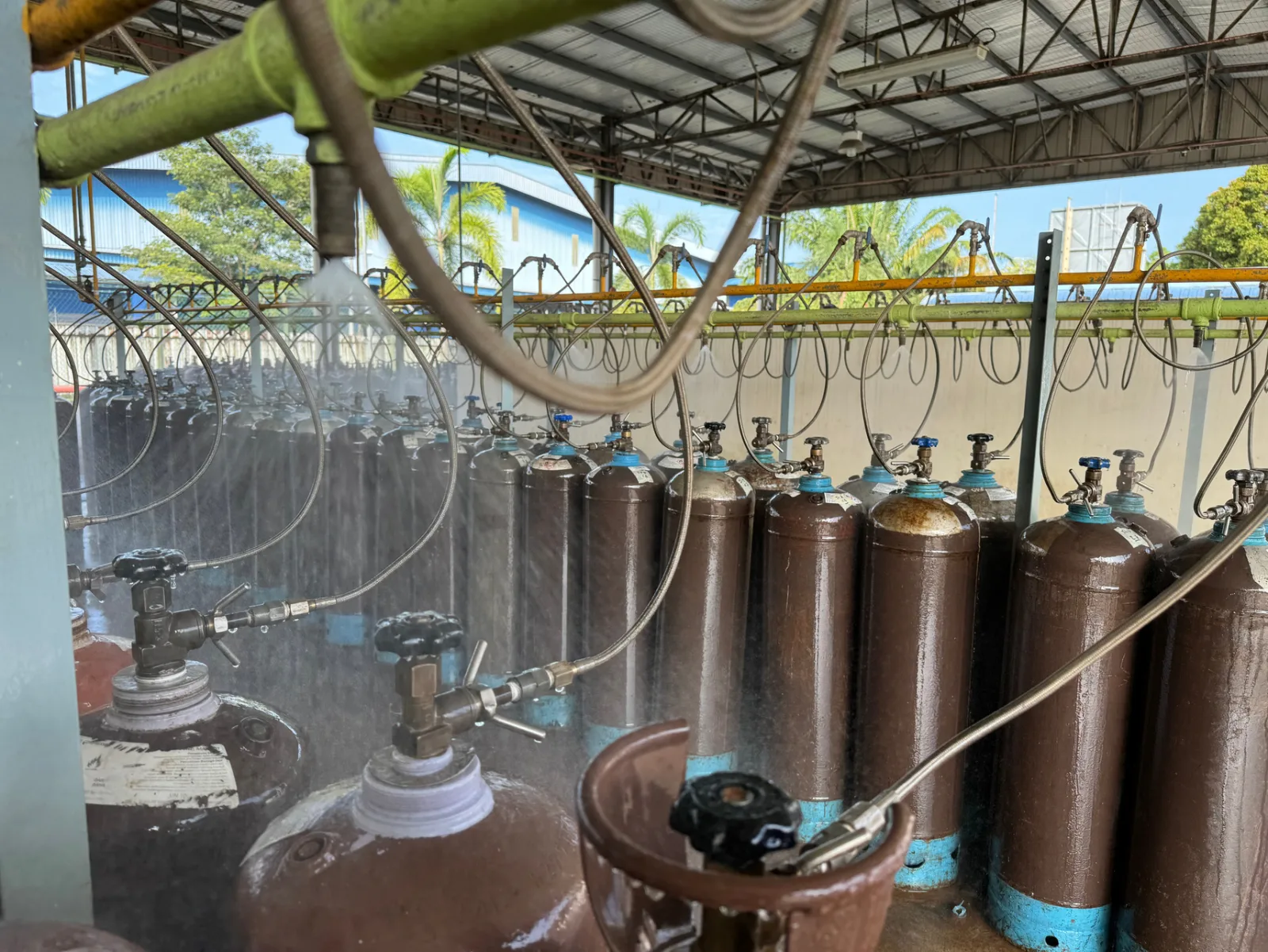
- Gas specification
- IS 308
- Cylinder construction
- IS 7312:2018
- Inspection at filling
- IS 16271:2014
- Periodic inspection
- IS 8433:2017
- Flashback protection
- IS 11006:2011
Why acetylene is a special case
Every other industrial gas we fill shares a cylinder standard. Oxygen, nitrogen, argon, hydrogen, carbon dioxide and nitrous oxide all go into cylinders built to IS 7285. Acetylene does not, and the reason is worth understanding before reading any of the standards.
Acetylene decomposes explosively under pressure without needing oxygen at all. It is not a fuel that becomes dangerous when it meets air; it is a molecule that comes apart on its own if compressed. That single property makes an ordinary compressed-gas cylinder impossible.
So the gas is dissolved in acetone, which is absorbed into a porous mass filling the whole cylinder. What you are handling is not a tank of gas — it is a solid block, soaked in solvent, holding acetylene in solution. Every acetylene-specific standard in the list below exists because of that.
The five standards that matter
IS 308 — the gas
The specification for dissolved acetylene: purity and the impurity limits, principally phosphine and hydrogen sulphide, which are the contaminants that come through from calcium carbide. This is the standard quoted on tenders and the one KIGL fills to at ≥98 %.
IS 7312:2018 — the cylinder
Welded or seamless steel dissolved-acetylene cylinders, 0.5 to 130 litres water capacity. Covers the shell, the porous mass and the solvent charge. It is not interchangeable with IS 7285 in either direction.
IS 16271:2014 — inspection at filling
Acetylene is explicitly excluded from IS 16050, the general standard for inspection at time of filling, and gets its own. The checks differ because the things that can be wrong differ: the state of the porous mass and the acetone level have no equivalent on any other cylinder.
IS 8433:2017 — periodic inspection
Inspection and maintenance of DA cylinders in service. Acetylene runs a shorter requalification cycle than other gases — two years against five in group practice — because the porous mass settles and cracks, and acetone is lost through normal use. Neither shows up on the kind of hydrostatic test that requalifies an oxygen cylinder.
IS 11006:2011 — flashback protection
The Indian Standard for flame arrestors on acetylene lines and cutting equipment. A flashback travels back up the hose towards the cylinder; the arrestor is what stops it. We manufacture these, and we would still tell you to fit them.
Alongside these sit IS 5903:2014 for cylinder safety devices, IS 15975:2020 for filling conditions, and above all of them the Gas Cylinders Rules, 2016, administered by PESO, which is where the legal obligation actually lives. The Indian Standards tell you how; the Rules tell you that you must.
What this means in practice
Never accept an acetylene cylinder without checking the test date
The two-year cycle is short enough that overdue cylinders circulate, and a customer holding one is holding a compliance problem as well as a safety problem.
Never lay one down
Horizontal storage lets liquid acetone reach the valve, and it is then drawn off with the gas — starving the porous mass, contaminating the flame and damaging downstream equipment. A cylinder that has been horizontal must stand upright for at least an hour before use.
Never draw too fast
Exceeding the safe withdrawal rate pulls acetone out with the gas. Where a high continuous rate is needed the answer is a cascade, not a bigger single cylinder.
Never use copper
Acetylene forms explosive copper acetylides. This rules out copper and high-copper alloys anywhere in contact with the gas — a detail that catches people fitting general-purpose fittings.
Fit arrestors at both ends
Regulator and torch. One is not a system.
Who writes these standards
The BIS committee responsible for gas cylinders is MED-16, and the KIGL group has contributed to the committee work behind the Indian standards for acetylene cylinders and generators. That is the reason these pages exist: the questions arrive weekly from purchase teams and safety officers, the answers are spread across a dozen separate documents that cost money to obtain, and we are in an unusually good position to explain them.
What follows from that is a limit as much as a claim. These pages are not the official text. BIS holds copyright and sells the authoritative version, and where compliance is at stake that is the only document that counts. Nothing here overrides the Gas Cylinders Rules, your PESO licence, or your own written procedures.
IS 308 — specification
| Property | Value | Method / basis |
|---|---|---|
| Gas specification | IS 308 | Dissolved acetylene, purity and impurity limits |
| Cylinder construction | IS 7312:2018 | Welded/seamless steel, 0.5–130 L water capacity |
| Inspection at filling | IS 16271:2014 | DA cylinders — acetylene excluded from IS 16050 |
| Periodic inspection | IS 8433:2017 | Code of practice, DA cylinders |
| Flame arrestor | IS 11006:2011 | Acetylene lines and cutting equipment |
| Safety devices | IS 5903:2014 | Safety devices for gas cylinders |
| Filling conditions | IS 15975:2020 | Charging pressure and filling ratios |
| Statutory framework | Gas Cylinders Rules, 2016 | PESO |
IS 308 — frequently asked questions
Why does acetylene have its own cylinder standard when every other gas shares IS 7285?
Because an acetylene cylinder is not a pressure vessel holding compressed gas — it is a vessel packed with a solid porous mass, charged with acetone, in which the acetylene is dissolved. Acetylene decomposes explosively under pressure with no oxidant present at all, so it can never simply be compressed. IS 7312 covers a fundamentally different object from IS 7285, which is why the two standards cannot be interchanged.
What does IS 308 actually require?
IS 308 is the Indian Standard for dissolved acetylene and sets the specification including impurity limits for phosphine and hydrogen sulphide. KIGL fills to ≥98 % against it. Our ultra-high-purity grade at 99.99 % is a different product in a different solvent and is not what IS 308 describes.
How often must an acetylene cylinder be retested?
Acetylene cylinders are on a shorter cycle than other gases — group practice is two years for dissolved acetylene against five for other cylinders — with the statutory interval set by the Gas Cylinders Rules and the inspection procedure by IS 8433. The shorter interval exists because the porous mass and the acetone charge degrade in ways that a hydrostatic test on an ordinary cylinder would never reveal. Confirm the current interval against your PESO licence.
Is a flashback arrestor legally required?
IS 11006 is the Indian Standard for flame arrestors on acetylene lines and cutting equipment, and safe practice — as well as most customers' own safety procedures and insurers — requires them at both the regulator and the torch. Treat a flashback arrestor as part of the system rather than an accessory. We manufacture them, so we have no interest in talking you out of fitting one.
Why is acetylene excluded from IS 16050?
IS 16050 covers inspection at the time of filling for cylinders generally, and it explicitly excludes acetylene. Acetylene gets its own equivalent, IS 16271, because the checks are different — the condition of the porous mass and the acetone level are the things that matter, and neither exists on any other cylinder.
Which standard covers the acetylene plant itself?
The standards above govern the gas and the cylinder, not the generating plant. Plant design, operation and maintenance are a separate body of practice — our guide to acetylene plant operation covers the working detail, including the generation pressure band and carbide handling.
Do these standards apply to imported acetylene cylinders?
Cylinders in service in India must comply with the Gas Cylinders Rules regardless of where they were made, which in practice means approval by PESO. Do not assume a cylinder built to an EN or DOT standard is acceptable here without checking. This catches out companies importing equipment packages with cylinders included.
Enquiries
Request a quotation
State the gas or equipment, the quantity or capacity, and your location. KIGL will confirm the grade, the cylinder or plant size, and whether the location can be served from Noonmati, or through our agent network.