
Guide
How much water per kilogram of carbide does an acetylene generator need and why 6 to 8 litres
A carbide-to-water acetylene generator needs a large excess of water because the reaction releases about 429 kcal per kg of commercial carbide. KIGL plants run at 6 to 8 litres per kg, never below 6.0; IS 8471:2003 asks for 8 litres per kg unless both feeds are continuous. The floor rises with pressure.
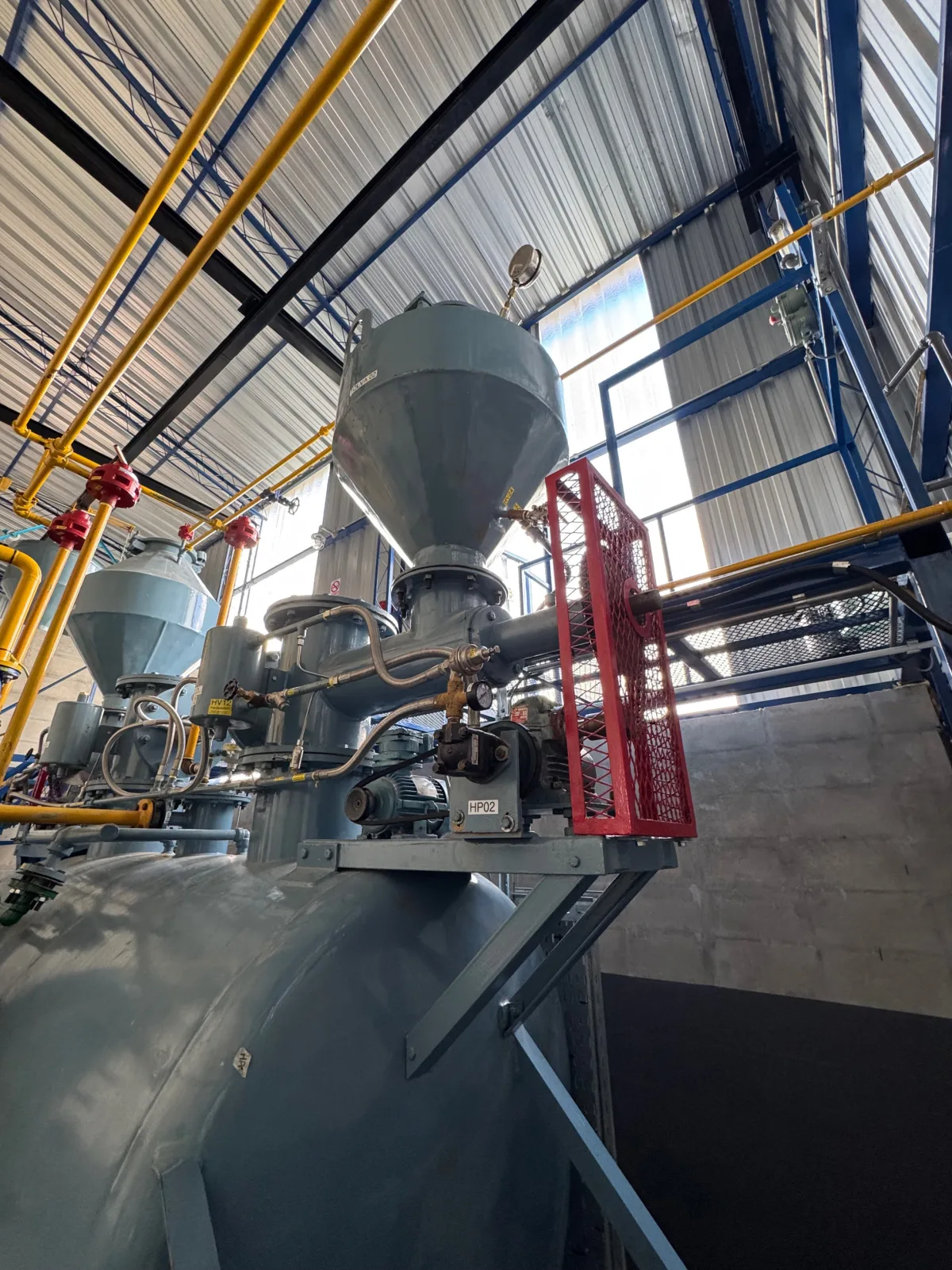
- KIGL operating band
- 6 to 8 litres of water per kg of carbide; 6.0 litres per kg minimum; weekly total within 7.5 times the carbide used
- Heat released
- About 429 kcal per kg of 300 l/kg commercial carbide
- Why 6 to 1 is the floor
- At 6 litres per kg a low-pressure generator settles near 75 °C and the slurry is about 18 % solids; both limits coincide
- Medium-pressure correction
- At 1.5 to 2 atm absolute the same temperature limit needs about 6.4 litres per kg
- Indian standard
- Not less than 8 litres per kg of carbide the holder can introduce
Every carbide-to-water acetylene generator depends on one number: how many litres of water it admits for each kilogram of calcium carbide. KIGL plants are specified at 6 to 8 litres per kg, never below 6.0, and the reason is not tradition. The reaction between carbide and water is strongly exothermic, and the excess water is the only heat sink the generator has.
How much heat does the reaction release?
Calcium carbide reacts with water to give calcium hydroxide and acetylene, releasing about 31.0 kcal per mole of CaC₂ when calculated from the heats of formation in the Handbook of Chemistry and Physics. For pure carbide that is about 484 kcal per kg. Commercial carbide of 300 l/kg gas yield is roughly 82 % CaC₂ and 12 % CaO, and when the heat of hydrating the lime is included it releases about 429 kcal per kg, consumes about 499 g of water, gives 333 g of acetylene and leaves about 1,166 g of solid residue, as compiled by S. A. Miller (1965).
If none of that heat were removed, the 1,166 g of lime and 333 g of gas would be heated by roughly 730 °C. Long before that, the acetylene itself begins exothermic polymerisation and decomposition, so the rise is self-accelerating. Two experiments anchor the point. Hauser (1954) recorded 580 °C within 34 minutes of treating carbide with an equal weight of water. The US Bureau of Mines (Huff, RI 3794, 1945; Jones, Scott, Kennedy and Spolan, RI 4067, 1947) found that moist air at 70 °C heated 14 to 28 mesh carbide until it glowed at about 1,100 °C. Carbide with too little water is not a slow reaction; it is a hot one.
Why 6 litres per kilogram is the floor
A generator that feeds water and carbide continuously, as every KIGL automatic plant does, settles at an equilibrium temperature set almost entirely by the water-to-carbide ratio. The thermal balances compiled by Miller for a 300 l/kg carbide with 15 °C feedwater at atmospheric pressure give roughly 56 °C at 10 litres per kg, 64 °C at 8 and 75 °C at 6. The gas leaving a wet generator is in equilibrium with the water, so these temperatures are ceilings the generator cannot exceed on its own, provided the feedwater is at the assumed 15 °C.
Where both water and carbide are fed continuously, the codes compiled by S. A. Miller (1965) specify a maximum generation temperature of 75 °C and also require the slurry to stay fluid enough to drain; for batch-water generators the British Acetylene Association's low-pressure code (1938) asked for 10 litres per kg. Both conditions happen to land at the same number: at 6 litres per kg the slurry is about 18 % solids. That coincidence is why 6 to 1 has survived as the industry floor for more than eighty years. The German regulations of 1923, as revised to 1962 (Engel), ask for 10 litres per kg but allow a reduction where clogging and high temperature are prevented by design; they also cap wet generation at 70 °C, which is the ceiling KIGL uses.
| Water per kg carbide | Equilibrium temperature, low pressure | Slurry solids | Comment |
|---|---|---|---|
| 10 litres | about 56 °C | well below 18 % | German baseline; dilute, more water to the pit |
| 8 litres | about 64 °C | below 18 % | IS 8471 cl 8.2.1 figure; EIGA Doc 237 typical |
| 6 litres | about 75 °C | about 18 % | long-standing industry floor; KIGL minimum |
| 6 litres at 2.5 atm absolute | about 82 °C | about 18 % | pressure suppresses evaporative cooling |
Temperatures are the calculated adiabatic equilibria compiled by Miller from Handbook of Chemistry and Physics data with 15 °C feedwater; a real generator loses some heat and runs a few degrees cooler. The 82 °C row is why the water floor must rise with pressure.
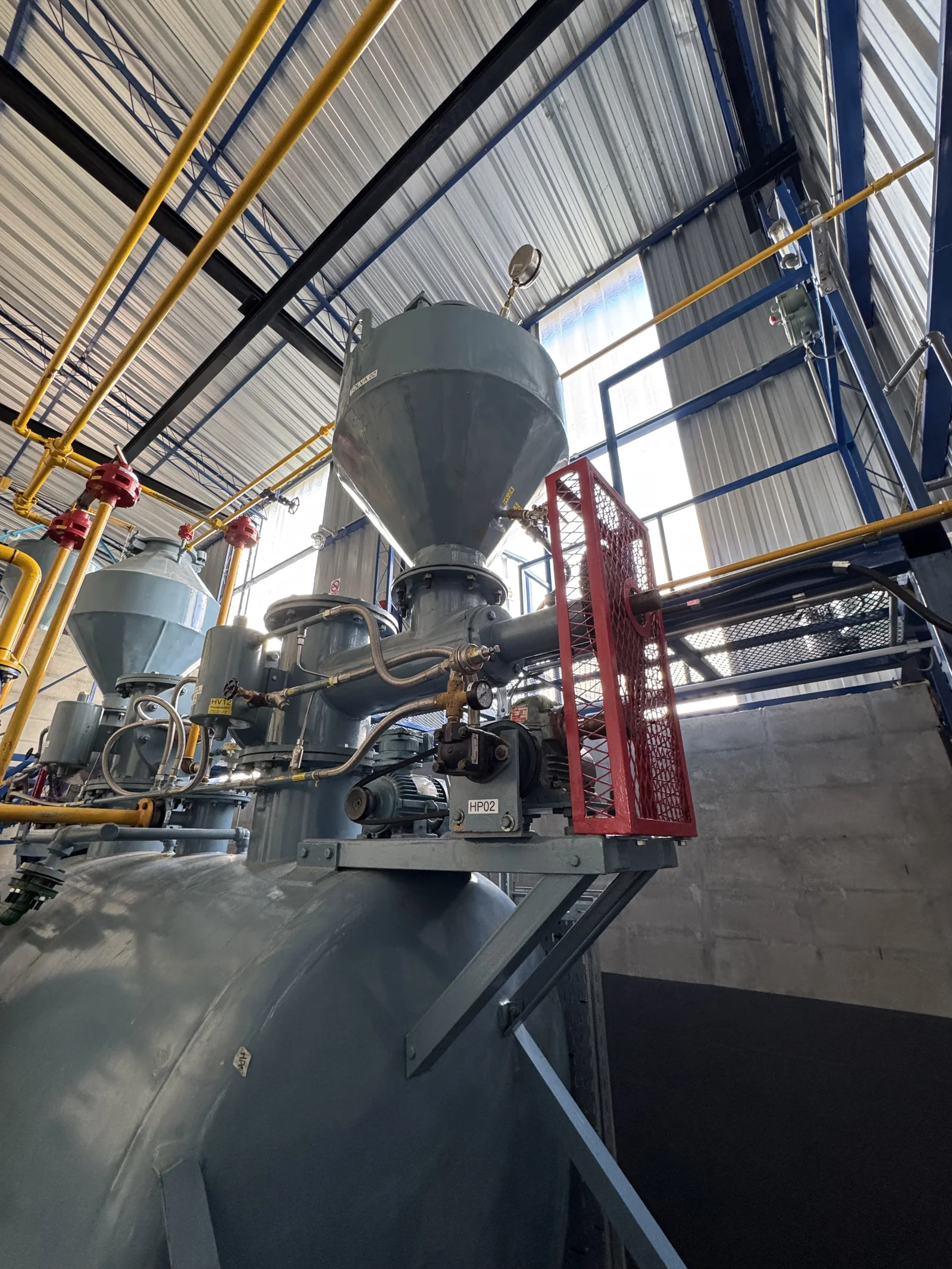
The medium-pressure correction
Pressure suppresses evaporative cooling, which is a large part of the heat removal at low ratios. As compiled by S. A. Miller (1965), medium-pressure generators at 1.5 to 2 atm absolute could tolerate only about 6.4 litres per kg for the same temperature limit. A KIGL generator at its maximum of 0.92 kg/cm²g is at about 1.9 atm absolute, inside that band. The published KIGL minimum is 6.0; on that figure a plant running at the top of its pressure range should be nearer 6.4. This is a 7 % change and a decision for the works, which is why this page leaves it to the works rather than stating it as a rule.
The practical reading is simple: when the generator pressure switches are set high, run the water ratio in the upper half of the band.
What IS 8471 and EIGA say
Clause 8.2.1 of IS 8471:2003 requires not less than 8 litres of water for each kilogram of carbide that can be introduced into the holder, unless water and carbide are introduced continuously in a predetermined ratio. Clause 9.2 adds that the total carbide that could fill the holders shall not exceed 1 kg per 8 litres of water in the generating chamber — and, for a water-to-carbide type generator rather than a carbide-to-water one, 1 kg per 4 litres, with the same continuous-feed exemption.
Both clauses are sizing rules, not operating rates, and that distinction is what makes them look stricter than they are. Each one compares the water the generating chamber holds against the carbide the holder could take if it were filled to every available space. Neither prescribes how much water a batch actually consumes. A plant can therefore satisfy clause 8.2.1 on its chamber sizing and still run a consumption ratio below 8 litres per kilogram, which is why the operating band below does not contradict the standard. The exemption very likely covers the continuous-feed design used in KIGL automatic plants, where a pressure-switched screw feed admits carbide and a temperature-controlled valve admits water. The standard also limits the gas temperature at the generator outlet to 75 °C and any external surface to 80 °C at 130 % of rated capacity.
EIGA Doc 237 §4.2 describes the water-to-carbide ratio as approximately 8 to 1, varying between 7 to 1 and 10 to 1. The American codes of the 1960s (Underwriters' Laboratories standards 207 and 403) set 8.3 to 1 for batch-water generators, which is simply 1 US gallon per pound. Current US practice under 29 CFR 1910.253 does not fix a ratio but caps generator pressure at 15 psig, which KIGL's maximum of 0.92 kg/cm²g (13.1 psig) is below.
Rules that matter
The ratio is not set by a flow controller. It is held by temperature, with the water meter as the audit:
How a KIGL plant holds the ratio
- Minimum 6.0 litres of water per kg of carbide; correct band 6 to 8; maximum 10.
- The air-operated water inlet valve opens on rising tank temperature. The controller is set initially at 58 °C, which is close to the equilibrium of a dilute, cold, lightly loaded generator at commissioning.
- If the water per kg over a hopper average falls below 6 litres, lower the set point by 1 °C; if it rises above, raise it by 1 °C. The set point is never taken above 70 °C.
- Water inlet temperature is kept below 40 °C and water supply pressure at about 1.5 times generator pressure.
- At every hopper recharge the water meter is read and the ratio for that hopper is computed; at shift end the water consumed and carbide charged are recorded in the shift log.
- The weekly water total, in litres, must stay within 7.5 times the kilograms of carbide used that week; excess water reduces yield.
- After a shutdown in which the generator has cooled more than 15 °C below set point, 30 litres of water are added for each degree of cooling before carbide is fed, so that the cold slurry does not take the first charge without a heat sink.
A ratio that has drifted shows up before any alarm does. A tank that is warmer above the water line than below it, a rising generator temperature with the water meter static, or a hopper average below 6 litres per kg are all reasons to stop and check the water valve, supply pressure and spray nozzles. The troubleshooting guide lists the sequence.
Three caveats the number carries
Feedwater temperature
The thermal balances assume 15 °C feedwater. Miller's compilation is explicit that the equilibrium temperatures hold unless the feedwater, or recycled make-up plus sludge filtrate, is warmer than that, for instance because it has been used to cool the effluent gas. In an Indian summer, feedwater at 30 °C adds roughly 15 °C to every row of the table. At 6 litres per kg that puts the generator near 90 °C against a 70 °C ceiling, which means the temperature controller is doing all the work rather than the thermodynamics. KIGL's manual permits the recirculation of acetylene-enriched water from the lime pit after settling, using a flameproof diaphragm pump, but that water is warm; where it is used, the ratio should be run high and the inlet temperature watched.
Carbide grade
A 250 l/kg carbide (about 68 % CaC₂) releases roughly 391 kcal per kg and leaves about 1,177 g of residue. The thermal floor stays near 6 to 1, but the slurry becomes about 21 % solids, past the 18 % fluidity limit. With poor carbide the ratio must rise to keep the slurry draining and the agitator unloaded.
Slurry solids
The 6 to 1 rule is really two rules: 6 litres per kg and no more than about 18 % solids in the slurry. A plant that keeps the meter at 6 but lets lime accumulate in the tank has broken the second rule while meeting the first. Laboratory series compiled by Miller (Pulkevich, 1934; Strizhevskii, Zaitseva and Shelechnik, 1951) show gasification time unchanged up to 20 % solids with agitation, but doubling at 30 % and lengthening fivefold at 40 %, with large lumps becoming coated and stalling at 20 % without agitation. That is the quantitative case for the agitator timer and for the slurry drain sensitivity check of 200 to 400 litres between successive drain openings.
The yield argument for running warm
There is a reason not to drown the generator. Acetylene dissolved in the discharged sludge is lost, and the loss falls with temperature: about 1 % of the make at 60 °C against 0.5 to 0.6 % at 75 °C (Hölemann et al., Forschungsberichte des Landes Nordrhein-Westfalen No. 790, 1959). Running near the 70 °C ceiling rather than well below it is worth about half a percent of output. That loss still dwarfs gasholder losses, measured at 0.007 % of the make for a 20-minute holder (Hölemann, Hasselmann and Strootman, No. 791, 1959), but it is small beside the 13 % yield spread between fine and lump carbide, which is why carbide grading matters more than any water setting.
Rules that matter
Rules to apply
- Never admit less than 6.0 litres of water per kg of carbide; run 6 to 8, and towards 8 when the generator pressure is set high, the feedwater is warm or the carbide is a low-yield grade.
- Compute the ratio at every hopper charge from the water meter, not from an assumption.
- Keep the temperature set point at or below 70 °C and treat a high-temperature alarm with a low water ratio as the commonest fault on the plant.
- Keep the slurry fluid: agitator on schedule, slurry drain sensitivity checked, tank cleaned on the manual's interval.
- State the feedwater temperature the ratio assumes, and measure it.
Generators that respect these rules spend their lives within a few degrees of their calculated equilibrium. The ones that end up in the incident literature are almost always the ones where water and carbide met somewhere other than the bulk of the tank.
How much water per kilogram of carbide does an acetylene generator need — frequently asked questions
What is the minimum water to carbide ratio for an acetylene generator?
For a continuously fed carbide-to-water generator the long-standing floor is 6 litres of water per kg of carbide, set by a 75 °C temperature limit and by the need to keep the lime slurry fluid at about 18 % solids. KIGL specifies 6.0 litres per kg as an absolute minimum and 6 to 8 litres per kg as the correct band. IS 8471:2003 asks for 8 litres per kg where the ratio is not continuously controlled.
Why does IS 8471 say 8 litres per kg when KIGL plants run at 6 to 8?
Clause 8.2.1 of IS 8471:2003 requires not less than 8 litres per kg of carbide that can be introduced into the holder, but exempts generators in which water and carbide are introduced continuously in a predetermined ratio. KIGL's automatic screw-feed generators admit both streams continuously, which very likely places them in the exempted case. EIGA Doc 237 gives a similar picture: approximately 8 to 1, varying between 7 to 1 and 10 to 1.
What happens if too little water reaches the generator?
The reaction heat has nowhere to go. With no cooling at all the products would be heated by roughly 730 °C, far into the range where acetylene itself decomposes. Experimentally, carbide mixed with an equal weight of water reached 580 °C in 34 minutes. In practice the first symptoms are a rising generator temperature, a tank that feels warmer above the water line than below, and a high-temperature trip.
Does hot feedwater change the ratio?
Yes. The published thermal balances assume feedwater at 15 °C. If the make-up water, or recycled lime-pit filtrate, enters at 30 °C, every equilibrium temperature rises by roughly the same amount, so a 6 to 1 generator that would settle near 75 °C with cold water can head towards 90 °C. KIGL's manual limits inlet water to below 40 °C; in hot weather the ratio should be run in the upper half of the 6 to 8 band.
Does a poorer grade of carbide need more water?
Slightly, and for an unexpected reason. A 250 l/kg carbide releases less heat than a 300 l/kg grade but leaves more lime, so the thermal floor stays near 6 to 1 while the slurry thickens to about 21 % solids, past the fluidity limit. With low-yield carbide the ratio must rise to hold the solids down, otherwise the slurry drain and agitator struggle.
Can I run above 8 litres per kg to be safe?
You can, but it costs yield and water. KIGL's manual states a maximum of 10 litres per kg and asks that the weekly water total stay within 7.5 times the weekly carbide used, because excess water reduces yield: more acetylene leaves dissolved in the larger volume of sludge water. The economic optimum lies in the lower half of the band, with the temperature controller holding below 70 °C.
How is the ratio actually controlled on a KIGL plant?
Indirectly, through temperature. An air-operated water inlet valve opens on rising tank temperature; the controller is set initially at 58 °C and trimmed by 1 °C per hopper average if the water per kg drifts below or above 6 litres, with a hard ceiling of 70 °C. The water meter is read at every hopper charge and at shift end, and the ratio is computed from the meter difference and the carbide weighed in.
References
- Bureau of Indian Standards. (2003). Acetylene Generators — Requirements (IS 8471:2003, First Revision).
- European Industrial Gases Association. (n.d.). Acetylene Generation (EIGA Doc 237).
- Huff, US Bureau of Mines Report of Investigations 3794 (1945); Jones, Scott, Kennedy and Spolan, RI 4067 (1947)
- Occupational Safety and Health Administration. (n.d.). Oxygen-fuel gas welding and cutting (29 CFR 1910.253).
Enquiries
Request a quotation
State the gas or equipment, the quantity or capacity, and your location. KIGL will confirm the grade, the cylinder or plant size, and whether the location can be served from Noonmati, or through the agent network.