
Guide
Operating and maintaining an acetylene gas plant: a practical guide
An acetylene plant runs safely inside a narrow envelope: generation pressure 0.2 to 0.92 kg/cm²g with a 1.05 ceiling, gas temperature below 70 °C, and carbide graded 4 to 50 mm. Water is supplied at 1.5 times operating pressure. Purging uses nitrogen, never air. Hourly checks catch most failures.
- Generation pressure, normal band
- 0.2
- Generation pressure, ceiling
- 1.05 kg/cm²g
- Maximum gas temperature
- 70 °C
- Carbide granulometry
- 4
- Cooling water supply pressure
- 1.5 × operating pressure
The envelope
An acetylene plant is safe and economic inside a narrow set of conditions, and progressively neither outside it. Four numbers define it:
| Parameter | Value |
|---|---|
| Generation pressure, normal | 0.2 – 0.92 kg/cm²g |
| Generation pressure, ceiling | 1.05 kg/cm²g |
| Gas temperature, maximum | 70 °C |
| Carbide size | 4 – 50 mm |
Cooling water is supplied at 1.5 × operating pressure. Purging is nitrogen only: air purging can create an explosive atmosphere inside the equipment being cleaned.
These figures come from the KIGL-DA series operating manuals, for plants we designed and continue to run.
The electrical requirement people get wrong
Everything electrical in an acetylene filling or storage building — meters, distribution boards, switches, fuses, plugs, sockets, fixed lamps and portable hand lamps — must be of flameproof construction conforming to IS/IEC 60079-1. IS 14814 : 2023 names that standard specifically.
This is worth checking on any plant that has been running a while, because the older reference, IS 2148, is still quoted in circulation and on some equipment. IS/IEC 60079-1 is the current citation. Tools in the same space should be non-sparking, and the wrench for the cylinder valve stays on the valve spindle while the cylinder is in use.
Starting up
Before the plant runs: confirm pipelines are leak-free, safety valves are calibrated, generator water levels are correct and electrical systems are functioning. Rotate moving parts by hand to confirm free movement before commissioning. A seized agitator discovered under load is a far more expensive problem.
Then charge carbide through the hopper, introduce water in controlled quantity, and let the reaction establish. The carbide-to-water ratio is the single most important operational variable for both safety and yield.
What each item in the gas train does
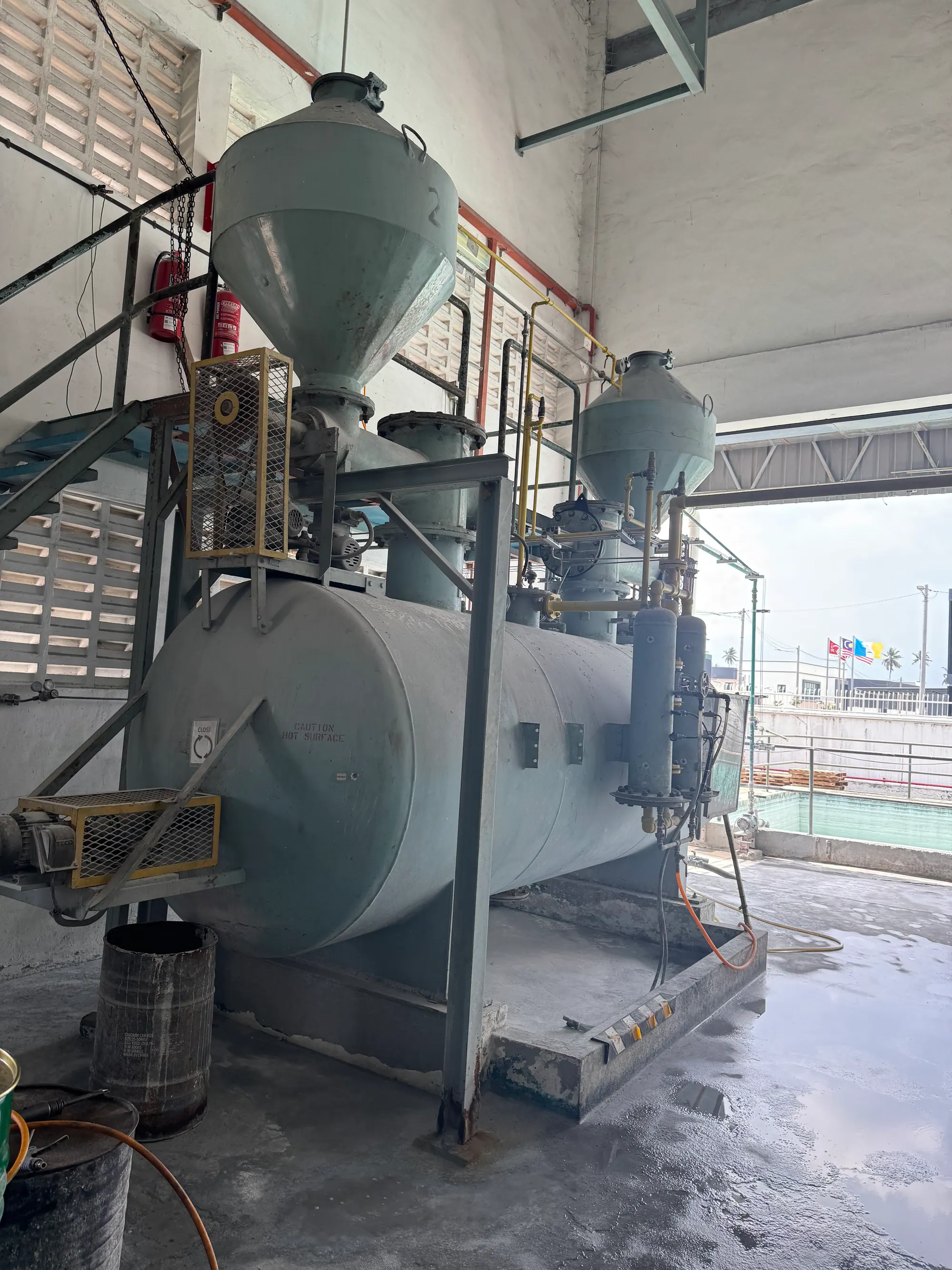
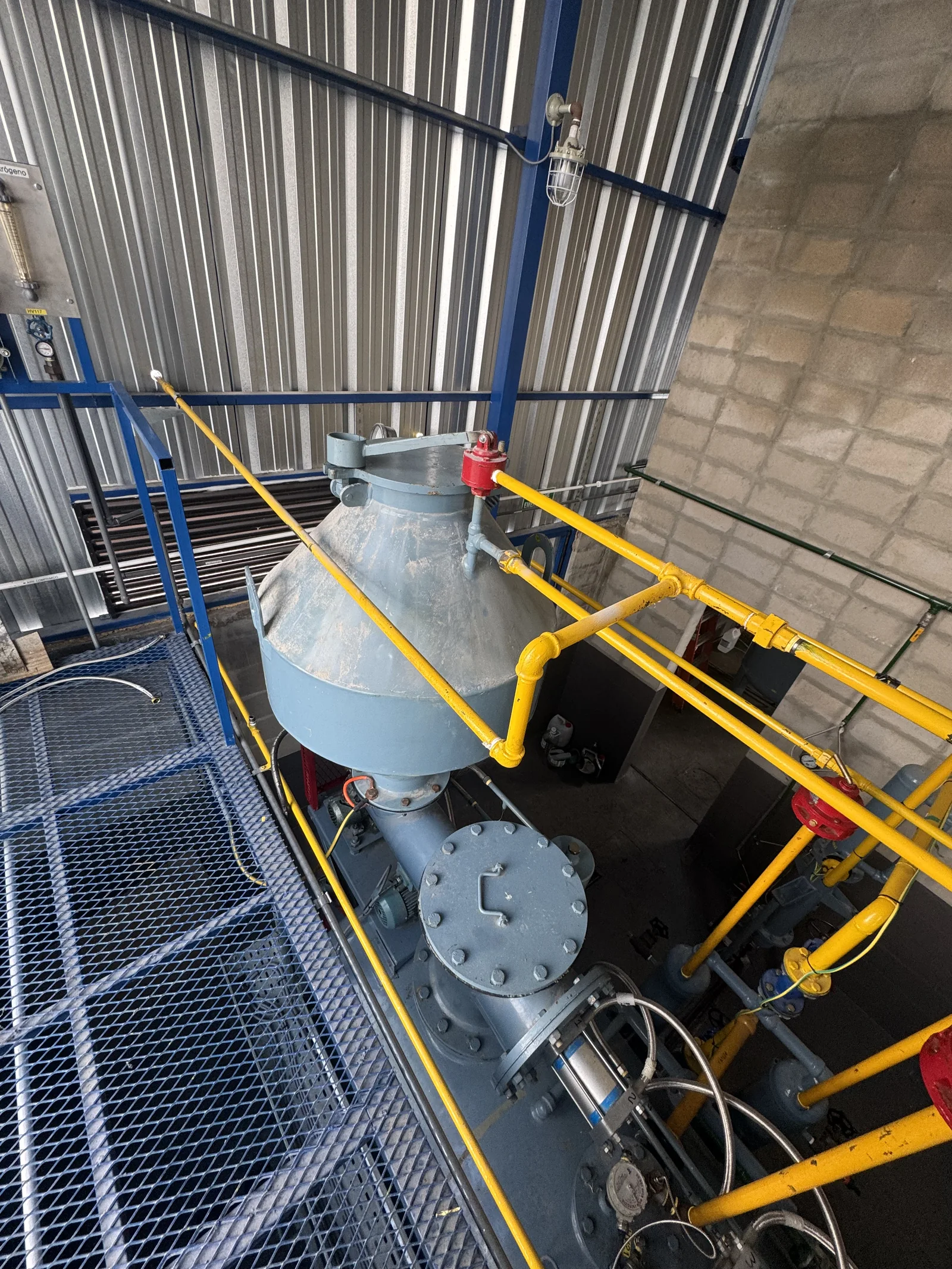
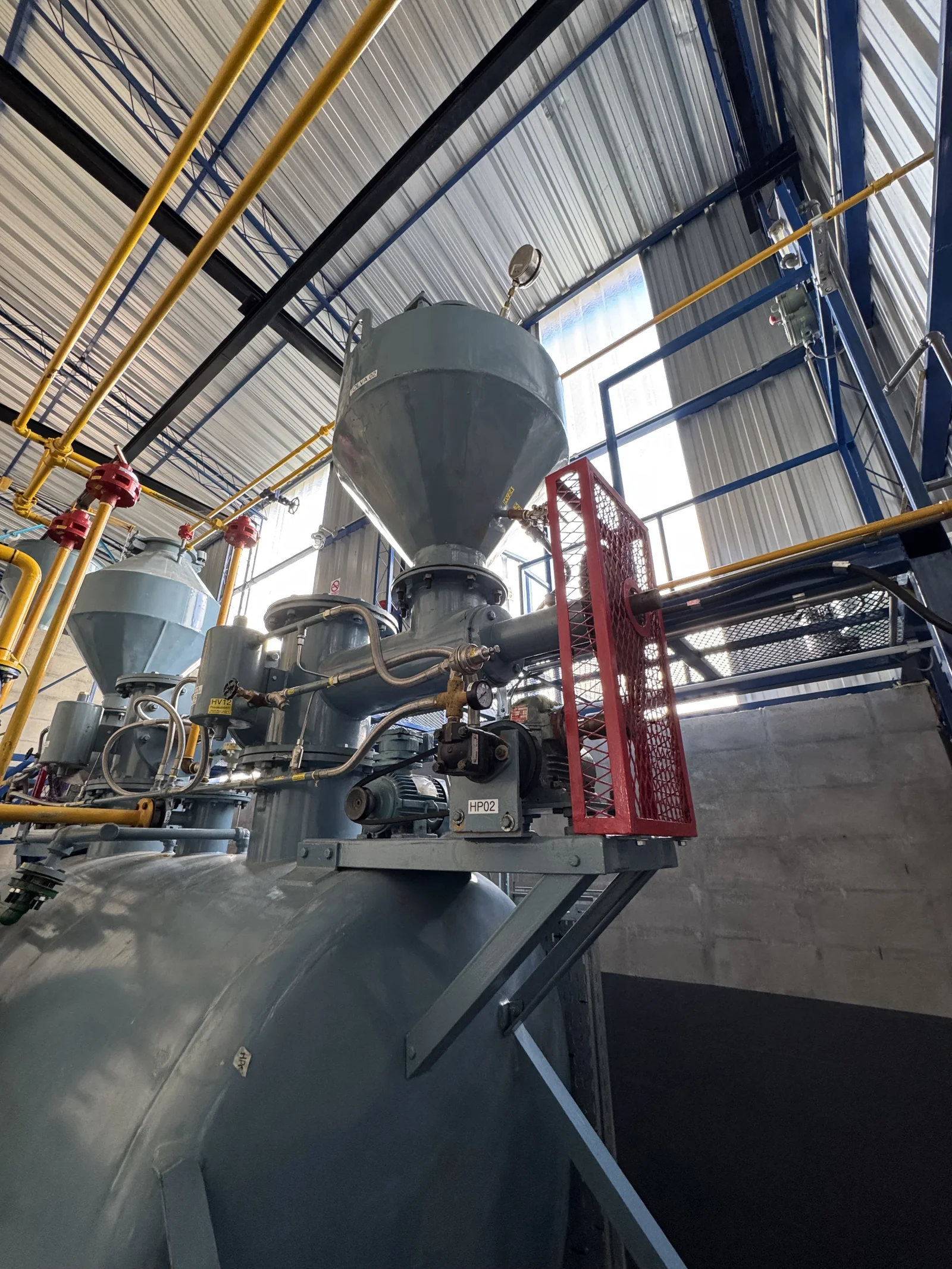
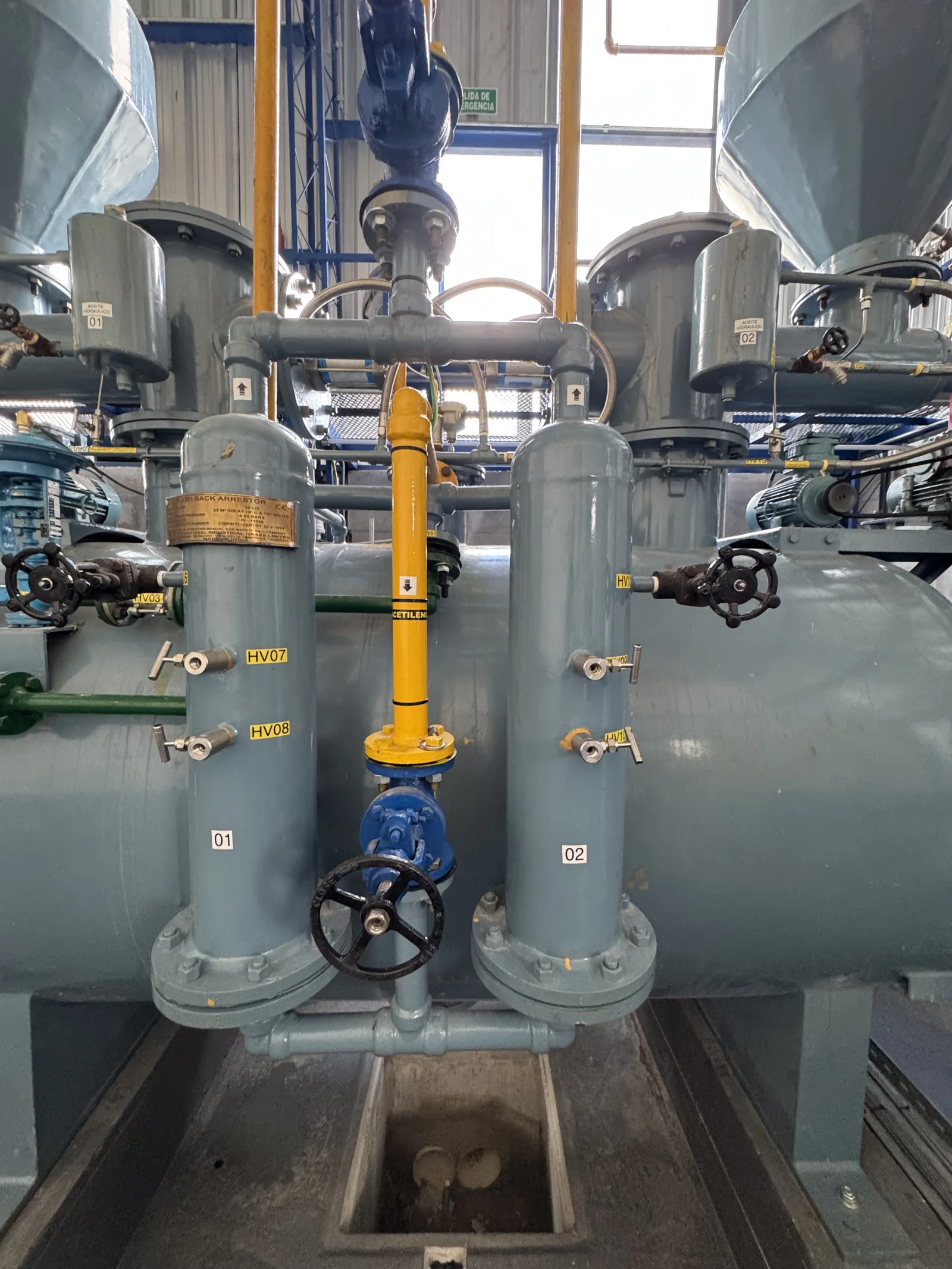
Between the generator and the cylinder the gas passes through a dozen separate pieces of equipment, and every one of them is there for a different reason. An operator who knows the plant as "generator, compressor, manifold" cannot diagnose it, because most quality complaints originate in one of the items in between, and each announces its own failure differently.
Taking them in the order the gas meets them:
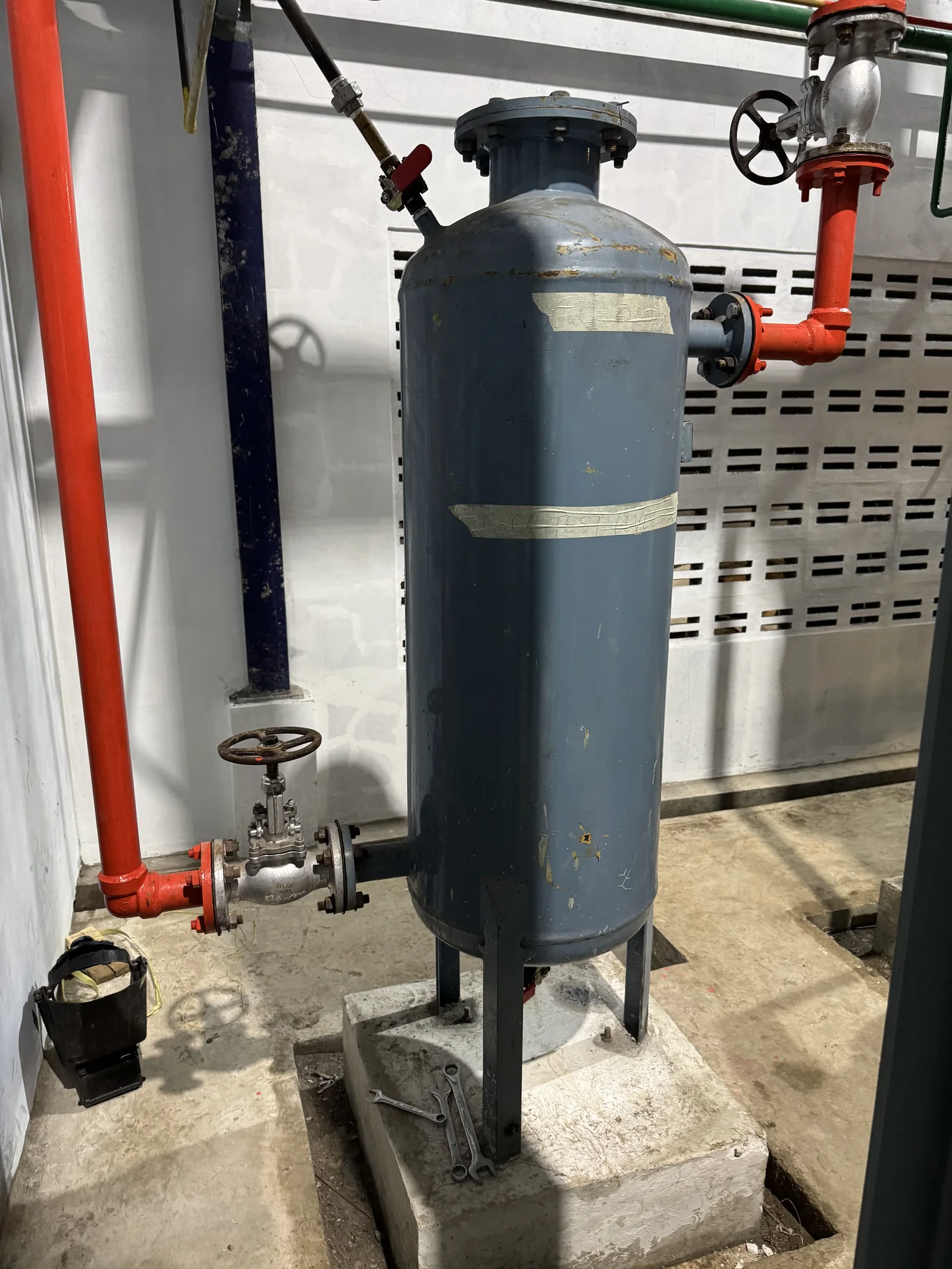
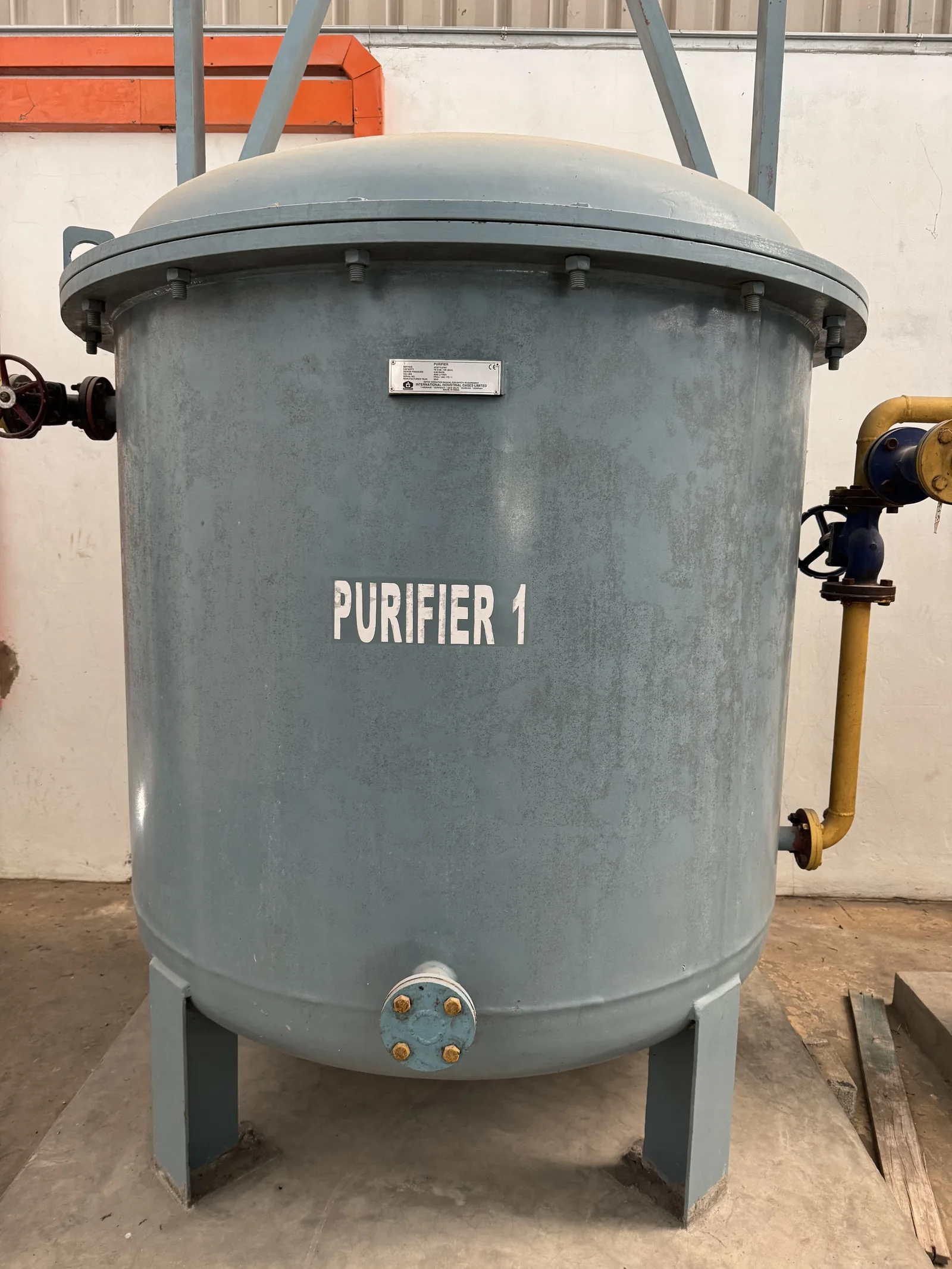
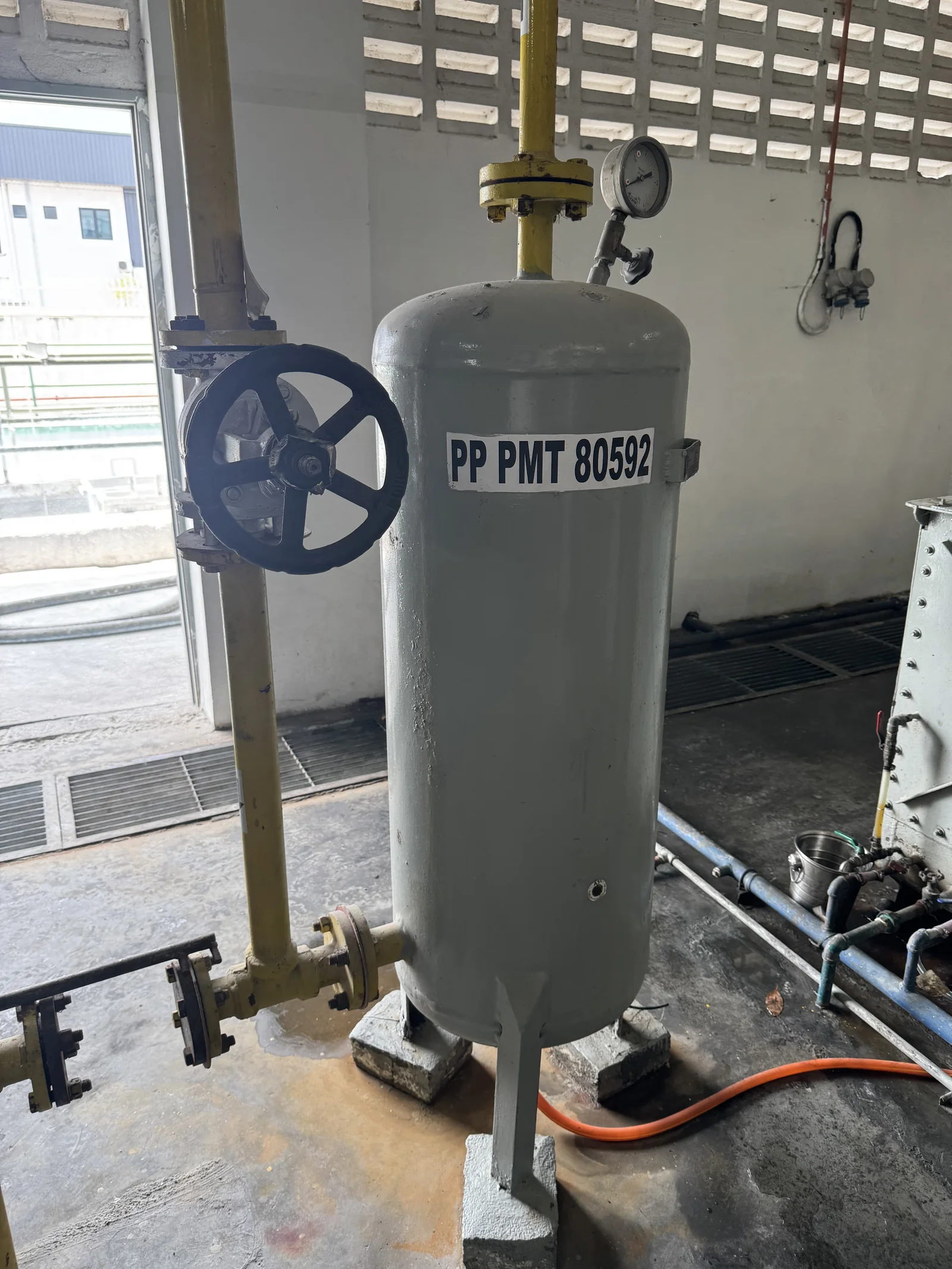
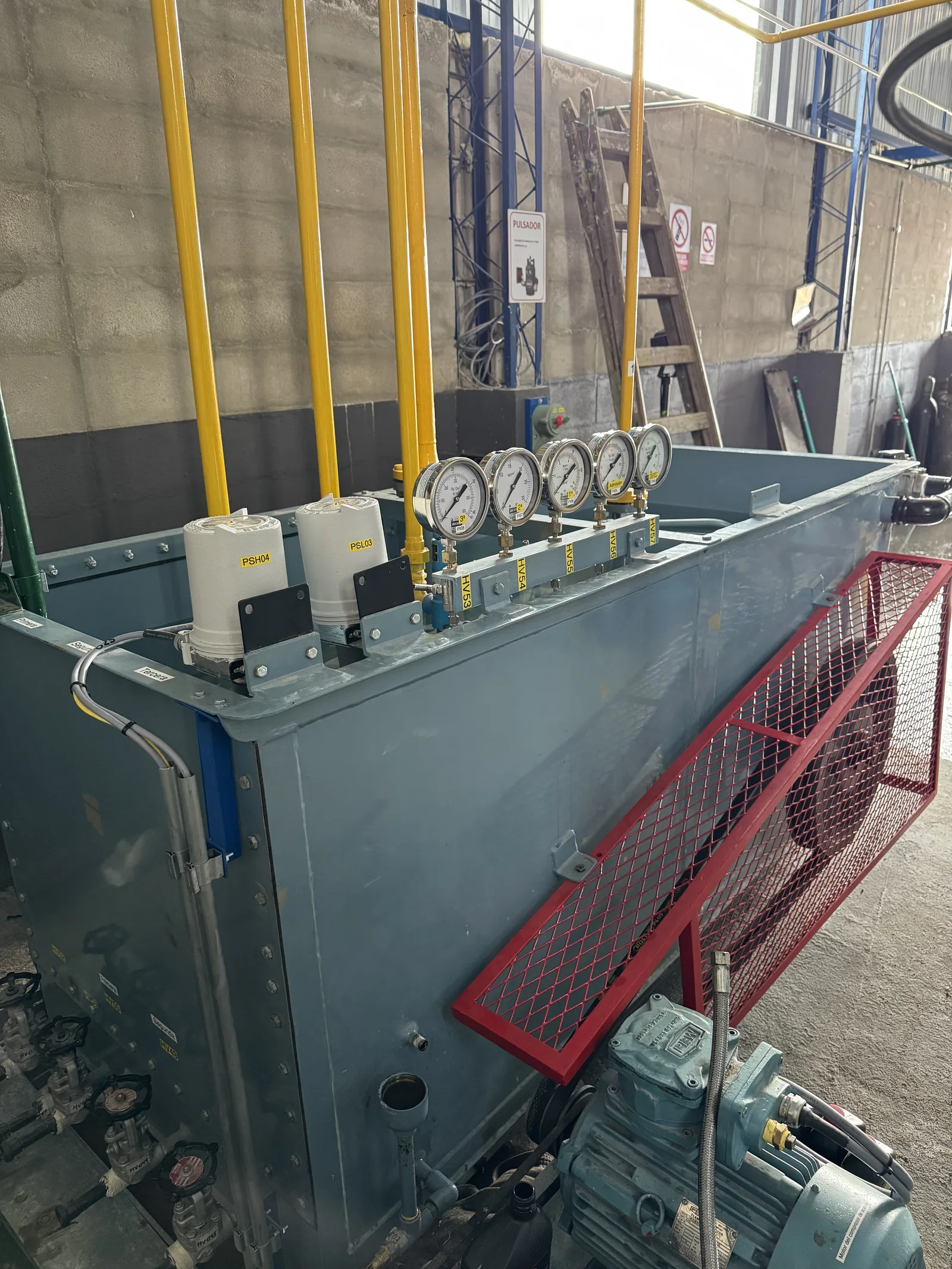
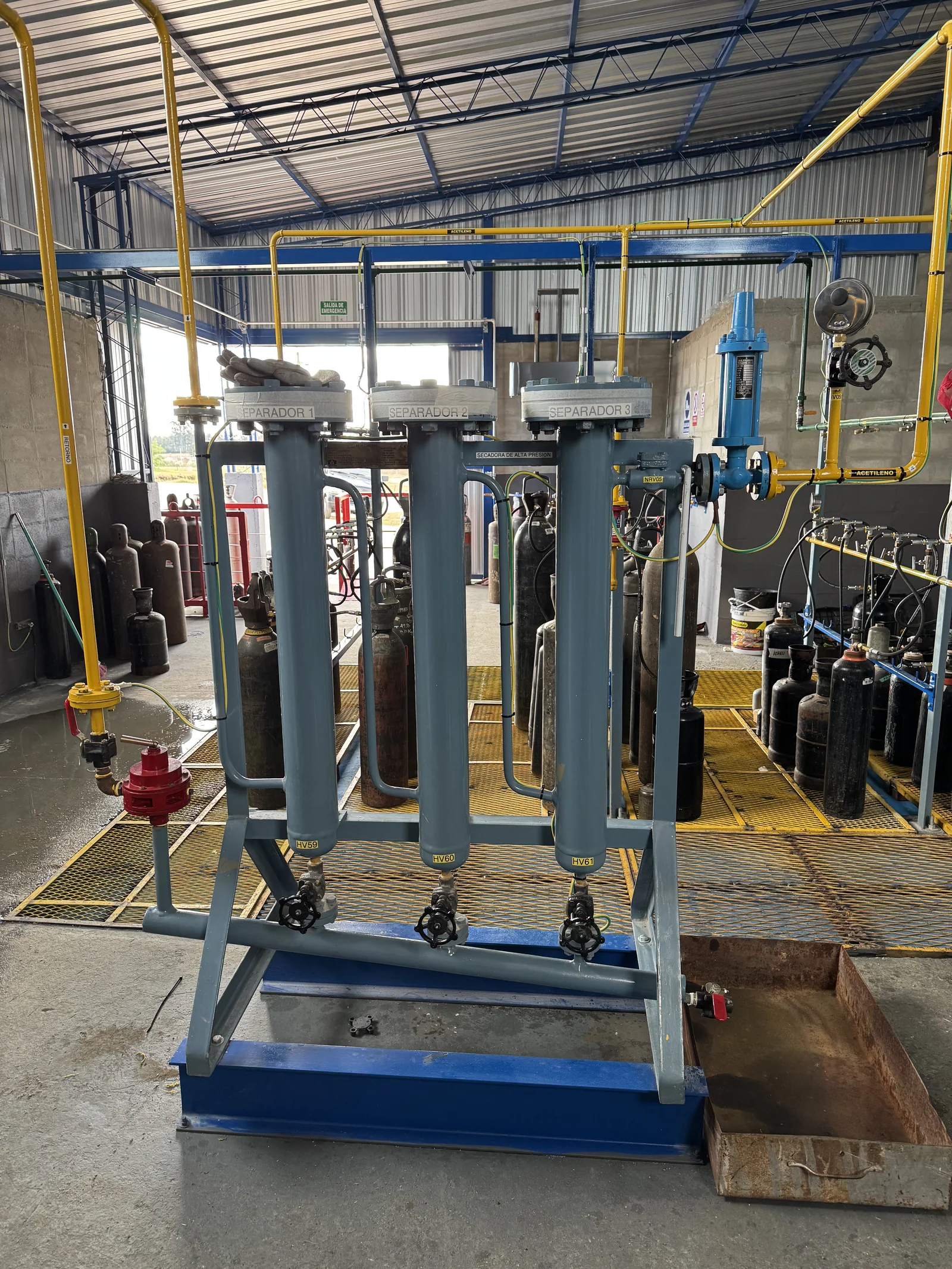
| Item | What it actually does | How it tells you it is failing |
|---|---|---|
| Generator | Carbide meets water and the gas is made. A pressure controller cuts the carbide feed motor at the set pressure and restarts it as gas is drawn off | Pressure that will not hold, or a feed motor cycling far more often than the draw-off justifies |
| Screw feed and twin hoppers | Meter carbide from the hopper into the shell, and let one hopper be recharged while the other feeds, so generation never stops | Feed rate falling off, or a changeover that does not complete |
| Agitator | Keeps carbide and water intimately mixed so the carbide reacts completely. It runs on a timer even when the plant is dormant, because settled slurry will jam it | Rising carbide consumption per cylinder — unreacted carbide is leaving with the slurry, and you are paying for gas you never made |
| Level controller and slurry discharge valve | Hold the water level between set points and discharge the minimum slurry. Generator water is saturated with dissolved acetylene, so over-discharging throws gas away | Slurry running clear and often, or level drifting outside the band |
| Wet flashback arrestor | Stops a flame travelling back down the line into the generator. This is the low-pressure side's arrestor | Any flashback event at all — replace it, do not inspect and re-use it |
| Low-pressure condenser | Cooling water drops the gas temperature and drops out the bulk of the moisture as condensate | Warm gas downstream, or a dry condensate drain when it should be running |
| Low-pressure dryer | Calcium chloride takes out more moisture — but deliberately not all of it | Spent charge: caking, channelling, or no longer producing condensate |
| Purifier | Purifying chemical strips the phosphorus and sulphur compounds, and acid fumes. This single vessel decides whether the cylinder meets IS 308 on phosphine and hydrogen sulphide | Nothing visible. It degrades silently and the plant keeps making gas — the complaint arrives from the customer |
| Water scrubber | Washes out purifying chemical carried over from the purifier, so it never reaches the compressor or the cylinder | Scrubber water not being drained on schedule |
| Acetylene compressor | Raises the gas from generation pressure to filling pressure. It takes wet gas at suction, and its clearances and materials are specific to acetylene | Pressure instability, lubrication trouble, knocking |
| High-pressure dryer | Removes lube-oil vapour carried over from the compressor, and the last of the moisture, before the gas ever reaches a cylinder | Oil or moisture found at the manifold |
| Back-pressure valve | Holds the gas back until the line is above its set pressure, so the high-pressure dryer sees the gas at pressure and actually dries it. Without it, under-dried gas slips straight through to the manifold | Gas reaching the manifold too easily, with moisture carried through |
| Dry flashback arrestor | The high-pressure side's own arrestor, before the manifold | As for the wet arrestor — replace after any event |
| Manifold and static-free uniflow valves | One uniflow valve per cylinder, so no cylinder can feed back into the manifold or into its neighbours | A cylinder that will not take gas, or takes it unevenly |
Two of these are routinely confused, and should not be. The wet arrestor at the generator and the dry arrestor before the manifold are different devices for different pressures, and they are not interchangeable.
The one that catches people out is the low-pressure dryer feeding the purifier. It is tempting to treat drying as "more is better". It is not: the gas has to reach the purifying chamber still carrying some moisture, because the purifying chemicals do not work on a bone-dry gas. Over-dry the gas at the low-pressure dryer and the purifier stops removing phosphine properly, and the plant gives no sign of it until a customer's analysis comes back.
Filling, and why cylinders are weighed twice
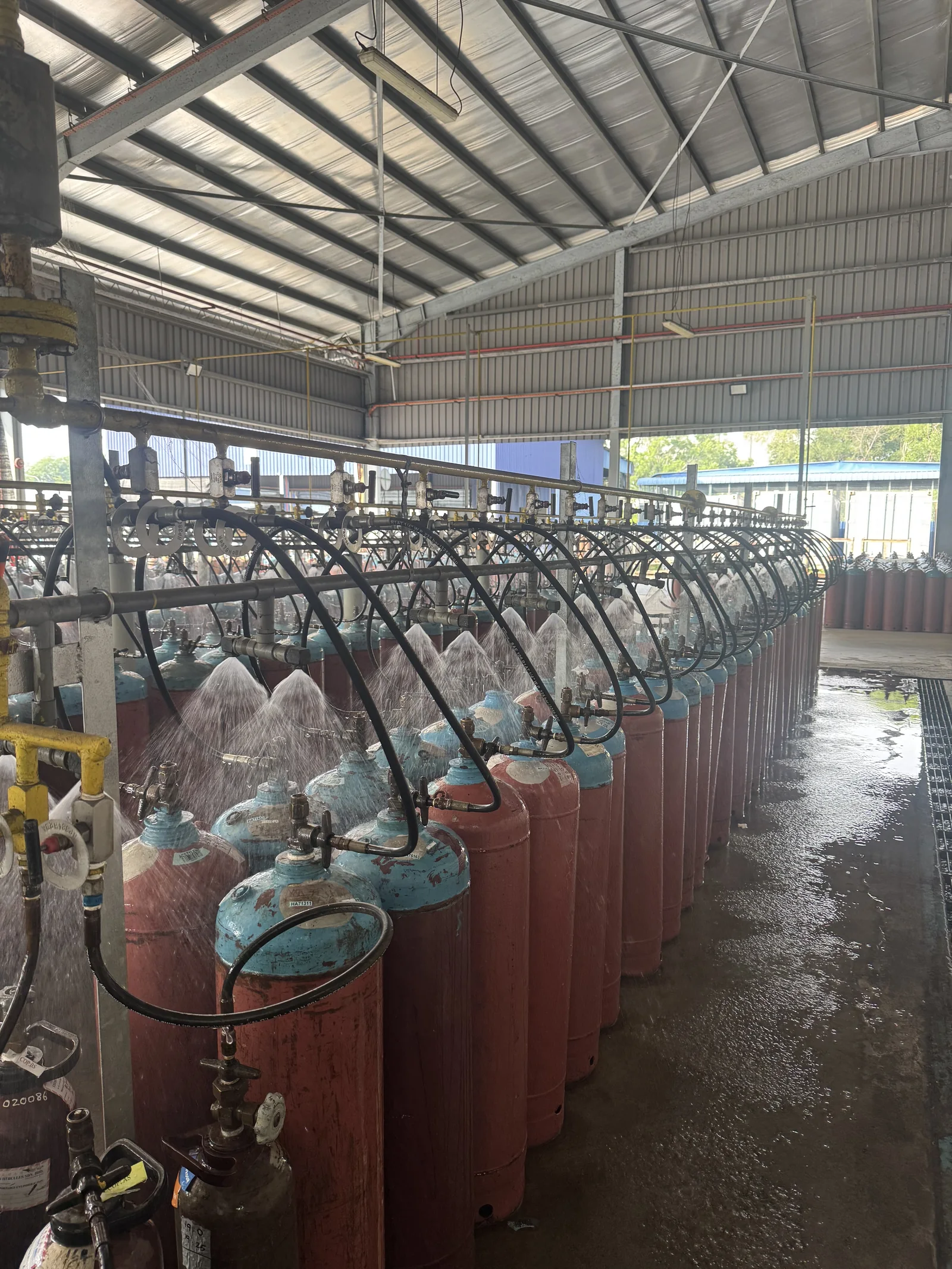
Filling is not simply connecting a cylinder to the manifold:
- Weigh each cylinder before filling and make up any acetone loss, pumped in from the drum
- Spray cooling water continuously over the cylinders during filling. Acetylene dissolves into acetone far better cold, and filling warms the cylinder
- Fill to the pressure the temperature chart gives, not to a fixed gauge reading
- Let the gas settle. Pressure will fall as it goes into solution, and a second or third fill is normally needed to reach the target
- Weigh again. The gas actually filled is the difference between the two weights. That is the only honest measure of cylinder contents
- Leak-test, then store for distribution
Running it
Hourly: generator pressure and temperature. Most failures show up as a slow drift long before anything trips, and an operator who checks hourly catches them while they are still adjustments rather than incidents.
Each shift: condensate drains across all systems, compressor cooling, water levels.
Two habits separate well-run plants from the rest. First, log the readings rather than glancing at them, because drift is only visible against a record. Second, investigate a reading that has moved rather than adjusting the setpoint to accommodate it.
Maintenance schedule
Daily — leak checks across pipelines, pressure gauge monitoring, condensate drain cleaning, compressor cooling checks.
Weekly — carbide hopper lubrication, safety valve inspection, scrubber water drainage, electrical motor checks.
Monthly — alarm system testing, pressure control system inspection, pipeline inspection, compressor maintenance.
Annually — generator tank cleaning, agitator shaft inspection, high-pressure dryer cleaning, full system inspection.
What to watch
The generator — pressure, temperature and feed rate. The core of the plant and the thing that determines whether everything downstream behaves.
Purifiers and dryers — the most commonly neglected item, because they degrade gradually. The plant keeps making gas while impurities carry through to the cylinder. The consequences land on your customer’s equipment, which is why nobody notices until there is a complaint.
The compressor — pressure stability and lubrication. Acetylene compressors are not general-purpose machines; clearances and materials are specific to the gas.
Flashback arrestors — replace after any flashback event, without exception.
Mistakes that cost money
Overfeeding carbide
Spikes pressure and temperature, wastes carbide in the slurry, and shortens plant life.
Adjusting the setpoint instead of investigating
Pressure drift is information.
Deferring purifier maintenance
Invisible until it reaches the customer.
Inadequate ventilation
Acetylene must never accumulate. Ventilation is at high level and is not something to be blocked for convenience.
Where the economics actually are
Carbide dominates the cost per cubic metre. Not electricity, not labour, not maintenance. So plant economics come down to how much gas you extract per kilogram of carbide, which is decided by carbide grading, water supply pressure, purification cleanliness and venting losses.
A plant that is well-maintained and correctly fed is not marginally cheaper to run than one that is not. It is substantially cheaper, every single shift.
Operating — specification
| Property | Value | Method / basis |
|---|---|---|
| Daily checks | Generator pressure and temperature hourly; condensate drains; compressor cooling; water levels | KIGL-DA manual |
| Weekly | Hopper lubrication; safety valve inspection; scrubber water drainage; motor checks | KIGL-DA manual |
| Monthly | Alarm testing; pressure control inspection; pipeline inspection; compressor service | KIGL-DA manual |
| Annual | Generator tank cleaning; agitator shaft inspection; HP dryer cleaning; full system inspection | KIGL-DA manual |
Operating — frequently asked questions
What pressure should an acetylene generator run at?
Normal operation is 0.2 to 0.92 kg/cm²g, with 1.05 kg/cm²g as the recommended ceiling. Running above that band raises the risk of instability without improving output. If the plant will not hold pressure inside the band under a normal carbide charge, investigate before continuing rather than adjusting the setpoint upward.
Why is 70 °C the temperature limit?
Acetylene becomes progressively less stable as temperature rises, and the carbide-water reaction is strongly exothermic. Seventy degrees is the point beyond which decomposition risk is no longer acceptable. A generator that regularly approaches it is being overfed, is under-cooled, or has fouled heat transfer surfaces.
What carbide size should I use?
4 to 50 mm. Undersized material and fines react too quickly, spiking both pressure and temperature. Oversized lumps react incompletely, so carbide leaves in the slurry and yield falls. Carbide grading has a direct and measurable effect on cost per cubic metre.
How often should the plant be checked during a shift?
Hourly, for generator pressure and temperature at minimum. Most operational failures announce themselves as a slow drift in one of those two readings well before anything trips. Condensate drains, compressor cooling and water levels should also be confirmed each shift.
Why must nitrogen be used for purging rather than compressed air?
Because acetylene forms a flammable mixture with air across a very wide concentration range, purging with air can create an explosive atmosphere inside the equipment being purged. Nitrogen displaces acetylene without forming a combustible mixture. This is not a preference; it is a requirement.
What is the most commonly neglected maintenance item?
Purifier and dryer condition. They degrade gradually rather than failing outright, so the plant keeps producing gas while phosphine, hydrogen sulphide and moisture carry through into cylinders. The damage lands on the customer’s equipment and on your gas quality, which is why it goes unnoticed for so long.
How can carbide consumption be reduced?
Maintain correct carbide grading, keep water supply pressure at 1.5 times operating pressure, keep purification clean so gas is not wasted through rework, and eliminate venting losses. Carbide dominates production cost, so this is where plant economics are decided.
Enquiries
Request a quotation
State the gas or equipment, the quantity or capacity, and your location. KIGL will confirm the grade, the cylinder or plant size, and whether the location can be served from Noonmati, or through our agent network.