
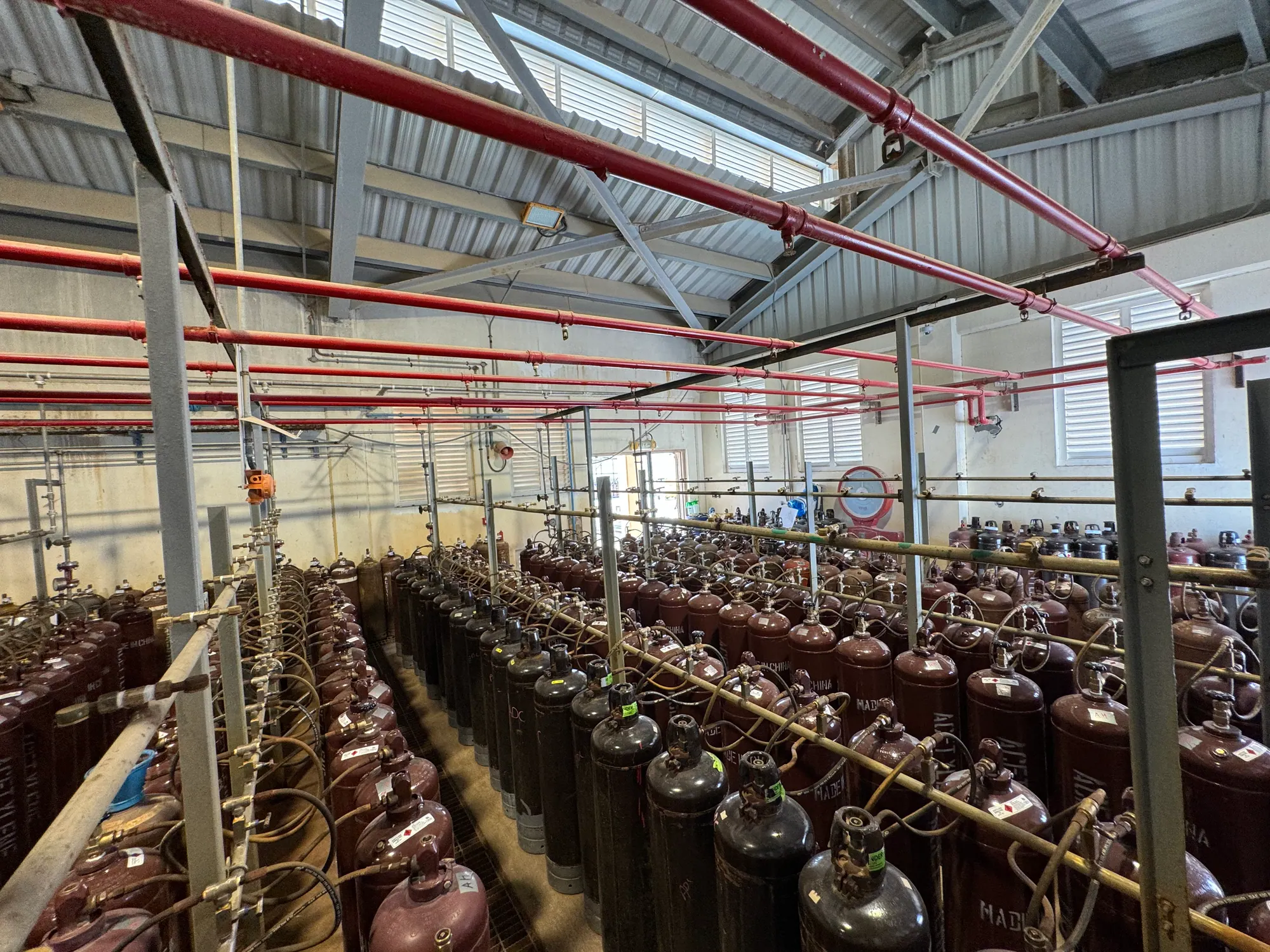
Gases
Ultra-high-purity acetylene — 99.99 %, dissolved in DMF, for atomic absorption spectroscopy
Ultra-high-purity acetylene is dissolved in DMF rather than acetone and refined to 99.99 % C₂H₂, with phosphine and hydrogen sulphide each below 10 ppm. Those two impurities are what disturb the flame in atomic absorption spectroscopy. KIGL is one of very few manufacturers in India producing this grade, in dedicated DMF cylinders, batch-verified.
By Mithillessh Garg, Director (Gas Supply)
₹1,200 – ₹2,200 per Nm³ Indicative. Your quotation is the figure that counts — price moves with quantity, cylinder size, contract term and delivery.
- 99.99 % C₂H₂
- Purity
- DMF
- Solvent
- < 10 ppm
- Phosphine (PH₃)
- < 10 ppm
- Hydrogen sulphide (H₂S)
- Dedicated DMF-charged
- Cylinder type
The grade that exists for one reason
Most acetylene is bought to melt metal. This grade is bought to not interfere with a measurement.
In atomic absorption spectroscopy, the acetylene flame is part of the instrument. Anything the gas carries into that flame — phosphine, hydrogen sulphide, solvent vapour — becomes background signal, baseline drift and a worse detection limit. At trace concentrations the gas quality stops being a consumable and becomes part of the analytical error budget.
KIGL manufactures ultra-high-purity acetylene at 99.99 % C₂H₂, dissolved in DMF, with phosphine and hydrogen sulphide each below 10 ppm. Industrial acetylene can carry phosphine in the hundreds of ppm. That is the difference this product exists to deliver.
Why the solvent is the whole story
Acetylene cannot be stored on its own as free compressed gas; it decomposes. It is compressed into solution in a solvent held inside a porous mass. Which solvent you choose determines what the gas is good for.
Acetone is standard for industrial dissolved acetylene. It works, it is cheap, and its relatively high vapour pressure means a meaningful quantity of acetone leaves the cylinder along with the gas. For cutting steel this is irrelevant. For a flame you are measuring through, it is not.
DMF has a substantially lower vapour pressure. Far less solvent is carried over, the delivered gas is cleaner and steadier, and the cylinder holds a better ratio of gas to solvent. It costs more and demands dedicated cylinders that never see acetone.
KIGL runs DMF filling as a separate, dedicated operation for exactly this reason.
Specification
The impurity limits below are what matter for analytical work. Read them before the purity figure.
See the specification table for full values: 99.99 % C₂H₂, PH₃ < 10 ppm, H₂S < 10 ppm, batch-verified with a certificate of analysis.
DMF against acetone — what changes for the user
Every acetylene cylinder holds the gas in solution in a solvent, inside a porous mass. Industrial dissolved acetylene uses acetone; this grade uses DMF, N,N-dimethylformamide, and the swap is not cosmetic.
| Acetone (industrial DA) | DMF (this grade) | |
|---|---|---|
| Solvent vapour pressure at 25 °C | About 30 kPa | About 0.5 kPa — roughly sixty times lower |
| Solvent carried out with the gas | Higher, and it rises as the cylinder empties | Negligible, so delivered purity holds constant to low residual pressure |
| Effect on a flame measurement | Acetone vapour is itself a carbon source and shows in the baseline | Materially less solvent reaching the burner |
| Cylinder | Shared industrial float | Dedicated, never in industrial service |
The practical consequence for a laboratory is that the gas stays consistent further down the cylinder. With acetone, solvent carry-over climbs as the cylinder empties and the last portion behaves differently from the first — which is why analysts learn to change cylinders early. DMF narrows that drift.
What does not change is the handling. It is still dissolved acetylene: upright in storage, transport and use; no copper or high-copper alloys anywhere in the system; no oil or grease; flash back arrestors fitted; and never over-drawn, because withdrawing too fast pulls solvent out with the gas whichever solvent it is.
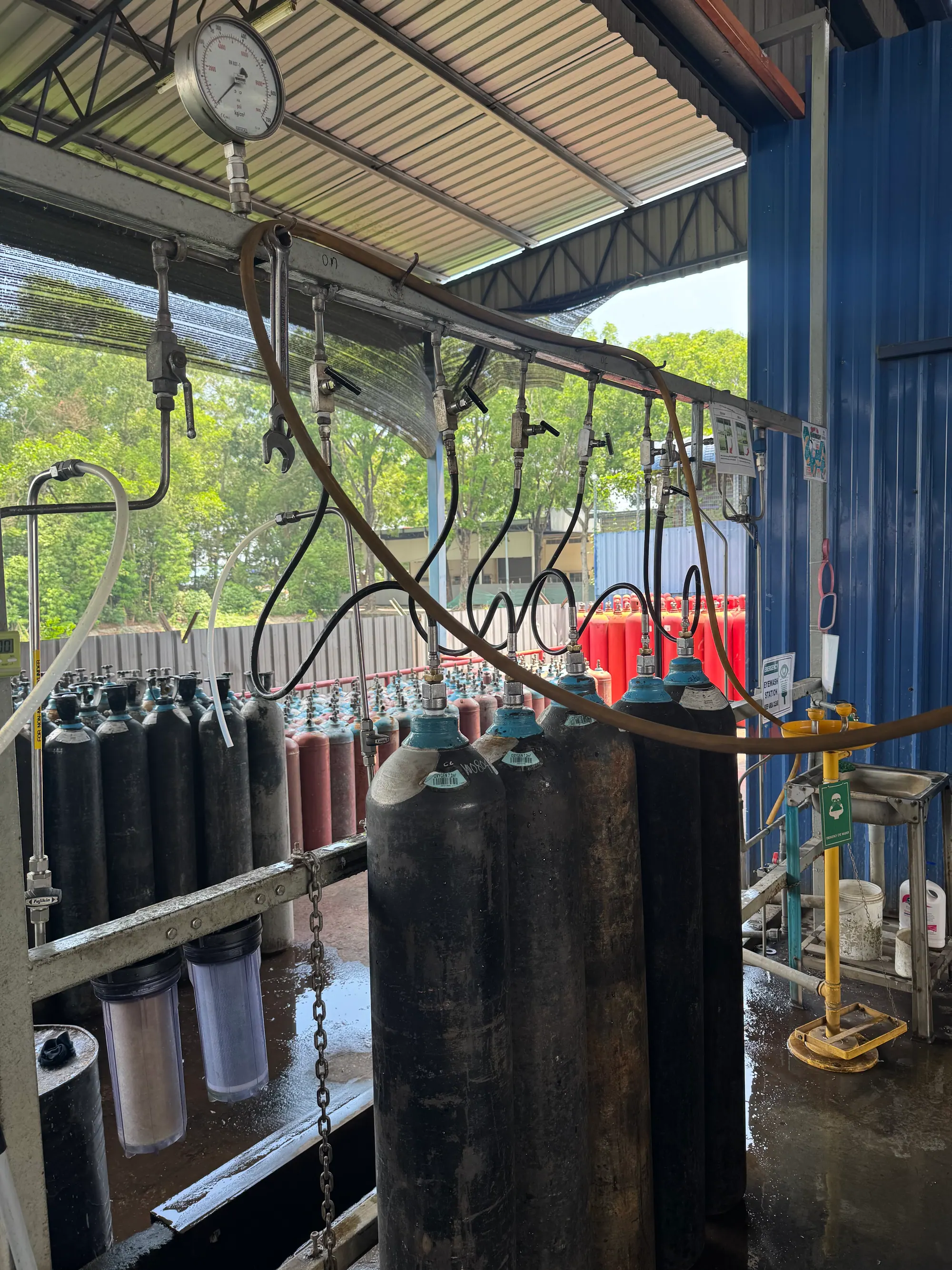
The cylinder filling manifold — one header, one gauge, many cylinders
Guwahati works · agent network
AAS grade, instrument grade, spectroscopy grade: the names for the same gas
Laboratories ask for this grade under several names — AAS grade acetylene, instrument grade acetylene, spectroscopy grade acetylene, acetylene for atomic absorption — and some suppliers list a 99.6 % product under one of them. KIGL's grade is 99.99 % v/v in DMF with phosphine and hydrogen sulphide each below 10 ppm, and it is the same cylinder whichever name appears on the purchase order. If an instrument manual specifies a minimum purity, quote it on the enquiry and the certificate of conformity will state the batch result against it.
How to specify and check it
Four things belong on the purchase order, and a supplier who will not state all four is not selling this grade:
- Purity, 99.99 % C₂H₂ minimum.
- Solvent, DMF, in dedicated cylinders.
- Impurity limits, phosphine and hydrogen sulphide each below 10 ppm — these matter more than the purity figure, because they are what reaches the flame.
- A certificate of analysis per batch, not a generic specification sheet.
On receipt, check the certificate against the cylinder number rather than filing it. A certificate that cannot be tied to the cylinder in hand evidences nothing. Where results drift and the gas is suspected, the batch certificate and the cylinder number are what allow KIGL to trace it.
Who uses it
Analytical laboratories running flame AAS for trace metals; environmental and water-testing laboratories; materials and metallurgical laboratories; academic and research institutions; and quality-control laboratories in pharmaceuticals, food and mining.
If your work is cutting, welding, brazing or flame heating, you want industrial dissolved acetylene instead. This grade would be an expensive way to melt steel.
Availability
Supplied in dedicated DMF cylinders from KIGL's filling operations, with a certificate of analysis per batch. Because the cylinders are dedicated and the filling is a separate operation, lead times differ from industrial DA. State the consumption and KIGL will set up a schedule.
Why KIGL
Why this is rare in India
Producing this grade commercially needs three things at once: a purification train that can hold phosphine and hydrogen sulphide to single-digit ppm, a dedicated DMF filling operation with cylinders that never cross-contaminate, and batch analysis to prove it. Most Indian acetylene producers have none of them, and imports carry long lead times and heavy dangerous-goods freight costs.
KIGL has made acetylene since 1947 and builds its own acetylene plants. The purification capability that makes this grade possible is KIGL's own engineering, not a bought-in package.
Specification
Ultra-high-purity acetylene — full specification
| Property | Value | Basis |
|---|---|---|
| Purity | 99.99 % v/v | Batch analysis |
| Solvent | DMF (N,N-dimethylformamide) | KIGL product specification |
| Phosphine (PH₃) | < 10 ppm | Batch analysis |
| Hydrogen sulphide (H₂S) | < 10 ppm | Batch analysis |
| Cylinder type | Dedicated DMF-charged, porous mass | KIGL product specification |
| Primary application | Atomic absorption spectroscopy (AAS) | — |
| Chemical formula | C₂H₂ | — |
| Cylinder charge | Porous mass, DMF-charged, dedicated service | IS 7312:2018 cylinder construction |
| Batch documentation | Certificate of analysis per batch | — |
Documents
Ultra-high-purity acetylene — safety and technical documentation
Questions
Ultra-high-purity acetylene — frequently asked questions
Why DMF instead of acetone for high-purity acetylene?
DMF has a much lower vapour pressure than acetone, so far less solvent leaves the cylinder with the gas. In atomic absorption spectroscopy, solvent carry-over shows up directly as baseline noise and drift. DMF also permits a higher gas-to-solvent ratio, giving more usable gas per cylinder at a steadier delivery. KIGL uses DMF for both upper grades, the 99 % high purity and this one; acetone is used for industrial dissolved acetylene to IS 308. What separates this grade from the 99 % is not the solvent but how far the purification is taken, the dedicated cylinders and the batch certificate.
Why do phosphine and hydrogen sulphide matter so much in AAS?
They disturb the flame and contribute background signal, which is exactly what degrades detection limits at trace concentrations. Industrial acetylene can carry phosphine in the hundreds of ppm; the KIGL grade is held below 10 ppm. For trace metals work that difference determines whether a result is usable.
Can I run UHP acetylene in a cylinder that previously held industrial DA?
No. The cylinders are dedicated. An acetone-charged cylinder will contaminate DMF-grade gas, and the two solvents must never be mixed. UHP acetylene is supplied only in its own dedicated cylinders.
How is 99.99 % achievable when industrial acetylene is 98 %?
By solvent and by purification, not by wishful specification. Industrial dissolved acetylene sits in acetone and carries phosphine and hydrogen sulphide through from the calcium carbide. The ultra-high-purity grade uses DMF, is purified to strip those contaminants, and is filled into dedicated cylinders that never see industrial service. Each batch is verified and ships with a certificate of analysis — ask for it, and check it against this page.
Do you provide a certificate of analysis?
Yes. Each batch is verified and documented. Ask at the time of order if your laboratory accreditation requires the certificate to accompany delivery.
Which instruments is this grade suitable for?
Any air-acetylene or nitrous oxide-acetylene flame AAS instrument. It also suits flame photometry and other applications where flame stability and low background matter.
References
- Bureau of Indian Standards. (2018). Welded and seamless steel dissolved acetylene gas cylinders — Specification (IS 7312:2018, Third Revision).
- The Kamrup Industrial Gases Limited. (2026). Company information and manufacturer's data [Company statement].
Read next
Enquiries
Request a quotation for ultra-high-purity acetylene
State the gas or equipment, the quantity or capacity, and your location. KIGL will confirm the grade, the cylinder or plant size, and whether the location can be served from Noonmati, or through the agent network.