
Guide
Electrical equipment in acetylene areas why acetylene is Group IIC, what IS/IEC 60079-1 flameproofing means, and when to pressurise or remove equipment instead
Acetylene is a Group IIC gas, the most demanding apparatus group, with a T2 temperature class from its 305 °C autoignition point. In India IS 14814:2023 requires flameproof fittings to IS/IEC 60079-1 in filling and storage premises; equipment certified only to IIA or IIB is not acceptable, and pressurisation or removal are recognised alternatives.
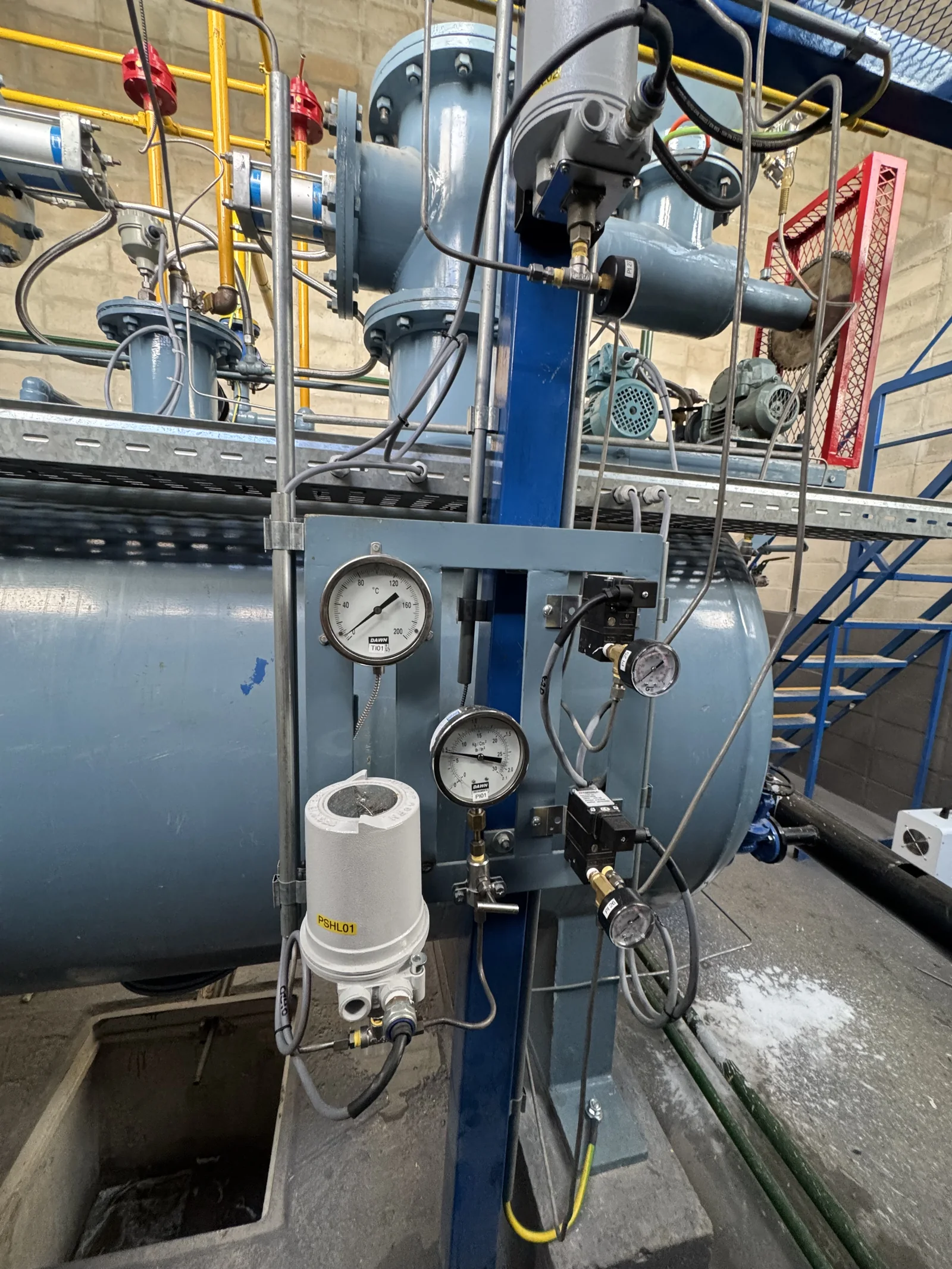
- Gas group
- Acetylene is gas group IIC
- Temperature class
- T2 for acetylene; autoignition about 305 °C
- Indian requirement
- Electrical fittings in filling and storage premises flameproof to IS/IEC 60079-1
- PESO distance
- 15 m from the acetylene plant to non-flameproof electrical fittings
- British view, 1957
- Maximum safe gap too small to certify flameproof gear for Group IV gases
Every electrical device in an acetylene plant is a potential ignition source, and acetylene is about as easy to ignite as any industrial gas: EIGA Doc 123 gives its minimum ignition energy in air as about 0.02 mJ and its autoignition temperature as about 305 °C. That is why the electrical installation is one of the first things a PESO officer, an insurer or a customer's auditor examines. This page explains the classification acetylene falls into, what Indian documents require, why "flameproof" is harder for acetylene than for almost any other gas, and the two alternatives — pressurisation and segregation — that plant designers have used for seventy years.
Group IIC and T2 — the two labels that matter
Under the IEC 60079 system, adopted in India as IS/IEC 60079, flammable gases are grouped by how easily a flame passes through a narrow gap and how little energy ignites them. Group IIA covers propane and most solvents, IIB covers ethylene, and IIC — the most demanding — covers hydrogen, carbon disulphide and acetylene. Acetylene is classed IIC (NEC Group A in the US system) in both systems' reference tables. Apparatus marked IIC is accepted for IIB and IIA gases; apparatus marked IIA or IIB is not accepted for acetylene.
The temperature class sets the hottest surface the equipment may present. Acetylene's autoignition point of about 305 °C (IS 14814:2023 clause 4.5.2) puts it in T2, a 300 °C ceiling. EIGA Doc 225 states the useful corollary for a filling plant: acetylene equipment (IIC T2) is suitable for acetone, which needs at least IIA T1, and for DMF, which needs at least IIA T2, but equipment rated only for the solvents is not suitable for acetylene.
| Property | Acetylene | Acetone | DMF |
|---|---|---|---|
| Apparatus group | IIC | IIA | IIA |
| Temperature class | T2 | T1 | T2 |
| Autoignition temperature | ~305 °C | 538 °C | 410 °C |
| Flash point | gas | −18 °C | 58 °C |
Sources: EIGA Doc 225 Table 1 and cl 4.4; IS 14814:2023.
What Indian documents require
| Document | Requirement |
|---|---|
| IS 14814:2023 cl 7.3.4 | Electrical fittings in filling and storage premises flameproof to IS/IEC 60079-1 |
| Gas Cylinders Rules 2016, Rule 22 | Premises storing flammable gases to have flameproof electrical fittings, effectively earthed |
| GCR 2016 Form E cl 9 | All electrical equipment of flameproof construction to IS 2148 / IEC 60079 |
| GCR 2016 Form E Part B | 15 m from the acetylene plant to non-flameproof electrical fittings |
| IS 15190 (Part 2):2002 cl 4.2.6 | Flameproof to IS 2148, "at least gas group class IIB", earthed to IS 3043 |
The last line needs a correction. IS 15190 Part 2 was written in 2002 against IS 2148, the older Indian flameproof standard, and its "at least IIB" is a minimum too low for acetylene. The clause is often wrongly attributed to IS 8471, which contains no electrical clause at all. For acetylene, specify IIC. IS 14814:2023, the more recent document, refers to IS/IEC 60079-1:2014 without a group, which in practice means the group appropriate to the gas — IIC. The wider context of the code is on the IS 14814 explained page.
Why flameproofing is hard for acetylene
A flameproof ("Ex d") enclosure does not keep gas out. It lets gas in, contains an internal explosion, and cools the escaping flame through long, narrow flanged gaps so that it cannot ignite the atmosphere outside. The narrower the gap a gas can pass through, the tighter and more expensive those flanges must be. Acetylene's flame passes very small gaps — the quenching diameter at 1 atm is about 0.12 to 0.16 mm, as compiled by S. A. Miller (1965) — and the gap shrinks as pressure rises.
In 1957 that led British practice, under BS 229, to the view that the maximum safe gap for flanged joints was too small to justify certifying flameproof gear for the most demanding gases, acetylene and hydrogen, on the basis of type test. In well-ventilated dissolved acetylene compressing stations, gear certified to the next group down was accepted; in plants using compressed acetylene for chemical reactions, motors and switchgear were housed away from the plant or pressurised. In the United States, the Underwriters Laboratories hazardous-location list of 1963 showed under 2 percent of certified equipment rated for acetylene — mostly light fittings, conduit fittings and small switches up to 2.5 kW. Both points are as compiled by S. A. Miller (1965). Modern IIC flameproof motors, lights and junction boxes are available, but the range and price still reflect that difficulty.
The two alternatives
Pressurisation ("Ex p"). The enclosure is purged with clean air or inert gas and then held slightly above atmospheric pressure so the surrounding atmosphere cannot enter. British plants using compressed acetylene, and some generating plants, enclosed motors, lighting and wiring and pressurised the enclosures and conduit with dry air at a few centimetres water gauge, as compiled by S. A. Miller (1965). The method depends on a reliable air supply and on an interlock that cuts power if pressure is lost — a fail-safe principle the plant already uses for its instrument-air trips.
Segregation. The C.P.I. code Safety in the Production and Use of Acetylene (Paris, 1968) recorded that many manufacturers installed all electrical equipment, lights and cables outside the rooms where acetylene might be free, behind a gastight wall, so that nothing inside needed to be flameproof. Motors driving boosters were to be outside the generator room unless officially recognised as safe in acetylene, with the shaft passing through a gastight gland. Daylight was preferred inside. This approach also satisfies the PESO 15 m rule for non-flameproof fittings by putting the fittings on the far side of a wall rather than at a distance.
Zone thinking
Hazardous-area classification divides a plant by how often a flammable atmosphere may be present: Zone 0 continuously, Zone 1 occasionally in normal operation, Zone 2 only abnormally and briefly. In an acetylene plant the inside of the generator, gasholder and pipework is not an electrical zone at all — nothing electrical belongs there. Around hopper lids, screw-feed glands, compressor packings, drains and manifold leads, releases can occur in normal operation, so those areas are commonly treated as Zone 1, and the rest of a well-ventilated building as Zone 2; the actual zones and their extents must come from a hazardous-area classification study for the plant. EIGA Doc 123 gives the ventilation that underpins a Zone 2 judgement: at least 0.3 m³/min per m² of ceiling area, with gas detection alarming at 25 percent of the lower explosive limit and shutting the plant down at 50 percent. Because acetylene's relative density is about 0.91, close to neutral, it tends to drift upward in a still building, so detectors and ventilation outlets are placed high; the lighter than air page explains why floor openings are still needed.
Static, earthing and non-electrical ignition
A correct electrical installation does not deal with static or friction. The static electricity page sets out the data: Hashiguchi and Fujisaki (1958) found the energy needed to ignite acetylene by spark falling from 10.5 J at 2 atm to 0.56 mJ at 15 atm, so at manifold pressures any static discharge is enough. The 1965 compilation by S. A. Miller gives 1 ohm as the maximum resistance across flanged connections, checked annually; EIGA Doc 123 limits hoses and plant to 10⁶ ohms; IS 15190 Part 2 allows 10 kΩ between a filling lead and its manifold. Belts must be static-conducting. Findings in plants KIGL has audited have included unauthorised modifications inside motor control centres, which make it impossible to know whether an interlock will trip, and earth resistances measured above the 1 ohm target.
Rules that matter
Rules to apply
- Specify IIC, T2 or better, for every electrical device inside the acetylene area, and read the certificate rather than the nameplate.
- Where IIC apparatus is impractical, pressurise it with a power-off interlock, or move it outside behind a gastight wall.
- Keep non-flameproof fittings at least 15 m from the plant (GCR 2016 Form E).
- Earth and bond everything; test flange continuity annually against 1 ohm.
- Treat any change inside a control panel as a modification requiring approval and an interlock function test.
For KIGL's own equipment, see the acetylene gas plants page; the building side is covered on plant layout and safety distances.
Electrical equipment — frequently asked questions
What gas group is acetylene?
Group IIC under the IEC 60079 system used in India, the same group as hydrogen and carbon disulphide, and Group A under the US National Electrical Code. IIC gases have the smallest maximum experimental safe gap and the lowest ignition currents, so a flameproof enclosure certified IIA or IIB will not contain an acetylene explosion. The certificate must say IIC or name acetylene specifically.
What temperature class is needed for acetylene?
T2, which limits the maximum surface temperature of the equipment to 300 °C, below acetylene's autoignition temperature of about 305 °C. EIGA Doc 225 gives acetylene equipment as IIC T2 and notes that it is therefore suitable for acetone (IIA T1) and DMF (IIA T2), but that acetone- or DMF-rated equipment is not suitable for acetylene.
Which Indian document requires flameproof equipment in an acetylene plant?
IS 14814:2023 clause 7.3.4 requires electrical fittings in filling and storage premises to be flameproof to IS/IEC 60079-1. Rule 22 of the Gas Cylinders Rules 2016 requires flameproof, earthed fittings where flammable gas is stored, and Form E clause 9 requires flameproof construction to IS 2148 or IEC 60079. Form E Part B sets 15 m from the plant to any non-flameproof fitting.
Is IS 15190 Part 2's 'gas group IIB' requirement correct for acetylene?
No. IS 15190 Part 2:2002 clause 4.2.6 asks for flameproof equipment to IS 2148 suitable for at least gas group IIB. That was the minimum the 2002 text set, but acetylene is a IIC gas, and IIB apparatus has not been tested against an acetylene flame path. Specify IIC. The clause is sometimes wrongly attributed to IS 8471, which contains no such text.
Why do some acetylene plants pressurise their motors instead of using flameproof ones?
Because the flame gaps needed for acetylene are so small that flameproof apparatus is expensive and limited in range. British Standard 229:1957 judged the safe gap too small to certify flameproof gear for acetylene on type test, and British plants enclosed motors, lights and wiring in casings purged and held at a few centimetres water gauge of dry air, as compiled by S. A. Miller (1965).
Can I just put the electrics outside the acetylene room?
Yes, and many plants do. The C.P.I. code of 1968 recorded that many manufacturers installed all electrical equipment, lighting and cables outside rooms where free acetylene could be present, separated by a gastight wall, so that no flameproof equipment was needed inside. Motors drive through the wall by a shaft in a gastight gland. This also satisfies the PESO 15 m rule for non-flameproof fittings.
Does a flameproof motor remove the need for earthing?
No. Static discharge is an ignition source independent of the electrical installation, and acetylene's minimum ignition energy is about 0.02 mJ in air. All equipment and pipework must be bonded and earthed; S. A. Miller's 1965 compilation gives a maximum of 1 ohm across flanged connections, checked annually, and EIGA Doc 123 limits hose and plant resistance to 10⁶ ohms to earth.
References
- Bureau of Indian Standards. (2023). Acetylene — Code of Safety (IS 14814:2023, First Revision).
- European Industrial Gases Association. (n.d.). Solvents for Acetylene Filling and Doc 123 Code of Practice — Acetylene (EIGA Doc 225).
- IS/IEC 60079-1:2014 Explosive atmospheres — Equipment protection by flameproof enclosures 'd', Bureau of Indian Standards
- Petroleum and Explosives Safety Organisation. (n.d.). Gas Cylinders Rules 2016, Form E licence conditions. Government of India.
Enquiries
Request a quotation
State the gas or equipment, the quantity or capacity, and your location. KIGL will confirm the grade, the cylinder or plant size, and whether the location can be served from Noonmati, or through the agent network.