
Guide
Laying out an acetylene plant in India: PESO distances single-storey compressor house, outward doors, light roof, ventilation, lighting and sludge pits
An Indian acetylene plant must sit at least 15 m from its boundary, 30 m from an oxygen plant and 90 m from any air-compressor intake, with sludge pits 9 m away, under Form E of the Gas Cylinders Rules 2016. The compressor house is single-storey, light-roofed, with outward doors and floor and ceiling vents.
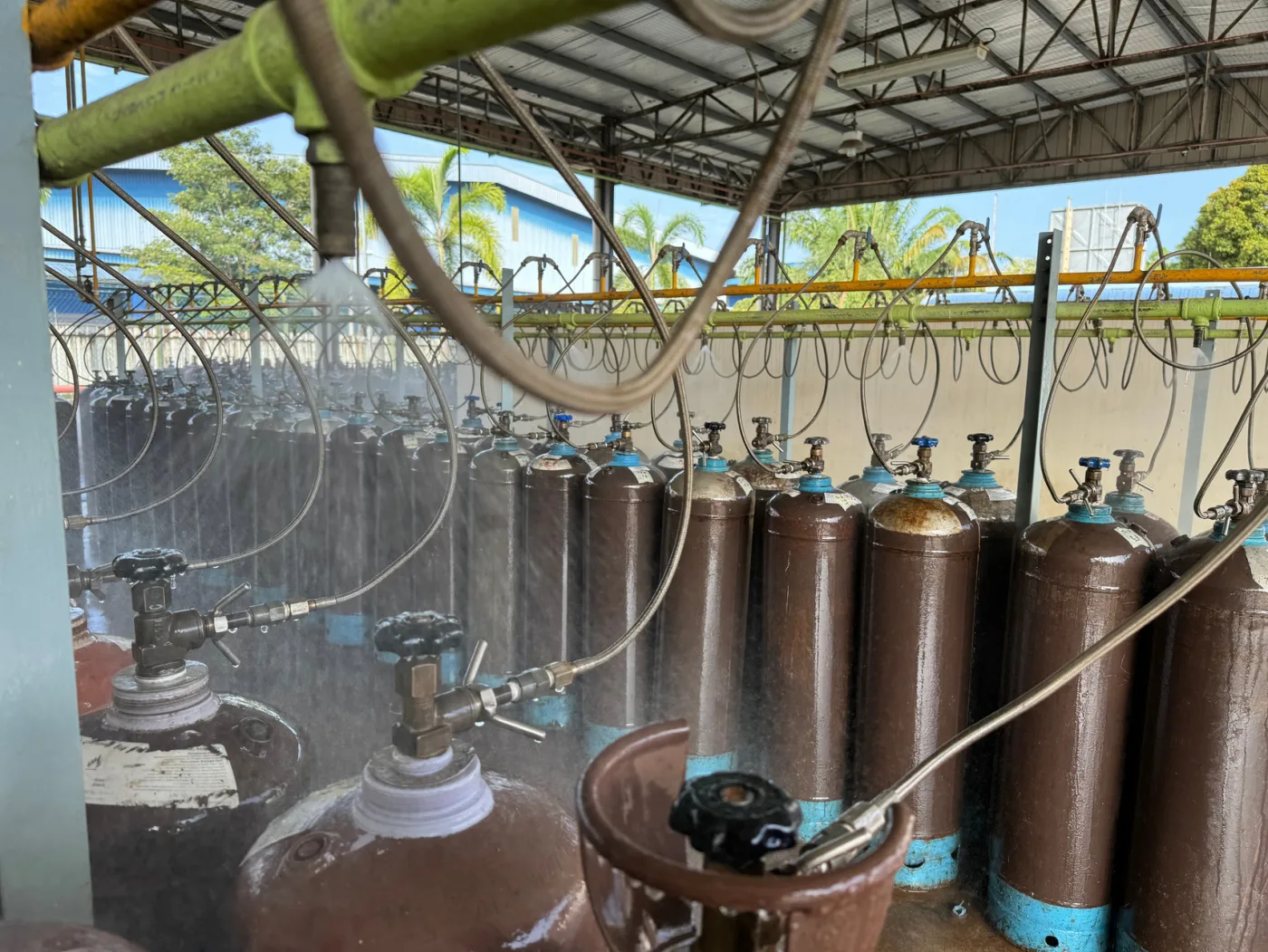
- Boundary and buildings
- 15 m from the acetylene plant to boundary wall
- Cross-contamination distances
- 30 m to an oxygen manufacturing plant; 90 m to an air-compressor air intake
- Sludge pits
- Lime-sludge drying pits at least 9 m from the boundary wall and the generation unit
- Compressor building
- No basement and no floor above or below the compressor or manifold area; explosion venting at least 0.06 m² per m³
- Ventilation
- At least 3.3 m³/min per m² of ceiling area
Most of what makes an acetylene plant safe is decided before a single vessel is ordered — by where the buildings stand, how far apart they are, how they are built and how they breathe. In India the distances are set by PESO in Form E of the Gas Cylinders Rules 2016, and the building rules come from IS 15190 Part 2 and long-standing international practice. This page sets out both, explains the reasoning behind each, and compares the Indian distances with the European code that a multinational customer's auditor will bring.
The PESO distances
Form E Part B of the Gas Cylinders Rules 2016, reproduced in PESO's licensing guidelines, is the table an Indian acetylene plant is licensed against:
| From | To | Minimum |
|---|---|---|
| Acetylene plant | Factory boundary wall, buildings, adjacent properties, offices | 15 m |
| Acetylene plant | Pressure vessels holding cryogenic liquid | 15 m |
| Acetylene plant | Oxygen manufacturing plant | 30 m |
| Acetylene plant | Air-compressor air-intake point | 90 m |
| Acetylene plant | Non-flameproof electrical fittings | 15 m |
| Lime-sludge drying pits | Boundary wall and acetylene generation unit | 9 m |
Form F adds 3 m of clear space all round a flammable-gas cylinder shed, with industrial fencing at least 2 m high. Rule 47(1)(a)(iii) requires the licensing plan to show everything within 100 m.
The 30 m and 90 m figures are the distinctive ones. They protect against acetylene being drawn into an oxygen plant or an air-compressor intake and carried into compressed-air systems or liquid-oxygen equipment. EIGA Doc 123 Table 6, the European comparator, has no such entries, so PESO is stricter on this axis. EIGA, for its part, requires 200 m from a filling building to public buildings with large gatherings — schools, hospitals, railway stations — a far-field rule PESO does not state. AIGA 022/13, the Asian code reproduced from EIGA's with permission, notes that local legislation takes precedence, so PESO governs in India; but a site that meets PESO alone may still be questioned by a European auditor.
| Distance | PESO (GCR 2016 Form E) | EIGA Doc 123 Table 6 |
|---|---|---|
| Boundary, public route, own offices | 15 m | 15 m |
| Public buildings with large gatherings | not stated | 200 m |
| Oxygen plant | 30 m | not stated |
| Air-compressor intake | 90 m | not stated |
| Other filling buildings | — | 6 m |
| Carbide store to boundary or offices | — | 3 m |
| Clear space round cylinder store, fence | 3 m, 2 m fence | 3 m, 2 m wall on transport route |
Rules that matter
IS 15190 Part 2:2002 governs the building that houses the compressor, filling manifold and discharge manifold. It must stand at least 15 m from public right of way and from any adjoining property that could be built on, with a boundary wall or barbed-wire fence at least 9 m from it and signs reading "Hazardous area — No smoking in the premises" and "No trespassing — No smoking or open flame" (clause 4.1.1). Its other rules:
The compressor and filling building
- Single storey No basement, no floor below and no floor above the compressor or manifold area (4.2.1). The CPI code Safety in the Production and Use of Acetylene (Paris, 1968) put it the same way: buildings in which acetylene is compressed have only one floor. A floor above traps gas and loads a structure that must be free to vent; a basement collects gas and is hard to escape.
- Light roof or explosion venting A roof of light material, or venting of not less than 0.06 m² per m³ of building volume (4.2.2). EIGA Doc 123 sets at least 0.05 m² per m³ with building relief at not more than 0.012 bar. The CPI code asked for a roof of light construction for the same reason: if the room fails, it should fail upwards.
- Walls Preferably non-combustible; combustible materials at least one-hour fire rated (4.2). EIGA asks for at least one hour.
- Ventilation At least 3.3 m³/min of air per m² of ceiling area, at floor and roof level, through two layers of 11-mesh stainless or non-corroding gauze, brass mesh not above 65 percent copper (4.2.3).
- Heating Steam or hot water only; boilers and flame equipment in a separate building at least 15 m away (4.2.4–4.2.5).
- Manifolds Not more than 80 cylinders or 480 m³ of gas connected under one roof without a 2.5 m high, 200 mm thick concrete dividing wall (4.2.9).
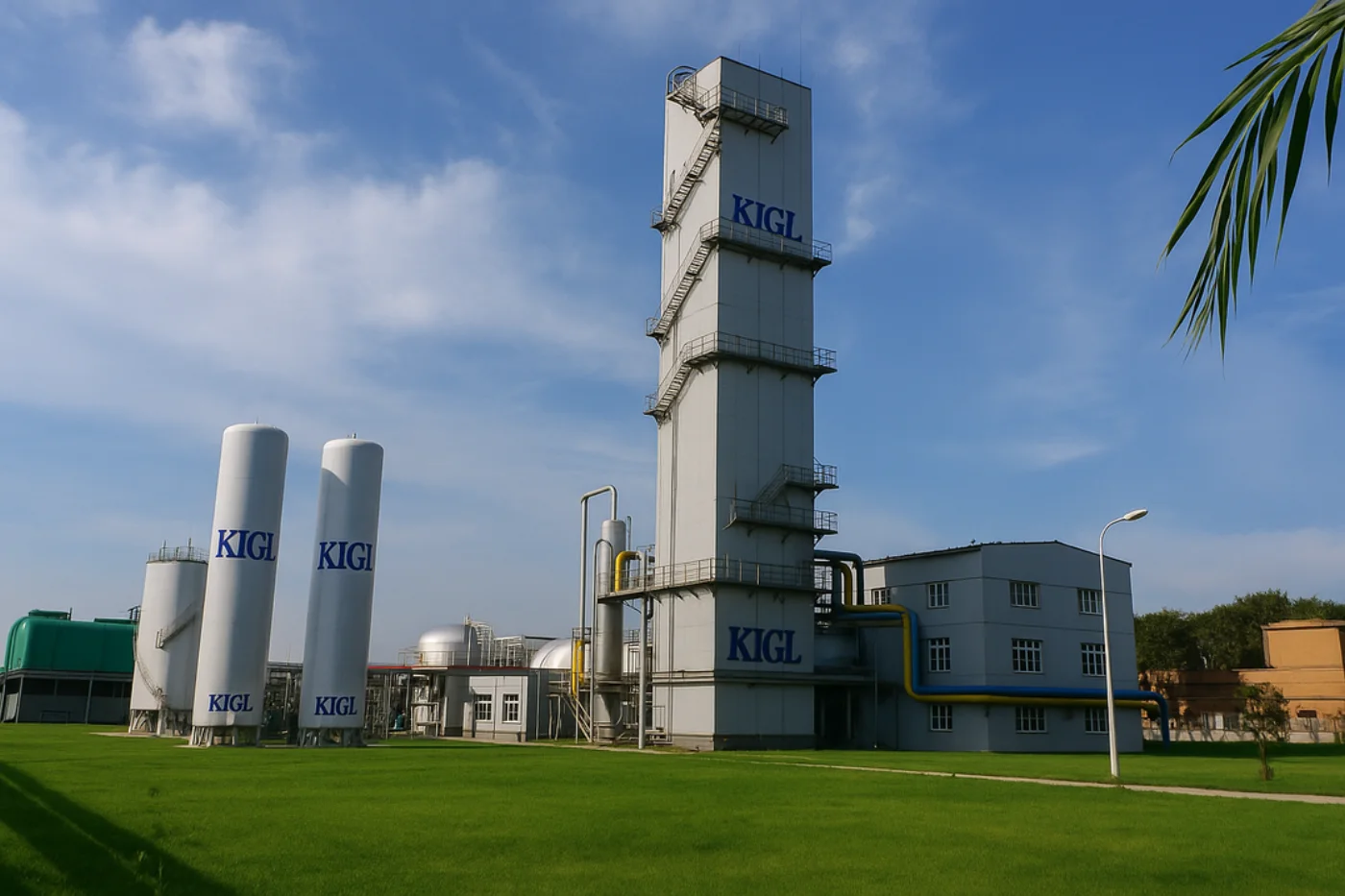
Doors, exits, ventilation openings and light
The CPI code's eight building rules remain the best short statement of the details. Walls, floors and ceilings are non-combustible. Doors open outwards, are light enough to move easily and let fresh air into the lower part of the room; a large sliding or lifting door carries a small outward-opening wicket so people can get out. Where ventilation is natural, there are non-closing openings at floor level and in the ceiling — both, because acetylene's relative density of 0.906 at 15 °C (IS 14814:2023) is close enough to air that it neither reliably rises nor reliably sinks, though in still air it collects under the roof. The lighter than air page explains the numbers. Lighting is good enough to see leaks and defects, with at least 60 lux at work level in the compression and loading shop. Floors in dry climates are semi-conducting, all equipment is earthed and staff do not wear rubber-soled shoes. Premises have a lightning-protection installation. EIGA Doc 123 adds a maximum travel distance to an exit of 25 m and a maximum heating-surface temperature of 225 °C.
The generator house
The generator house is built of fire-resisting materials, ventilated thoroughly so released acetylene cannot accumulate, and isolated from workshops and offices. Daylight is used as far as possible, and any electrical equipment is arranged so that an acetylene atmosphere cannot ignite on it — which in India means flameproof Group IIC equipment, or equipment moved outside behind a gastight wall, as discussed on the Group IIC page. Relief and over-production pipes from generator and gasholder discharge outside into the open air at a safe point, cannot choke, can be checked, and are protected from weather, birds and insects. NFPA 51A-1984, the US standard for charging plants (cited here for comparison only; it is not Indian law), puts relief vent outlets at least 12 ft (3.6 m) above ground and 3 ft (0.9 m) from combustible construction; IS 15190 Part 2 puts safety-valve vents at 5 m height clear of the building.
Sludge pits and carbide store
Carbide lime leaves the generator carrying dissolved acetylene, which outgasses as the liquor cools and settles. The CPI code required drainage pipes, at least over part of their length, and the decanting trenches to be open to the air so that no explosive atmosphere forms in a closed container; the German practice it reflected sited pits so gas could not drift indoors. PESO's 9 m from drying pits to boundary and generator is the Indian minimum. NFPA 51A-1984 forbids continuous drain connections to sewers and puts the discharge point at least 15 ft (4.5 m) from ignition sources and buildable property. Handling of the sludge itself is on the carbide lime sludge page.
The carbide store is separate, dry, waterproof and well ventilated, with containers raised off the ground and no water, steam or condensate lines in the room. EIGA puts it at least 3 m from the boundary and offices; NFPA 51A at least 10 ft (3 m) from buildable property. Empty drums are stored outside the manufacturing premises.
Fire services within the layout
The CPI code required hydrants outside the buildings with adequate pressure and delivery, alarms to warn staff and to call the fire brigade, and at least two extinguishers in every important building, placed where operators can reach them. Form E of the Gas Cylinders Rules 2016 requires a deluge system and dry chemical powder extinguishers at strategic locations; EIGA Doc 123 specifies deluge at 10 l/m² per minute with 90 minutes' supply normally and 12 hours for a hot-cylinder incident. Hydrant valves and deluge actuators belong at exits so they can be worked from outside, and the carbide store is the one area where water is not used.
Rules that matter
What this means for you
- Fix the site against the 15/30/90 m and 9 m distances first; nothing else matters if the plot cannot carry them.
- If customers may audit to EIGA, check the 200 m public-building distance too.
- Build the compressor house single-storey, light-roofed, with outward doors and vents at floor and ceiling.
- Keep electrics outside or IIC flameproof, heating by steam or hot water, sludge pits open to the air and the carbide store dry and separate.
For layout questions on a KIGL acetylene gas plant, confirm the plot against these distances before ordering; plot area against capacity is discussed on sizing an acetylene plant.
Laying out an acetylene plant — frequently asked questions
What are the PESO safety distances for an acetylene plant?
Form E Part B of the Gas Cylinders Rules 2016 gives them: 15 m from the acetylene plant to the factory boundary, buildings, adjacent properties and offices; 15 m to cryogenic liquid storage vessels; 30 m to an oxygen manufacturing plant; 90 m to an air-compressor air-intake point; 15 m to non-flameproof electrical fittings; and 9 m from lime-sludge drying pits to the boundary wall and the generation unit.
Why is the air-compressor intake distance 90 m?
Because acetylene drawn into an air compressor ends up in compressed air lines, instrument air and, at an air separation plant, in a liquid-oxygen system, where hydrocarbons are a recognised explosion hazard. The 90 m rule and the 30 m rule to oxygen plants have no counterpart in EIGA Doc 123 Table 6, which makes the Indian requirement stricter than the European code on cross-contamination.
Does India require 200 m to public buildings, as EIGA does?
No. EIGA Doc 123 Table 6 (and the AIGA 022/13 code reproduced from it) asks for 200 m from an acetylene filling building to public buildings with large gatherings. PESO's published distances do not include an equivalent. A plant that meets PESO is therefore not automatically compliant with the European code, and a multinational customer's auditor may look for the 200 m figure.
Can an acetylene compressor house have two floors?
No. IS 15190 Part 2 clause 4.2.1 forbids housing the compressor station, filling manifold or discharge manifold in a building with a basement, a floor below it or a floor above it. The CPI code of 1968 stated the same rule: buildings in which acetylene is compressed have only a single floor. Other buildings of the plant may have more than one storey.
Why must doors open outwards in an acetylene plant?
So that people can leave in one movement and so that an internal pressure rise pushes the door open rather than jamming it. The CPI code of 1968 required all doors to open outwards, to be light enough to move easily and to let fresh air into the lower part of the room, and any large sliding or lifting door to carry a small outward-opening wicket.
Where should ventilation openings be in an acetylene building?
At both floor and ceiling level. Acetylene's relative density is about 0.91, so in still air it tends to collect under the roof, but it is close enough to air to mix and spread. The CPI code of 1968 called for non-closing openings at floor level and in the ceiling where ventilation is natural; IS 15190 Part 2 sets at least 3.3 m³/min per m² of ceiling area, screened with two layers of 11-mesh non-corroding gauze.
How far should the carbide store be from other buildings?
Indian rules leave carbide-store distances to the carbide licence; the PESO acetylene table does not list one. EIGA Doc 123 Table 6 gives 3 m from the carbide store to the boundary and offices, and the US NFPA 51A-1984 (a comparator, not Indian law) gives 10 ft (3 m) to any buildable property line. The store must be dry, raised off the ground, free of water and steam lines, and away from the sludge handling area.
References
- Asia Industrial Gases Association. (2013). Code of Practice — Acetylene (AIGA 022/13).
- Bureau of Indian Standards. (2002). Acetylene Pipelines — Code of Practice (IS 15190 (Part 2):2002).
- European Industrial Gases Association. (n.d.). Code of Practice — Acetylene (EIGA Doc 123).
- Petroleum and Explosives Safety Organisation. (n.d.). Guidelines for issuing licences under the Gas Cylinders Rules; Gas Cylinders Rules 2016 Form E. Government of India.
Enquiries
Request a quotation
State the gas or equipment, the quantity or capacity, and your location. KIGL will confirm the grade, the cylinder or plant size, and whether the location can be served from Noonmati, or through the agent network.