
Guide
Transporting acetylene cylinders safely: the Schedule VI rules valve caps, securement and why open vehicles are compulsory
Dissolved acetylene cylinders are transported under Schedule VI of the Gas Cylinders Rules 2016: never in a closed vehicle, never on a two-wheeler, secured and braced, valves closed and capped, and not mixed with other compressed gases except up to 25 acetylene cylinders with non-toxic non-flammable gases. Leaking or fire-damaged cylinders are never carried.
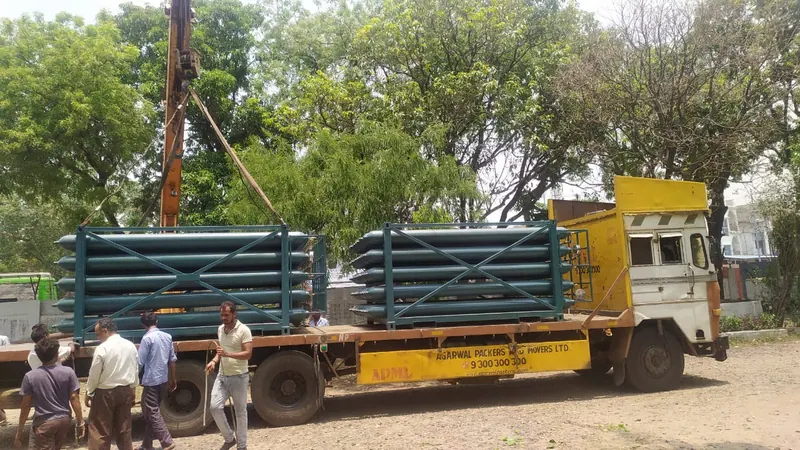
- Vehicle type
- Acetylene cylinders shall not be transported in a closed vehicle; no cylinder may be carried on a bicycle or two-wheeled mechanically propelled vehicle
- Mixed loads
- Flammable gas cylinders not carried with other compressed gases
- Securement
- Cylinders adequately secured
- Valve protection
- A metal cap
- Leaking cylinders
- No person shall tender or transport any leaky cylinder
A dissolved acetylene cylinder is at its most vulnerable on the road. In the store it stands still, upright and shaded; on a truck it is shaken, heated, sometimes dropped and, in the worst case, thrown. Schedule VI of the Gas Cylinders Rules 2016 sets the Indian transport rules, IS 14814:2023 adds two, and the investigated accident record from abroad shows what each rule is for. This page puts the rules, the reasons and the evidence together.
The rules in one table
| Rule | What it requires | Why |
|---|---|---|
| Schedule VI cl 1(a); IS 14814 cl 7.5.2 | No cylinder on a bicycle or two-wheeled motor vehicle | A heavy cylinder on a scooter cannot be secured and falls on its valve |
| Schedule VI cl 1(b), 1(c) | No projection beyond the sides or ends of the vehicle; no sharp projections inside it | Projecting cylinders are struck; internal projections gouge the shell |
| Schedule VI cl 1(d), 1(e) | Adequately secured; blocked or braced | Unsecured cylinders are ejected in a rollover and lose their valves |
| Schedule VI cl 1(f) | Not with highly flammable or corrosive articles | A diesel drum or an acid carboy turns a leak into a fire or a corroded shell |
| Schedule VI cl 2(a), with the proviso printed in cl 2(d) | Flammable gas cylinders not with other compressed gases; up to 25 DA cylinders may travel with non-toxic non-flammable gases | Keeps oxidisers and fuels apart on the vehicle |
| Schedule VI cl 2(c) | Acetylene cylinders not transported in a closed vehicle | A leak in a closed body makes a flammable atmosphere |
| Schedule VI cl 3(a), 3(b) | No lifting magnet; crane or fork-lift only with a proper cradle and slings | Magnets drop; slung cylinders swing into each other |
| Schedule VI cl 4 | Vented metal cap, cover, ring or grill protecting the valve | The valve is the part that shears in a fall |
| Schedule VI cl 5 | No person shall tender or transport any leaky cylinder | A leak on the move finds an ignition source |
| GCR Rule 24(2) | A cylinder damaged by fire is condemned and destroyed | Heat damages the porous mass invisibly |
Everything else on this page is explanation of those lines.
Why open vehicles
Acetylene's flammable range in air starts at 2.5 % (IS 14814:2023 cl 4.5.3.1) and its minimum ignition energy is about 0.02 mJ, measured by Fenn in 1951 as the lowest of any common combustible; a static discharge from a person's hand exceeds it. A cylinder valve that weeps a few litres an hour, harmless in an open yard, produces a flammable layer in a closed van within the length of a delivery round. The 1968 C.P.I. safety code listed the ignition sources that matter on a vehicle: electric switches, electrostatic discharges, steel tools, the impact of shoe nails on steel plate. An open truck body, or a van with a bulkhead and permanent ventilation front and rear, makes the leak a nuisance instead of a hazard. The same reasoning is behind the storage rule against cupboards and closed rooms, explained on the cylinder storage page.
Why securement is the control
The clearest evidence comes from the United States. The National Transportation Safety Board's special investigation SIR-09/01 (2009) covered several mobile acetylene trailer accidents, two of them rollovers. In the first, on a Louisiana interstate in October 2007, the trailer overturned, 220 cylinders were thrown from it, 32 had their valves broken off, and acetylene from 145 cylinders was released and ignited. The cylinders had not been secured to the trailer. In the second, in Colorado in June 2008 (which NTSB reported from the state accident report rather than investigating itself), about half of 225 cylinders carrying only residual acetylene were ejected; fire from the broken-valve cylinders then melted the fusible plugs of intact neighbours, each of which became a new jet fire. NTSB's finding was that the US regulations did not adequately require cylinders to be secured or their valves protected from impact, and it recommended both.
Two lessons travel to India without translation. First, the valve is the weak point: a cylinder that falls on its shell is dented; a cylinder that falls on its valve becomes a torch. The vented cap required by Schedule VI clause 4 exists for that reason. Second, an empty cylinder is not safe cargo. A dissolved acetylene cylinder returned for refilling still holds acetone saturated with acetylene at atmospheric pressure, and a fleet of such cylinders fed a major fire. Empties are chained and capped like full ones.
Loading and unloading
The handling rules in Schedule VI clause 3 reflect the same physics. A lifting magnet can release without warning, and a cylinder dropped from a crane lands on its valve or its base weld. The clause permits crane and fork-lift handling only with a proper cradle with chains or wire-rope slings. On the ground, the right tool is a cylinder trolley, and for a short move the cylinder may be tilted and rolled on its base ring with one hand on the cap, never dragged, never rolled on its side, never used as a roller for something else. The C.P.I. 1968 code's one-line rule is that impacts are to be avoided in transporting and handling dissolved acetylene containers; the mechanism is that mechanical shock can crack or settle the porous mass, creating the voids that periodic inspection under IS 8433 exists to find. Handling technique is covered in handling acetylene cylinders.
Loading order matters where a mixed load is permitted. Within the mixed-load proviso printed in clause 2(d), which is separate from that clause's rule against carrying thin-walled cylinders horizontally, dissolved acetylene and inert cylinders may share a vehicle, but each gas is grouped and separately braced so that a cylinder of one kind cannot work loose and strike the other. Oxygen is an oxidiser, and the conservative reading of clause 2(a) is that it does not travel with acetylene at all, or only in a separately secured compartment agreed with the licensing officer.
Valves closed, keys and caps
Before a cylinder leaves the yard its valve is closed, the outlet is capped or plugged, and the protective cap is on. The C.P.I. 1968 code required the valve to be closed during every interruption in work and whenever a cylinder is set aside as empty, so that neither gas nor acetone vapour escapes; the same discipline applies before loading. A spindle valve to IS 3224 is closed with its key, and the key stays with the cylinder in use, because the cylinder cannot be made safe without it. The valve rules are on the cylinder valves page.
The cap is not decoration. Schedule VI requires it on any cylinder whose valve stands proud of the body, and the cap for a non-toxic gas is vented so that a small leak under it cannot build pressure. A cylinder received without its cap is a cylinder whose valve has travelled unprotected, and the receiver is entitled to ask why.
Heat on the road
A truck bed in the Indian sun is hotter than the yard it left. Acetylene's critical temperature is 35.15 °C (IS 14814:2023), and above it the acetone charge expands with every degree while the settled pressure climbs from its 15 °C design point. CGA G-1 in the United States gives 51.7 °C as the storage ceiling; a dark cylinder under a tarpaulin on a steel deck reaches it. The practical rules are a light-coloured cover that shades without enclosing, loading early or late in the day on long runs, and never parking a loaded vehicle in the sun with the cover on and the sides closed. The hot-weather page gives the solubility figures behind this.
Documents and marking
IS 14814:2023 cites the Central Motor Vehicles Rules 1989 for the transport of hazardous chemicals, and gives acetylene's identifiers: UN 1001, UN Class 2.1, Hazchem code 2SE. The vehicle carries the hazard marking and the driver the transport emergency information those rules require. Every cylinder carries its Rule 9 label with the warning text, and under Rule 42 the date of last filling, the weight of gas filled, the full cylinder weight and the filler's name; the next test date is on the metal ring between the valve and the neck. A delivery note listing serial numbers is the receiver's means of checking each ring against the paperwork before signing. Any accident involving a cylinder is notified to the Chief Controller within twelve hours under Rule 67(1)(a).
Rules that matter
Rules to apply
- Open truck or ventilated van with a bulkhead; never a closed body, never a two-wheeler.
- Upright, in racks or chained in rows, blocked and braced, nothing projecting.
- Valve closed with the key, outlet plugged, vented cap on, full and empty alike.
- Acetylene grouped and braced apart from any other gas; oxygen on another vehicle unless the licensing officer agrees otherwise.
- No diesel drums, paint, acid or other flammable or corrosive goods on the same load.
- Shade, not enclosure; do not park loaded in the sun.
- No leaking cylinder is loaded; a cylinder found leaking en route is isolated in the open and the supplier called.
- A cylinder that has been in a fire is condemned under Rule 24(2), not returned to service.
Customers collecting KIGL dissolved acetylene in their own vehicles should apply every rule above, and can ask KIGL how Schedule VI is met on its own delivery routes. The gas's hazard data is on the acetylene safety data sheet.
Transporting acetylene cylinders safely — frequently asked questions
Can acetylene cylinders be carried lying down in a truck?
Schedule VI clause 2(d) of the Gas Cylinders Rules 2016 requires thin-walled cylinders not to be carried horizontally. Dissolved acetylene cylinders are always carried upright, chained or racked, so that acetone stays in the porous mass and the valve is protected. If a cylinder has travelled on its side, IS 14814:2023 clause 7.3.1 says stand it upright and leave it about half an hour before use.
Why may acetylene not be carried in a closed vehicle?
A valve weep in a closed van fills the load space with a mixture that is flammable from 2.5 % acetylene in air (IS 14814:2023) and can be ignited by 0.02 mJ, a static spark from a finger. Schedule VI clause 2(c) therefore requires an open or well-ventilated vehicle, so that any leak disperses on the move rather than building up in an enclosed load space.
Do the cylinders have to be chained or tied down?
Yes. Schedule VI requires cylinders to be adequately secured and blocked or braced so they cannot move or project beyond the vehicle. The NTSB special investigation of 2009, which covered two trailer rollovers in 2007 and 2008, found that unsecured cylinders were thrown clear, their valves sheared off and the released acetylene ignited; the valve is the weak point and the securement is the control.
Can I carry acetylene and oxygen on the same vehicle?
Schedule VI clause 2(a) says flammable gas cylinders are not transported with cylinders containing any other type of compressed gas, with one exception, the proviso to clause 2(a) that is printed in clause 2(d) after the rule on thin-walled cylinders: up to 25 dissolved acetylene cylinders may be carried with non-toxic non-flammable gases taking due precautions. Oxygen is an oxidiser, not a non-flammable inert, so the conservative reading is separate vehicles or separately secured compartments; confirm with the licensing officer.
Must the valve cap be fitted for transport?
Schedule VI clause 4 requires a metal cap, cover, ring or grill of approved design on any cylinder whose valve is not wholly below the level of the body. The cap for a non-toxic gas has a vent so that a small leak cannot build pressure under it. The valve is the part that breaks in a fall or a rollover, and a capped valve is the difference between a dented cylinder and a jet fire.
What paperwork travels with a load of acetylene cylinders?
Each cylinder carries its Rule 9 label and the Rule 42 acetylene additions: date of last filling, weight of gas, full weight and filler's name. The vehicle and consignment fall under the Central Motor Vehicles Rules 1989 for hazardous chemicals, which IS 14814:2023 cites; acetylene is UN 1001, Class 2.1, Hazchem 2SE. A delivery note listing cylinder serial numbers lets the receiver check the test ring on each one.
What do I do if a cylinder is leaking on the vehicle?
Stop in the open, away from drains, buildings and traffic; switch off the engine; close the cylinder valve with the key if the leak is at the outlet; keep everyone upwind and away from ignition sources, and do not use a phone beside the cylinder. A cylinder that cannot be made gas-tight is not moved further under Schedule VI clause 5; call the supplier. A leak is found by soap solution, never by flame.
Can a cylinder that has been in a vehicle fire be sent back for refilling?
No. Rule 24(2) of the Gas Cylinders Rules 2016 requires a dissolved acetylene cylinder damaged by fire to be condemned and destroyed by a person conversant with the hazards. Heat can crack or shrink the porous mass and leave voids where free acetylene collects; the cylinder may look sound and be unsafe. Cool it, label it, and hand it to the filler for condemnation.
References
- Bureau of Indian Standards. (2023). Acetylene — Code of Safety (IS 14814:2023, First Revision).
- C.P.I. (1968). Safety in the production and use of acetylene. Paris.
- European Industrial Gases Association. (n.d.). Code of Practice: Acetylene (EIGA Doc 123).
- Government of India. (2016). Gas Cylinders Rules, 2016 (G.S.R. 1081(E)). Petroleum and Explosives Safety Organisation. [Schedule VI (Transport of cylinders)]
- NTSB Special Investigation Report SIR-09/01, Mobile acetylene trailer fires and rollovers, 2009
Enquiries
Request a quotation
State the gas or equipment, the quantity or capacity, and your location. KIGL will confirm the grade, the cylinder or plant size, and whether the location can be served from Noonmati, or through the agent network.