
Guide
Acetylene gas formula structure and properties — the numbers behind the hottest flame in the workshop
The acetylene gas formula is C₂H₂: two carbon atoms joined by a triple bond, each carrying one hydrogen. That bond stores energy, so acetylene burns at about 3,100 °C with oxygen, ignites across 2.5 % to 82 % in air, and can decompose alone above roughly 1.5 bar g. Molecular weight 26.04; relative density 0.91.
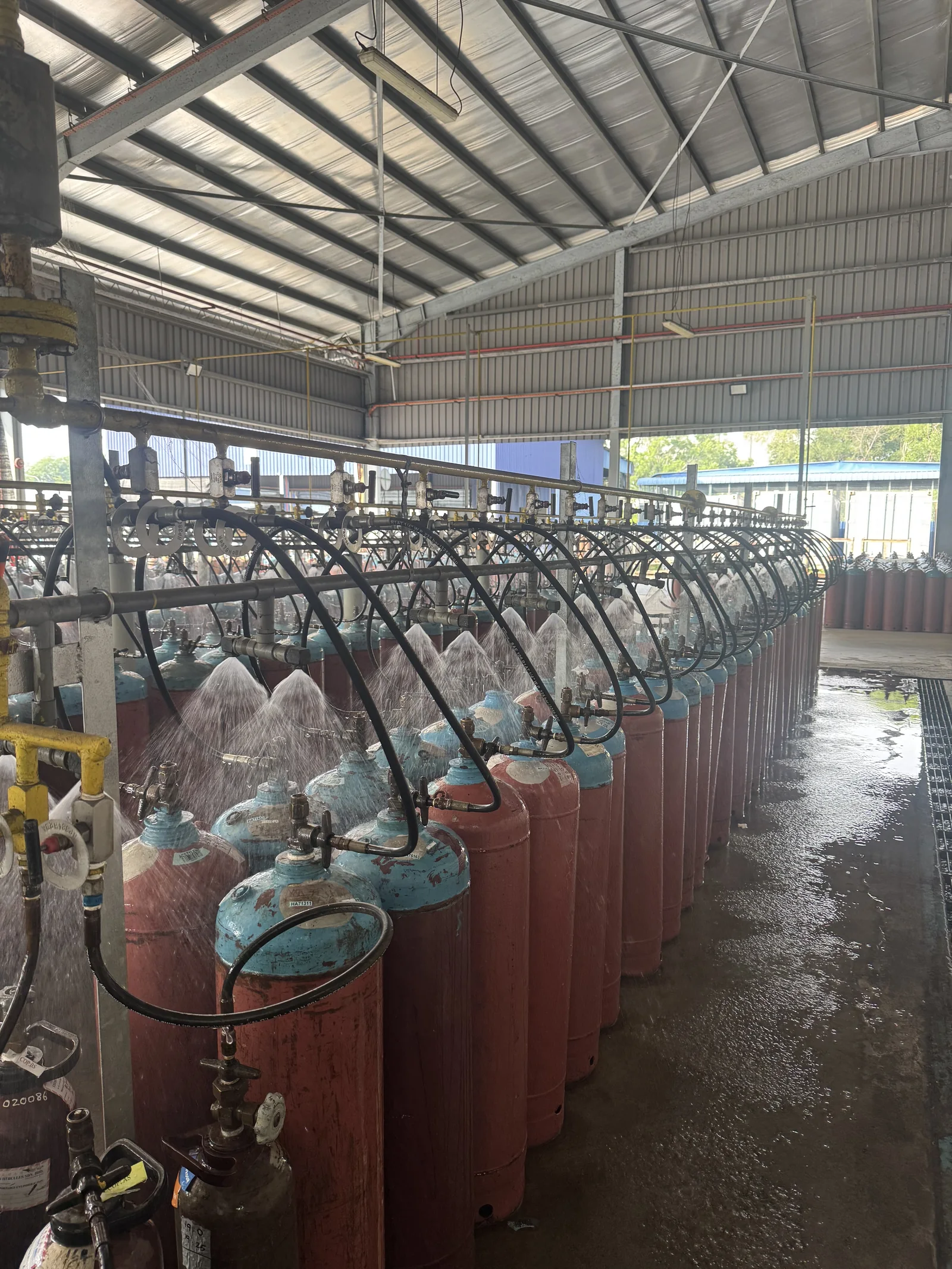
- Chemical formula
- C₂H₂
- Molecular weight
- 26.04
- Flame temperature with oxygen
- ≈3
- Flammability range in air
- 2.5 % to 82 % by volume
- Relative density (air = 1)
- 0.91
The formula, and what the triple bond means
The acetylene gas formula is C₂H₂. Written to show its structure it is HC≡CH: two carbon atoms sharing a triple bond, each with one hydrogen attached, in a straight line. It is the simplest alkyne, and its IUPAC name is ethyne.
Everything useful and everything dangerous about acetylene follows from that triple bond. Forming it took energy in, when calcium carbide was made in an electric furnace, and that energy is still stored in the molecule. Acetylene is endothermic: it holds more energy than the carbon and hydrogen it is made of. Burn it and you get that energy back on top of ordinary combustion heat, which is why the flame is so hot. Compress it, and the molecule can release that energy without burning at all.
Acetylene properties at a glance
| Property | Value | Basis |
|---|---|---|
| Chemical formula | C₂H₂ (ethyne) | IUPAC |
| Molecular weight | 26.04 | NIST |
| Gas density at 20 °C, 1 atm | 1.09 kg/m³ | NIST |
| Relative density (air = 1) | 0.91 | NIST |
| Sublimation point at 1 atm | −84 °C | Literature |
| Vapour pressure at 20 °C | 44 bar absolute | Literature |
| Flammability limits in air | 2.5 % to 82 % | IS 14814 |
| Autoignition temperature | ≈305 °C | Literature |
| Flame temperature in oxygen | ≈3,100 °C | Literature |
| Decomposition without oxygen | Above roughly 1.5 bar g | IS 14814 |
| State in a cylinder | Dissolved in acetone, in a porous mass | IS 7312 |
The flame: why 3,100 °C
Oxy-acetylene is the hottest flame in common industrial use. Three things make it so. The triple bond releases its stored energy when it breaks. Acetylene needs only 2.5 volumes of oxygen per volume of gas for complete combustion, against 5 for propane, so less heat is spent warming surplus combustion products. And the flame burns in two stages, with the hottest zone, the inner cone, sitting a few millimetres from the torch tip, where the welder puts the work.
That is why acetylene still cuts, welds and brazes where LPG cannot. The acetylene versus LPG guide sets out where each wins.
The flammability range: why acetylene leaks matter more
Most fuel gases burn in air over a band of a few percent. Propane ignites between about 2 % and 10 %. Acetylene ignites from 2.5 % to 82 %, the widest range of any common industrial gas, and needs very little energy to light. Almost any leak that mixes with air produces an atmosphere that can ignite.
Two handling rules come straight from that number. Acetylene stores and filling halls ventilate at high level, because the gas is slightly lighter than air and collects under the roof. And leaks are found with soap solution, never with a flame.
Decomposition: why the gas is never compressed
Above roughly 1.5 bar g, free acetylene can decompose into carbon and hydrogen explosively with no oxygen present at all. It does not need to meet air to be dangerous. A compressed-gas cylinder of acetylene would be a bomb.
So acetylene is never compressed into an empty cylinder. It is dissolved in acetone held in a porous mass that fills the cylinder, and acetone takes up about 300 volumes of acetylene per volume at working pressure. The porous mass stops any decomposition that starts from propagating. That is why an acetylene cylinder is heavy, why it stands upright, why the gauge reads acetone vapour pressure rather than contents, and why the cylinder is weighed rather than gauged. The acetone guide and the decomposition guide go further.
Where the gas comes from
Industrially, acetylene is made by reacting calcium carbide with water: CaC₂ + 2H₂O → C₂H₂ + Ca(OH)₂. A kilogram of good carbide gives roughly 300 litres of gas and a lime slurry by-product. The gas leaves the generator carrying phosphine and hydrogen sulphide from the carbide, which the plant's purification train removes before the gas is dried, compressed and dissolved into cylinders. KIGL builds those plants and fills acetylene gas at its own works, and has done since 1947.
Sources
Acetylene gas formula — frequently asked questions
What is the chemical formula of acetylene gas?
C₂H₂. Two carbon atoms share a triple bond, and each carbon carries a single hydrogen atom. The IUPAC name is ethyne, but the gas trade, the cylinder standards and the safety codes all use "acetylene". The formula is sometimes written HC≡CH to show the bond.
Why does acetylene burn hotter than LPG or propane?
Because of the triple bond. Breaking it releases energy on top of what the carbon and hydrogen give when they burn, and acetylene needs less oxygen per unit of gas than propane does, so less of the flame's heat goes into warming surplus combustion products. The result is an oxy-acetylene flame at about 3,100 °C against roughly 2,800 °C for oxy-propane.
Is acetylene lighter than air?
Slightly. Relative density is about 0.91 against air at 1.0, so a leak rises and collects at high level rather than pooling on the floor as propane or carbon dioxide would. That is why an acetylene store ventilates at the roof, and why a detector mounted at floor height will not see it.
What is the flammability range of acetylene?
From 2.5 % to 82 % by volume in air, the widest of any common industrial gas. Almost any leak that mixes with air at all produces an ignitable atmosphere, and the ignition energy needed is very small. Ventilation and leak testing matter more with acetylene than with any other fuel gas.
Why is acetylene gas stored dissolved and not compressed?
Because the same bond that makes the flame hot makes the molecule unstable under pressure. Above roughly 1.5 bar g, free acetylene can decompose into carbon and hydrogen explosively with no oxygen present at all. Dissolving it in acetone held in a porous mass that fills the cylinder stops that decomposition propagating, which is why every acetylene cylinder is a dissolved-gas cylinder and why there is no such thing as liquid acetylene.
What is the density of acetylene gas?
About 1.09 kg per cubic metre at 20 °C and atmospheric pressure, against 1.20 for air. In the cylinder the gas is in solution, so the useful figure there is the mass of gas, which is why acetylene is sold and checked by weight rather than by pressure.
Enquiries
Request a quotation
State the gas or equipment, the quantity or capacity, and your location. KIGL will confirm the grade, the cylinder or plant size, and whether the location can be served from Noonmati, or through our agent network.