
Guide
The acetylene plant maintenance calendar: 10 daily 18 weekly, 15 monthly and 20 yearly tasks, grouped by system
A carbide-to-water acetylene plant needs 63 scheduled tasks in KIGL's regime: 10 daily before start-up, 18 weekly, 15 monthly and 20 yearly, plus hourly checks on the shift log and volume-triggered work such as cleaning the generator tank after 60,000 m³ of acetylene. Safety valves are deliberately checked at four frequencies.
- Task count
- 63 scheduled tasks: 10 daily
- Volume triggers
- Generator tank cleaned yearly on smaller plants
- Agitator
- Runs 5 minutes in every 15
- Safety valve checks
- 3 generator safety valves: lifted daily
- Longer intervals
- Gearboxes 6-monthly; cooler condenser every 2.5 years; motor bearings about 8
A carbide-to-water acetylene plant is maintained to a calendar, not by waiting for faults. KIGL's regime has 63 scheduled tasks: 10 checked every day before start-up, 18 every week, 15 every month and 20 every year, plus the hourly round recorded on the shift log and work triggered by the volume of gas made. Each list is a controlled record with satisfactory, non-satisfactory and remarks columns, signed by the person who did the work.
How the tiers fit together
The tiers are layered. The same device is often checked at more than one frequency, each check testing something different: the generator safety valves are lifted daily, soap-tested weekly and monthly, and bench-set yearly. A reader who sees an item three times should read it as design, not duplication.
| Tier | Count | Purpose |
|---|---|---|
| Hourly (shift log) | 12 readings per shift | Drain condensate, verify level and temperature, record pressures |
| Daily, before start-up | 10 | Prove the moving and protective parts work before carbide is fed |
| Weekly | 18 | Lubricate, test the low-water trip, refresh arrestor water and drier charges, inspect leaks |
| Monthly | 15 | Test the high-level and temperature trips, oil the reducers, service cooling and instrument air |
| Yearly | 20 | Open the generator, inspect and reset everything that cannot be reached in service |
| By volume or hours | various | Tank clean at 60,000 m³; HP drier flush at 200,000 m³; bearings at 8,000 h |
Daily, before start-up (10)
- Agitator runs 5 minutes in every 15 minutes.
- Agitator runs during each hopper run.
- Agitator stuffing boxes not leaking.
- Residue drain valve not leaking water.
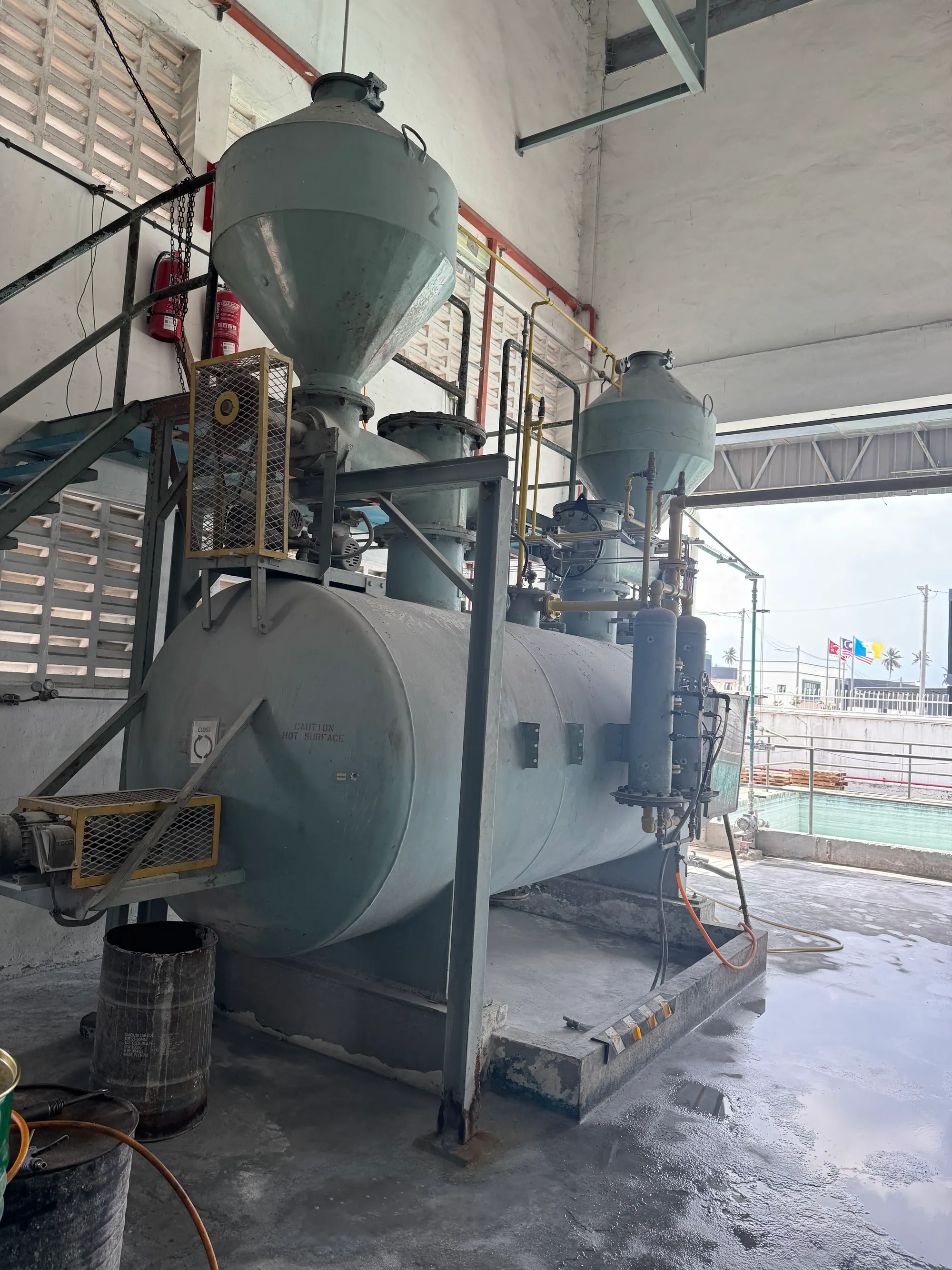
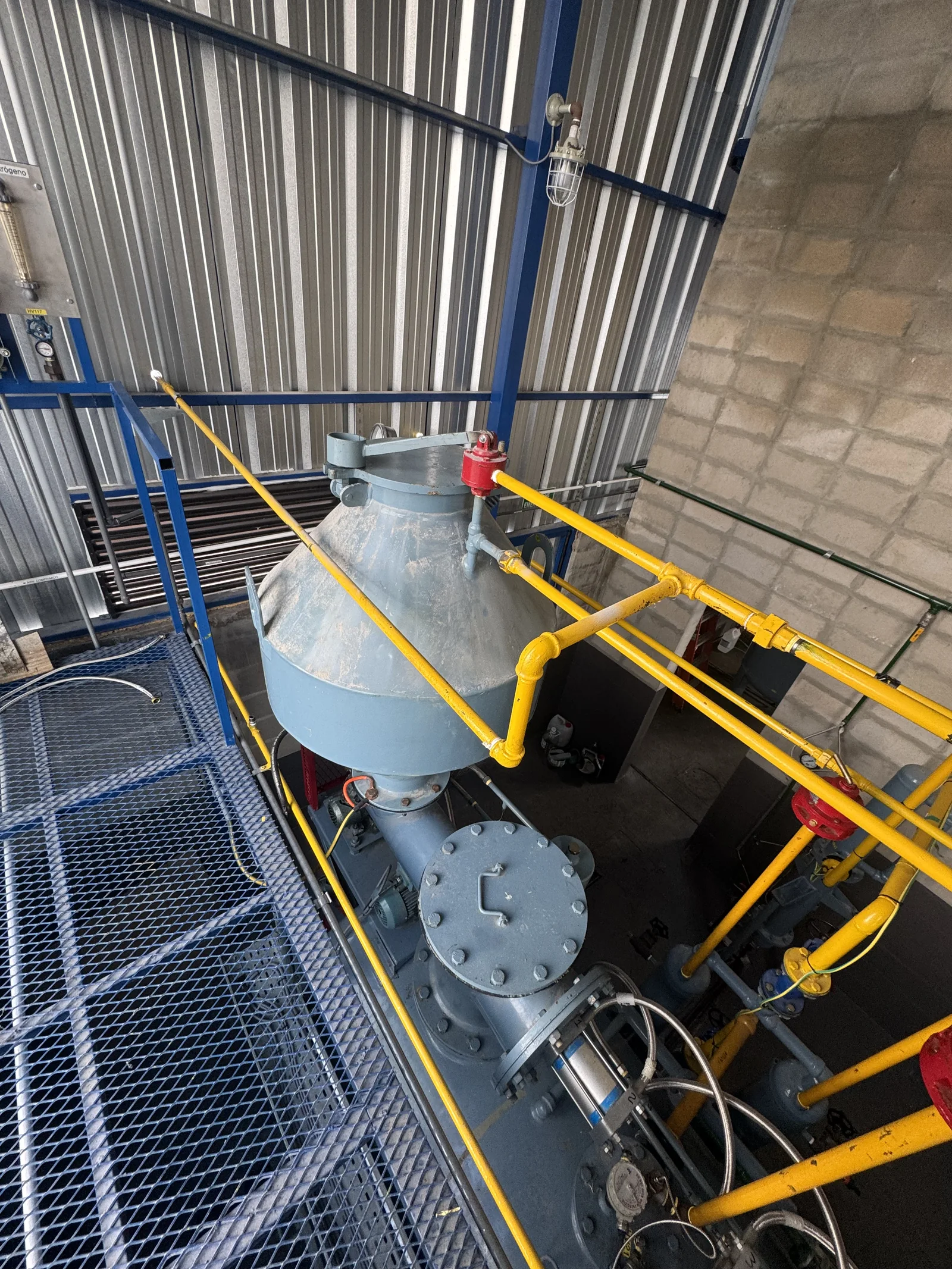
- Each generator safety valve opened by its lever to prove it lifts and reseats.
- Hydraulic piping free of oil leaks.
- Scrubber water level checked and topped up.
- Water condensate drained from the acetylene compressor oil.
- Compressor oil level checked, SAE 30 non-detergent added if needed.
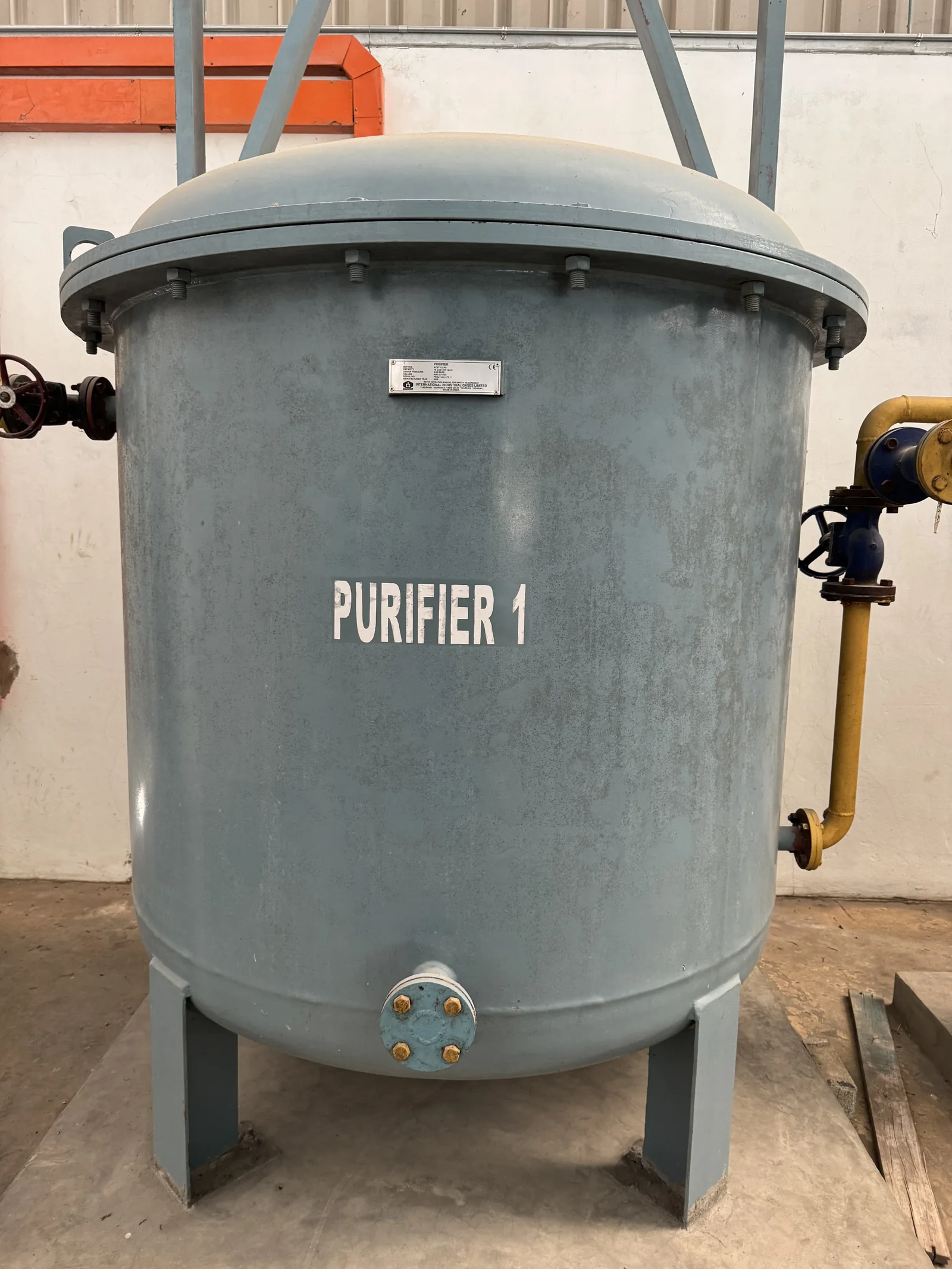
- High-pressure drier refilled with anhydrous calcium chloride, because the manual warns that a void could result in an explosion.
Before every start, and at each hopper filling, the generator water level is also confirmed at the two check valves: water from the lower, gas from the upper.
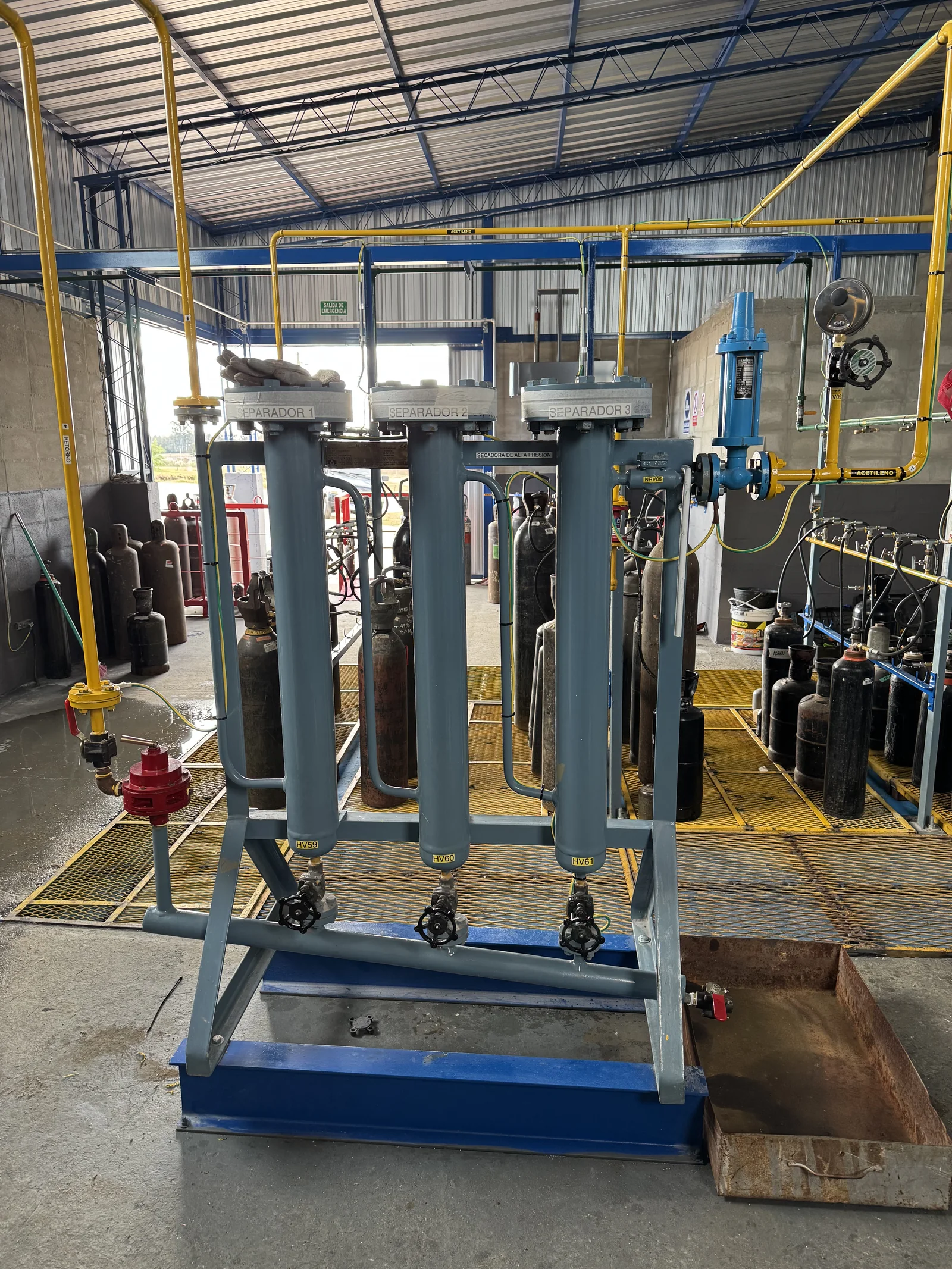
Weekly (18)
Hoppers and screw feed
grease the hopper fill cover gasket and lugs with soap, Vaseline or silicone; fill the grease cups over the screw-feed bushes; check oil in both hydraulic reservoirs, about 3 inches below the top; check screw-feed oil pressure, with the relief valve at 12 kg/cm²g; check the screw-feed mechanism for belt wear and abnormal gearbox or pump noise.
Generator and arrestors
drain, flush and refill both wet flashback arrestors to overflow at the level valves and purge them five times; soap-test all three generator safety valves at operating pressure; test the low water level alarm by draining until the bell rings and confirming the screw feed will not run.
Gas train
fill the low pressure drier with anhydrous calcium chloride; drain and refill the scrubber with the plant stopped; soap-test the cooler condenser, compressor and high-pressure drier condensate valves.
Compressor
check the oil for moisture and change it if grey; check the two magnesium anodes and replace any worn to the core wire or pencil thickness.
Manifold
check pigtails, replacing any with broken braid wires or a permanent bend tighter than 50 mm radius; soap-test manifold and station valves; clean the cylinder sprinkler system.
Monthly (15)
- High water level alarm tested by raising the level through the bypass; also after any work on the level transmitter or slurry valve.
- Residue drain valve sensitivity: 200 to 400 litres on the water meter between successive drain openings.
- Temperature safety instrument tested by lowering its setting below the indicated value and confirming the alarm.
- Generator safety valves soap-tested at the vent-side union.
- Hopper vent valves soap-tested the same way.
- Agitator gear reducer topped up with SERVO Gear HP 85.
- Both screw-feed gear reducers topped up.
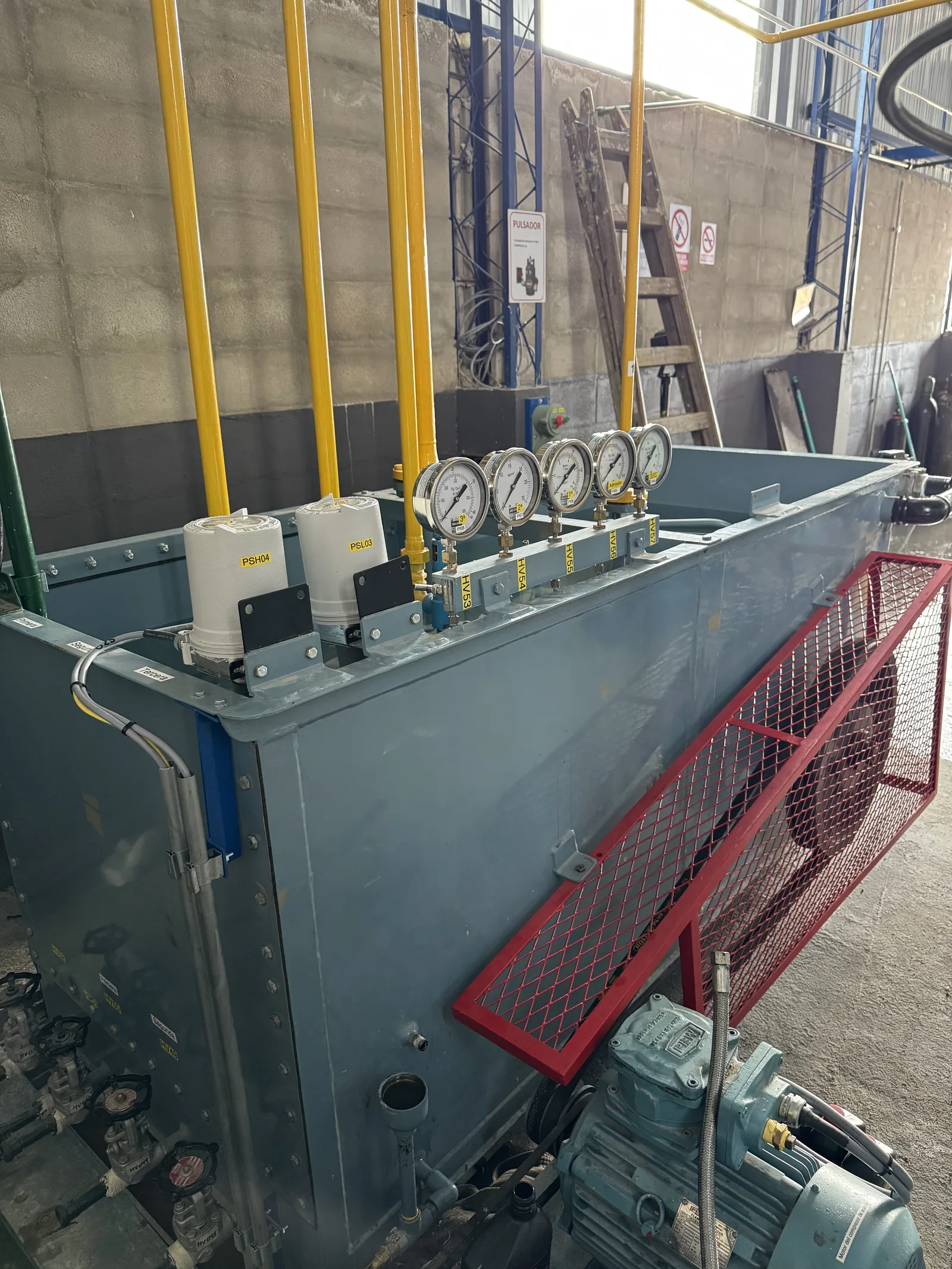
- Compressor cooling tank drained, cleaned, piping inspected for corrosion, refilled.
- Screw-feed drive belt checked; static-conducting belts only.
- Compressor motor drive belt checked.
- Compressor oil-pump belt checked; it is a cog belt and runs slack.
- All acetylene piping, low and high pressure, inspected and soap-tested; repairs only with the plant shut down and purged.
- Instrument-air compressor belts cleaned or changed.
- Instrument-air compressor oil drained and refilled with SAE 30 non-detergent; drier silica gel replaced.
- All air piping checked for leaks.
Yearly (20)
- Withdraw the generator from service, letting both hoppers run empty on the last shift.
- Clean and inspect the tank interior.
- Check agitator packing and shaft for wear.
- Check the water inlet spray system.
- Check control diaphragms.
- Check carbide valve seats and the rubber disc.
- Inspect hoppers and hopper gaskets.
- Check and adjust safety relief valves on the bench: tight below the set pressure, free discharge at it, and clean reseating after pressure is reduced, to the values on the approved drawing.
- Check the hydraulic system for leaks and reservoir level.
- Check hydraulic cylinders for operation, leaks and rod damage.
- Check gearbox oil levels.
- Check screw-feed drive chain and belt tension.
- Drain, clean and refill the flashback arrestors.
- Check generator valves and gauges.
- Check the slurry drain valve opens on level rise.
- Check the water inlet valve opens on temperature rise and spring-closes on loss of air.
- Purge the air-acetylene mixture from the generator on restart.
- Function-test the alarm and drain valve control system: low level, high level, high temperature and instrument air.
- Clean and lap acetylene and air compressor suction and discharge valves; head bolts to 60 ft-lb (8.3 kg-m).
- Check and clean all valves and valve seats, renew gland packing.
The annual list also carries cleaning of the high-pressure drier flange and the charging manifold, blown out with nitrogen and checked for amines that can clog check valves where no purifier is used.
The tank clean, step by step
The tank clean is the yearly job most likely to hurt someone, because a generator opened after service still holds acetylene in sludge and pockets. Fill the tank to normal level with the agitator on to thin the sludge; vent through the safety valve handle; drain fully; remove the flexible coupling between agitator and gearbox and isolate the control panel so nothing can start; remove the manholes and feed-tube top plates; flush with a hose and scrape only with a wooden paddle, never a metal tool. Clear the spray nozzles, the build-up around the feed-tube ends and the centre riser, flush the arrestor bottoms, refit plates with new gaskets tightened alternately across, refill, purge all air through the safety and hopper vent valves, soap-test and refit the coupling. Lime burns: protective clothing, goggles, rubber boots, gloves and apron, with fresh water to wash off. The hot work and maintenance guide covers the purge rules.
Rules that matter
Longer and condition-based intervals
- Every 3 weeks at most: purifier regeneration, sooner on a silver nitrate breakthrough.
- Every 6 months: all three generator gearboxes.
- Every 2.5 years: cooler condenser water side flushed with hot water, mildly descaled if needed.
- About 8,000 operating hours: motor bearings cleaned and regreased to one-third of the cover space.
- 5 years at 8 hours a day: compressor motor regreased until clean grease emerges.
- After 200,000 m³: high-pressure drier interior flushed with kerosene then water, chain rings re-oiled, calcium chloride renewed.
- In storage before commissioning: hand-rotate and grease every 2 months; zinc chromate repaint after 12 months.
What audits find skipped
Plant audits find that the tasks left undone are the ones that look routine. At one audited plant, soot below the arrestor water line proved the arrestors had been run dry and the weekly drain and refill was not being logged; at another the hopper had no interference vent valve at all, although the monthly checklist assumes one is fitted and tests it; at a third no hourly record of plant readings was being kept. The regime already exists; the gap is running it.
— frequently asked questions
Which acetylene plant checks are done every day?
Before start-up: agitator runs 5 minutes in every 15 and during each hopper run; agitator stuffing boxes not leaking; residue drain valve not leaking; generator safety valve opened to prove it lifts and reseats; hydraulic piping free of oil leaks; scrubber water level topped up; water condensate drained from the compressor oil; compressor oil level checked; and the high-pressure drier refilled with anhydrous calcium chloride so no void can form.
Why is the low water level alarm tested every week?
Because it is the trip that protects against carbide falling into too little water. The test is to drain through the low-level valve until the bell rings and confirm the screw feed will not run with low water. If it does not alarm, the level transmitter diaphragm is cleaned or replaced before the plant runs. The high-level alarm and temperature trip are tested monthly.
Why do the safety valves appear in the daily, weekly, monthly and yearly lists?
Deliberate layering. Daily, each valve is lifted by hand to prove it moves. Weekly, all three are soap-tested for leakage at operating pressure. Monthly, a union on the vent side is loosened and soap-tested to catch seat leakage. Yearly, each is bench-checked for no discharge below its set pressure, free discharge at it, and clean reseating, against the approved drawing.
How often should the generator tank be cleaned?
Annually for smaller plants, and after about 60,000 m³ of acetylene for larger ones, because lime build-up depends on gas made and carbide quality. Both hoppers are run empty, power is isolated and the agitator coupling removed so it cannot start, the tank is flushed and scraped with a wooden paddle only, and the spray nozzles, feed-tube ends and riser are cleared before purging and restart.
What does the monthly compressor maintenance include?
Draining, cleaning and refilling the cooling tank and inspecting its piping for corrosion; checking the compressor drive belts and the oil-pump cog belt, which must be static-conducting; and servicing the instrument-air compressor: inlet filter, belts, oil change and the silica gel in its drier. Weekly, the oil is checked for water and the two magnesium anodes for wear.
Can maintenance be done while the plant runs?
Checks, yes; repairs, no. Every acetylene leak is repaired with the plant stopped and the section purged with nitrogen or a water flush (never carbon dioxide), using spark-resistant tools, and the section is purged of air again before acetylene is readmitted. Piping found rusty or leaking in the monthly inspection is repaired only under those conditions.
References
- Bureau of Indian Standards. (2003). Acetylene Generators — Requirements (IS 8471:2003, First Revision).
- Bureau of Indian Standards. (2023). Acetylene — Code of Safety (IS 14814:2023, First Revision).
- European Industrial Gases Association. (n.d.). Acetylene Plant Design and Operation (EIGA Doc 241).
Enquiries
Request a quotation
State the gas or equipment, the quantity or capacity, and your location. KIGL will confirm the grade, the cylinder or plant size, and whether the location can be served from Noonmati, or through the agent network.