
Guide
Starting stopping and purging an acetylene plant: getting the air out and keeping it out
Acetylene plant start-up is a purge: every vessel is inerted with nitrogen, then flushed by building and venting acetylene, 8 to 10 times at commissioning and at least twice at normal start, until gas leaving is at least 98 % acetylene. Shutdown keeps the low-pressure side positive, never under vacuum, and the agitator running.
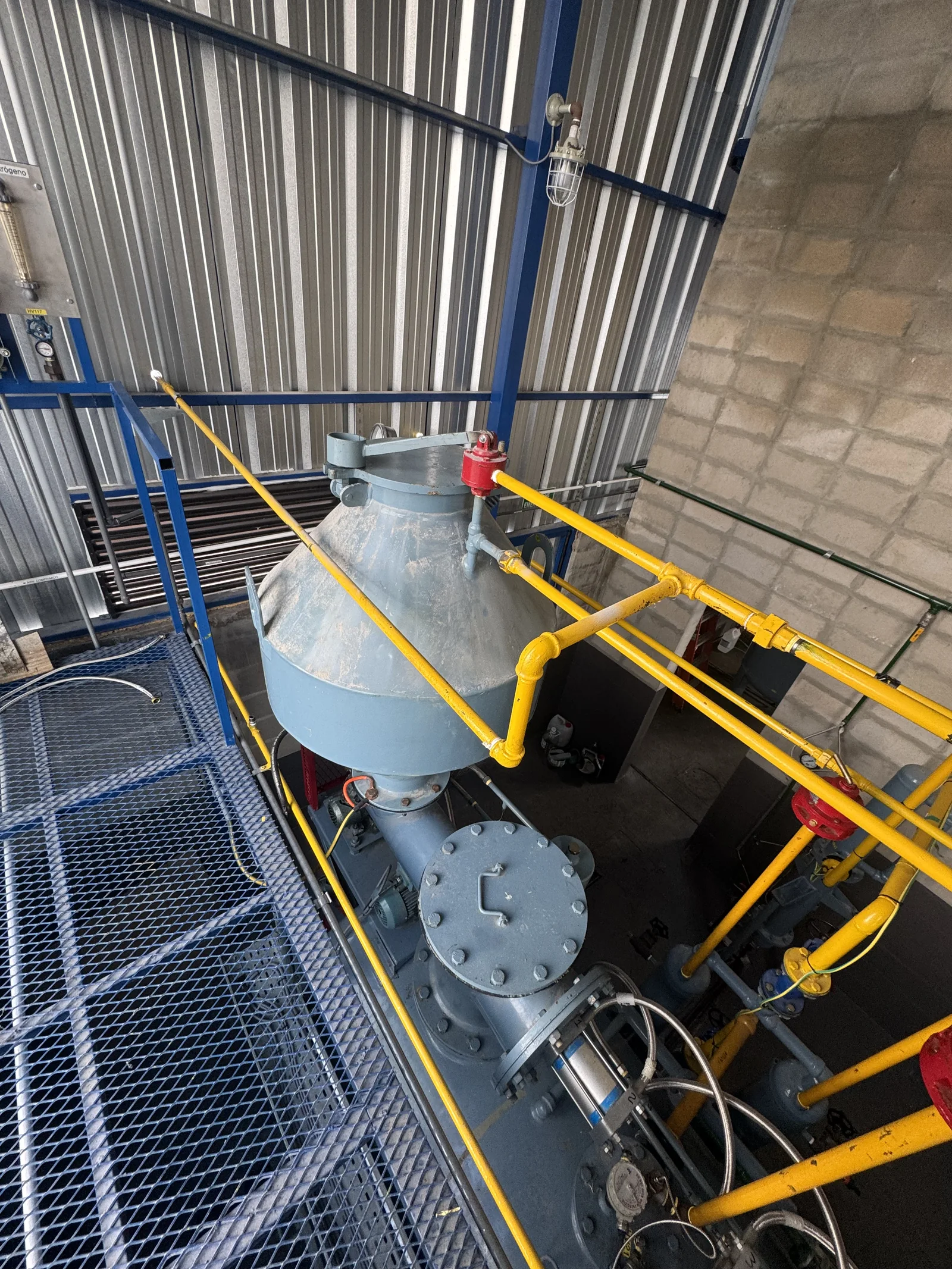
- Generator purge cycles
- Build a little pressure and vent through the vent valves 8 to 10 times at commissioning and after cleaning; at least twice at every normal start-up
- Nitrogen purge acceptance
- Nitrogen only; pipeline purge complete at not more than 2.5 % oxygen in the outgoing gas before acetylene is admitted; generator nitrogen purge 5 minutes through the high-level check valve
- Scavenging endpoint
- Apparatus scavenged with acetylene until the emergent gas is at least 98 % acetylene
- Never sub-atmospheric
- Low-pressure side kept above 25 mm water; compressor stops before suction falls below 0.1 kg/cm²g
- Shutdown agitation
- Agitator left running on its intermittent timer
Almost every acetylene plant procedure is, underneath, a rule about air. Acetylene alone can decompose; acetylene with air or oxygen is flammable from a few per cent upward and needs only about 0.02 mJ to ignite. Start-up exists to get the air out of every vessel before the gas goes in, and shutdown exists to stop the air getting back. The steps below are those of the KIGL plant operation manual for its carbide-to-water plants, with the reasons attached.
The principle: inert, then scavenge, then never let it go negative
The 1968 C.P.I. code put the three rules most clearly. Before any apparatus is put into circuit, scavenge it with acetylene until the emergent gas contains at least 98 % acetylene, and vent the scavenge outside the building. Keep a slight excess pressure of more than 25 mm water everywhere on the low-pressure side. Stop the compressor automatically before suction can fall far enough to draw air in. German regulations, as compiled by S. A. Miller (1965), add the same requirement from the other end: within a short time of starting up there must be no more than 3 % oxygen in any operational part of the generator.
Nitrogen inerting comes first where it is available, because it means the acetylene that follows is flushing an inert gas rather than air. The acetylene purge cycles then remove the nitrogen and any pockets the first purge missed.
Before start-up
| Check | Requirement |
|---|---|
| Instrument air or nitrogen | At least 2 kg/cm² on the regulator discharge |
| Generator water | Water drains from the low-level test valve and is below the high-level valve |
| Safety and vent valves | Each lever moved wide open and back, to keep them free |
| Wet flashback arrestors | Filled until water overflows at the level valves |
| Purifier and driers | Purifying mass in place; calcium chloride charged |
| Lubrication | Oil in the compressor and in all three generator gearboxes |
| Cooling water | Flowing to the cooler condenser, compressor tank and manifold sprays |
| Cylinders | Inspected, weighed and acetone made up before connection |
The generator is filled to level before any carbide is in a hopper. Carbide is charged with the hopper vented and, where available, nitrogen purged; the fill cap gasket is moistened and the vent closed over it.
Start-up sequence
- Hook prepared cylinders to the manifold, close the manifold inlet, open cylinder and manifold valves and vent old gas through the arrestor vent valves.
- Start the water supply; open water to the generator through the manual bypass to the required level; open water to the cooler, compressor tank and cylinder sprays.
- Open the generator and arrestor vent valves with the arrestor outlet valve closed.
- If nitrogen is available, purge the generator for 5 minutes through the high-level check valve.
- Start the agitator, then hopper No. 1 feed.
- Purge by building a little pressure and releasing it through the vent valves: 8 to 10 times at commissioning or after cleaning, at least twice at normal start-up. On the panel this is the repeated AUX ON, check pressure rise, AUX OFF and vent.
- Close the arrestor and generator vents; purge downstream equipment with nitrogen if available.
- Open the arrestor discharge valve and purge with acetylene at the scrubber, low pressure drier and purifier drains.
- Start the compressor with all drain valves open, close each stage separator drain in turn, purge at the high-pressure drier drains, then close all purge and vent valves.
- Build to the 14 kg/cm²g back pressure and open the manifold inlet valves gradually.
All valves are opened and closed slowly. The C.P.I. code notes the risk of ignition by friction where flow is too rapid, and a slow valve also avoids a pressure shock that can lift a safety valve.
Purging a pipeline
For a plant that supplies a pipeline rather than cylinders, the line is purged with nitrogen from the scrubber to every consumption point until the outgoing gas contains not more than 2.5 % oxygen, the end-point set by IS 15190 (Part 1):2002 cl 12.6.3, using nitrogen of at least 97.5 % purity (cl 12.6.2); it is then purged with acetylene until the gas is smelt at the consumption points. Older KIGL manuals give 2.8 %; the governing standard is 2.5 %. Nitrogen is the only purge gas: EIGA Doc 237 cl 6.1 prohibits carbon dioxide because of static. The pipeline rules guide covers the design side.
Purge gas you can trust
The 2.5 % limit assumes the nitrogen is nitrogen. KIGL has investigated an event in which purge gas, delivered with oxygen more than ten times the acceptance limit and backed by a supplier certificate claiming it was in specification, created a detonable atmosphere in a hopper that friction from tramp metal then ignited. The wet arrestors and relief valves contained it. The lesson: test every purge-gas supply at the point of use with your own calibrated analyser, sign it per batch, and do not charge carbide or start the compressor until it passes.
Two related rules from audits of other plants: purge through the dedicated vent valves, never from the main gas line, which leaves air-acetylene pockets in dead legs; and keep vent and nitrogen-purge lines separate rather than teed together.
Shutdown sequence
Compressor
turn off the hopper switches without moving the selector; drain the compressor condensate traps; let the compressor run until its low-pressure switch stops it, which should happen before inlet pressure falls below 0.1 kg/cm²g. If it does not stop, switch it off by hand to avoid pulling a vacuum on the generator, and repair the switch before the next run. Slowly close the outlet valves and the cooling water.
Manifold
close the manifold and station valves slowly; cylinder valves may be left open.
Condensate
drain the arrestors, cooler condenser, low pressure and high pressure driers.
Generator
close the manual water supply and record the meter reading; close the instrument air or nitrogen supply and let the alarm bell ring, which tests the gas-failure circuit; flush the slurry line with water so lime does not set in it; turn off every switch at the main panel except the agitator's, which keeps running on its intermittent timer, 24 hours a day.
Carbide is not left in a hopper over a long shutdown. Any moisture that gets in will generate acetylene in the hopper.
Rules that matter
The plant is designed to fail safe. On loss of instrument air every motor except the agitator stops, the carbide valve closes on its spring, and the air-operated water valve spring-closes; see interlocks and alarms. The restart therefore begins with diagnosis, not the start button:
Restart after a power failure or trip
- Confirm level, temperature and pressure at the generator, and that pressure stayed positive throughout.
- If the generator has cooled more than 15 °C below the temperature set point, add 30 litres of water for each degree of cooling before any carbide is fed; a cold generator taking a full hopper without compensation is how over-pressure follows a shutdown.
- Confirm the cause of a trip has been found; the panel will not let the feed run until the fault is cleared and acknowledged.
- Restart through the normal sequence, with at least two purge cycles if any part of the system may have seen air.
After any event in which an explosion has occurred, or is believed to have occurred, the installation is inspected and tested before it is put back into service, as the C.P.I. code required.
Rules that matter
Rules to apply
- Inert with nitrogen of verified oxygen content, then scavenge with acetylene, logging every cycle.
- Never let the low-pressure side go below atmospheric; test the compressor low-pressure switch every shift.
- Vent purges outside, through dedicated vents, at height.
- Shut down in sequence, flush the slurry line, leave the agitator on.
- Restart after a trip only when the cause is known.
On KIGL plants the sequence is printed in the manual and on the panel. The discipline is to follow it every day, not only at commissioning.
Starting — frequently asked questions
How many times should an acetylene generator be purged at start-up?
At commissioning, and after the tank has been opened for cleaning, KIGL's manual requires 8 to 10 cycles of building a little pressure and venting it through the generator and arrestor vent valves. At a normal daily start, at least two. Where nitrogen is available the generator is first purged for 5 minutes through the high-level check valve. Every cycle should be logged.
What oxygen level is acceptable after a nitrogen purge?
Not more than 2.5 % oxygen in the outgoing gas before acetylene follows, the end-point set by IS 15190 (Part 1) cl 12.6.3; purge with nitrogen only, never CO₂. That limit is meaningless if the nitrogen itself is contaminated. Purge nitrogen has been seen delivered with oxygen many times the limit while its certificate claimed otherwise, so check every supply on site with a calibrated analyser before use; a tighter target of 0.5 % oxygen or less in the nitrogen has been recommended after audit.
Why must the plant never go below atmospheric pressure?
Any part of an acetylene plant below atmospheric pressure draws air in through every gland, gasket and leak, and the compressor then raises that mixture to charging pressure. The 1968 C.P.I. code required a positive pressure of more than 25 mm water throughout the low-pressure side. KIGL's compressor low-pressure switch stops the machine before suction falls below 0.1 kg/cm²g and is tested at the end of every shift.
What is the correct order for shutting down an acetylene plant?
Turn off the hopper switches without moving the selector; drain the compressor traps; let the compressor stop on its low-pressure switch; close its outlet and cooling water; close the manifold valves slowly; drain arrestors, cooler and driers; close the generator water supply and record the meter; shut off instrument air and let the alarm ring as a test; flush the slurry line; leave the agitator running.
What happens after a power failure?
Instrument air is lost or the motors stop, and the plant fails safe: carbide feed stops, the water inlet valve spring-closes, and the compressor stops. Do not restart by simply reapplying power. Check level, temperature and pressure; confirm no air has entered; if the generator has cooled more than 15 °C below set point add 30 litres of water per degree before feeding carbide; then restart through the normal sequence with at least two purge cycles.
Why does the agitator keep running after shutdown?
Lime slurry settles. A generator left unstirred overnight develops a sludge bed that coats the next charge of carbide, slows generation and creates hot spots. The manual's answer is intermittent agitation on the timer, 24 hours a day: at shutdown every switch at the main panel is turned off except the agitator's, and the agitator is the one motor that does not stop on instrument-air failure.
How is a new pipeline charged with acetylene?
Purge it with nitrogen from the scrubber to every consumption point until the sample at the far end shows not more than 2.5 % oxygen, the end-point set by IS 15190 Part 1 cl 12.6.3; then open the scrubber outlet and purge the whole line with acetylene until it is smelt at the consumption points. Only then are the flow recorders started and the line put into service.
References
- Bureau of Indian Standards. (2003). Acetylene Generators — Requirements (IS 8471:2003, First Revision).
- Bureau of Indian Standards. (2023). Acetylene — Code of Safety (IS 14814:2023, First Revision).
- European Industrial Gases Association. (n.d.). Acetylene Generation (EIGA Doc 237).
- Petroleum and Explosives Safety Organisation. (n.d.). Petroleum and Explosives Safety Organisation. Government of India.
Enquiries
Request a quotation
State the gas or equipment, the quantity or capacity, and your location. KIGL will confirm the grade, the cylinder or plant size, and whether the location can be served from Noonmati, or through the agent network.