
Guide
Storing acetylene cylinders in India: what the Gas Cylinders Rules 2016 and IS 14814 actually require
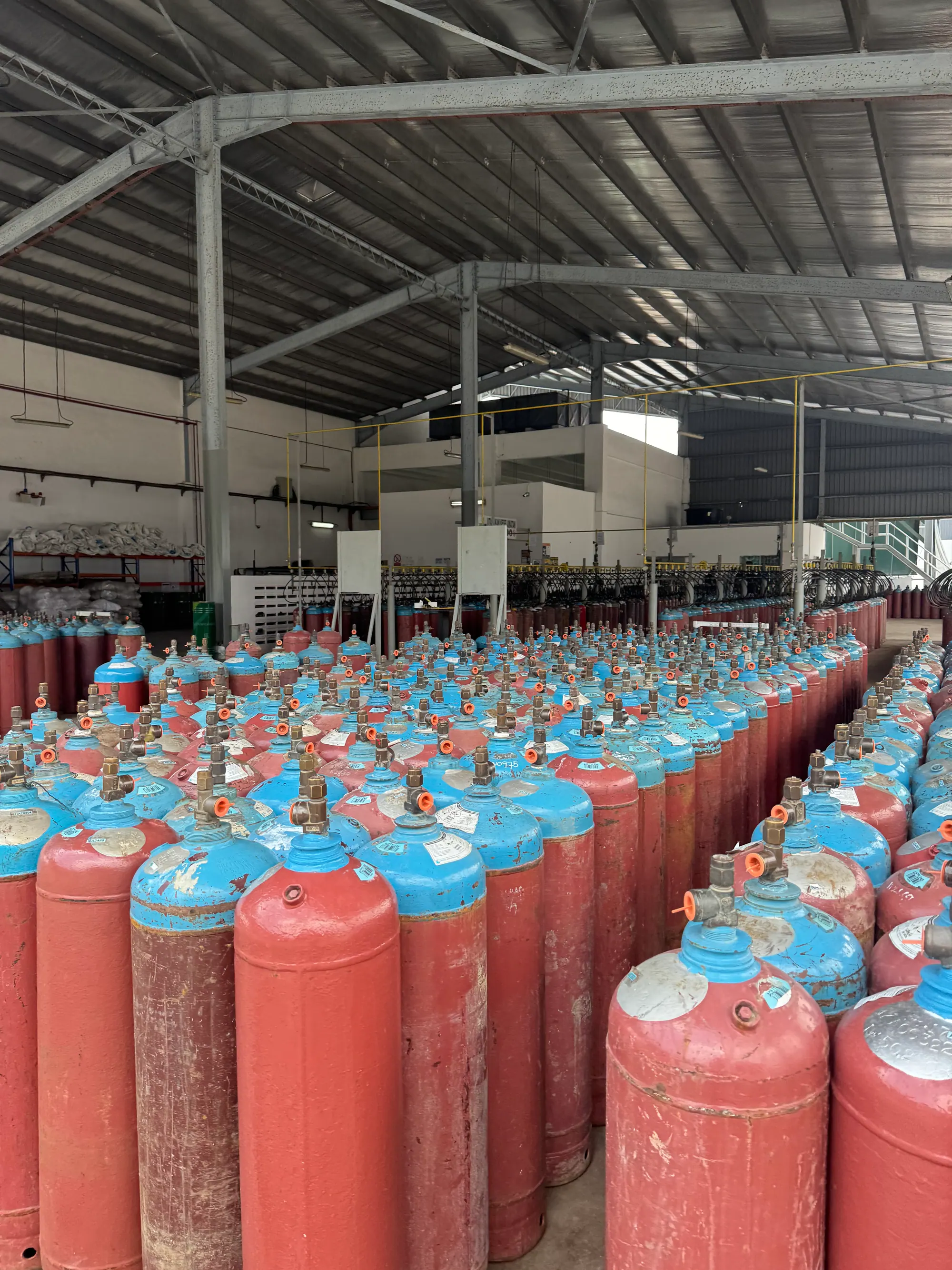
Dissolved acetylene cylinders in India are stored under the Gas Cylinders Rules 2016 and IS 14814:2023. Up to 25 cylinders for own use need no licence; above that a Form F storage licence from PESO is required. Cylinders stand upright, apart from oxygen, away from heat and flame, in a ventilated shed with flameproof electricals.
- Licence threshold
- No licence to possess up to 25 dissolved acetylene cylinders at a time for own use; a Form F storage licence above that
- Oxygen separation
- Flammable gas cylinders kept from oxidising gas cylinders by an intervening space of 1 m or a fire-resisting partition wall; IS 14814 does not permit acetylene and oxygen cylinders to be stored together
- Shed clearance
- 3.0 m clear all round a flammable gas storage shed
- Orientation
- Dissolved gas cylinders shall not be stacked horizontally; a cylinder that has been lying down is stood upright for about half an hour before use
- Electricals
- All fittings in acetylene filling and storage premises flameproof to IS/IEC 60079-1; acetylene is gas group IIC
Storing dissolved acetylene cylinders in India is governed by two documents that most workshops have never read: the Gas Cylinders Rules 2016, administered by the Petroleum and Explosives Safety Organisation (PESO), and IS 14814:2023, the Indian code of safety for acetylene. The rules are short and mostly physical. Keep the cylinders upright, keep them away from oxygen, keep them cool and ventilated, keep ignition sources out, and know whether your quantity needs a licence. This page sets out each requirement with its clause, and notes where international practice adds a number the Indian text leaves open.
When does a user need a licence?
The line is 25 cylinders. Rule 44(b)(iv) of the Gas Cylinders Rules 2016 says no licence is needed to possess acetylene in cylinders in the dissolved state when the total quantity does not exceed twenty-five at a time. The exemption is for own use. A fabrication shop running two or three cutting stations from a stock of a dozen cylinders needs nothing from PESO beyond the cylinders themselves being compliant and in test.
Above 25 cylinders, or for any storage for sale or trading, a Form F storage licence is required. Because acetylene is a flammable gas, the application goes to the Chief Controller of Explosives at Nagpur, not to a circle office. Rule 48(1) adds that a Form F applicant for flammable gas storage for sale or trading must first obtain a no-objection certificate from the District Authority. The licence plan must show the surrounding area within 100 m of the facility (Rule 47(1)(a)(iii)). The fee for a dissolved acetylene store of up to 200 cylinders is Rs 2,000, with Rs 2,000 for every additional 200 or part thereof, and a Form F licence runs until 30 September of the year to which it is granted, for a maximum of ten years (Rule 51(2)). The cost of compliance is not the fee; it is the shed, the clearances and the time.
A dealer or a large user holding a Form F licence must also observe the licence conditions printed with the form, which carry most of the numbers on this page. The Gas Cylinders Rules guide covers the filling side; this page stays with storage.
The physical rules, with their sources
| Requirement | What the rule says | Source |
|---|---|---|
| Orientation | Dissolved gas cylinders shall not be stacked horizontally | GCR 2016 Rule 21(3) |
| After lying down | Stand the cylinder upright for about half an hour before use | IS 14814:2023 cl 7.3.1 |
| Oxygen | Acetylene and oxygen cylinders not stored together; in a licensed shed, flammable and oxidising gases separated by a 1 m intervening space or a fire-resisting partition | IS 14814:2023 cl 7.3.3; Form F condition 4 |
| Combustibles | Cylinders kept away from combustible materials; no flammable material in the vicinity or the same room | GCR 2016 Rule 21(6); IS 14814 cl 7.4 label |
| Heat and sun | No exposure to high temperature or direct sun | GCR 2016 Rule 15(2), 15(3) |
| Oil | No oil or similar lubricant on valves or fittings | GCR 2016 Rule 15(2); IS 14814 cl 7.4 |
| Electricals | Flameproof fittings to IS/IEC 60079-1, effectively earthed | IS 14814 cl 7.3.4; GCR 2016 Rule 22 |
| Ignition | No smoking, open flames, matches or mobile phones near flammable gas cylinders | GCR 2016 Rules 14, 18(7) |
| Clearance | 3.0 m clear all round a flammable gas shed; fencing at least 2.0 m high | Form F condition 5(b) |
| Extinguishers | At least two portable extinguishers of 10 kg each, BIS marked | Form F condition 16 |
| Colour | Cylinder maroon to IS 4379:2021 | IS 14814 cl 7.3.5 |
Three of these deserve explanation, because the reason behind the rule is what makes people follow it.
Why upright, and why half an hour
A dissolved acetylene cylinder is a steel shell filled with a porous mass soaked in acetone, and the acetylene is in solution in the acetone. Acetone is a liquid and obeys gravity. Lay the cylinder down and acetone collects against the valve; stand it up and open the valve at once, and the first gas out carries liquid acetone with it. That damages the regulator diaphragm, contaminates the hose and gives a sooty, unstable flame. The Indian code's half-hour settling period is the time for the solvent to drain back into the mass. The longer explanation, including what acetone carry-over does to a weld, is on the page on why acetylene cylinders must stand upright. The C.P.I. 1968 safety code, remarkably, had no upright-storage rule at all; it is one of the genuine improvements in the modern Indian text.
Why oxygen is kept apart
An acetylene leak in a shed is a flammable mixture waiting for a spark. The same leak next to a leaking oxygen cylinder is a mixture with no spark required to be serious: an enriched atmosphere lowers the energy needed to ignite anything in the shed, including clothing. The C.P.I. 1968 code records that workmen's clothes and cleaning rags ignite at an oxygen content of only 25 to 30 %. That is why both the Indian licence conditions and IS 14814 separate the two gases, and why CGA G-1 in the United States specifies 20 ft (6.1 m) or a 5 ft non-combustible partition with a one-hour fire rating. EIGA Doc 123 uses the same device, allowing the spacing between cylinder storage areas to fall to nil only where a one-hour fire partition is interposed, and keeps ignition sources 3 m from any storage area.
Why ventilation at two levels
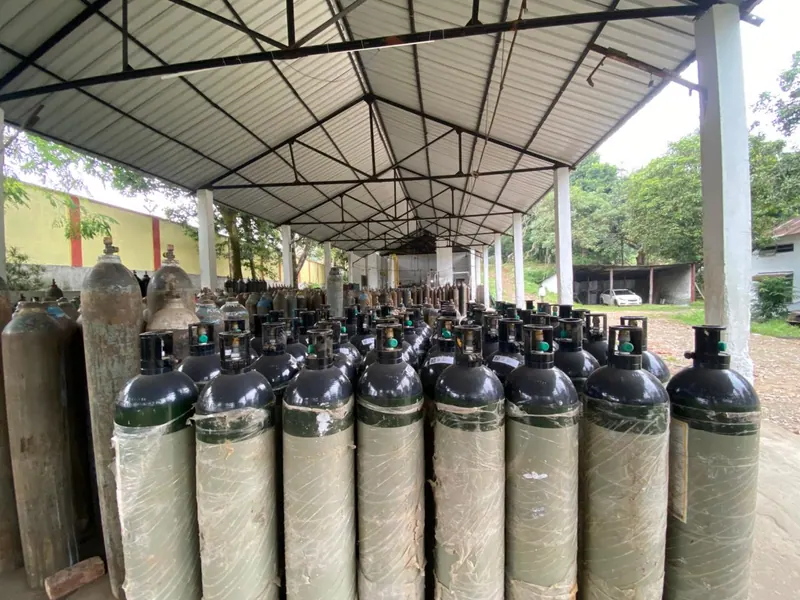
IS 14814:2023 gives acetylene a specific gravity of 0.906 relative to air at 15 °C. That is lighter than air, but only just. A plume from a leak drifts rather than rises, cools against a wall and can pool as readily as it can climb. The C.P.I. 1968 practice for acetylene plant buildings, and a sound rule for cylinder stores, is non-closing ventilation openings at both floor level and in the ceiling, with mechanical ventilation where natural flow is not enough. A store of non-combustible construction, open-sided or louvred on at least two faces, under a light roof that shades the cylinders from the sun, satisfies every one of the rules in the table above at once. A cellar, a basement, a closed container or a brick room with a single door satisfies none of them.
Electricals, signage and discipline
Acetylene is gas group IIC, the most onerous group, and IS 14814:2023 clause 7.3.4 requires every meter, switch, fuse, socket, fixed lamp and hand lamp in acetylene filling and storage premises to be of flameproof construction to IS/IEC 60079-1. Rule 22 of the Gas Cylinders Rules requires the same for any premises storing flammable gas, effectively earthed. The practical answer for a small store is the one the C.P.I. code recommended in 1968: keep the electrical equipment outside the gas-tight envelope altogether, and light the store by daylight and by fittings mounted outside its walls.
The required notice under IS 14814 clause 7.4 reads SMOKING STRICTLY PROHIBITED, NO NAKED FLAME, AVOID LEAKAGES. The 1968 code offered a human-factors note that still reads well: some manufacturers change the colour of the danger notice from time to time so that people keep seeing it, while others hold to a standard red or yellow. Either way, the rule only works if a supervisor enforces it.
Every cylinder in the store also speaks for itself. The cylinder label described in IS 14814:2023 cl 7.4 warns that the cylinder must not be filled with any other gas, that no oil goes on the valve, and that the next test date is on the metal ring between valve and neck; if that date is past, the cylinder is not accepted for filling. Rule 42 adds the date of last filling, the weight of gas filled, the full cylinder weight and the filler's name. A storekeeper who reads the ring and the label on receipt has done most of the inspection the rules expect of them. What to look for on arrival is set out in buying acetylene: what to check.
Heat, and the summer yard
The Indian rules state the principle: no high temperature, no direct sun. CGA G-1 supplies the figures the trade uses internationally, 51.7 °C maximum in storage and 48.9 °C in use. Acetylene's critical temperature is 35.15 °C (IS 14814:2023), which an Indian summer afternoon exceeds; as the cylinder warms, the loaded solvent expands and the settled pressure climbs with every degree. The settled pressure is set at 15 °C, and the Gas Cylinders Rules cap it at 16 kgf/cm² at that temperature (Rule 37(vi)); a cylinder in the sun is simply not at the temperature its filling was designed for. The CSB investigation of the 2005 St Louis cylinder-yard fire (CSB Safety Bulletin, June 2006) found that returned, part-full cylinders on asphalt heated faster than full ones; the cylinders that vented first held propylene, but the mechanism applies to any yard, which is a reason to shade the empties bay as carefully as the full stock. The physics is on the critical temperature page.
Rules that matter
Rules to apply
- Count your cylinders. At or below 25 for own use, no licence; above that, or for trading, Form F through CCE Nagpur with the District Authority NOC first.
- Build the store open, shaded, non-combustible, ventilated at floor and ceiling, 3 m clear round it and fenced to 2 m.
- Upright always; chained or racked so a cylinder cannot fall; a cylinder that has travelled lying down stands for half an hour before use.
- Acetylene in one bay, oxygen in another, with a space or a fire-resisting partition between them.
- No flame, no smoking, no phones, no oil, no non-flameproof electricals inside the envelope.
- Valves closed and the key on the spindle on every cylinder not in use; caps on cylinders in the store.
- Two 10 kg extinguishers at the door, and water for cooling, never for the carbide store.
- Read the test ring and the label on every cylinder received, and refuse any that fails either.
A cylinder store built to these rules is also a store that passes a PESO inspection without argument. KIGL delivers to licensed and exempt users alike from Guwahati and Kolkata. The safety data for the gas itself are on the acetylene SDS page.
Storing acetylene cylinders — frequently asked questions
Do I need a PESO licence to keep acetylene cylinders in my workshop?
Not if you hold no more than 25 dissolved acetylene cylinders at a time and they are for your own use. Rule 44(b)(iv) of the Gas Cylinders Rules 2016 exempts that quantity. If you keep more, or if you sell or trade cylinders, you need a Form F storage licence from the Chief Controller of Explosives, and for trading a no-objection certificate from the District Authority comes first under Rule 48(1).
Can acetylene and oxygen cylinders be stored in the same shed?
IS 14814:2023 clause 7.3.3 says storage of acetylene and oxygen cylinders together is not permitted. The Form F licence conditions allow flammable and oxidising gases in one shed only when separated by an intervening space of at least 1 m or a fire-resisting partition wall. The safe reading for a small user is separate bays, with the partition where space is short. CGA G-1 in the United States asks for 6.1 m or a 1.5 m fire-rated partition.
Why must acetylene cylinders be stored upright?
The acetone that holds the acetylene is a liquid. A cylinder on its side lets acetone reach the valve, where it is carried out with the gas on first use and can damage a regulator or spoil a weld. Rule 21(3) forbids horizontal stacking of dissolved gas cylinders, and IS 14814:2023 clause 7.3.1 says a cylinder that could not be kept upright should stand for about half an hour before use.
How should an acetylene storage shed be ventilated?
Acetylene has a specific gravity of 0.906 relative to air at 15 °C (IS 14814:2023), close to neutral, so it neither rises nor sinks reliably. The C.P.I. 1968 practice is non-closing openings at both floor level and ceiling, a sound rule for any cylinder store. A shed should be of non-combustible construction, open-sided or louvred, shaded from direct sun, and never a basement or enclosed room without through-ventilation.
What temperature limits apply to stored acetylene cylinders?
Indian rules state the principle rather than a number: Rule 15(3) of the Gas Cylinders Rules 2016 forbids exposure to high temperature or direct sun. CGA G-1 gives the international figure of 51.7 °C maximum in storage and 48.9 °C in use. A dark cylinder on asphalt in an Indian summer afternoon can approach those figures, which is why shading is a rule and not a courtesy.
What is the correct way to store acetylene cylinders?
Upright and secured against falling, in a dry, well-ventilated and shaded store away from heat and ignition sources; separated from oxygen and other oxidising gases; with the valve shut and the cap fitted on full and empty cylinders alike; and with full and empty cylinders kept apart. Holdings above the licence-free quantity need a PESO licence under the Gas Cylinders Rules 2016. The sections of this page give the source of each rule.
Can I keep an acetylene cylinder in a cupboard or a locked tool store?
No. An enclosed cupboard is the opposite of a ventilated store: a small valve leak builds a flammable mixture that an electric light or a dropped tool can ignite. The C.P.I. 1968 rules add that a torch connected to a cylinder must never be shut in a cupboard or locker. Keep the cylinder in the open-sided store, valve closed and key on the spindle, and bring it to the job on a trolley.
What happens if a stored cylinder is caught in a fire?
Cool it with water spray from a distance and keep cooling for a sustained period until the cylinder is cool to the touch, as the Form E licence conditions require for a hot cylinder. On the flame itself use dry chemical powder, as the Form E Part B licence conditions require; they bar CO₂ extinguishers on flammable gas fires because of static, although IS 14814:2023 cl 9.2 mentions carbon dioxide. Afterwards, Rule 24(2) of the Gas Cylinders Rules 2016 is absolute: a dissolved acetylene cylinder damaged by fire is condemned and destroyed, never refilled.
References
- Bureau of Indian Standards. (2021). Identification of the Contents of Industrial Gas Cylinders — Colour Code (IS 4379:2021, Second Revision).
- Bureau of Indian Standards. (2023). Acetylene — Code of Safety (IS 14814:2023, First Revision).
- Compressed Gas Association. (2009). Acetylene (CGA G-1).
- European Industrial Gases Association. (n.d.). Code of Practice: Acetylene (EIGA Doc 123).
- Government of India. (2016). Gas Cylinders Rules, 2016 (G.S.R. 1081(E)). Petroleum and Explosives Safety Organisation. [22 November 2016]
Enquiries
Request a quotation
State the gas or equipment, the quantity or capacity, and your location. KIGL will confirm the grade, the cylinder or plant size, and whether the location can be served from Noonmati, or through the agent network.