
Guide
Acetylene decomposition: why it can explode with no oxygen present
Acetylene is endothermic: the molecule stores energy rather than needing to find it. It can decompose into carbon and hydrogen, releasing heat, with no oxidant present anywhere — which is why free gas is capped at 0.62 bar g. That single property is behind every acetylene rule you follow.
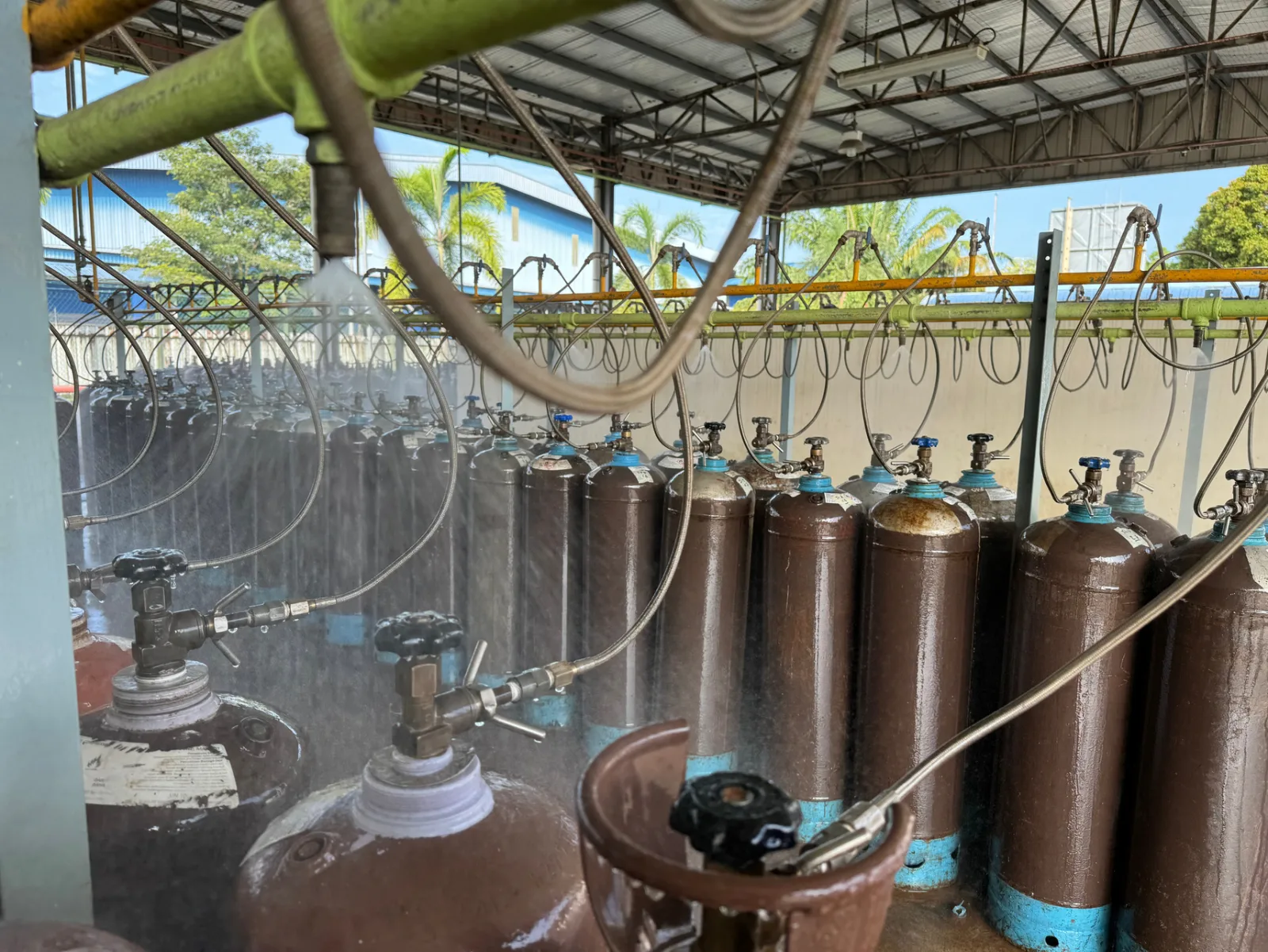
- Nature of the molecule
- Endothermic
- Decomposition products
- Carbon and hydrogen
- Free acetylene at the point of use
- 0.62 bar g
- Oxidant required
- None
- What stops propagation in a cylinder
- The porous mass
The property that explains everything else
Every rule you have been given about acetylene — the upright cylinder, the sub-bar pressure limit, the one-seventh draw-off, the porous mass, the two-yearly retest, the prohibition on copper — comes back to one fact.
Acetylene does not need oxygen to explode.
Endothermic means the energy is already inside
Most fuel gases are stable compounds. They hold together happily and release energy only when they find an oxidant to react with. Methane sitting in a pipe is doing nothing at all.
Acetylene is different. It is an endothermic compound: energy went into forming its carbon-carbon triple bond during manufacture, and it is still in there.
Given enough of a push, the molecule breaks apart:
C₂H₂ → 2C + H₂ + heat
Carbon, hydrogen, and the stored energy released as heat. Nothing else is involved. No oxygen, no air, no oxidant of any kind. This is not combustion; it is the molecule coming apart.
And because it releases heat, it can feed itself: a decomposition starting in one place raises the temperature around it, which decomposes more acetylene, which releases more heat. Once it propagates, it is an explosion inside a vessel that never met an oxidant.
Rules that matter
What sets it off
- Pressure — the higher the pressure of free gas, the more readily a decomposition runs
- Heat — self-decomposition sets in from around 350 °C on a bare surface, and far lower on rust or other catalytic solids, which is why nothing hot and nothing loose belongs in an acetylene gas space
- Wide bore — the larger the pipe, the lower the pressure at which a decomposition will still travel
- Mechanical shock
- A local hot spot — a flashback entering a line, a cylinder against a hot surface, a restriction where gas is being compressed
Why the pressure limit is a ceiling, and not a guarantee
IS 14814 : 2023 normally permits free acetylene at 0.612 atm — about 0.62 bar g — and allows a maximum of 1.021 atm, exactly 15 psig, only with special safety measures and clearance from the Chief Controller of Explosives. It is not a design pressure with a factor applied, and it cannot be engineered around. Thicker pipe does not help, because there is nothing to contain — the energy is already inside the gas, distributed through the whole line. Raising pressure sharply raises the risk, and the limit is absolute.
But do not read the limit backwards. Staying below the limit is not a guarantee that a decomposition cannot propagate. Whether one runs depends on the bore of the pipe, the temperature, and how much energy started it — and the wider the pipe, the lower the pressure at which it will still travel.
The published work is blunt about this. Decomposition has been made to propagate in 7.5 cm pipe for 180 m at atmospheric pressure, and in 15–16 cm pipe at pressures below atmospheric. In January 1954 at Chemische Werke Hüls in Germany, chlorine entering an acetylene main initiated a decomposition that travelled over two kilometres through 15, 30 and 60 cm pipe at a pressure of just 1.03 atmospheres absolute, barely above atmospheric. Large plant was wrecked and people were hurt.
The practical lesson is the one that matters on site: the pressure limit is a ceiling, not a floor of safety. A large-bore acetylene line at low pressure is not intrinsically safe, which is why acetylene pipelines need flashback arrestors, non-return valves and proper isolation regardless of how low the working pressure is.
How a cylinder is made safe
Two mechanisms, working together:
Dissolve it. In acetone, the acetylene is no longer free gas under pressure. It is in solution, and far more stable.
Divide the space. The porous mass splits the cylinder interior into cells small enough that a decomposition starting in one place cannot build into a propagating front — it pulls heat out of the reaction faster than the reaction can spread. This is the same principle a flashback arrestor element works on.
That is why the mass is integral to the cylinder, why a monolithic one cannot be replaced, and why IS 7312 has to specify it.
But the gas leaving the valve is free gas again. From the regulator onward, the 0.62 bar g rule applies absolutely.
The hot cylinder
A cylinder that warms up in use may be decomposing internally.
The reaction is being fed from inside. There is no external flame to put out, and cooling the outside does not reach it.
- Close the valve only if it is safe to reach
- Evacuate
- Call the fire service and your supplier
- Do not move it. Do not try to cool it yourself
Acetylene cylinders can require prolonged cooling long after any external fire is out, because nothing outside the cylinder is driving what is happening inside it.
Why this is worth understanding rather than memorising
An operator who has learned the rules can follow them. An operator who understands why acetylene is different from every other gas on site will recognise the situation the rules did not anticipate.
KIGL has manufactured acetylene since 1947 and builds the plants that generate it. That is the reason the person answering your technical question has stood in front of a generator, and not only read about one.
Acetylene decomposition — frequently asked questions
How can a gas explode without oxygen?
Because it does not need to react with anything. Acetylene is endothermic — energy went into forming its carbon-carbon triple bond and remains stored there. Given enough of a push, the molecule breaks apart into carbon and hydrogen and releases that energy as heat. Combustion needs fuel and oxidant; decomposition needs only acetylene.
What triggers decomposition?
Rising pressure in free gas, heat, mechanical shock, or a local hot spot — and once started in one place it can propagate through the gas. Wide-bore pipe makes propagation easier, not harder. A flashback entering a line, a cylinder standing against a hot surface, or a generator running above its temperature limit are all credible initiators.
What is the line pressure limit, and why?
IS 14814 : 2023 permits 0.612 atm — about 0.62 bar g — normally, and 1.021 atm only with statutory clearance. The likelihood of a decomposition sustaining itself rises sharply with pressure, and it cannot be engineered around with thicker pipe because there is nothing to contain: the energy is already inside the gas. Read the limit as a ceiling, not a floor of safety — propagation also depends on the bore of the pipe, and in wide pipe it has run at atmospheric pressure and below.
How does the porous mass stop it?
By dividing the cylinder interior into cells small enough that a decomposition beginning in one place cannot build into a propagating front. It takes heat out of the reaction faster than the reaction can spread — the same principle a flashback arrestor element uses. This is why the mass is integral to the cylinder and cannot be replaced.
Why must a hot cylinder never be moved?
Because a cylinder warming up in use may be decomposing internally, and the reaction is being fed from inside rather than by any external flame. Moving it applies shock; cooling the outside does not reach it. Evacuate, call the fire service and the supplier, and leave it alone. Acetylene cylinders can need prolonged cooling long after an external fire is out.
Does this apply to dissolved acetylene in a cylinder?
The dissolved gas is far more stable, which is the whole point of the acetone and the mass. But the acetylene coming out of the valve is free gas, and from there the 0.62 bar g limit applies absolutely — through the regulator, the hose, the pipeline and the torch.
Enquiries
Request a quotation
State the gas or equipment, the quantity or capacity, and your location. KIGL will confirm the grade, the cylinder or plant size, and whether the location can be served from Noonmati, or through our agent network.