
Gases
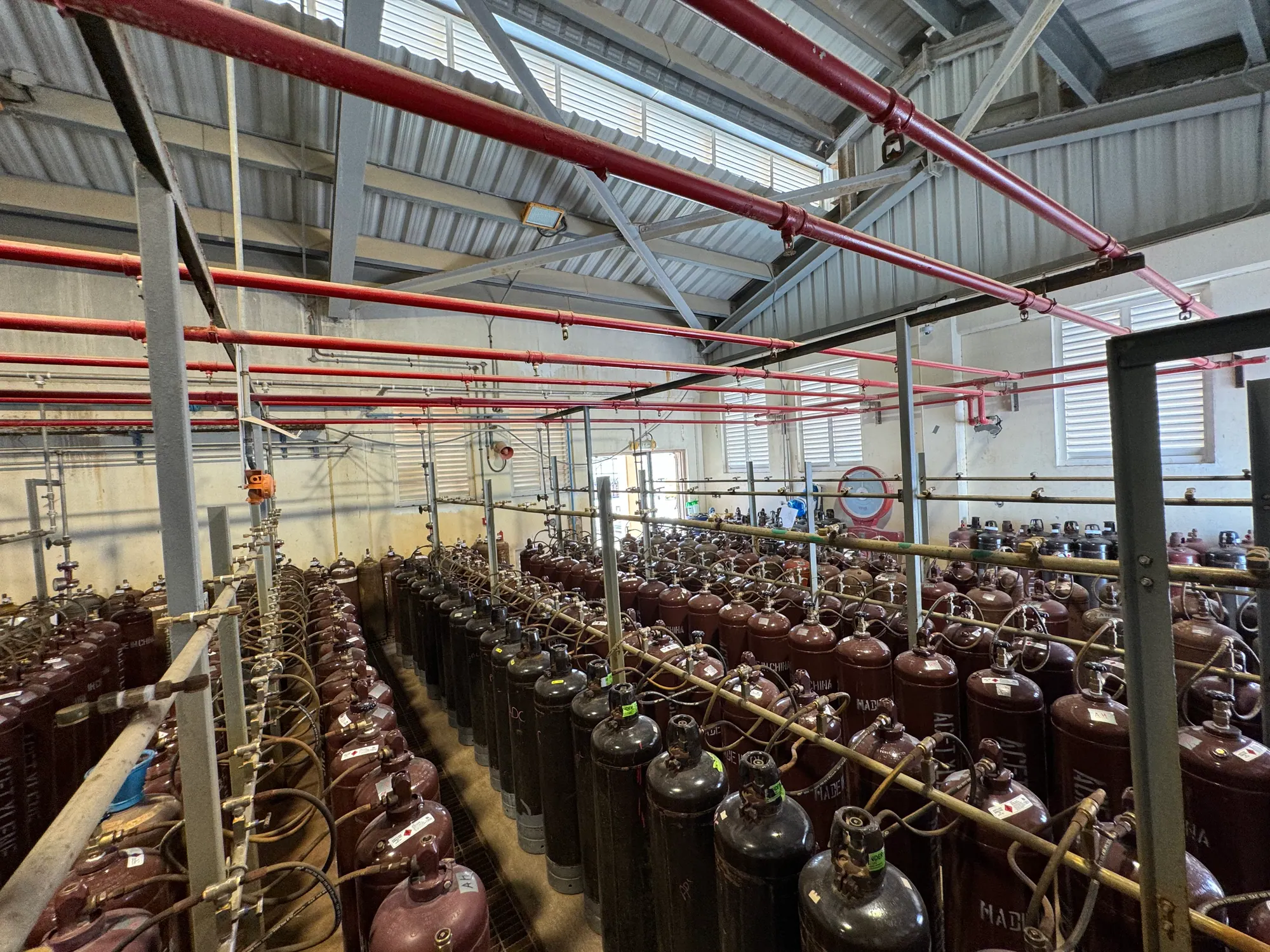
Dissolved acetylene gas (DA) to IS 308, filled at our Guwahati works
Dissolved acetylene (C₂H₂) is a fuel gas with the highest flame temperature of any common hydrocarbon, around 3,100 °C with oxygen. KIGL fills it to IS 308 at ≥98 % purity into acetone-charged porous-mass cylinders at 20 bar g. Supplied in cylinders and cascades from Guwahati, and through a network of agents. Manufacturing since 1947.
₹350 – ₹450 per Nm³ Indicative. Your quotation is the figure that counts — price moves with quantity, cylinder size, contract term and delivery.
Dissolved acetylene specification to IS 308
KIGL Industrial Acetylene is generated from calcium carbide, purified and dissolved in acetone at our PESO-approved Noonmati works. It conforms to IS 308 : 2024 and is filled to KIGL's own specification of ≥ 98.0 % C₂H₂, into acetone-charged porous-mass cylinders built to IS 7312. Phosphine and hydrogen sulphide are the two impurities that carry over from the calcium carbide, and both are removed in the purifying chamber of the generating plant; KIGL fills inside the IS 308 limits for each. The full table of properties, values and their basis is set out below.
Higher purity is available on special order. The standard industrial fill is ≥ 98 %, which is KIGL's own specification — IS 308 caps impurities rather than setting a minimum assay — and it is what cutting, welding and flame heating need. Where a process needs cleaner gas than that, KIGL can supply dissolved acetylene up to 99.9 % against a specific enquiry — tell us the purity your process needs and the volume, and we will confirm what we can hold and on what lead time.
Need cleaner flame chemistry? KIGL also fills ultra-high-purity acetylene in DMF for atomic absorption spectroscopy and synthesis.
Acetylene physical properties
| Property | Value |
|---|---|
| Molecular weight | 26.04 |
| State in cylinder | Dissolved gas, in porous mass (in acetone) |
| Sublimation point at 1 atm | −84 °C |
| Liquid density at boiling point | 0.617 g/ml |
| Gas density at 20 °C, 1 atm | 1.09 kg/m³ |
| Relative density (air = 1) | 0.91 |
| Vapour pressure at 20 °C | 44 bar g |
| Flammability limits in air | 2.5 % to 82.0 % |
| Autoignition temperature | ≈305 °C |
| Flame temperature in oxygen | ≈3,100 °C |
The 2.5 % to 82.0 % range is the widest of any common industrial gas. Almost any leak that mixes with air at all produces an ignitable atmosphere, which is why ventilation and leak testing matter more with acetylene than with any other fuel gas on a site.
Acetylene applications in welding, cutting and thermal work
One flame, many trades. KIGL Industrial Acetylene covers the full range of hot work.
Welding and cutting
- Oxy-acetylene welding and brazing of steels and alloys
- Profile cutting of plates and sections
- Gouging and scarfing
- Flame straightening and localised heating
Surface and thermal
- Flame hardening of wear surfaces
- Hardfacing and thermal spraying
- Flame cleaning and descaling
- Carbon coating of moulds and dies
Control equipment is available from KIGL: two-stage brass acetylene regulators with left-hand connection, flashback arrestors for regulator and torch ends, and welding and cutting torch sets.
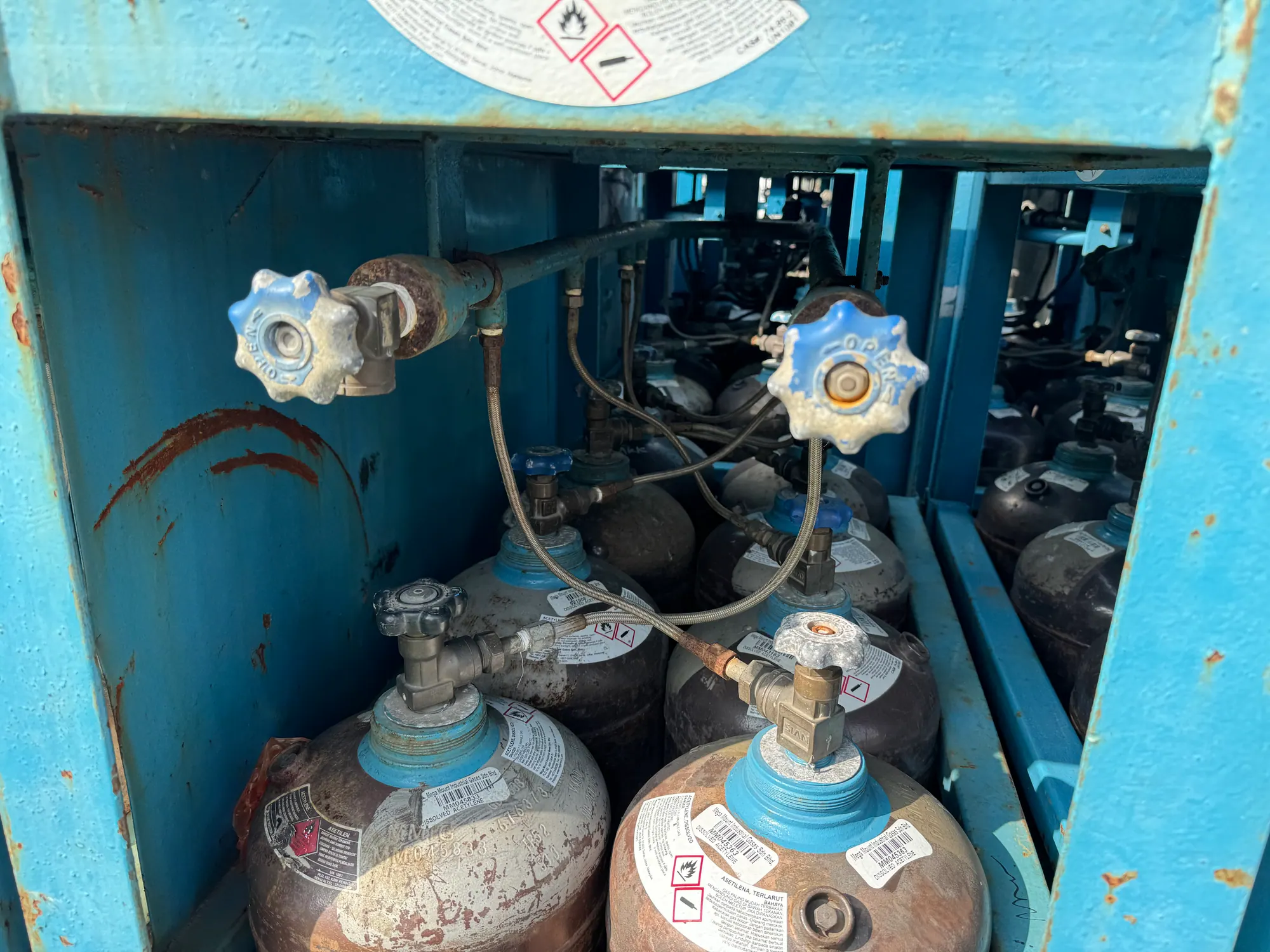
An acetylene cylinder cascade, manifolded to a single regulated take-off
Guwahati works · agent network
Safe handling
Safe handling of acetylene cylinders
- Never exceed 0.62 bar g line pressure — the normal limit for free acetylene under IS 14814 : 2023. A maximum of 1.03 bar g (15 psig) applies only with special safety measures and clearance from the Chief Controller of Explosives. Free acetylene can decompose explosively with no oxidant present.
- Withdraw no more than 1/7th of cylinder contents per hour in continuous service; manifold multiple cylinders for high flows.
- Keep cylinders upright in storage, transport and use, to prevent liquid solvent withdrawal.
- Fit flashback arrestors at both regulator and torch; open the valve no more than 1.5 turns.
- Store ventilated, away from oxygen and oxidiser cylinders, heat and ignition sources.
- Leak-test with soap solution, never a flame.
Full hazard data is in the acetylene safety data sheet; the governing standards are set out on acetylene standards.
Acetylene cylinder supply across India
Filled at our own PESO-approved works at Guwahati (Assam), in single cylinders and in cascades sized against measured draw-off rather than total consumption, and supplied beyond its delivery radius through a network of agents across Uttar Pradesh, Madhya Pradesh, West Bengal, Assam, Odisha and other states.
Cylinder exchange and refill programmes are available for regular users. We do not supply liquid or cryogenic acetylene — no one does; the product is not stable in that form.
Why KIGL
Why buy dissolved acetylene from KIGL
Acetylene since 1947, and we build the plants that generate it as well as filling the gas. The family has contributed to the Bureau of Indian Standards committees that draft the standards for acetylene cylinders and generators.
That matters at the point where something is wrong with your gas: the person answering has run a generator, filled cylinders from it, and answered to an inspector about it.
Specification
Dissolved acetylene gas — full specification
| Property | Value | Basis |
|---|---|---|
| Specification | IS 308 (Dissolved Acetylene) | Bureau of Indian Standards |
| Purity | ≥98 % v/v | KIGL fill specification |
| Solvent | Acetone | IS 7312 |
| Filling pressure | 20 bar g | KIGL fill standard |
| Cylinder standard | IS 7312 | Bureau of Indian Standards |
| UN number | UN 1001 | ADR 2025 |
| HSN code | 2901 29 | India GST tariff |
| Chemical formula | C₂H₂ | — |
| Purity, special order | Up to 99.9 % v/v | KIGL, against a specific enquiry |
| Phosphorus compounds (as PH₃) | Within IS 308 limits | Purified in the generating plant, batch checked |
| Sulphur compounds (as H₂S) | Within IS 308 limits | Purified in the generating plant, batch checked |
| Moisture | Within IS 308 limits | Low- and high-pressure drying stages |
| Cylinder charge | Porous mass, acetone-charged | IS 7312 |
| Flame temperature with oxygen | ≈3,100 °C | Literature |
| Cylinder colour | Maroon | IS 4379 |
Documents
Dissolved acetylene gas — safety and technical documentation
Questions
Dissolved acetylene gas — frequently asked questions
Why is acetylene dissolved in acetone rather than stored as compressed gas?
Acetylene decomposes explosively under pressure on its own — it does not need oxygen to do so. Dissolving it in acetone, held inside a porous mass that fills the cylinder, keeps it stable. This is why an acetylene cylinder is heavy, why it must be used upright, and why it can never be filled like an ordinary compressed gas.
Why must an acetylene cylinder be used upright?
Lying it down lets liquid acetone reach the valve. The acetone is then drawn off with the gas, which starves the porous mass, contaminates the flame and damages downstream equipment. If a cylinder has been horizontal, stand it upright and leave it for at least an hour before use.
What is the maximum rate I can draw from one cylinder?
Draw-off is limited, because withdrawing too fast pulls acetone out with the gas. Exceeding the safe rate destabilises the flame and reduces the protection a flashback arrestor can give. Where a high continuous rate is needed, use a cascade rather than a single cylinder — we size these against your consumption.
What acetylene grades do you make?
Three. Industrial dissolved acetylene at 98 % in acetone to IS 308, for cutting, welding, brazing and flame heating. High purity at 99 %, where industrial grade is not clean enough but analytical grade is more than the job needs. And ultra-high-purity at 99.99 % in DMF, for atomic absorption spectroscopy and analytical work. Buying the analytical grade for a cutting torch wastes money; using industrial grade on an instrument ruins results.
Can I use my propane regulator and hoses with acetylene?
No. Acetylene equipment uses different thread forms, materials and pressure ranges, and acetylene attacks copper and high-copper alloys to form explosive acetylides. Use acetylene-rated equipment throughout, keep it free of oil and grease, and fit flashback arrestors and non-return valves.
Do you supply liquid acetylene or bulk tankers?
No. Liquid acetylene does not exist as a commercial product — it is unstable. KIGL supplies dissolved acetylene in cylinders and cascades only.
How do I know how much gas is left in the cylinder?
Not from the pressure gauge, which reads the acetone vapour pressure rather than the gas remaining, and which varies with temperature. Weigh the cylinder and compare against the tare weight stamped on the shoulder. The difference is the acetylene left.
What should I do if a cylinder gets hot during use?
Treat it as a possible internal decomposition. Close the valve if it is safe to reach, evacuate the area, raise the alarm, and call the fire service and your supplier. Do not move the cylinder and do not attempt to cool it yourself. Acetylene cylinders can require prolonged cooling even after any external flame is out.
Read next
Enquiries
Request a quotation for dissolved acetylene gas
State the gas or equipment, the quantity or capacity, and your location. KIGL will confirm the grade, the cylinder or plant size, and whether the location can be served from Noonmati, or through our agent network.