
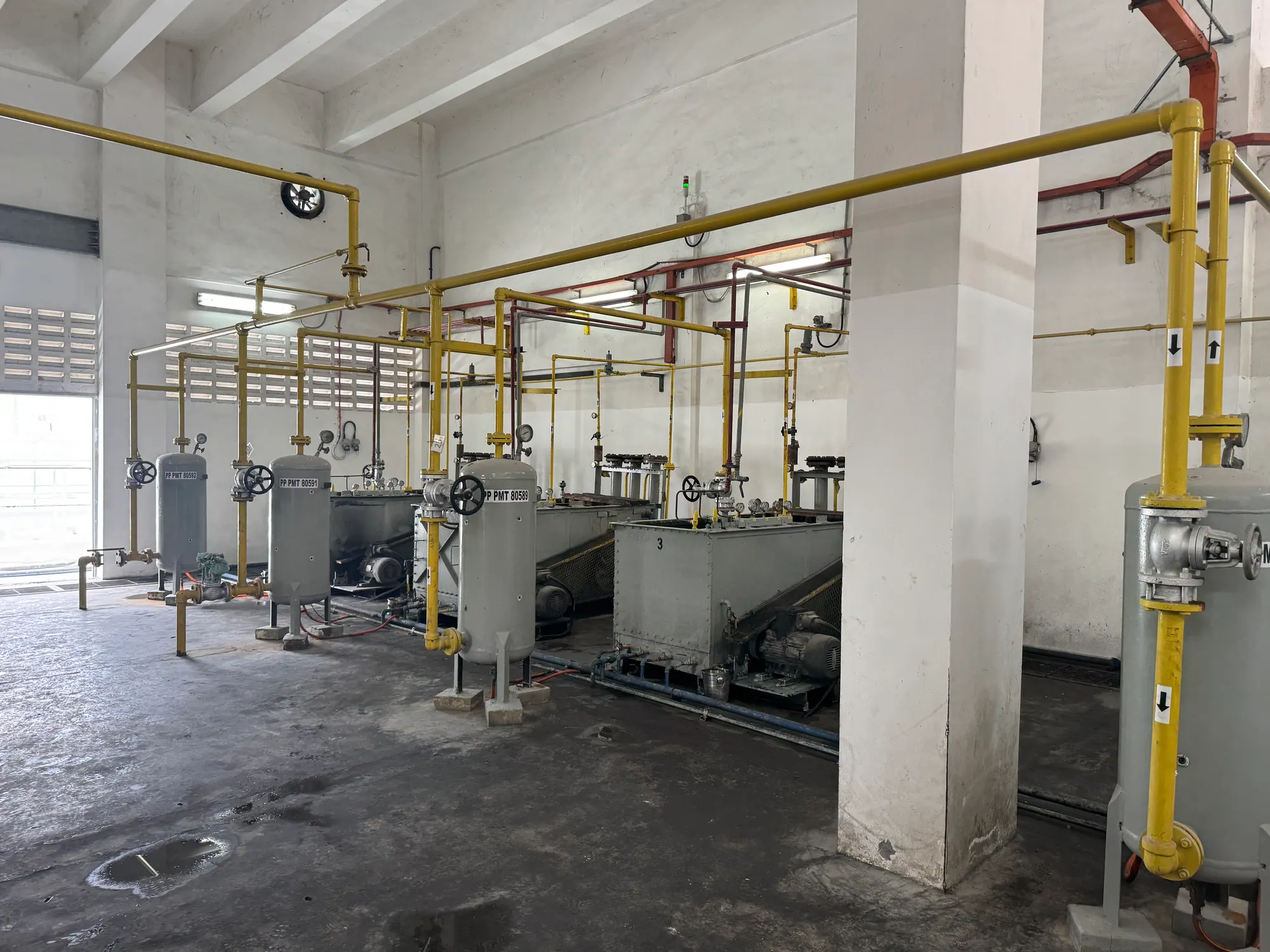
Equipment
PSA nitrogen plants — on-site nitrogen generation from compressed air
A PSA nitrogen plant generates nitrogen on site from compressed air using a carbon molecular sieve, which separates by diffusion rate rather than by capacity — oxygen enters the sieve pores faster and is retained, while nitrogen passes through as product. Purity is set by design, typically from 95 % upward.
₹20,00,000 – ₹2,00,00,000 per plant Indicative. Your quotation is the figure that counts — price moves with quantity, cylinder size, contract term and delivery.
- Pressure swing adsorption over carbon molecular sieve
- Principle
- Kinetic
- Separation mechanism
- Compressed air
- Feed
- Typically 95 % upward
- Purity range
- Residual oxygen content
- Purity expressed as
Nitrogen from air, on your own site
A PSA nitrogen plant takes compressed air in and delivers nitrogen continuously, with no cylinder deliveries, no tanker, and no consumable other than electricity.
For a user consuming nitrogen steadily — food packaging, laser cutting, blanketing, heat treatment — that changes both the economics and the supply risk.
How it works, and why it is not the same as PSA oxygen
Both use pressure swing adsorption. The similarity ends there.
A PSA oxygen plant uses a zeolite sieve that holds nitrogen by adsorption capacity, letting oxygen through.
A PSA nitrogen plant uses a carbon molecular sieve, and separates by rate rather than capacity. The CMS micropores are sized so that oxygen molecules diffuse into them noticeably faster than nitrogen molecules do. Run the cycle for the right length of time and the oxygen is inside the sieve while the nitrogen has passed through as product. Depressurise, release the oxygen, repeat.
It is a kinetic separation, and the timing of the cycle is the design.
Purity is a choice, and it has a price
Unlike PSA oxygen — where argon sets a hard ceiling in the mid-nineties. Nitrogen purity is a design decision. Plants run from around 95 % up to very high purity.
But the air factor climbs steeply with purity. Higher purity means a shorter, more selective cycle that rejects far more of the feed, so you burn substantially more compressed air per unit of product. Since compressed air is the running cost, purity is the single biggest lever on your operating expense.
| Typical application | Purity requirement |
|---|---|
| Blanketing, inerting, tyre filling | Moderate |
| Food packaging | Moderate to high |
| Laser cutting stainless and aluminium | High — residual O₂ causes edge oxidation |
| Heat treatment, bright annealing | High |
| Electronics, analytical | Very high |
Specify what the process needs. Buying headroom you never use is a cost you pay every hour the plant runs.
A point about argon
Purity in PSA nitrogen is conventionally quoted as residual oxygen content, not as a nitrogen percentage. Argon from the feed air carries through with the nitrogen product rather than being removed.
For inerting, blanketing, packaging and the overwhelming majority of industrial uses, that makes no practical difference. It matters only if your process is sensitive to argon specifically, in which case tell us at the enquiry stage rather than discovering it later.
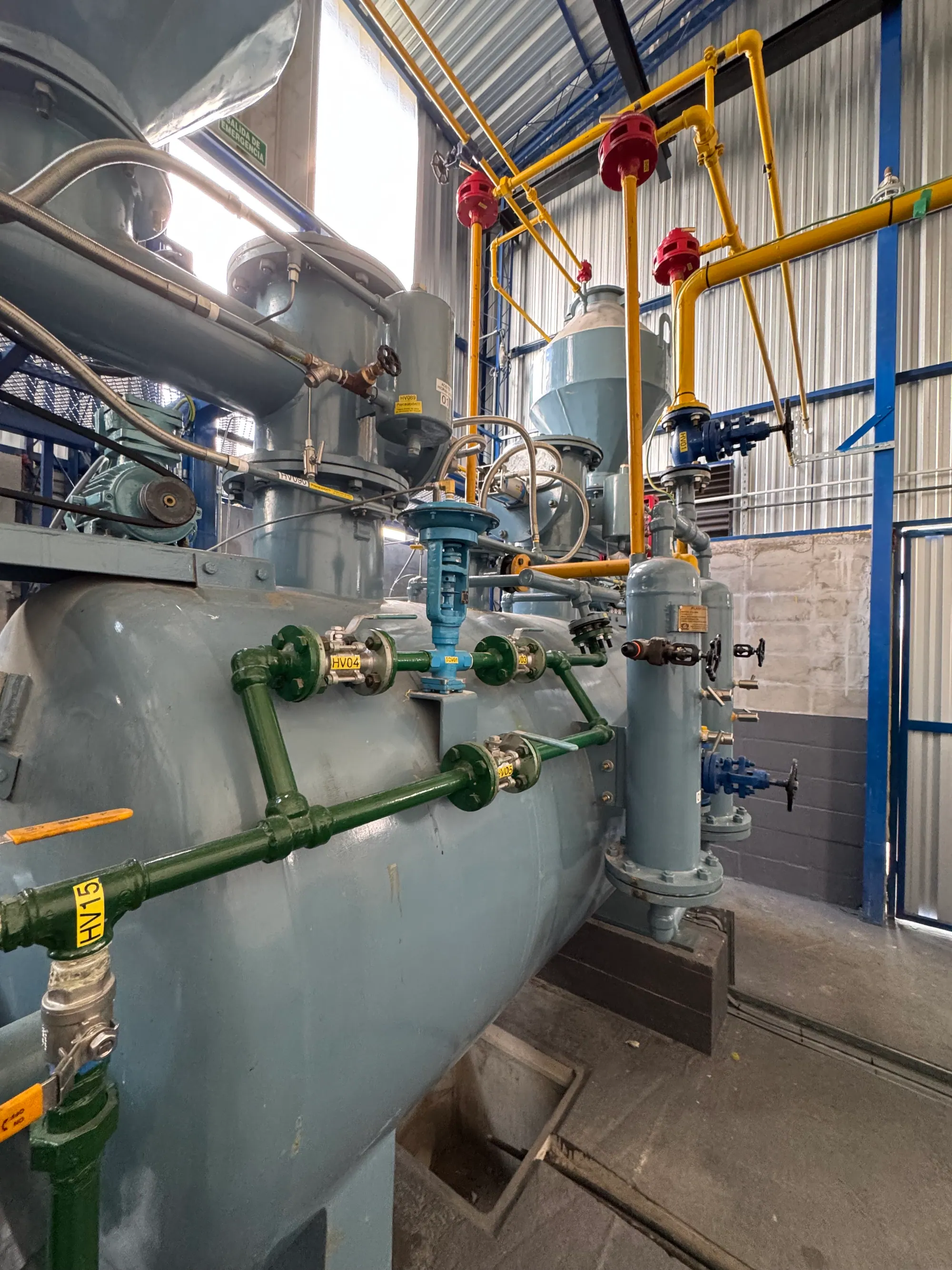
Process pipework and valve manifold on a KIGL-built industrial gas plant
Guwahati works · agent network
The thing that kills nitrogen generators
Oil and water in the feed air. Carbon molecular sieve is unforgiving of both, and the damage is cumulative and irreversible.
Feed air drying and oil removal are not accessories bolted on to the plant; they determine the working life of its most expensive component. Neglected air treatment is by a distance the commonest cause of premature failure in nitrogen generators, and it is entirely avoidable.
PSA or membrane
Membrane systems are simpler, more compact and cope well with intermittent duty, but lose efficiency as purity rises. PSA is more efficient at higher purity and larger scale. Where the crossover sits depends on your purity and flow.
We will tell you which suits your case, including when it is not us.
Psa nitrogen plants supplied, installed and commissioned
We manufacture PSA nitrogen plants alongside PSA oxygen plants and acetylene plants, with installation, commissioning, operator training and maintenance support.
Equipment ships anywhere in India: all seven North-East states, West Bengal, Uttar Pradesh, Madhya Pradesh, Chhattisgarh, Bihar and Odisha included. Unlike cylinder gas, distance is not a constraint on plant.
Tell us your flow, your required purity and your duty pattern, and we will size it against those rather than quote a catalogue model.
Why KIGL
Why buy a plant from a gas producer
We have built gas plant at Kolkata since 1947 and filled cylinders on our own equipment at Noonmati for just as long. That combination is what decides how we size a machine, because we know what it costs to run one badly. Air treatment ahead of the vessels is part of the plant rather than an accessory. And if your demand does not yet justify a generator, we will tell you to keep buying cylinders.
Specification
PSA nitrogen plants — full specification
| Property | Value | Basis |
|---|---|---|
| Principle | Pressure swing adsorption over carbon molecular sieve | — |
| Separation mechanism | Kinetic — oxygen diffuses into the sieve faster than nitrogen | — |
| Feed | Compressed air — no other consumable | — |
| Purity range | Typically 95 % upward, set by design | PSA process characteristic |
| Purity expressed as | Residual oxygen content, not nitrogen percentage | Industry convention |
| Running cost driver | Electricity for the air compressor | — |
| Process | Pressure swing adsorption, twin adsorber | — |
| Adsorbent | Carbon molecular sieve (CMS) | — |
| Separation basis | Difference in diffusion rate into the sieve micropores | — |
| Feed gas | Compressed, dried, oil-free filtered air | — |
| Product purity | Specified as residual O₂ — from a few per cent down to low ppm | Process characteristic |
| Air factor | Rises steeply with purity | Process characteristic |
Documents
PSA nitrogen plants — safety and technical documentation
Questions
PSA nitrogen plants — frequently asked questions
How is a PSA nitrogen plant different from a PSA oxygen plant?
Different adsorbent and a different mechanism. A [PSA oxygen plant](/psa-oxygen-plant) uses a zeolite sieve that adsorbs nitrogen by capacity, letting oxygen through. A PSA nitrogen plant uses a **carbon molecular sieve** that separates by *rate*: oxygen molecules diffuse into the sieve micropores faster than nitrogen does, so oxygen is held and nitrogen passes through as product. Same pressure-swing cycle, opposite product, different science.
What purity can a PSA nitrogen plant reach?
Considerably higher than a PSA oxygen plant — nitrogen generators routinely run from around 95 % up to very high purity. Unlike oxygen, there is no argon ceiling limiting the product, so the purity you get is a design choice rather than a physical wall.
Why does higher purity cost so much more?
Because the air factor climbs steeply. Producing high-purity nitrogen means running a shorter, more selective cycle and rejecting far more of the feed, so you need substantially more compressed air per unit of product — and compressed air is the running cost. Doubling purity does not double cost; it can multiply it. Specify the purity you actually need, not the highest available.
What purity do I actually need?
Food packaging and general blanketing are usually satisfied at moderate purity. Laser cutting of stainless steel, heat treatment and electronics need much lower residual oxygen, because residual O₂ shows as edge oxidation or scale. KIGL specifies against the stated application rather than sell you headroom you will pay for every hour the plant runs.
Is argon present in PSA nitrogen?
Yes, to a degree. Purity in PSA nitrogen is conventionally specified as **residual oxygen content**, and argon from the feed air carries through with the nitrogen product rather than being removed. For inerting, blanketing and most industrial uses this is irrelevant. If your application is sensitive to argon specifically, say so at the enquiry stage.
PSA or membrane — which should I choose?
Membrane systems are simpler, more compact and tolerate intermittent duty well, but become inefficient at higher purity. PSA is more efficient at higher purity and at larger scale. The crossover depends on your purity and flow. We will tell you honestly which suits your case.
What destroys a carbon molecular sieve?
Oil and water. CMS is unforgiving of both, and contamination is cumulative and irreversible. Feed air treatment — drying and oil removal — is not an accessory to the plant; it determines the life of its most expensive component. Neglected air treatment is the commonest cause of premature failure in nitrogen generators.
Read next
Enquiries
Request a quotation for PSA nitrogen plants
State the gas or equipment, the quantity or capacity, and your location. KIGL will confirm the grade, the cylinder or plant size, and whether the location can be served from Noonmati, or through our agent network.