
Guide
What the Gas Cylinders Rules 2016 require of a gas filler and a cylinder user licences, filling, testing, valves, colour, transport and storage
The Gas Cylinders Rules 2016 (GSR 1081(E), 22 November 2016) govern every gas cylinder in India. They set the licence forms C to G, the 15 °C filling basis, retest marking, IS 3224 valves, IS 4379 colours, Schedule VI transport rules and a 25-cylinder own-use exemption for dissolved acetylene.
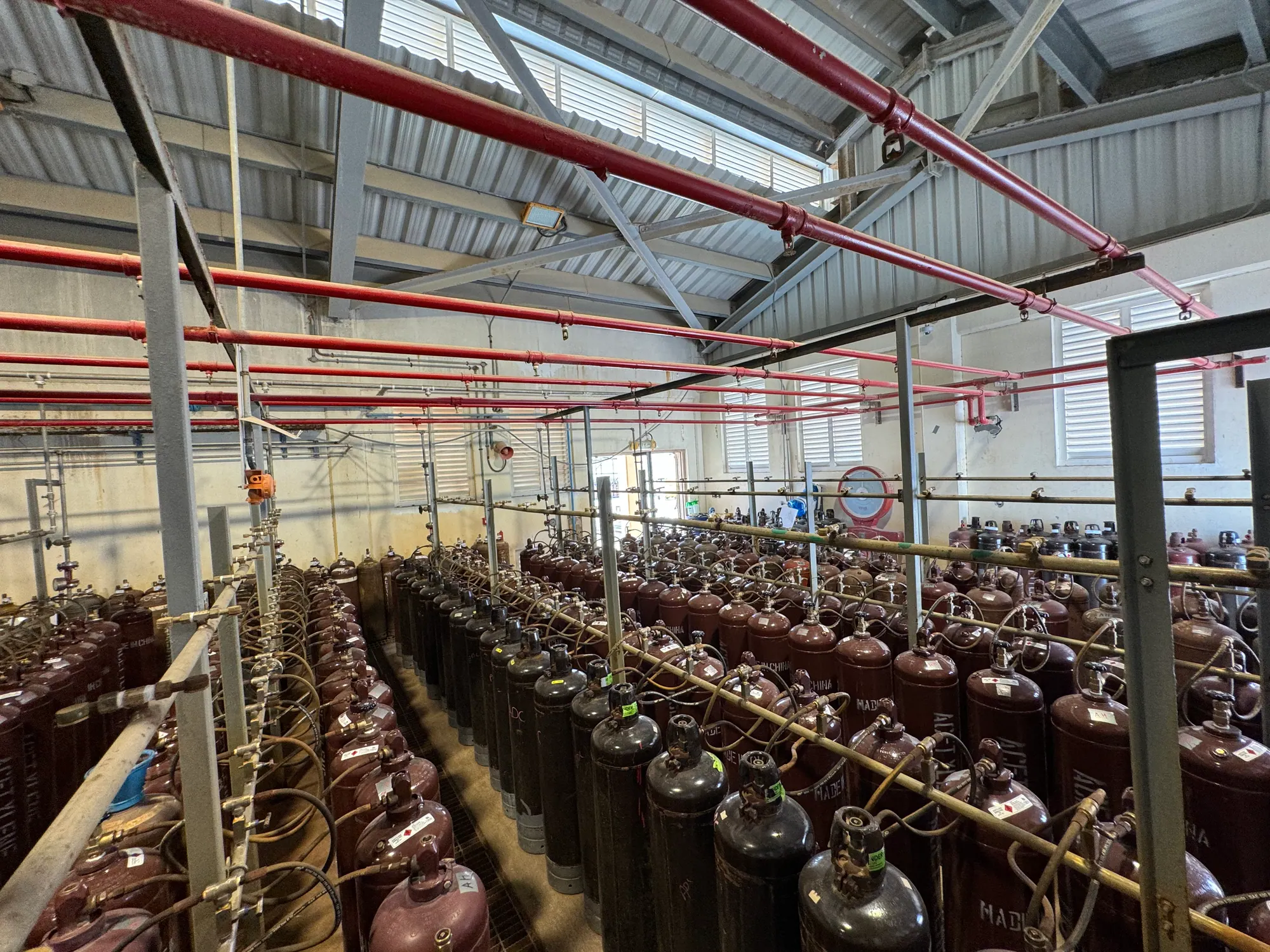
- Instrument
- Gas Cylinders Rules 2016
- What counts as a compressed gas
- Any gas exceeding 2.5 kgf/cm² absolute at 15 °C or 3 kgf/cm² absolute at 50 °C
- Reference temperatures
- Filling pressure and water capacity are defined at 15 °C; working pressure of a low-pressure liquefiable gas is its vapour pressure at 65 °C
- Dissolved acetylene cylinder
- Pressure not above 16 kgf/cm² at 15 °C; porosity 75
- Condemnation on weight
- A cylinder that loses more than 5 percent of its tare weight
The Gas Cylinders Rules 2016 are the single instrument every gas filler, cylinder owner and cylinder user in India answers to. Notified as GSR 1081(E) on 22 November 2016 under sections 5 and 7 of the Explosives Act 1884, they replaced the 2004 Rules (Rule 73) and are administered by the Chief Controller of Explosives through PESO. They decide who may fill a cylinder, how full it may be, when it must be retested, what valve and colour it carries, how it travels and how it is stored. This page sets out what the Rules require, in the order a filler or user meets them, with rule numbers so the text can be checked.
What the Rules cover
Rule 2(v) defines a compressed gas as one exerting a pressure above 2.5 kgf/cm² absolute at 15 °C or above 3 kgf/cm² absolute at 50 °C, and expressly includes cryogenic liquids. Rule 2(xxviii) defines a gas cylinder as a closed metal container of more than 500 ml and not more than 1,000 litres, extendable to 3,000 litres for CNG, nitrogen and compressed air if the diameter does not exceed 60 cm. Gases are then classed by critical temperature: a permanent gas has a critical temperature below −10 °C; a high-pressure liquefiable gas between −10 °C and +70 °C; a low-pressure liquefiable gas above +70 °C (Rules 2(xliii), 2(xxx), 2(xl)). A flammable gas is one that forms a flammable mixture at 13 percent or less in air, or whose flammable range exceeds 12 percentage points (Rule 2(xxvi)); acetylene, with a range of 2.5 to 82 percent in air per IS 14814:2023, is flammable on both counts. A toxic gas is one whose maximum allowable concentration for human respiration does not exceed 100 mg/m³ (Rule 2(xlv)).
Licences — who needs which form
| Form | Purpose | Notes |
|---|---|---|
| Form C | Application for prior approval, grant, renewal, transfer | The working form for every licence |
| Form D | Import of empty or filled cylinders, valves, LPG regulators | Valid up to one year (Rule 51(1)) |
| Form E | Filling compressed gas into cylinders | Charged per gas type; dissolved acetylene is its own category |
| Form F | Storage of cylinders in sheds | Trader needs a District Authority NOC first (Rule 48) |
| Form G | CNG/CBG dispensing | — |
Rule 43 requires a licence to fill and Rule 44 a licence to possess, subject to the own-use exemptions in Rule 44(b): up to 25 cylinders or 200 kg of flammable non-toxic gas, 200 cylinders of non-flammable non-toxic gas, 5 cylinders of toxic gas, and — in its own sub-clause, 44(b)(iv) — up to 25 dissolved acetylene cylinders at a time. Rule 40 states the filling rule as a prohibition: acetylene may only be compressed into cylinders at licensed premises. Forms E, F and G run until 30 September of the final year granted, for a maximum of ten years (Rule 51(2)). The licensing sequence for an acetylene plant specifically is on the PESO licence page.
Filling — the 15 °C and 65 °C framework
Every quantity in the Rules is anchored to two temperatures. Filling pressure is the maximum permissible gauge pressure converted to 15 °C (Rule 2(xxiv)); water capacity is measured at 15 °C (Rule 2(li)); the working pressure of a permanent gas is its pressure at 15 °C (Rule 2(liii)). For a low-pressure liquefiable gas, working pressure is the saturated vapour pressure at 65 °C, taken from IS 3710 (Rule 2(lii)) — 65 °C being the maximum attainable temperature assumed for India in both IS 3710:1978 and IS 8775:1978. The filling ratio for a liquefiable gas is the weight of gas divided by the weight of water the cylinder holds at 15 °C (Rule 2(xxv)), and for pure non-hydrocarbon gases IS 3710 sets it so that liquid occupies about 95 percent of the cylinder volume at 65 °C.
Rule 23 requires gases to be as dry as practicable: the aqueous phase must not separate when a liquefied gas is cooled to 0 °C, and before filling carbon monoxide, coal gas, hydrogen or methane the moisture must be below 0.02 g/m³. Rule 35(1) ties the general filling conditions and test periods to IS 15975. Rule 38 requires the filler to hold the cylinder's full history before filling it.
For dissolved acetylene, Rule 37 is the governing clause and is set out on the cylinder standards page: porous mass filling the cylinder as completely as possible with porosity between 75 and 92 percent; acetone to IS 170 in a quantity that lets the cylinder pass the IS 7312 tests; valves with not more than 70 percent copper; pressure not above 16 kgf/cm² at 15 °C; hydrostatic test before the mass is introduced at not less than 60 kgf/cm², reducible to 53 kgf/cm² with a fusible plug, with permanent stretch not above 7.5 percent of total stretch; and a relief device, if fitted, operating at 53 kgf/cm² or 100 °C (+4/−2). Rule 39 requires a visual examination to IS 8433 at every charge and, where none has been recorded within two years, removal of the valve and inspection of the porous mass at the neck (one year for loose mass). Rule 41 prescribes the per-charge record and Rule 42 the label.
Testing, retest and condemnation
Rule 26 bars the charging or transport of any cylinder whose periodic retest is overdue. Rule 35 governs the recognition of testing stations. A station needs the Schedule IV facilities and facilities for evacuation, neutralisation or scrubbing and for condemnation (Rule 35(3)). Its recognition starts at one year and may be extended, at the Chief Controller's discretion, up to a maximum of ten years where a valid ISO accreditation, testing records and the Schedule V fee are all in place (Rule 35(4)). Schedule IV requires the hydrostatic stretch test to IS 5844 with the pressure held at least 30 seconds, a permanent stretch not above 10 percent of total stretch for permanent, high-pressure liquefiable, toxic and corrosive gases, two 15 cm working gauges with a master gauge, a weighing error not above 0.1 percent and gauge calibration monthly (working) and six-monthly (master). The method is explained on the hydrostatic stretch testing page.
Rule 36(1) condemns a cylinder that fails its examination or test, loses more than 5 percent of its tare weight, is otherwise unsafe or reaches the end of its service life (twenty years for CNG cylinders; fifteen for low-carbon-steel auto-LPG containers), and requires destruction to IS 8198. Rule 36(3) keeps the history sheets of condemned cylinders for two years with quarterly reports to the Chief Controller on 1 January, April, July and October. Rule 36(4) deems any cylinder used to generate gas, or for any purpose other than storing, transporting and using compressed gas, to be condemned. Rule 12(5) forbids repair of a dissolved acetylene cylinder leaking at a weld seam, and Rule 24(2) requires a dissolved acetylene cylinder damaged by fire to be condemned and destroyed. The test rings and stamps are explained on cylinder testing and retest.
Valves, safety devices, marking and colour
Rule 4(1) assigns valve specifications: IS 3224 for industrial gas and CNG cylinders, IS 3745 for medical cylinders, IS 7302 for breathing apparatus, IS 8776 and IS 8737 for LPG, IS 15100 for auto-LPG, IS 12300 for small refrigerant cylinders. Valves for flammable gases not listed in IS 3224 take left-hand outlet threads; all others are right-hand (Rules 4(3)–(4)). A valve is screwed to the neck, never permanently attached, and its spindle must not be withdrawable in normal use (Rules 4(5)–(6)). A carbon dioxide valve must carry a softened copper bursting disc set between 200 and 220 kg/cm² (Rule 4(2)). Safety devices follow IS 5903 (Rule 5(1)), and cylinders for the listed poisonous gases — chlorine, phosgene, hydrogen sulphide and others — must have none (Rule 5(2)).
Rule 6 requires permanent stamping on the shoulder or a part not stressed by gas pressure: manufacturer's, owner's and inspector's marks and rotation number, specification, heat-treatment symbol, the date and code mark of the last hydrostatic test, working and test pressures, tare weight (including the valve for liquefiable-gas cylinders), water capacity, an "H" for hydrogen and embrittling gases, and expiry dates on CNG and auto-LPG cylinders. Rule 7 marks the valve with its specification, year and month or quarter of manufacture, working pressure, gas name and thread hand. Rule 8 assigns colours: IS 4379 for industrial cylinders, IS 3933 for medical, and a table of its own for gases neither standard covers — white shell, with a yellow neck band (IS 5 shade 356) for toxic gases, red (shade 537) for flammable, both for flammable and toxic. The industrial scheme — maroon for acetylene, graphite black for oxygen, French grey with a black shoulder and bottle-green band for nitrogen — is on the cylinder colour codes page. Rule 9 prescribes the warning label and its five standing instructions, the last of which tells the user to find the next test date on the metal ring under the valve.
Transport — Schedule VI
Rule 20 applies Schedule VI. Cylinders are not carried on a bicycle or any two-wheeled motor vehicle, must not project beyond the vehicle, must be secured, blocked or braced, and must not travel with highly flammable or corrosive articles. Flammable-gas cylinders do not travel with other compressed gases, except that up to 25 dissolved acetylene cylinders may go with non-toxic non-flammable gases. Acetylene cylinders are never transported in a closed vehicle. Lifting magnets are forbidden; cranes and fork-lifts need a proper cradle. Valves not wholly below the body profile carry a metal cap, cover, ring or grill, vented except for the highly toxic gases, with an exemption for medical oxygen and nitrous oxide cylinders up to 5 litres. No leaky cylinder is tendered or carried. The practice side is on transporting acetylene cylinders safely.
Storage and handling
Rule 21(3) forbids horizontal stacking of dissolved-gas cylinders; Rule 21(4) separates flammable and toxic gases from others by distance or a partition; Rule 21(6) keeps them from combustibles. Rule 15(2) bans oil or lubricant on valves, and 15(3) bans exposure to high temperature or sun and storage with flammable or explosive materials. Rule 22 requires flameproof, effectively earthed electrical fittings where flammable gas is stored. Rules 14 and 18(7) ban smoking, open flames, matches and mobile phones near flammable-gas cylinders, except a blowpipe flame for repair or the use of the gas itself for welding, cutting or heating. Form F adds the shed conditions: 3 m clear round a flammable or toxic gas shed with a 2 m fence, 1 m or a fire-resisting wall between flammable and oxidising gases, and two 10 kg extinguishers.
Accidents, offences and appeals
Rule 67 requires notice of an accident to the Chief Controller by fax or e-mail followed by a letter within twelve hours; a magistrate holding an inquiry gives the Chief Controller at least fourteen days' notice (Rule 68(2)). Suspension of a licence may not exceed three months (Rule 57(2)(b)); appeals lie within sixty days (Rule 59(2)) or thirty days under Rule 70.
Rules that matter
What this means for you
- A filler needs Form E and Form F, the Rule 41 records, IS 3224 valves, IS 4379 colours and a recognised testing station; the fees are small, the paperwork is not.
- A user with up to 25 acetylene cylinders for own use needs no licence but is still bound by the handling, storage and transport rules.
- Every pressure and weight in the Rules is at 15 °C; every safety margin is at 65 °C.
- A cylinder with a past test date, a 5 percent tare loss, a weld-seam leak or fire damage is out of service, and the Rules leave no discretion on the last two.
KIGL fills dissolved acetylene and other industrial gases under these Rules at its licensed premises; the full set of Indian Standards they invoke is listed on the acetylene cylinder standards page.
What — frequently asked questions
Which licence form do I need under the Gas Cylinders Rules 2016?
Form C is the application for prior approval, grant, renewal or transfer. Form D is an import licence for cylinders, valves and LPG regulators. Form E is the licence to fill compressed gas into cylinders. Form F is the licence to store cylinders in a shed. Form G covers CNG and CBG dispensing. A gas filler normally holds Form E and Form F; a trader holds Form F; a fabrication shop with a few cylinders for its own use usually needs none.
How is the filling pressure of an oxygen or nitrogen cylinder defined?
As the maximum permissible gauge pressure converted to 15 °C (Rule 2(xxiv)). For a permanent gas the working pressure is the internal pressure at 15 °C (Rule 2(liii)), and the safety check is the pressure the gas develops at 65 °C, the maximum attainable temperature assumed for India in IS 8775:1978 and IS 3710:1978. A charging pressure quoted without a reference temperature is incomplete under the Rules.
What is a filling ratio and which gases does it apply to?
The filling ratio is the weight of liquefiable gas put into the cylinder divided by the weight of water the cylinder holds at 15 °C (Rule 2(xxv)). It applies to liquefiable gases such as ammonia, chlorine, LPG and carbon dioxide, not to permanent gases. Low-pressure liquefiable gases take their ratios from IS 3710:1978; the general filling conditions and retest periods are referred to IS 15975.
How do I know when a cylinder is due for retest?
Look for the next test date on the metal ring inserted between the valve and the neck of the cylinder — the Rule 9 warning label tells the user to do exactly that, and not to accept the cylinder for filling if the date has passed. Rule 26 bars charging or transporting a cylinder whose periodic test is overdue, and Rule 35(1) ties the test periods to IS 15975.
What does Rule 37 require of a dissolved acetylene cylinder?
Porous mass filling the cylinder as completely as possible, with porosity between 75 and 92 percent; a solvent that does not react with acetylene, the mass or the metal, acetone to IS 170; valves with not more than 70 percent copper; pressure not exceeding 16 kgf/cm² at 15 °C; a hydrostatic test of at least 60 kgf/cm² (53 with a fusible plug) with permanent stretch not above 7.5 percent; and a relief device operating at 53 kgf/cm² or 100 °C.
Can acetylene cylinders be carried in a closed van?
No. Schedule VI, which governs transport under Rule 20, states that acetylene cylinders shall not be transported in a closed vehicle. It also bans carriage on bicycles or any two-wheeled motor vehicle, requires cylinders to be secured and braced, forbids lifting magnets, and allows up to 25 dissolved acetylene cylinders to travel with non-toxic non-flammable gases with due precautions.
What must a filler record for each acetylene cylinder charged?
Rule 41 requires a record per charge of the date, the empty weight without gas, the weight of solvent charged before gas, the full weight, every date on which solvent was added, the dates and results of the Rule 39 examinations with the examiner's name, and on first issue the tare, the solvent type and the maximum permitted pressure. Rule 42 puts the date and weight of the last fill and the full weight on the label.
Is an IS 3224:2002 valve still acceptable?
Rule 4(1) points to IS 3224 without a year, so the current edition, IS 3224:2021, governs new valves. BIS still lists the 2002 Third Revision as published alongside the 2021 Fourth Revision, so a certificate to the 2002 edition is not a citation of a withdrawn document. Valves for flammable gases not listed in IS 3224 must have left-hand outlet threads (Rule 4(3)).
References
- Bureau of Indian Standards. (2020). Gas cylinders — Conditions for filling gas cylinders (IS 15975:2020, First Revision).
- Bureau of Indian Standards. (2021). Identification of contents of industrial gas cylinders (IS 4379:2021, Second Revision).
- Bureau of Indian Standards. (2021). Valves for compressed gas cylinders (IS 3224:2021, Fourth Revision).
- Government of India. (2016). Gas Cylinders Rules, 2016 (G.S.R. 1081(E)). Petroleum and Explosives Safety Organisation. [22 November 2016]
- Petroleum and Explosives Safety Organisation. (n.d.). Petroleum and Explosives Safety Organisation. Government of India.
Enquiries
Request a quotation
State the gas or equipment, the quantity or capacity, and your location. KIGL will confirm the grade, the cylinder or plant size, and whether the location can be served from Noonmati, or through the agent network.