
Equipment
KIGL-FBA-PM — the pipeline and manifold flashback arrestor
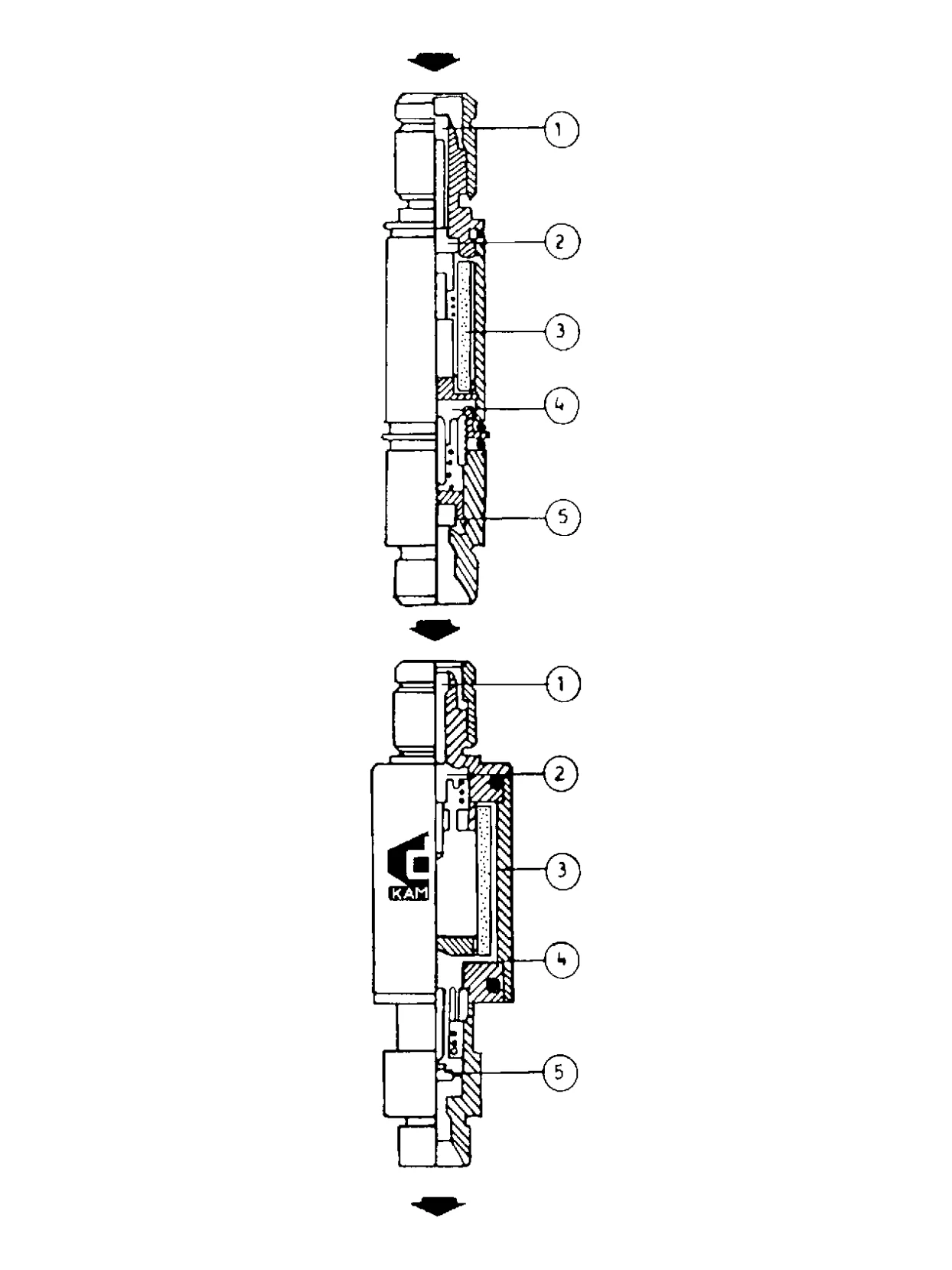
The KIGL-FBA-PM is the pipeline and manifold model in the KIGL-FBA range, built to IS 11006 : 2011. One body carries five safety elements, and the maximum working pressure runs from 25.0 bar on air or oxygen down to 0.6 bar on natural gas. Fuel-gas bodies carry left-hand threads.
Written and checked by KIGL technical staff
- 25.0 bar
- Air or oxygen maximum
- 1.5 bar
- Acetylene maximum
- 3.5 bar
- Hydrogen maximum
- Five in one body
- Safety elements
- IS 11006 : 2011
- Governing standard
On this page 7 sections
Where the KIGL-FBA-PM sits in a gas system #
The KIGL-FBA-PM is the fixed-installation model in the KIGL-FBA range. It is an automatic arrestor for distribution pipelines and gas manifolds, and it serves fuel gases, oxygen and air. Unlike the hose-mounted body, it is piped in once and stays there, so it is specified against the line rather than against a torch.
Three duties account for most of what KIGL supplies. A distribution pipeline running from a manifold to the workshop takes one unit at the manifold outlet. A cylinder gas bank takes a unit on the header. What the -PM does not cover is the generator outlet on an acetylene plant: that position takes a wet type, where water and a distributor disc do the quenching at 25 or 50 Nm³/h, and the device is the KIGL-FBA-WT. A cylinder charging rack takes three bodies in series, which is the arrangement described under acetylene cylinder filling plants, because a charging manifold gives a returning flame the longest straight run of pipe on the site.
The general question of what a flashback is, how the quenching works and which model suits which duty is answered on the range page, flash back arrestors. This page covers the -PM alone.
Maximum working pressure, gas by gas #
The figure that decides whether this model can be used is the maximum working pressure for the gas in the line, and on one body it varies by a factor of forty.
| Gas | Maximum working pressure |
|---|---|
| Air / oxygen | 25.0 bar |
| Hydrogen | 3.5 bar |
| Acetylene | 1.5 bar |
| LPG | 1.0 bar |
| Natural gas | 0.6 bar |
Acetylene is the lowest figure on the table and that is a property of the gas, not of the device: free acetylene decomposes without an oxidant once compressed, so IS 14814 : 2023 cl 7.2.1 holds it at 0.612 atm, or 1.021 atm with PESO clearance. A -PM on an acetylene header therefore works at a small fraction of its marked maximum, which is also why its flow capacity has to be read off the curve at the pressure in use — about 1.4 Nm³/h at 0.1 bar against 19.5 Nm³/h at 1.5 bar on air. The measured tables are in flashback arrestor pressure drop and flow capacity.
KIGL-FBA-PM, filled and despatched from KIGL's own works.
Guwahati works · agent network
Connections and thread forms #
Fuel-gas and oxygen bodies take different threads, and the hand of the thread is the physical interlock that stops one being fitted to the other.
| Service | Thread hand | Thread forms offered |
|---|---|---|
| Fuel gases | Left hand | G3/8″, M16×1.5, UNF 9/16″-18, UNF 5/8″-18, ¼″ NPT |
| Oxygen or air | Right hand | G¼″, G3/8″, M16×1.5, UNF 9/16″-18, UNF 5/8″-18, ¼″ NPT |
Other thread forms, flanged connections, materials and surface finishes are made to order. The port size in nominal bore is confirmed against the line at order, because this model is specified by thread form rather than by DN. Where a DN size is what the specification calls for, the KIGL-FBA-NRV is the body that publishes a DN range, threaded DN6 to DN40 and flanged DN32 to DN150.
The five safety elements in one -PM body #
Each element answers a different way a flame or the wrong gas travels the wrong way down a line, and they act in the order the gas meets them.
-
Contaminant filter
This takes particulate out of the gas before it reaches the quenching elements, which matters because a fouled element has lost the pore geometry it quenches with.
-
Non-return valve
This blocks reverse gas flow, and reverse flow is how oxygen enters a fuel line and makes a combustible mixture inside the pipe.
-
Flame block
This drops the velocity of an advancing flame below the minimum burning velocity of the fuel gas, so the flame can no longer sustain its own propagation.
-
Flame trap
This stops propagation into the pipe at any mixture velocity, and absorbs the heat of the flame front as a sintered heat sink.
-
Temperature-activated cut-off
This shuts the gas off on fuel-gas bodies when the device heats up, which covers sustained burning against the arrestor rather than through it.
Key points
Specifying and installing a KIGL-FBA-PM #
An enquiry that states these six things can be quoted and supplied without a second exchange.
- Name the gas, and say whether the line is fuel gas or oxygen Each gas has its own maximum working pressure on this body, and the thread hand follows from the service.
- Give the working pressure the line actually sees, and the flow in Nm³/h The device is sized on the flow curve at the working pressure, never on the marked maximum.
- Give the thread form wanted, from the table above, or the line size for KIGL to propose one Flanged connections and other forms are made to order.
- Say how many bodies the installation needs, counted per line and per position A charging rack takes three in series; a manifold outlet takes one per line.
- Name the standard to be cited on the documents On an Indian tender that is IS 11006 : 2011, with EN ISO 5175-1 as the international equivalent. A quotation citing EN 730-1 is citing a withdrawn standard.
- Confirm the gas service has not changed A body prepared for oxygen is never returned to compressed air or fuel-gas duty, and a used unit of unknown history is treated as having arrested a flame.
Every unit is tested for gas tightness and gas return before dispatch, and should be tested again at least once a year by a qualified person. After any flashback the device is replaced rather than reset, and the five conditions that condemn a device without further testing are listed in flashback arrestor testing and replacement.
Specification
KIGL-FBA-PM — full specification
| Property | Value | Basis |
|---|---|---|
| Air or oxygen maximum | 25.0 bar | Maximum working pressure, KIGL-FBA technical specification |
| Acetylene maximum | 1.5 bar | Maximum working pressure, KIGL-FBA technical specification |
| Hydrogen maximum | 3.5 bar | Maximum working pressure, KIGL-FBA technical specification |
| Safety elements | Five in one body | Filter, non-return valve, flame block, flame trap and temperature cut-off |
| Governing standard | IS 11006 : 2011 | International equivalent EN ISO 5175-1 |
| Fuel-gas thread forms | G3/8 in, M16x1.5, UNF 9/16-18, UNF 5/8-18 and 1/4 in NPT, left hand | KIGL-FBA technical specification |
| Oxygen and air thread forms | G1/4 in, G3/8 in, M16x1.5, UNF 9/16-18, UNF 5/8-18 and 1/4 in NPT, right hand | KIGL-FBA technical specification |
| LPG maximum | 1.0 bar | Maximum working pressure, KIGL-FBA technical specification |
| Natural gas maximum | 0.6 bar | Maximum working pressure, KIGL-FBA technical specification |
| Temperature cut-off | Fitted on fuel-gas bodies | KIGL-FBA technical specification |
Questions
KIGL-FBA-PM — frequently asked questions
What is the difference between the KIGL-FBA-PM and the hose-mounted KIGL-FBA-HP?
Position and element count. The -PM is a fixed installation on a pipeline or a gas manifold and carries five elements, including a contaminant filter ahead of the flame trap and a temperature-activated cut-off on fuel-gas bodies. The [KIGL-FBA-HP](/kigl-fba-hp-hose-flashback-arrestor) screws onto a welding or cutting hose and carries a non-return valve with a flame-arrestor block. The -PM also holds 25.0 bar on oxygen against the -HP at 20.0 bar.
Why are three KIGL-FBA-PM units fitted in series on a charging rack?
Because a cylinder charging manifold is the one place where a flame front has a long straight run of pipe to accelerate in, and the gas bank behind it is the largest inventory on the site. Three bodies in series give three independent quenching stages. The arrangement is set out under [acetylene cylinder filling plants](/acetylene-cylinder-filling-plant).
Which thread form should be ordered for a fuel-gas line?
A left-hand thread, in one of five forms: G3/8 in, M16x1.5, UNF 9/16-18, UNF 5/8-18 or 1/4 in NPT. Oxygen and air bodies are right hand and add G1/4 in to that list. The hand of the thread is what prevents a fuel-gas body being fitted to an oxygen line, so it is stated on the order rather than assumed.
Does the KIGL-FBA-PM carry a temperature cut-off on oxygen service?
No. The temperature-activated flow cut-off is a fuel-gas element, because it exists to stop fuel feeding a flame that has stabilised against the arrestor. An oxygen or air body carries the filter, the non-return valve, the flame block and the flame trap.
What pressure test does the body have to pass?
IS 11006 cl 4.1 requires a non-fragmenting casing that withstands ten times maximum working pressure, or 60 bar, whichever is higher, for five minutes with no permanent deformation and no leak. On an acetylene body rated at 1.5 bar that is a 60 bar test. The clause detail is on [flashback arrestor standards](/standards/flashback-arrestor-standards).
Can the KIGL-FBA-PM be fitted to a pipeline carrying any of the five gases?
The body is made for one gas service and marked for it. Each gas has its own maximum working pressure on this model, from 25.0 bar on air or oxygen to 0.6 bar on natural gas, and a unit prepared for oxygen service is never returned to compressed air or fuel-gas duty afterwards.
References
Bureau of Indian Standards.
- IS 11006:2011, First RevisionFlash back arrestor (flame arrestor) — Specification (2011)
- IS 14814:2023, First RevisionAcetylene — Code of safety (2023)
- The Kamrup Industrial Gases Limited. (2026). Company information and manufacturer's data [Company statement].
Read next
Enquiries
Request a quotation for KIGL-FBA-PM
State the gas or equipment, the quantity or capacity, and your location. KIGL will confirm the grade, the cylinder or plant size, and whether the location can be served from Noonmati, or through the agent network.