
Guide
Oil grease and flashback arrestor elements: why a contaminated element quenches less, and how to keep it clean
Oil and grease weaken a flashback arrestor element because quenching is a heat-transfer duty. In Hölemann and Hasselmann's 1956 tests, oil, wax or water films on packing somewhat favoured passage of an acetylene explosion. In oxygen devices oil is a fire risk, and IS 11006:2011 tests only with gas below 5 × 10⁻⁶ oil vapour.
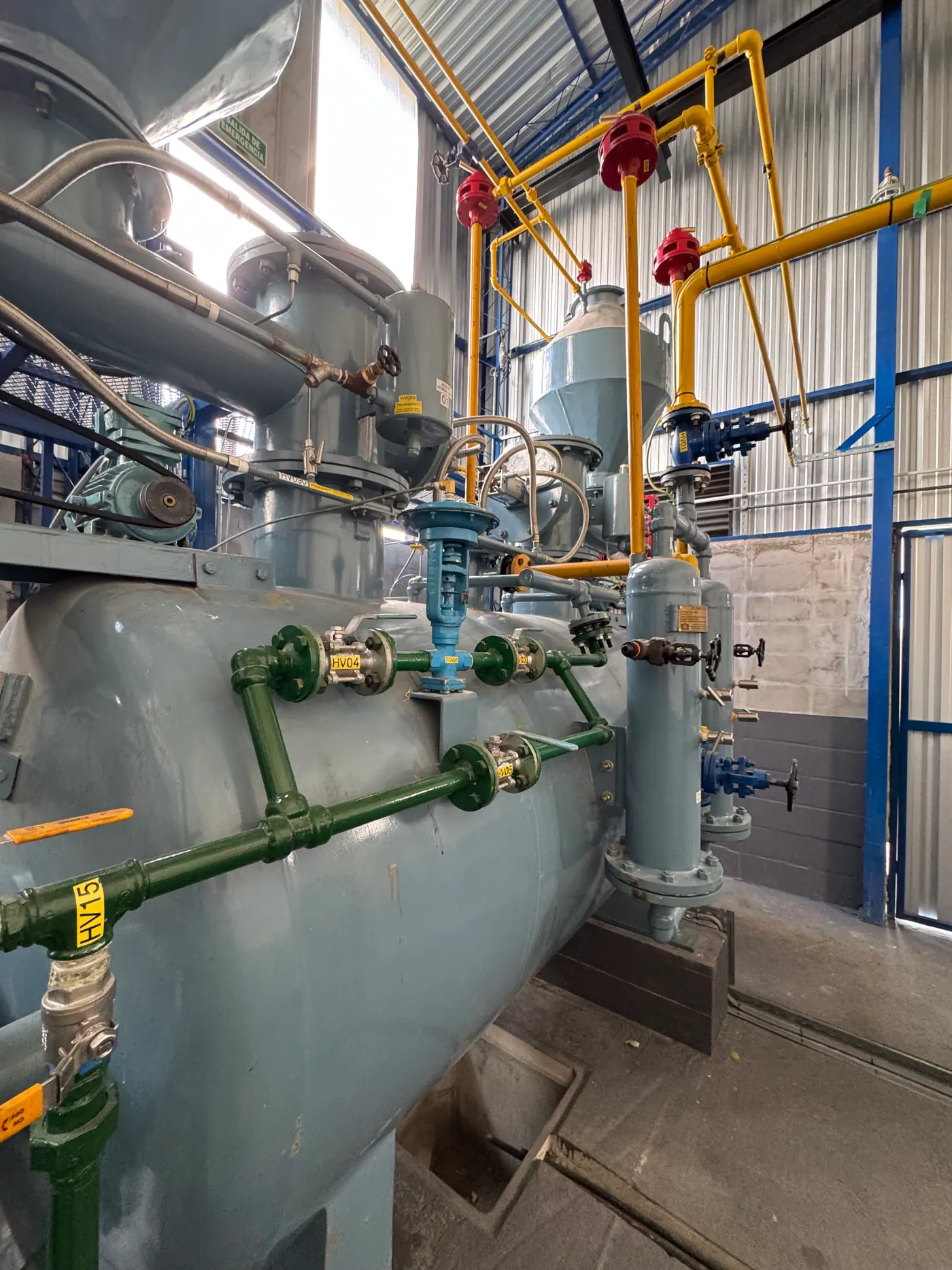
- Effect of an oil, wax or water film on packing
- Somewhat favoured passage of the explosion by reducing heat transfer
- Packed steel shot, two critical limits
- Explosion stopped below 5.3 atm
- Effect of adherent rough corrosion films
- Hindered passage
- Oil-free test gas
- Oil vapour mass fraction below 5 × 10⁻⁶ and suspended droplets below 1 mg/m³; dew point 0 °C
- Paraffin oil on a heated steel capillary
- Raised the decomposition initiation temperature by 60
An oily flashback arrestor is a weaker flashback arrestor. The element stops a flame by drawing heat out of it through a very large metal surface, and anything that insulates that surface slows the heat transfer the device depends on. German tests in the 1950s showed exactly that for acetylene, and the same contamination that weakens a fuel-gas element is a fire hazard in an oxygen one. This page sets out the evidence, where the contamination comes from, and how to keep elements clean.
What did the tests show?
The most direct evidence comes from Hölemann and Hasselmann's experiments for the state of North Rhine-Westphalia (Forschungsberichte No. 526, 1956). They packed tubes of 1.9 cm bore with 5 and 10 cm lengths of steel shot, 1 and 2 mm in diameter, and fired acetylene decompositions into them. Below 5.3 atm the explosion was stopped; above 6.9 atm it passed through instantly; between the two it crept through the packing and re-ignited the gas beyond, a regime explained in the twenty-minute delay. They then changed the surface of the shot:
| Change to the packing surface | Effect on the explosion | Why |
|---|---|---|
| Film of oil, wax or water | Somewhat favoured passage | Film reduces heat transfer from gas to metal |
| Film easily decomposed endothermically, or blown off by the pressure wave | Exception to the above | Coating absorbs heat or is removed |
| Adherent rough corrosion film | Hindered passage | More surface area to absorb heat |
| Coarser particles, thinner layers | Lower quenching limits, poorer performance | Larger passages, less surface |
Source: Hölemann and Hasselmann, 1956, and related reports Nos. 383 (1957) and 690 (1959), which found the same two-limit behaviour with a dozen non-metallic packings.
The lesson is that the element's performance is a property of its surface, not only its pore size. IS 11006:2011 cl 6 asks for the same things the tests reward: good thermal conductivity, high porosity, large surface area and small pore size. A film of oil leaves the pore size almost unchanged but degrades the first and third.
The two-limit result makes the point sharper. An arrestor does not fail gradually as it gets dirtier; it has a pressure below which it stops a flame and a pressure above which it does not, with a creeping regime in between. Anything that weakens heat transfer pulls those limits down. A device that quenched comfortably at its rated pressure when clean may, once filmed with oil or water, sit in or above the creep band at the same pressure. Nothing on the outside of the body shows that the margin has gone, and no field test measures it, because the IS 11006 flashback test in cl 11.6 is a type test on new devices, not an in-service check.
Is oil always worse?
Not in every test, which is why the mechanism matters. Hölemann, Hasselmann and Dix (Forschungsberichte No. 102, 1954) heated new mild-steel capillaries in acetylene and found decomposition began at 520 °C. Wetting the wall with paraffin oil raised that by 60–90 °C, more than pre-annealing (30–60 °C), tinning (40–50 °C) or switching to stainless steel (50 °C). So oil does not make a hot surface a better igniter. But an arrestor is not an ignition problem; it is a quenching problem, and there the same film works against you by insulating the metal. Clean, bare metal is the condition the element was designed and tested in.
Loose solids behave differently again. Miller and Penny (IChemE symposium, 1960) found that 1 g of rust, pipe scale or similar powder in a steel tube lowered the initiation temperature of acetylene from 425 °C to 280–300 °C. Adherent corrosion on packing can help quenching; loose rust in a line is an ignition hazard and, once it reaches the arrestor, a source of blockage. See rust, dust and ignition temperature.
Why is oil a different hazard in oxygen arrestors?
On the oxygen line the risk is not weaker quenching but fire. Oil and grease ignite readily in oxygen and burn intensely, and a sintered element offers an enormous surface for a film to spread across. Wilhelmsen/Unitor's arrestor manual warns that compressed air with oil traces can react violently with oxygen and that a device used on compressed air must not later be installed in oxygen equipment. Gas Cylinders Rules 2016 Rule 15(2) bars oil or similar lubricant on cylinder valves. Oxygen-service components should be cleaned and kept to recognised practice such as EIGA Doc 33 or CGA G-4.1; the oxygen pipeline cleanliness guide covers the methods.
How clean is clean?
IS 11006:2011 gives the only numerical definition in the Indian standard. Cl 11.3 requires type tests to be run with air or nitrogen free from oil and grease, and defines oil-free air as having:
| Parameter | Limit | Clause |
|---|---|---|
| Oil vapour, mass fraction | below 5 × 10⁻⁶ | IS 11006:2011 cl 11.3 |
| Suspended oil droplets | below 1 mg/m³ | IS 11006:2011 cl 11.3 |
| Moisture | dew point of 0 °C | IS 11006:2011 cl 11.3 |
| Test temperature | 27 ± 5 °C | IS 11006:2011 cl 11.3 |
The same limits are a sensible standard for any gas used to leak-test or reverse-flow-test an arrestor in the field. Unfiltered workshop compressed air from an oil-lubricated compressor will not meet them, which is why oil-free bottled nitrogen is the usual test gas, and why oxygen is never used.
Rules that matter
Where does the contamination come from?
- Hands, tools and threads Greased fittings, oily gloves and general-purpose thread paste are the commonest route. Use only the seal the maker specifies.
- Leak-test fluids An IMCA hose-fire investigation (Safety Flash 02/14) advised against soapy water or any product containing oil or grease on oxygen systems; use a fluid made for oxy-fuel work.
- Compressed-air service A device moved from air to oxygen carries oil with it.
- Compressor carry-over On filling plants, lubricant from the acetylene compressor can travel downstream towards the charging-rack arrestor.
- Water Wet generator gas condenses in the element; Wilhelmsen/Unitor notes that water can block it, and the tests above show a water film also reduces heat transfer.
- Acetone A cylinder drawn faster than its rated rate entrains liquid acetone, which can reach the regulator and arrestor; see the one-seventh rule.
- Soot and tar Carbon from an earlier flashback plugs the element, which is why an arrestor that has stopped a flame should be replaced.
Can a contaminated element be cleaned?
Not reliably in the field. A sintered element cannot be inspected internally, and solvent may move contamination deeper rather than remove it. Wilhelmsen/Unitor sets a five-year replacement interval because internal condition is hard to judge, and replaces immediately any device that is faulty or corroded. The conservative rule is to replace an oily, wet or sooted arrestor, or return it to the manufacturer for testing, and to fix the source before fitting a new one. The testing and replacement guide gives the in-service checks.
Rules that matter
Rules to apply
- Keep oil, grease and general thread paste off every arrestor, whether fuel or oxygen.
- Never move a device from compressed-air service to oxygen service.
- Test only with oil-free nitrogen or air meeting IS 11006 cl 11.3, never with oxygen.
- Use a leak-test fluid made for oxy-fuel systems, not household soap.
- Replace any element that is oily, wet, sooted or has stopped a flame; do not solvent-wash it on site.
- Stop the source: drain condensate, respect cylinder withdrawal rates, and control compressor carry-over.
- See KIGL flash-back arrestors for replacement units.
Oil — frequently asked questions
Does oil make a flashback arrestor less effective?
Yes. An arrestor stops a flame by drawing heat out of it through a large metal surface. In tests on tubes packed with steel shot, Hölemann and Hasselmann found that a film of oil, wax or water on the shot somewhat favoured passage of the explosion by reducing heat transfer. The exception was a coating easily decomposed or blown off by the pressure wave, which cannot be relied on.
Can I clean a flashback arrestor element with solvent?
Not in the field. A sintered element cannot be inspected, so you cannot tell whether solvent has removed the contamination or spread it deeper. One manufacturer replaces its arrestors at five years precisely because internal condition is hard to judge. Return an oily, wet or sooted arrestor to the manufacturer for testing, or replace it, and find the source of the oil.
Why is oil dangerous in an oxygen flashback arrestor?
Because oil and grease can ignite and burn violently in oxygen, and a sintered element offers a very large surface for a film to spread over. Wilhelmsen/Unitor warns that compressed air with oil traces can react violently with oxygen, and that a device used on compressed air must not later be installed in oxygen service. Clean to EIGA Doc 33 or CGA G-4.1 practice.
What gas should be used to test a flashback arrestor?
Oil-free air or nitrogen, never oxygen. IS 11006:2011 cl 11.3 defines oil-free as an oil-vapour mass fraction below 5 × 10⁻⁶ with suspended droplets below 1 mg/m³, dried to a dew point of 0 °C. Workshop compressed air rarely meets that without filtration, so bottled nitrogen is the safer choice for field leak and reverse-flow checks.
Does rust inside a pipeline help or harm an arrestor?
Both, in different places. Adherent rough corrosion films on packing hindered explosion passage in Hölemann and Hasselmann's tests, because they add surface. But loose rust and scale in a pipeline lower the temperature at which acetylene decomposes, from 425 °C on a clean steel surface to 280–300 °C with 1 g of powder present (Miller and Penny, 1960). Keep lines clean.
Where does oil in an acetylene line come from?
Most often from people: greased threads, oily hands and tools, and leak-test fluids that contain oil. On filling plants it can also come from compressor lubricant carried downstream of the compressor. Water and acetone are related contaminants: water from wet generator gas, and liquid acetone entrained when a cylinder is drawn too fast. All form films or blockages in the element.
Is soapy water safe for leak testing arrestor connections?
Not on oxygen equipment. An IMCA investigation of an oxy-acetylene hose fire (Safety Flash 02/14) recommended a leak-detection fluid made for oxy-fuel systems and advised against soapy water or any product containing oil or grease. Use the same approved fluid on the fuel side, wipe it off afterwards, and never test with a flame.
References
- American Welding Society, Safety and Health Fact Sheet No. 28, Flashback arrestors
- Bureau of Indian Standards. (2011). Flash Back Arrestor (Flame Arrestor) — Specification, Bureau of Indian Standards (full text) (IS 11006:2011, First Revision).
- Compressed Gas Association. (n.d.). Cleaning Equipment for Oxygen Service (CGA G-4.1).
- European Industrial Gases Association. (n.d.). Cleaning of Equipment for Oxygen Service (EIGA Doc 33).
- Government of India. (2016). Gas Cylinders Rules, 2016 (G.S.R. 1081(E)). Petroleum and Explosives Safety Organisation.
Enquiries
Request a quotation
State the gas or equipment, the quantity or capacity, and your location. KIGL will confirm the grade, the cylinder or plant size, and whether the location can be served from Noonmati, or through the agent network.