
Guide
The twenty-minute delay: why an acetylene arrestor that seems to have worked can still fail
An acetylene flashback arrestor can appear to work and still fail: decomposition can creep slowly through packing and re-ignite the gas beyond it. Steel wool at Griesheim stopped two explosions in a 20 cm pipe at 6 atm, then a detonation followed twenty minutes later. Treat every arrested flashback as live until isolated and cold.
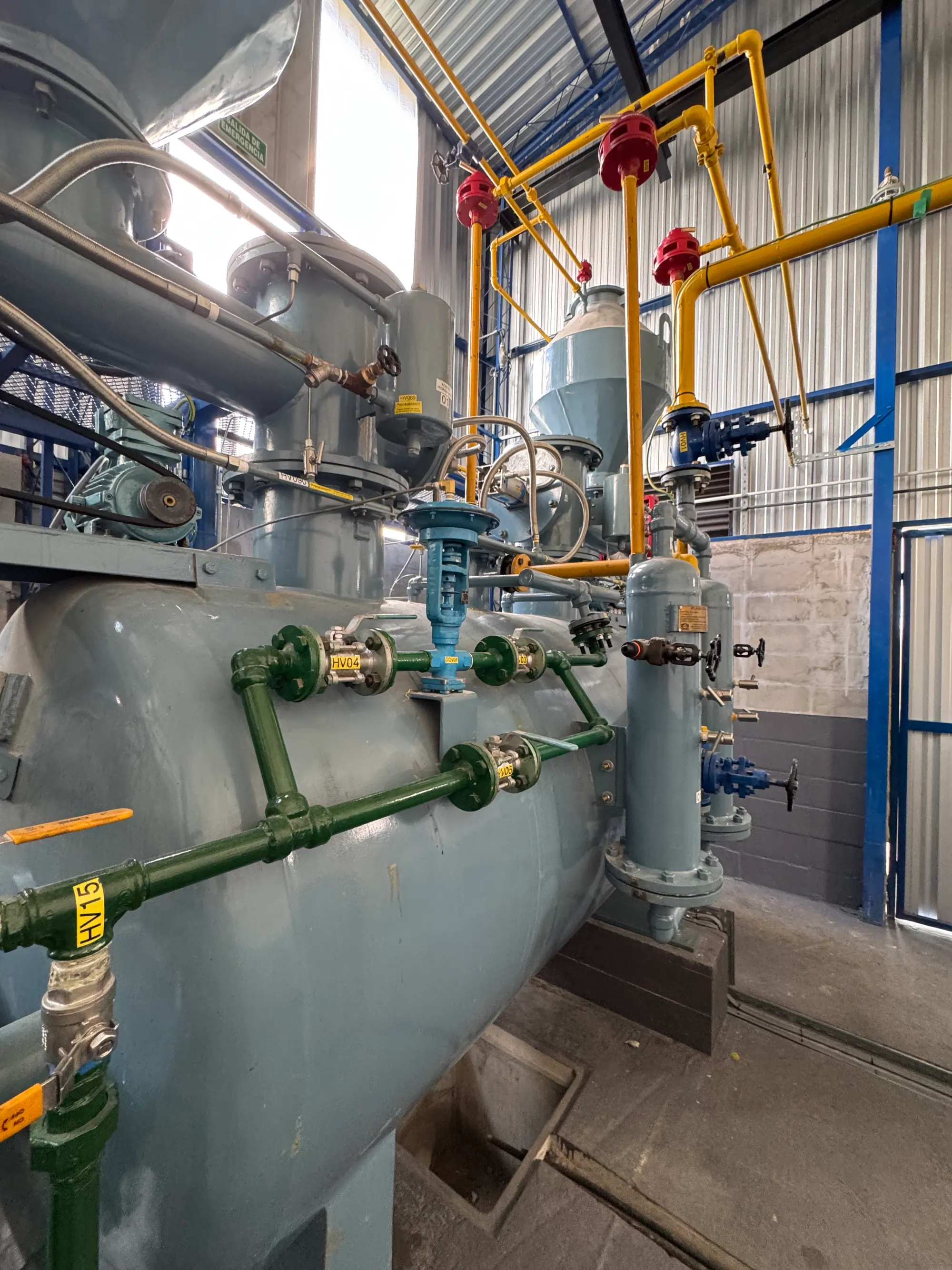
- Griesheim steel-wool event
- Two explosions arrested in a 30 m
- Packed-bed lower critical limit
- Explosion stopped below 5.3 atm in 1.9 cm tubes packed with 1
- Packed-bed upper critical limit
- Explosion passes instantly above 6.9 atm; between the limits decomposition creeps through
- Pulse after a successful quench
- More than 10 atm passed beyond a packed tower; an upstream 10 atm bursting disc cut it to about 3.5 atmg
- Tube bundles
- 1.2 cm tubes in pipes up to 15 cm stopped detonation to 5 atm absolute; no use at 9 atm
An acetylene flashback arrestor is supposed to stop a flame completely. Usually it does. But the research literature contains a failure mode that every plant operator should know: the arrestor appears to work, the bang stops, and minutes later the decomposition, having crept slowly through the packing, ignites the gas on the far side. The best-known case took twenty minutes. Partial success is the dangerous outcome, and it changes what operators should do after any flashback.
What happened at Griesheim?
At the Griesheim works in Germany, steel-wool sponges were fitted as arrestors in an acetylene pipe 30 m long and 20 cm in diameter, working at 6 atm. Twice they arrested explosions. Twenty minutes later a vigorous detonation occurred. The decomposition had passed very slowly through the steel wool, and when it emerged it ignited the acetylene in the rest of the pipe (as compiled by S. A. Miller, 1965).
The same material behaves very differently when confined. Steel-wool plugs only 2.5 cm long, compressed to 75 % porosity, have suppressed detonations at initial pressures of 20–25 atm in 2.5 cm pipe. In a 20 cm pipe at 6 atm, loosely filled, steel wool merely slowed the reaction. The variable is not the material but the confinement, the compression and the size of the passages relative to the flame.
Why is there a dangerous middle ground?
Hölemann and Hasselmann measured it directly (Forschungsberichte des Landes Nordrhein-Westfalen No. 526, 1956). They packed 1.9 cm tubes with 5 and 10 cm lengths of steel shot of 1 and 2 mm diameter and fired acetylene decompositions into them:
| Initial pressure | What the packed layer did |
|---|---|
| Below 5.3 atm | The explosion was stopped |
| Between 5.3 and 6.9 atm | Neither stopped nor passed: decomposition crept through, mostly to methane and unsaturated hydrocarbons rather than hydrogen |
| Above 6.9 atm | The explosion passed through instantaneously |
In the middle regime, the gas in the layer was pushed through by the explosion, the reaction inside the layer was incomplete, and when the decomposition emerged, the acetylene behind the layer exploded with violent pressure effects, followed by secondary decomposition of acetylene left in the packing. Hard brittle packings such as marble were split. The same two critical limits appeared with silicon carbide, petroleum coke, limestone, charcoal, silica gel, coke, cement, pumice, lime, phenolic resin and aluminium powder (Hölemann and Hasselmann, reports No. 383, 1957, and No. 690, 1959).
Three conditions moved the limits the wrong way: a film of oil, wax or water on the packing, which reduced heat transfer; coarse particles; and thin layers. Rough, adherent corrosion films moved them the right way, because they added surface. An arrestor element that is oily, wet, coarse or shallow is closer to the creep regime than the same element clean and deep. See oil, grease and arrestor elements.
Where else does an arrestor only half work?
| Arrangement | Works | Fails | Source |
|---|---|---|---|
| Steel-wool plug, 2.5 cm long, 75 % porosity | 20–25 atm in 2.5 cm pipe | loose steel wool in 20 cm pipe at 6 atm (Griesheim) | as compiled by S. A. Miller (1965) |
| Bundles of 1.2 cm tubes inside pipes up to 15 cm | up to 5 atm absolute | no useful purpose at 9 atm | German plant practice, as compiled by S. A. Miller (1965) |
| Narrow tubes alone | low pressure | detonation observed in 3 mm tubes at 10 atm absolute | as compiled by S. A. Miller (1965) |
| Packed tower, 25 cm, 2.5 cm Raschig rings, 1.2 m | quenched detonations from 180 m of 8 cm pipe at 3 atmg | pressure pulse above 10 atm still passed downstream | Schmidt and Haberl, 1955 and 1956 |
The last row is the second half-success. After the Hüls pipeline explosion of 2 January 1954, Schmidt and Haberl showed that a packed tower repeatedly quenched detonations. But the gas in the long pipe had been heated to about 2,800 °C and raised to 72 atm, and it did not return to ambient at once; a pulse of more than 10 atm passed into the gas beyond the tower even though no explosion occurred there. A bursting disc set at 10 atm on a T-junction near the tower inlet, discharging upwards, cut the pulse to about 3.5 atmg. Arrest and relief work together; neither is enough alone. The packed-tower guide has the design rules, and bursting discs vs flashback arrestors explains why a disc is never an arrestor.
Webster and colleagues added a further warning in 1972 (IChemE Symposium Series No. 33): with strong initiation, detonation propagated at pressures below those needed to sustain a deflagration, and measured terminal pressure ratios exceeded 320 times. A line that is safe against a weak spark may not be safe against the flame front arriving from a decomposing component.
How do the standards guard against it?
Partly, through repetition and margin in testing. IS 11006:2011 cl 11.6 does not accept a single successful arrest: each sample must stop five flashbacks in a static mixture of 32–35 % acetylene in oxygen at its maximum operating pressure, with time allowed between shots for conditions to recover, and the upstream gas must not ignite on any of them. Separately, cl 4.1 requires the casing to withstand ten times its maximum working pressure or 60 bar, whichever is higher. What no type test reproduces is the slow, minutes-long emergence seen at Griesheim, or an element that has become oily, wet or partly blocked in service. That gap is closed only by procedure: isolation, observation and replacement after every event.
Rules that matter
The guidance below is conservative and consistent with IS 14814:2023 and the C.P.I.'s 1968 code. It assumes the arrestor did its job and treats the event as live anyway.
What should operators do after any flashback?
- At the torch close both torch valves at once, in the order the torch maker gives. Historical codes differ: the C.P.I. (1968) specified the acetylene valve first for ignition inside the torch, while some makers specify oxygen first.
- At the supply close the cylinder valve or isolate the line upstream of the arrestor at once. The C.P.I. (1968) required the key or spanner to be on the valve whenever the cylinder is in use, so that this takes seconds.
- Do not reopen to see whether the flame is out Reopening feeds acetylene into a hot or still-reacting element.
- Watch from a distance for heat in the arrestor body or pipe, discolouration, a smell of tar, or rising pressure. Keep people out of the line of the pipework.
- On a plant stop the compressors and generators to cut the supply into the high-pressure system, and use the quick-opening vent valves to release pressure to a safe place outdoors, as the C.P.I. recommends.
- Before restart inspect and test the installation. The C.P.I. set the trigger deliberately low: an explosion that has occurred, or is believed to have occurred.
- Replace the arrestor An element that has stopped a flame is fouled, and a temperature cut-off that has operated cannot be reset under IS 11006:2011 cl 10.5.
If an acetylene cylinder feels warm after a flashback, treat it as a cylinder incident and follow the cylinder fire guide.
Rules that matter
What this means for you
- An arrestor that has stopped a flame is a warning, not an all-clear.
- Keep elements deep, clean and dry, and fit them where the pipe is narrow; packing in wide pipes at higher pressure is the creep regime.
- In large pipelines, pair arrestors with upstream relief.
- Replace after every flashback, and record it. For the mechanism behind all of this see how a flashback arrestor works and acetylene decomposition.
— frequently asked questions
Why can an acetylene arrestor fail minutes after it has stopped a flashback?
Because a packed element can slow a decomposition instead of stopping it. Between two critical pressures, measured by Hölemann and Hasselmann in 1956 at 5.3 and 6.9 atm for steel-shot packing, the reaction creeps through the bed, mainly forming methane, and when it emerges it can ignite the acetylene beyond with violent pressure effects. The delay can be many minutes.
What happened at Griesheim?
Steel-wool arrestors in a 30 m acetylene pipe of 20 cm diameter at 6 atm twice stopped explosions. Twenty minutes later a vigorous detonation occurred: the decomposition had crept very slowly through the steel wool and, on emerging, ignited the rest of the pipe. The same material works in narrow pipe; confinement and compression decide the result.
How long should I wait after a flashback before going near the equipment?
No standard sets a time. The safe rule is to treat the line as live until the gas supply is isolated upstream, pressure is steady or falling, and the arrestor body and pipe have returned to ambient temperature. Approach only when all three are true, and replace the arrestor before the line is used again.
Does a quenched detonation still damage equipment downstream?
It can. In the tests by Schmidt and Haberl after the 1954 Hüls incident, a packed tower quenched detonations from a long 8 cm pipe, but the gas behind it had been heated to about 2,800 °C and 72 atm and a pressure pulse above 10 atm passed beyond the tower. An upstream bursting disc reduced it to about 3.5 atmg.
Does oil or water on an arrestor element make creeping more likely?
Yes. Hölemann and Hasselmann found that coating the packing with a film of oil, wax or water somewhat favoured passage of the explosion by reducing heat transfer, while rough adherent corrosion films hindered it. Coarse particles and thin layers also lowered the quenching limits. A contaminated or shallow element is closer to the creep regime.
What should I do if the acetylene cylinder feels warm after a flashback?
Close the cylinder valve at once, keep people away, and follow the emergency procedure for a heated cylinder, applying water from a safe distance and calling the fire service. A warm cylinder after a flashback can mean decomposition inside. See the KIGL guide to acetylene cylinder fires before any cylinder is moved or reused.
References
- Bureau of Indian Standards. (2023). Acetylene — Code of Safety (IS 14814:2023, First Revision).
- European Industrial Gases Association. (n.d.). Code of Practice: Acetylene (EIGA Doc 123). https://www.eiga.eu/uploads/documents/DOC123.pdf
- Petroleum and Explosives Safety Organisation. (n.d.). Petroleum and Explosives Safety Organisation. Government of India.
- Webster and colleagues, The Explosive Decomposition of Acetylene in Pipelines, IChemE Symposium Series No. 33, 1972 https://www.icheme.org/media/10611/iv-paper-08.pdf
Enquiries
Request a quotation
State the gas or equipment, the quantity or capacity, and your location. KIGL will confirm the grade, the cylinder or plant size, and whether the location can be served from Noonmati, or through the agent network.