
Guide
Choosing a flashback arrestor: position gas, pressure rating, flow capacity and the right standard
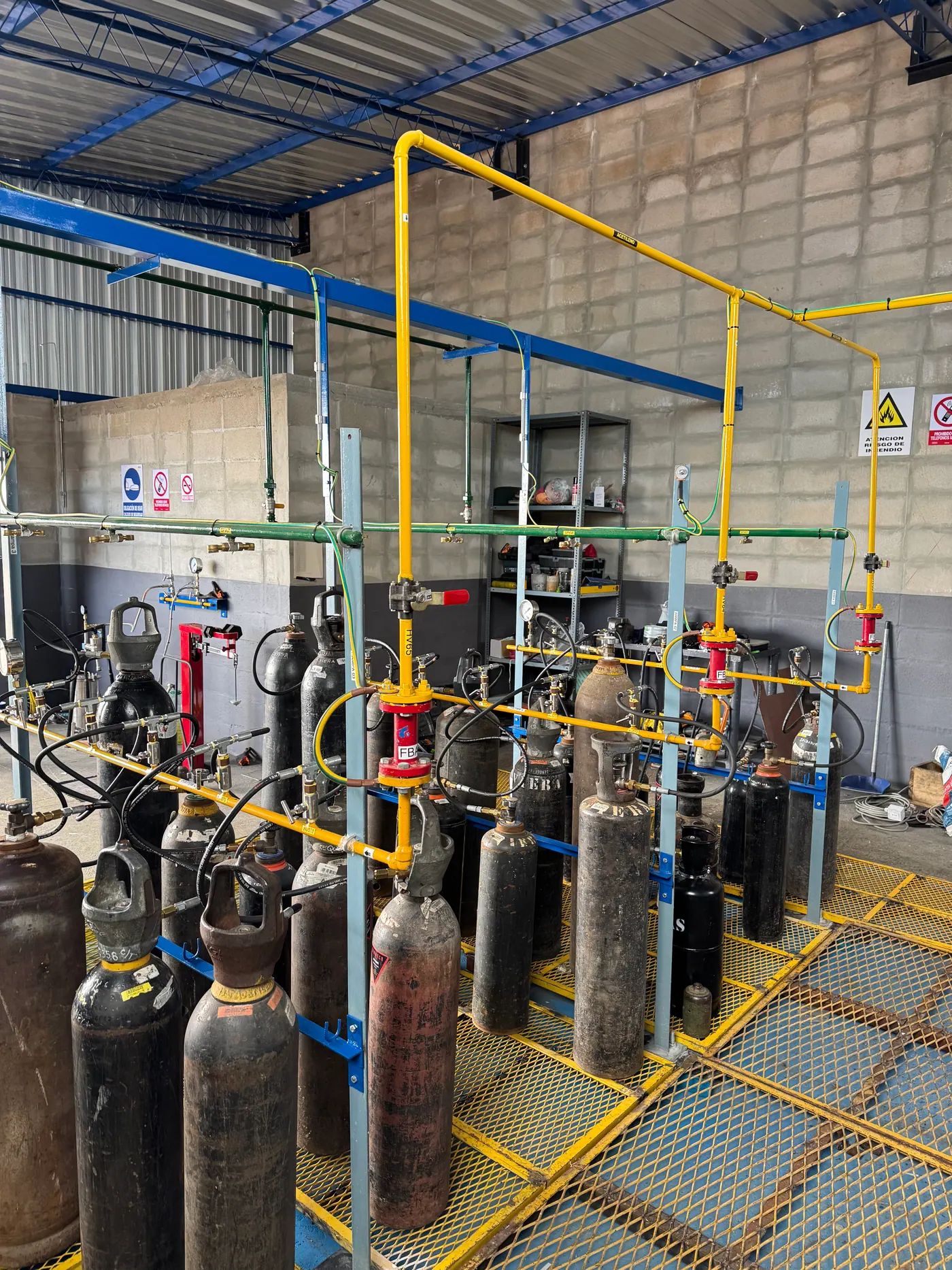
Flashback arrestor selection starts with position: torch inlet, regulator outlet, pipeline point, manifold lead or generator outlet. Then match the marked gas, a maximum operating pressure of normally 1.5 bar for acetylene, and a rated flow measured at 10 % pressure drop under IS 11006:2011, with flame arrestor and non-return functions as the minimum.
- How rated flow is defined
- Flow in m³/h at maximum operating pressure with a pressure drop of 10 % of that pressure
- Acetylene service rating
- 1.5 bar is the common maximum operating pressure for acetylene arrestors; oxygen devices typically 10 bar
- Free-state acetylene in India
- Normally 0.612 atm; up to 1.021 atm only with clearance from the Chief Controller of Explosives
- Air-to-acetylene flow factor
- 1.04
- BIS licences
- Only 5 BIS licences exist against IS 11006 nationally; the Standard Mark is optional
Choosing a flashback arrestor means matching five things to the duty: where it sits in the gas system, which gas it carries, the maximum operating pressure, the flow the torch or process needs at an acceptable pressure drop, and the standard it is certified to. Get the position and the gas right first; most failures in the field come from a device that is missing, in the wrong place or built for a different gas, not from one that is slightly undersized.
Where in the system will the arrestor sit?
The product standards say what a compliant device is; they do not say where to put it. ISO 5175-1:2017 states plainly that it "does not specify the location of these devices in the gas system". Siting comes from installation codes and good practice, and the positions are distinct:
| Position | What it protects | Typical device | Governing reference |
|---|---|---|---|
| Torch (blowpipe) inlet | The hose, from a flame leaving the torch | Compact dry arrestor with non-return valve | IS 11006:2011; ISO 5175-1:2017 |
| Regulator outlet | Regulator, cylinder or pipeline, from a hose flashback | Dry F + N, often with T and P cut-offs | IS 11006:2011; ISO 5175-1:2017 |
| Pipeline outlet point and branches | The distribution main, from a workstation | Larger station arrestor | IS 15190 (Part 1):2002 cl 4.12.1.2 |
| Cylinder manifold and leads | Cylinders from each other, and the header | Arrestor with non-return valve per lead; three in series per manifold | IS 15190 (Part 2):2002 cl 8.2, 8.6 |
| Generator outlet, gasholder, booster | Generator and gasholder, from a downstream flame | Wet (hydraulic) arrestor or packed tower | IS 8471:2003 cl 12.8; IS 11006:2011 |
For portable oxy-fuel sets the nearest thing to consensus is an arrestor on both hoses at both ends. WorkSafe ACT, citing AS 4839-2001, recommends regulator and torch protection on oxygen and fuel; an Oregon OSHA rule requires a backflow or flashback device on each hose, fuel and oxygen, between hose and torch. The low-pressure and generator positions are covered in the guides to wet arrestors and packed towers.
Which gas, and what pressure rating?
Arrestors are built and tested for a specific gas. IS 11006:2011 cl 14 requires the body to carry the gas abbreviation (A acetylene, O oxygen, P LPG or propane, H hydrogen, M methane or natural gas), the maximum operating pressure in bar, the flow direction, a serial number and the safety functions. An optional band is red for fuel gases, blue for oxygen and black for others. Never fit an oxygen device on a fuel line or the reverse.
For acetylene the published device ratings converge on 1.5 bar: GCE and Wilhelmsen/Unitor publish 1.5 bar, and Witt publishes 22 psi, which is 1.52 bar. That is a ceiling for the device. Indian practice is stricter for the gas itself: IS 14814:2023 cl 7.2.1 permits free-state acetylene normally at 0.612 atm, and up to 1.021 atm only with clearance from the Chief Controller of Explosives. Two further limits on scope matter: ISO 5175-1 does not cover devices for premixed oxy-fuel or air-fuel supplies, nor electrolytic hydrogen-oxygen generators, and a device certified to it must not be sold into those duties.
How much flow do you need?
IS 11006:2011 cl 10.6 defines the rated flow of an arrestor as the flow in m³/h at maximum operating pressure with a pressure drop across the device of 10 % of that pressure. Cl 11.9 makes the manufacturer measure flow and pressure drop at 0.25, 0.5, 0.75 and 1.0 of maximum operating pressure on five samples, with no more than 10 % spread between them. Ask for that curve, not a single number.
Flow is normally measured on air and converted to the service gas. Two unrelated manufacturers publish identical factors:
| Gas | Factor (air flow × factor) |
|---|---|
| Acetylene | 1.04 |
| Propane / LPG | 0.80 |
| Natural gas | 1.25 |
| Methane | 1.33 |
| Oxygen | 0.95 |
| Hydrogen | 3.75 |
Acetylene devices look heavily derated against oxygen devices of the same size: one maker's regulator-outlet unit is rated 10 m³/h on acetylene and 95 m³/h on oxygen, mainly because acetylene is limited to 1.5 bar and oxygen is not. An undersized arrestor starves the torch, and a starved torch is a cause of the backfire the arrestor was bought to contain. The pressure drop and flow capacity guide works through the numbers; for cylinder draw limits see the one-seventh rule.
Which safety functions?
The minimum for oxy-fuel work is a flame arrestor (F) with a non-return valve (N). A temperature-sensitive cut-off (T) shuts the gas off if a flame keeps burning on the element; under IS 11006 cl 10.5 it cannot be reset, so a tripped device is replaced. A pressure-sensitive cut-off (P) closes on the pressure wave from downstream and must act at or below 1,200 mbar (cl 11.8). An inlet filter protects the element from scale and dust. IS 11006:2011 Table 1 lists five combinations; every one except the plain arrestor is built on a non-return valve.
Rules that matter
Which certificate counts where?
- India IS 11006:2011. The BIS Standard Mark is optional (cl 14.2), and only five BIS licences exist against the standard nationally. IS 11006 is an indigenous text with no cross-referenced international standard.
- Europe and the UK EN ISO 5175-1:2017 and -2:2017, which replaced EN 730-1 and -2 in December 2017. Type-test certificates from German bodies such as IBExU and BAM are the norm.
- Australia AS 4603-1999, which WorkSafe ACT describes as mandatory.
- United States no single mandatory device standard; OSHA 29 CFR 1910.253 and NFPA 51 govern use, and UL listing is the market signal.
A datasheet that still cites ISO 5175:1987 or EN 730-1:2002, both withdrawn in 2017, is out of date.
Materials and construction
IS 11006:2011 requires a non-fragmenting casing of forged, carbon or alloy steel, cast stainless steel, or forged or extruded non-ferrous metal, with a corrosion allowance where corrosion cannot be avoided. Cl 3.2 still permits compressed asbestos fibre gaskets; specify spiral-wound metal or a compatible synthetic rubber instead. On copper, the Indian limits differ by component: Gas Cylinders Rules 2016 Rule 37(v) allows up to 70 % in cylinder valves, IS 15190 (Part 2):2002 cl 6.2 requires under 65 % for high-pressure piping, and IS 14814:2023 cl 7.3.4 says copper and copper-alloy fittings should not be used. Ask the supplier for the body alloy and its copper content. Oxygen devices must be supplied clean for oxygen service, and a device that has been used on compressed air must not be moved to oxygen.
Rules that matter
What to ask a supplier
- Which standard, edition and functions does the marking state, and is there a BIS licence or third-party certificate number?
- What is the maximum operating pressure for my gas, and what is the flow at 10 % pressure drop at my working pressure?
- Is the temperature cut-off non-resettable, and does the device show when it has tripped?
- What is the body alloy and copper content, and what are the gaskets made of?
- Does it carry a serial number and a date of manufacture, and what inspection interval and service life do you recommend?
Rules that matter
Rules to apply
- Choose by position and gas first, then pressure, then flow.
- Insist on a flame-arrestor element; a non-return valve alone is not protection.
- Size on the IS 11006 flow curve with margin, never on hose size.
- Keep a register of every arrestor by serial number and installation date; IS 11006 does not require a date of manufacture to be marked.
- For the KIGL range see flash-back arrestors and the standards page.
Choosing — frequently asked questions
Do I need a flashback arrestor at both the torch and the regulator?
For full protection, yes. Australian guidance under AS 4839-2001 recommends arrestors at both the regulator and the torch on both the oxygen and the fuel line, four devices on a two-gas rig. The regulator-end device protects the regulator and cylinder; the torch-end device protects the hose. Oregon OSHA likewise requires a device on each hose, fuel and oxygen.
Can I use an oxygen flashback arrestor on an acetylene line?
No. Arrestors are gas-specific. IS 11006:2011 requires the gas to be marked on the body, A for acetylene and O for oxygen, and the flashback type test uses a gas-specific mixture, 32–35 % acetylene in oxygen for acetylene devices. An optional colour band, red for fuel gases and blue for oxygen, helps prevent mix-ups on site.
What pressure rating should an acetylene flashback arrestor have?
Arrestors for acetylene are normally rated to a maximum operating pressure of 1.5 bar, which several manufacturers publish independently. In India, IS 14814:2023 limits the use of free acetylene to 0.612 atm, or 1.021 atm with clearance from the Chief Controller of Explosives, so the arrestor's rating is a ceiling for the device, not permission to run at that pressure.
What does the marking A D F N on a flashback arrestor mean?
It is two codes from two different annexes of IS 11006:2011, which the standard itself writes as **A DFN**. The leading letter is the gas, from Annex A: A for acetylene, O for oxygen, H for hydrogen, P for LPG or propane. The letters after it are the safety functions, from Annex B: D for dry type (W for wet), F for flame arrestor, N for non-return valve, T for a temperature-sensitive cut-off and P for a pressure-sensitive cut-off. Read the first letter against Annex A and the rest against Annex B, because **D means compressed air in Annex A and dry type in Annex B**, and P means propane in one and pressure-sensitive cut-off in the other. European makers use two-letter codes such as FA, NV, TV and PV for the same functions, so an imported device will look different even if it does the same job.
Is an EN ISO 5175-1 certificate valid for India?
It is evidence of a tested design, but it is not the Indian standard. IS 11006:2011 is an indigenous text with no cross-referenced international standard, so its clauses and tests do not map onto EN ISO 5175-1. A claim of IS 11006 conformity needs its own test programme. Equally, an IS 11006 device needs EN ISO 5175-1 testing to sell in Europe.
How do I size a flashback arrestor for a cutting torch?
Find the torch's maximum fuel and oxygen consumption at the nozzle size you use, then pick an arrestor whose rated flow, defined in IS 11006 at a 10 % pressure drop, is comfortably above it at your working pressure. An undersized arrestor starves the torch, which raises the risk of backfire. Where several torches share a line, size for their combined peak demand.
Are LPG flashback arrestors different from acetylene ones?
Yes. IS 11006:2011 type-tests LPG devices with 13–15 % propane in oxygen and acetylene devices with 32–35 % acetylene, at each device's own maximum operating pressure. Ratings differ, and flow factors differ: 0.80 for propane against 1.04 for acetylene on the same air-calibrated curve. Buy the arrestor marked for the gas you actually use.
References
- Bureau of Indian Standards. (2011). Flash Back Arrestor (Flame Arrestor) — Specification, Bureau of Indian Standards (full text) (IS 11006:2011, First Revision).
- Bureau of Indian Standards. (2023). Acetylene — Code of Safety (IS 14814:2023, First Revision).
- International Organization for Standardization. (2017). Safety devices incorporating a flame (flashback) arrestor (ISO 5175-1:2017).
- Petroleum and Explosives Safety Organisation. (n.d.). Petroleum and Explosives Safety Organisation. Government of India.
- WorkSafe ACT, Flashback arrestors (AS 4603-1999 and AS 4839-2001 guidance) https://www.worksafe.act.gov.au/health-and-safety-portal/safety-by-industry/building-and-construction/flashback-arrestors
Enquiries
Request a quotation
State the gas or equipment, the quantity or capacity, and your location. KIGL will confirm the grade, the cylinder or plant size, and whether the location can be served from Noonmati, or through the agent network.