
Standards · IS 309 · IS 7285 (Part 1):2018 · IS 3224:2021
IS 309 and IS 7285: the standards for industrial oxygen in India
Industrial oxygen in India is specified by IS 309, filled into seamless steel cylinders to IS 7285 Part 1, valved to IS 3224, charged under IS 15975 and requalified every 5 years under IS 8451. Medical oxygen adds a pharmacopoeial specification and a pin-index valve to IS 3745.
- Gas specification
- IS 309
- Cylinder construction
- IS 7285
- Valve
- IS 3224:2021
- Filling conditions
- IS 15975:2020
- Periodic inspection
- IS 8451:2018
The five standards, and what each one covers
Oxygen is the most widely used industrial gas in India and the one with the longest chain of standards behind it. Unlike acetylene, which needs its own separate cylinder standard, oxygen sits in the mainstream: the same cylinder and valve standards cover most compressed gases.
IS 309 — the gas
The Indian Standard specification for industrial oxygen. This is the code quoted on tenders and purchase specifications, and the one an industrial customer is buying against.
IS 7285 (Part 1):2018 — the cylinder
Refillable seamless steel cylinders, normalized, 0.5 to 400 litres water capacity, covering compressed, liquefied and dissolved gases. This is the standard behind the ordinary oxygen cylinder. Part 2 covers quenched and tempered seamless steel below 1100 MPa tensile; above that, IS/ISO 9809-2 applies. Larger vessels have their own codes — IS/ISO 11120 for tubes from 150 to 3000 litres, IS 16507 for cascades.
IS 3224:2021 — the valve
The valve standard for compressed gas cylinders excluding LPG, up to 1000 litres, now in its fourth revision. It is the valve standard for industrial, medical and dissolved gases alike. Taper threads are checked against IS 7202, IS 9122 or IS 15894 depending on the form. Residual pressure valves add IS 18272:2023 on top.
IS 15975:2020 — the filling
Conditions for filling gas cylinders: charging pressure, filling ratios, minimum test pressure. This is the standard that converts a cylinder size and a pressure into a lawful quantity of gas, and it is what a filling station works to. IS 16050:2020 covers the inspection carried out at the time of filling — with acetylene explicitly excluded, which is why acetylene has its own IS 16271.
IS 8451:2018 — the retest
Periodic inspection of seamless steel cylinders, as a code of practice. Group practice is a five-year cycle for oxygen and other compressed gases, against two years for dissolved acetylene.
Above all of them sit the Gas Cylinders Rules, 2016, administered by PESO. The Indian Standards describe how; the Rules are where the legal obligation lives.
Medical oxygen is a different regime
This is the distinction that causes the most confusion, so it is set out explicitly.
Industrial oxygen is specified by IS 309, in a cylinder to IS 7285, valved to IS 3224.
Medical oxygen is a drug. It is specified by the Indian Pharmacopoeia monograph rather than IS 309, it requires a drug licence to manufacture, it is filled under a separate set of controls, and it carries a yoke-type pin-index valve to IS 3745:2024 — a physically different connection, rated at 200 bar at 15 °C, deliberately incompatible with industrial equipment.
The pin-index system exists precisely so that a cylinder cannot be connected to the wrong apparatus. That incompatibility is not an inconvenience to be engineered around with an adaptor; it is the entire safety mechanism. See medical oxygen for what we supply against it.
Rules that matter
Oxygen does not burn. It makes other things burn, and it does so at a violence that has no equivalent in normal experience.
In a high-pressure oxygen system, hydrocarbon contamination — oil, grease, solvent residue, a fingerprint from an oily glove — can ignite from the heat of compression alone. No spark. No external flame. Simply opening a valve quickly against a closed downstream can raise the gas temperature enough to start it. The resulting fire burns the metal of the fitting.
The practical consequences:
The oil and grease rule
- Never lubricate an oxygen regulator, valve, or fitting. Not with grease, not with oil, not with PTFE tape unless it is specified for oxygen service.
- Open cylinder valves slowly, so that pressure downstream rises gradually rather than in a shock.
- Keep degreased equipment separate. Once an oxygen regulator has been used on another service or handled with oily hands, it is no longer clean.
- Do not use oxygen to blow down, ventilate, cool, or drive tools. Oxygen enrichment in a confined space turns ordinary clothing into something that burns fiercely and is very hard to put out.
Reading a cylinder correctly
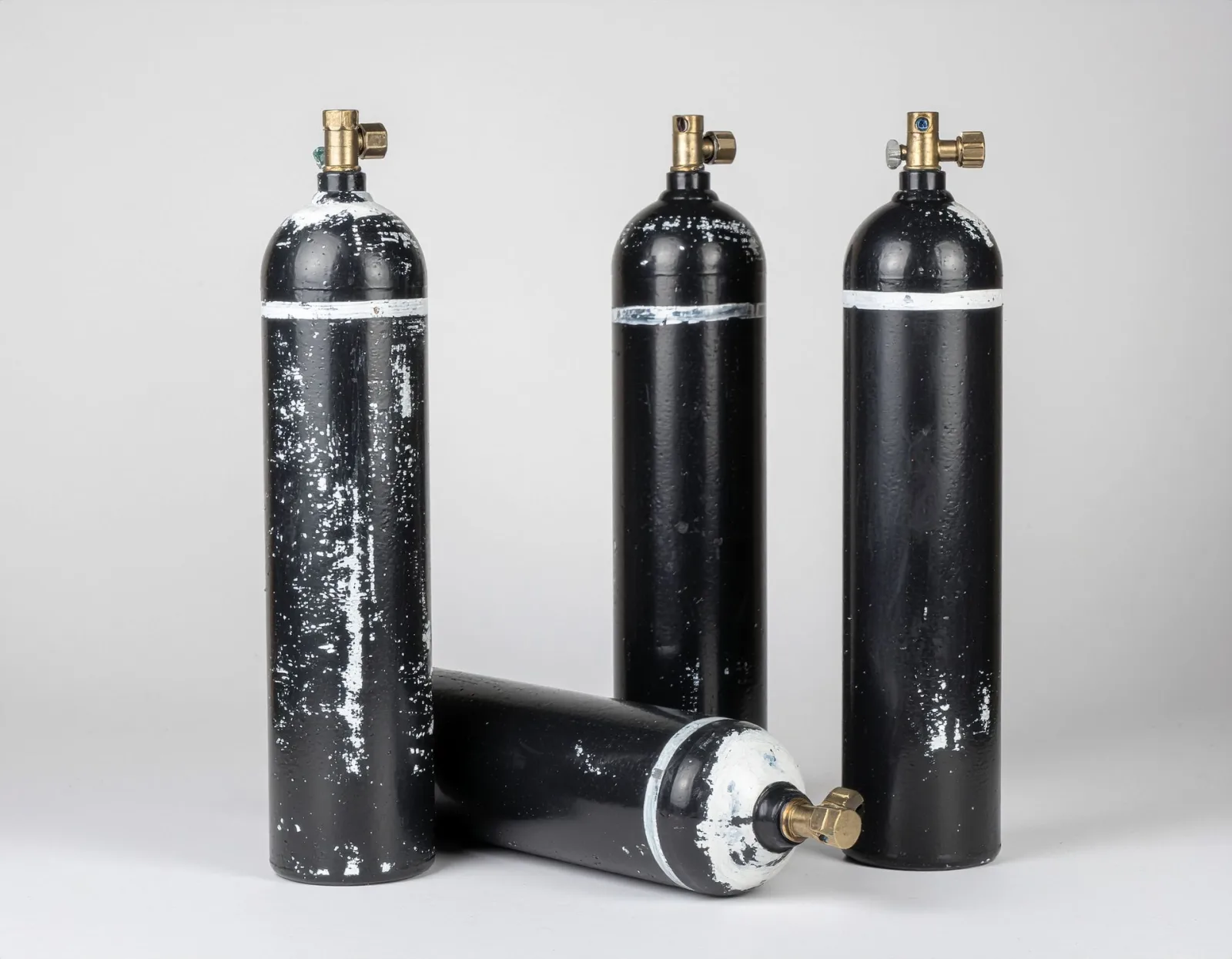
Under IS 4379:1981, an industrial oxygen cylinder in India carries a black ground colour with no neck band. So does carbon dioxide — separated only by CO₂'s white or aluminium band, which fades and gets overpainted.
That shared black body is why the discipline on an oxygen cylinder is the same as on any other: the stamped marking on the shoulder, then the label, then the colour. Colour tells you where to look. The stamping tells you what it is, which standard it was built to, its working and test pressure, and when it was last requalified.
What KIGL fills against
We fill industrial oxygen against IS 309 at our Guwahati works, into cylinders built and requalified to the standards above, with the fill record and test date held against each cylinder’s individual serial number. See industrial oxygen for supply detail, and the standards index for the rest of the cluster.
These pages are not the official text. BIS holds copyright to the Indian Standards and sells the authoritative version, which is the only document that counts for compliance. Nothing here overrides the Gas Cylinders Rules, your PESO licence, or your own written procedures.
IS 309 — specification
| Property | Value | Method / basis |
|---|---|---|
| Gas specification | IS 309 | Industrial oxygen |
| Cylinder construction | IS 7285 (Part 1):2018 | Seamless steel, normalized, 0.5–400 L |
| Cylinder construction (alternative) | IS 7285 (Part 2):2017 | Seamless steel, quenched and tempered, tensile <1100 MPa |
| Valve | IS 3224:2021 | Compressed gas cylinder valve, excluding LPG, ≤1000 L |
| Valve (medical service) | IS 3745:2024 | Yoke-type pin-index medical valve, 200 bar at 15 °C |
| Filling conditions | IS 15975:2020 | Charging pressure and filling ratios |
| Inspection at filling | IS 16050:2020 | Inspection at time of filling (excludes acetylene) |
| Periodic inspection | IS 8451:2018 | Code of practice, seamless steel cylinders |
| Cylinder colour | Black, no band | IS 4379:1981 |
IS 309 — frequently asked questions
What is the difference between IS 309 and the medical oxygen specification?
IS 309 is the Indian Standard for industrial oxygen. Medical oxygen is a licensed drug and is specified by the Indian Pharmacopoeia monograph instead, with tighter limits on carbon monoxide and carbon dioxide, a manufacturing licence behind it, and a pin-index valve to IS 3745 so it cannot be connected to industrial equipment. They are different products with different paperwork, not two grades of the same thing.
How often does an oxygen cylinder have to be retested?
Five years in group practice under IS 8451, against two years for dissolved acetylene. The statutory position sits in the Gas Cylinders Rules and in the conditions of your PESO licence, so confirm the interval that applies to you rather than relying on the general figure. An overdue cylinder must not be filled and should not be accepted on site.
Why is oil and grease such a serious issue with oxygen?
Because oxygen does not burn — it makes everything else burn, and hydrocarbons in an oxygen-enriched, high-pressure system can ignite from the heat of compression alone, with no spark and no flame anywhere near them. This is why oxygen regulators, valves and fittings are degreased to a specification, why they must never be lubricated, and why oily gloves are a genuine hazard rather than a housekeeping complaint.
Which cylinder standard applies — IS 7285 Part 1 or Part 2?
Part 1 covers refillable seamless steel cylinders in the normalized condition, from 0.5 to 400 litres water capacity, and is the usual answer for oxygen. Part 2 covers quenched and tempered seamless steel below 1100 MPa tensile strength. Higher-strength seamless steel above that threshold falls under IS/ISO 9809-2 instead. The cylinder itself is stamped with the standard it was built to.
Can I use the same valve for oxygen and for other gases?
IS 3224 is the valve standard for compressed gas cylinders other than LPG, so it covers oxygen alongside most industrial and medical gases — but the outlet connection and thread form differ by gas deliberately, so that equipment cannot be cross-connected. Never adapt a connection to make a fitting work. The incompatibility is the safety feature.
What pressure are oxygen cylinders filled to?
Charging pressure and filling ratios are set by IS 15975, and the cylinder’s own stamped working and test pressures govern what may be put into that particular cylinder. Do not infer a fill pressure from another cylinder of the same size — read the stamping.
Why are oxygen and carbon dioxide cylinders the same colour?
Both carry a black ground colour under IS 4379:1981, separated only by a white or aluminium neck band on the carbon dioxide cylinder. It is the most dangerous ambiguity in the Indian colour scheme and the reason the stamped marking, not the paint, is the identification that counts. Our cylinder colour codes page covers this in full.
Enquiries
Request a quotation
State the gas or equipment, the quantity or capacity, and your location. KIGL will confirm the grade, the cylinder or plant size, and whether the location can be served from Noonmati, or through our agent network.