
Guide
Types of industrial gas plants: how acetylene PSA, air separation, CO₂, nitrous oxide and hydrogen plants work, and what each contains
Industrial gas plants fall into seven types: carbide acetylene plants, PSA oxygen and PSA nitrogen plants, cryogenic air separation units, carbon dioxide recovery plants, nitrous oxide plants and hydrogen plants by electrolysis or reforming. PSA oxygen tops out near 95 % because argon passes through the sieve; only cryogenic plants make liquid gases.
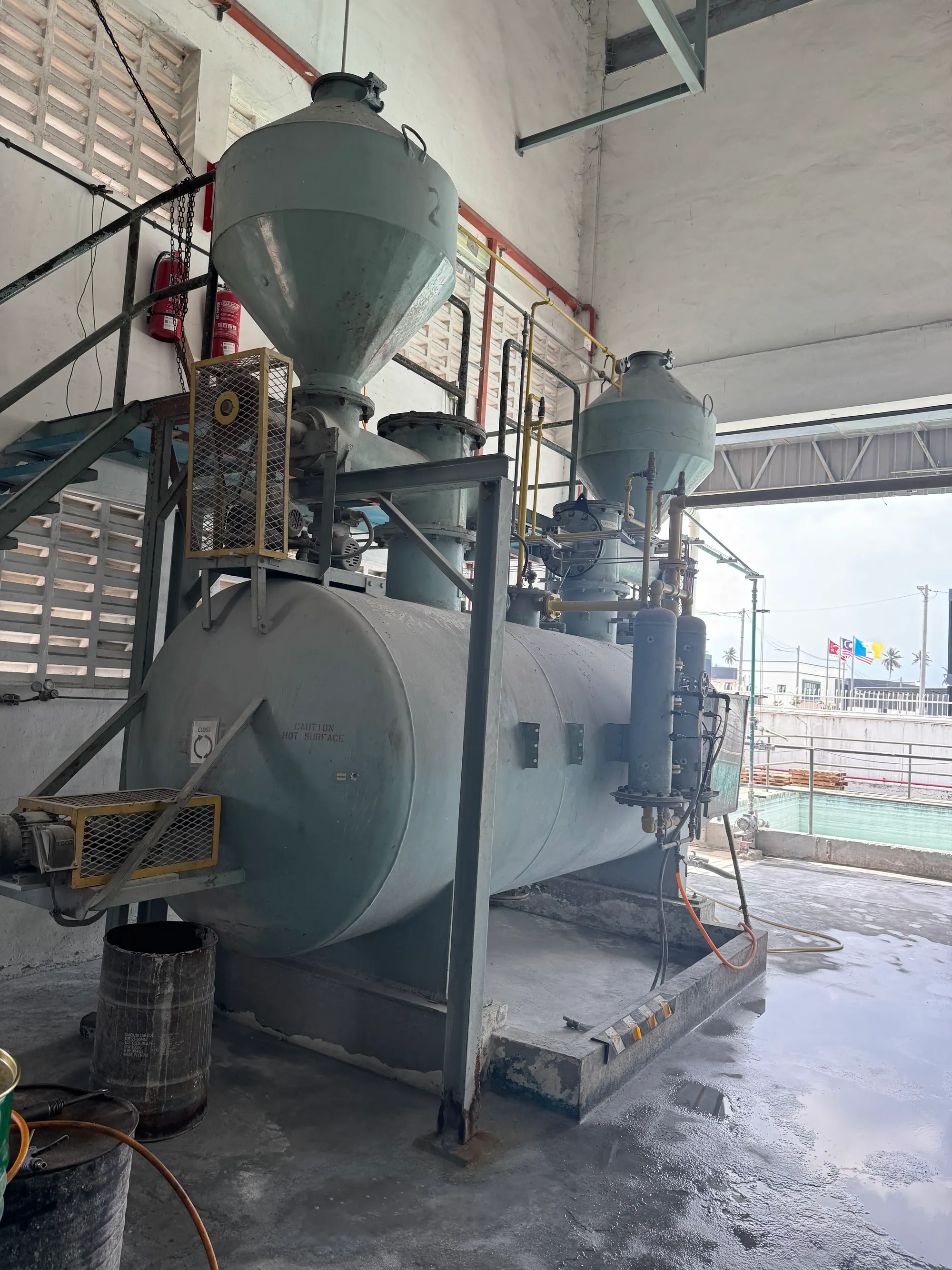
- KIGL acetylene plant range
- KIGL-DA-25
- PSA oxygen ceiling
- About 95.7 % if every trace of nitrogen were removed
- Boiling points at 1 atm
- Nitrogen −195.80 °C
- Electrolysis energy floor
- 39.4 kWh per kg of hydrogen on the enthalpy of liquid water
- Critical temperatures
- Carbon dioxide 31.0 °C at 73.8 bar; nitrous oxide 36.4 °C; both are liquefied for storage and sold by weight
An industrial gas plant either separates a gas from a mixture that already contains it, or makes it by a chemical reaction. Air separation plants, cryogenic or PSA, are the first kind; acetylene, nitrous oxide and most hydrogen plants are the second; carbon dioxide plants sit between, recovering a gas another process has already made. The type decides the purity you can reach, whether you get liquid or only gas, and what equipment you have to run.
The seven types at a glance
| Plant | Feed | How it works | Product | Liquid output | KIGL builds |
|---|---|---|---|---|---|
| Acetylene (carbide) | Calcium carbide and water | CaC₂ + 2H₂O → C₂H₂ + Ca(OH)₂, then cooling, purification, drying, compression into acetone-filled cylinders | Dissolved acetylene to IS 308:2024 impurity limits | No | Yes, 25, 50 and 100 Nm³/h |
| PSA oxygen | Compressed air | Zeolite adsorbs nitrogen under pressure; two beds alternate | 93 to 95 % oxygen, balance mostly argon | No | Yes |
| PSA nitrogen | Compressed air | Carbon molecular sieve takes up oxygen faster than nitrogen | 95 % to 99.999 %, specified as residual oxygen | No | Yes |
| Cryogenic air separation | Compressed air | Liquefaction and distillation on boiling-point differences | Oxygen, nitrogen and argon, gas and liquid | Yes | No |
| Carbon dioxide recovery | Fermentation, ammonia, hydrogen or kiln gas | Scrubbing, compression, carbon treatment, drying, liquefaction | Liquid CO₂ to IS 307:2024 | Yes | No |
| Nitrous oxide | Ammonium nitrate | Controlled thermal decomposition, scrubbing, liquefaction | Liquefied N₂O, medical or industrial | Yes | No |
| Hydrogen | Water, or natural gas and steam | Electrolysis, or steam reforming with shift and PSA purification | Compressed hydrogen to IS 1090:2002 | No, at this scale | No |
Acetylene plants: making a gas by reaction
A carbide acetylene plant is the only common gas plant that makes its product from a solid. Calcium carbide fed into water gives acetylene and lime; at 0 °C and 1 atm a kilogram of pure carbide would give about 347 litres of gas, a figure that follows from its molar mass of 64.1 g/mol and the measured density of acetylene, 1.17167 kg/m³ (Bottomley, Reeves and Seitlow). Commercial carbide gives less, and the detail is on how acetylene is made from calcium carbide.
KIGL builds three sizes, the KIGL-DA-25, DA-50 and DA-100, rated at 25, 50 and 100 Nm³/h, with generation held between 0.2 and 0.92 kg/cm²g and a 70 °C gas temperature ceiling. The equipment, in process order:
- carbide hoppers and screw feed;
- a carbide-to-water generator with agitator, sludge drain, level and temperature alarms;
- wet flashback arrestors at the generator outlet;
- a cooler and a chemical purifier, with a standby purifier;
- a low-pressure drier, the acetylene compressor and high-pressure driers;
- the cylinder filling manifold with flashback arrestors and non-return valves;
- lime sludge pits and the carbide store.
The generator is governed by IS 8471:2003, whose clause 11.5 caps the water-seal relief at twice the maximum working pressure or 152 kPa, whichever is lower. The plant needs a Chief Controller of Explosives generator approval in Nagpur, and PESO's licensing guidelines fix its distances: 15 m to the boundary, 30 m to an oxygen plant and 90 m to any air compressor intake. Sizing against cylinder demand is covered on sizing an acetylene plant, and the plants themselves on KIGL acetylene gas plants.
Rules that matter
Pressure swing adsorption passes compressed air through a bed of adsorbent at pressure, then drops the pressure to release what the bed has held. Two beds alternate so the product flow is continuous; the detail is on how PSA oxygen generation works.
An oxygen plant uses a zeolite that holds nitrogen. Argon is not held, so it travels with the oxygen. With dry air at 20.95 % oxygen and 0.93 % argon (U.S. Standard Atmosphere 1976), removing every molecule of nitrogen would leave 20.95 / (20.95 + 0.93) = 95.7 % oxygen. That is why a PSA oxygen plant delivers 93 to 95 % and never 99.5 %: the ceiling is set by air, not by the machine.
A nitrogen plant uses a carbon molecular sieve that separates on speed: oxygen diffuses into the pores faster than nitrogen, so nitrogen passes as product. Purity is quoted as residual oxygen and can be set anywhere from about 95 % to 99.999 %, but the air demand and plant size climb steeply with each step, as choosing PSA nitrogen purity explains.
A PSA plant contains:
PSA oxygen and nitrogen: separating air at room temperature
- an oil-free or well-filtered air compressor and air receiver;
- refrigerated or desiccant dryer and coalescing and carbon filters;
- twin adsorber vessels with the switching valves and their controller;
- a product buffer vessel, purity analyser and flow control;
- for cylinder filling, a booster compressor and filling manifold.
There is no Indian plant standard for PSA. BIS committee CHD 06 writes the gas specifications and the IS/ISO 8573 compressed-air purity classes, not plant standards, so a buyer specifies the product grade, such as IS 1747:2023 N 2.5 at 99.5 % minimum, the feed-air quality and the vessel code. KIGL's ranges are on the PSA oxygen plant and PSA nitrogen plant pages.
Rules that matter
A cryogenic air separation unit cools air until it liquefies and distils it. The order of operations is fixed by physics:
Cryogenic air separation: the only route to liquid
- compress the air and remove water and carbon dioxide in a molecular-sieve pre-purifier, since both would freeze solid in the cold box;
- cool the air against the outgoing products in the main heat exchanger;
- expand part of the stream through a turbine to provide refrigeration;
- distil in a double column, with nitrogen, the most volatile, rising and oxygen collecting at the bottom;
- draw argon from the middle of the column, where its concentration peaks, and purify it separately.
The column works on boiling points at 1 atm of −195.80 °C for nitrogen, −185.85 °C for argon and −182.96 °C for oxygen (NIST Chemistry WebBook). A 12.8 °C spread between nitrogen and oxygen, and only 2.9 °C between argon and oxygen, is why these plants are tall, energy-intensive and economic only at large scale. In return they make every atmospheric gas, including liquids for tanker delivery. KIGL operates an air separation plant and supplies liquid oxygen and liquid nitrogen; the comparison with PSA is on PSA vs air separation.
Carbon dioxide recovery plants
Most carbon dioxide is recovered from a stream that is already rich in it: fermentation off-gas, the shift gas of an ammonia or hydrogen plant, or kiln gas. The plant washes out entrained liquid and soluble impurities, compresses the gas, removes odour and sulphur compounds over activated carbon or by oxidising scrubbing, dries it, and liquefies it by refrigeration. Because the critical temperature of CO₂ is 31.0 °C at 73.8 bar (NIST Chemistry WebBook), the liquid is stored refrigerated in insulated tanks and filled into cylinders by weight.
IS 307:2024 is the product test. Both grades limit carbon monoxide to 10 ppm, oil to 5 ppm by weight and arsenic to 0.5 mg per normal cubic metre, and require the gas to pass tests for acid, sulphur dioxide, phosphine and hydrogen sulphide. Those last tests matter most on fermentation and fuel-derived feeds.
Nitrous oxide plants
Nitrous oxide is made by heating ammonium nitrate under control, NH₄NO₃ → N₂O + 2H₂O, then scrubbing out nitric oxide, nitrogen dioxide and ammonia, compressing, drying and liquefying. Its critical temperature of 36.4 °C (NIST Chemistry WebBook) means it is stored and sold as a liquefied gas, by weight. Medical nitrous oxide is a drug under the Indian Pharmacopoeia, and its cylinders are French blue under IS 3933:2021. The gas itself can decompose exothermically if heated, which is why its fittings are kept oil-free.
Hydrogen plants: electrolysis and reforming
Water electrolysis splits water with direct current, 2H₂O → 2H₂ + O₂. From the NIST enthalpy of formation of liquid water, −285.83 kJ/mol, the energy floor is 39.4 kWh per kilogram of hydrogen; on Gibbs energy, −237.13 kJ/mol, it is 32.7 kWh/kg, with the difference supplied as heat. Real cells need more. Industrial electrolysers are covered in India by IS 16509:2020, identical to ISO 22734:2019, with IS 16749:2018 for basic hydrogen system safety. A plant contains a transformer-rectifier, the electrolyser stack, gas-liquid separators, a deoxidiser and drier, and a compressor.
Steam reforming reacts natural gas with steam, CH₄ + H₂O → CO + 3H₂, converts the carbon monoxide in a shift reactor, CO + H₂O → CO₂ + H₂, and purifies the hydrogen by PSA. It is the large-scale route; the shift gas it leaves is one of the feeds for CO₂ recovery.
Rules that matter
What this means for you
- Decide first whether you need gas or liquid. Only a cryogenic plant makes liquid; everything a PSA plant can do, it does as gas.
- Specify the product to an Indian standard and grade, not the plant to a standard that does not exist.
- For oxygen, accept that PSA means 93 to 95 %. If the process needs 99.5 %, it needs cylinder or liquid oxygen to IS 309:2023 Grade 2.
- On a mixed site, lay out the acetylene plant first: 30 m from any oxygen plant and 90 m from every compressor intake.
- Compare running cost on the electricity and consumables per normal cubic metre, not on the capital price alone.
Types of industrial gas plants — frequently asked questions
What are the main types of industrial gas plant?
Air separation plants, which make oxygen, nitrogen and argon either cryogenically or by pressure swing adsorption; acetylene plants, which react calcium carbide with water; carbon dioxide recovery plants, which clean and liquefy CO₂ from fermentation or chemical process gas; nitrous oxide plants, which decompose ammonium nitrate; and hydrogen plants, which split water by electrolysis or reform natural gas. Each produces a different product state.
How is nitrous oxide gas made?
By heating ammonium nitrate under close temperature control, which breaks it into nitrous oxide and water, NH₄NO₃ → N₂O + 2H₂O. The gas is then scrubbed to remove nitric oxide, nitrogen dioxide and ammonia, compressed, dried and liquefied. With a critical temperature of 36.4 °C (NIST Chemistry WebBook) it is stored as a liquid and filled by weight; the medical grade is controlled by the Indian Pharmacopoeia.
What equipment is in an acetylene plant?
A carbide hopper and feed, a carbide-to-water generator with agitator and sludge drain, wet flashback arrestors, a cooler, a chemical purifier and low-pressure drier, an acetylene compressor, high-pressure driers, and a cylinder filling manifold with its own arrestors and non-return valves. KIGL plants add interlocked alarms for water level, temperature and instrument air, all of which stop the carbide feed and fail safe.
How is carbon dioxide gas produced commercially?
Mostly by recovery rather than manufacture. A CO₂-rich stream from fermentation, an ammonia or hydrogen plant, or a kiln is scrubbed, compressed, purified over activated carbon, dried and cooled below its 31.0 °C critical temperature to liquefy it. IS 307:2024 then limits the product, including carbon monoxide at 10 ppm, oil at 5 ppm and arsenic at 0.5 mg per normal cubic metre.
How much electricity does it take to make hydrogen by electrolysis?
At least 39.4 kWh per kilogram of hydrogen if the heat of reaction is supplied electrically, calculated from the NIST enthalpy of formation of liquid water, and 32.7 kWh/kg on the Gibbs energy alone. Real electrolysers need more because of cell losses, compression and drying. In India, industrial electrolysers are covered by IS 16509:2020, identical to ISO 22734:2019.
Is there an Indian standard for PSA oxygen or nitrogen plants?
No. The BIS committee for industrial gases, CHD 06, publishes product gas specifications and the IS/ISO 8573 compressed-air purity classes, but no PSA or air separation plant standard. What a buyer can specify is the product grade, such as IS 1747:2023 N 2.5 for nitrogen, the feed-air quality class and the pressure-vessel code for the receivers.
What is the difference between electrolysis and steam reforming for hydrogen?
Electrolysis splits water with electricity, 2H₂O → 2H₂ + O₂, needs no fossil feed and gives very pure hydrogen, but costs at least 39.4 kWh per kilogram on the NIST enthalpy of water. Steam reforming reacts natural gas with steam, then shifts the carbon monoxide to CO₂ and cleans the hydrogen by PSA. Reforming is the large-scale route; electrolysis suits smaller plants and sites with cheap power.
References
- Bureau of Indian Standards. (2003). Acetylene Generators (IS 8471:2003, First Revision).
- Bureau of Indian Standards. (2020). hydrogen electrolysers (IS 16509:2020).
- Bureau of Indian Standards. (2023). Nitrogen (IS 1747:2023, Second Revision).
- Bureau of Indian Standards. (2024). Carbon Dioxide (IS 307:2024, Third Revision).
- EIGA, European Industrial Gases Association, document library
- Linstrom, P. J., & Mallard, W. G. (Eds.). (n.d.). NIST Chemistry WebBook (NIST Standard Reference Database 69). National Institute of Standards and Technology. [, SRD 69 (thermochemical and fluid data)] https://webbook.nist.gov/chemistry/fluid/
- Petroleum and Explosives Safety Organisation. (n.d.). Guidelines for issuing licences under the Gas Cylinders Rules, 2016. Government of India.
Enquiries
Request a quotation
State the gas or equipment, the quantity or capacity, and your location. KIGL will confirm the grade, the cylinder or plant size, and whether the location can be served from Noonmati, or through the agent network.