
Guide
Industrial oxygen and medical oxygen: what actually differs
Industrial oxygen is filled to IS 309 at ≥99.5 % for cutting, welding and process use. Medical oxygen is made to Indian Pharmacopoeia and IS 12406 under a drug licence, in cylinders kept in dedicated medical service. The purity figures look similar; the regulatory route, traceability and cylinder handling do not.
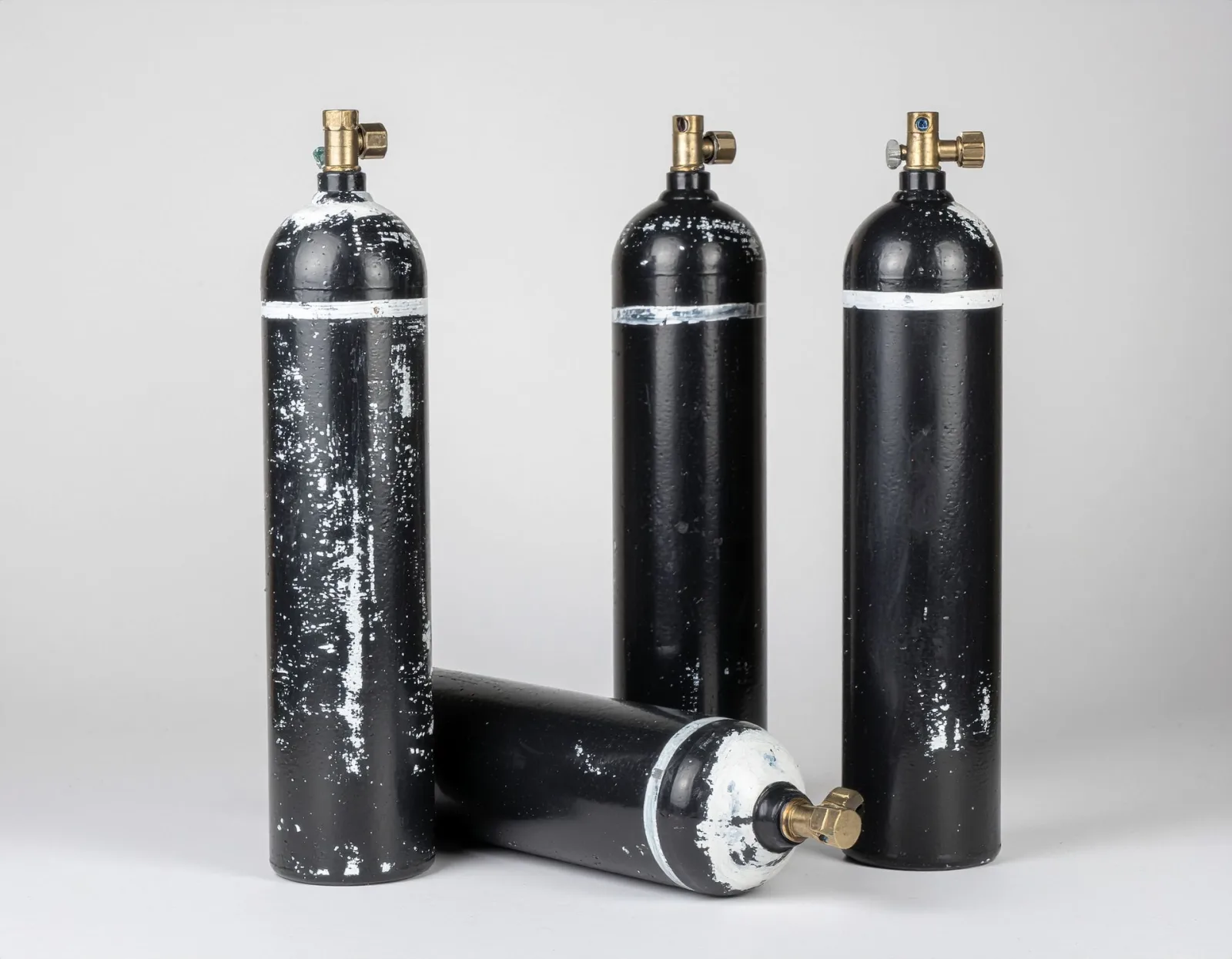
- Industrial specification
- IS 309
- Medical specification
- Indian Pharmacopoeia
- Medical regulatory basis
- Manufactured under drug licence
- Cylinder standard, both
- IS 7285
- Industrial cylinder colour
- Black
They are closer than you think, and further apart than you think
Put the two specifications side by side and the numbers look almost the same. Both are oxygen well above 99.5 %. A chemist comparing only the assay would struggle to explain the price difference.
The difference is not in the molecule. Industrial oxygen is a product. Medical oxygen is a drug.
What actually differs
| Industrial oxygen | Medical oxygen | |
|---|---|---|
| Specification | IS 309 | Indian Pharmacopoeia + IS 12406 |
| Published purity | ≥99.5 % | To the pharmacopoeial monograph |
| Regulatory basis | Industrial standard | Manufactured under drug licence |
| Batch traceability | Commercial records | Pharmaceutical batch records |
| Cylinder fleet | General industrial | Dedicated medical service |
| Cylinder standard | IS 7285 | IS 7285 |
| Typical use | Cutting, welding, process | Patient care |
The row that matters most is the last-but-two. A medical cylinder is dedicated: it holds medical oxygen and nothing else, ever. That is what lets a hospital state with confidence what a patient received.
Never substitute, in either direction
Industrial oxygen must never be given to a patient. It is unlawful, and it discards every assurance the pharmacopoeial route exists to give. The gas inside may well be clean; the point is that nobody can prove it, because the cylinder's history was never controlled to that standard.
Medical oxygen should not be used for cutting. Nothing dangerous happens — you simply pay a large premium for certification a torch cannot use, and remove a cylinder from medical service. When this happens in practice it is usually a symptom: industrial supply has failed somewhere, and that is the problem to fix.
Which do you need?
Ask one question: will this gas reach a patient?
If yes, it must be medical, from a supplier manufacturing under drug licence, in cylinders kept in dedicated medical service. There is no acceptable shortcut and no grade in between.
If no — cutting, welding, brazing, furnace work, water treatment, process oxidation — industrial oxygen to IS 309 is the correct product, and buying anything else is paying for paperwork the process cannot use.
For hospitals moving off cylinders altogether, PSA oxygen generation is a different conversation, with its own regulatory requirements around the pipeline system it feeds.
Sources
Industrial oxygen — frequently asked questions
Is medical oxygen purer than industrial oxygen?
Not by much, and purity is not the real difference. Both sit above 99.5 %. What separates them is that medical oxygen is a drug: made under a drug licence, to a pharmacopoeial monograph, with batch traceability and record-keeping that industrial gas does not carry. You are buying an audit trail as much as a gas.
Can I use industrial oxygen for a patient?
No. It is not merely a technical breach — it is unlawful, and it removes every assurance the pharmacopoeial route exists to provide. Industrial cylinders are not kept in dedicated medical service, so their history of contents and handling is not controlled to medical standards. Never substitute, in any circumstances.
Can I use medical oxygen for cutting?
Physically yes, commercially no. You would pay a considerable premium for a certification the torch cannot use, and you would take a cylinder out of medical service. Where it does happen, it is usually a sign that industrial supply has failed, which is the problem worth solving.
Why is medical oxygen more expensive?
The licence, the pharmacopoeial testing, the batch records, the dedicated cylinder fleet and the handling regime — not the gas. You are paying for the system that lets a hospital prove what a patient received, which is exactly what an industrial cylinder cannot do.
What does dedicated medical service mean?
That the cylinder is used only for medical oxygen and is never cross-filled with anything else. Its history is controlled, so a cylinder arriving at a hospital has a known and unbroken record. A cylinder that has held industrial gas cannot re-enter medical service on the strength of a clean-out.
Is oxygen flammable?
No, and the distinction matters. Oxygen does not burn — it makes other things burn far more readily, at lower temperatures and with far greater violence. Oil or grease on an oxygen fitting can ignite spontaneously under pressure. Keep oxygen equipment scrupulously free of hydrocarbons and never use it to blow down clothing or work areas.
Enquiries
Request a quotation
State the gas or equipment, the quantity or capacity, and your location. KIGL will confirm the grade, the cylinder or plant size, and whether the location can be served from Noonmati, or through our agent network.