
Guide
Cylinder supply or on-site generation: how to decide honestly
On-site generation wins on unit cost and loses on capital, maintenance and licensing. The crossover turns on 4 things: steady consumption, required purity, how continuous the demand is, and whether you can actually run a plant. High purity in modest quantity keeps cylinders ahead almost indefinitely.
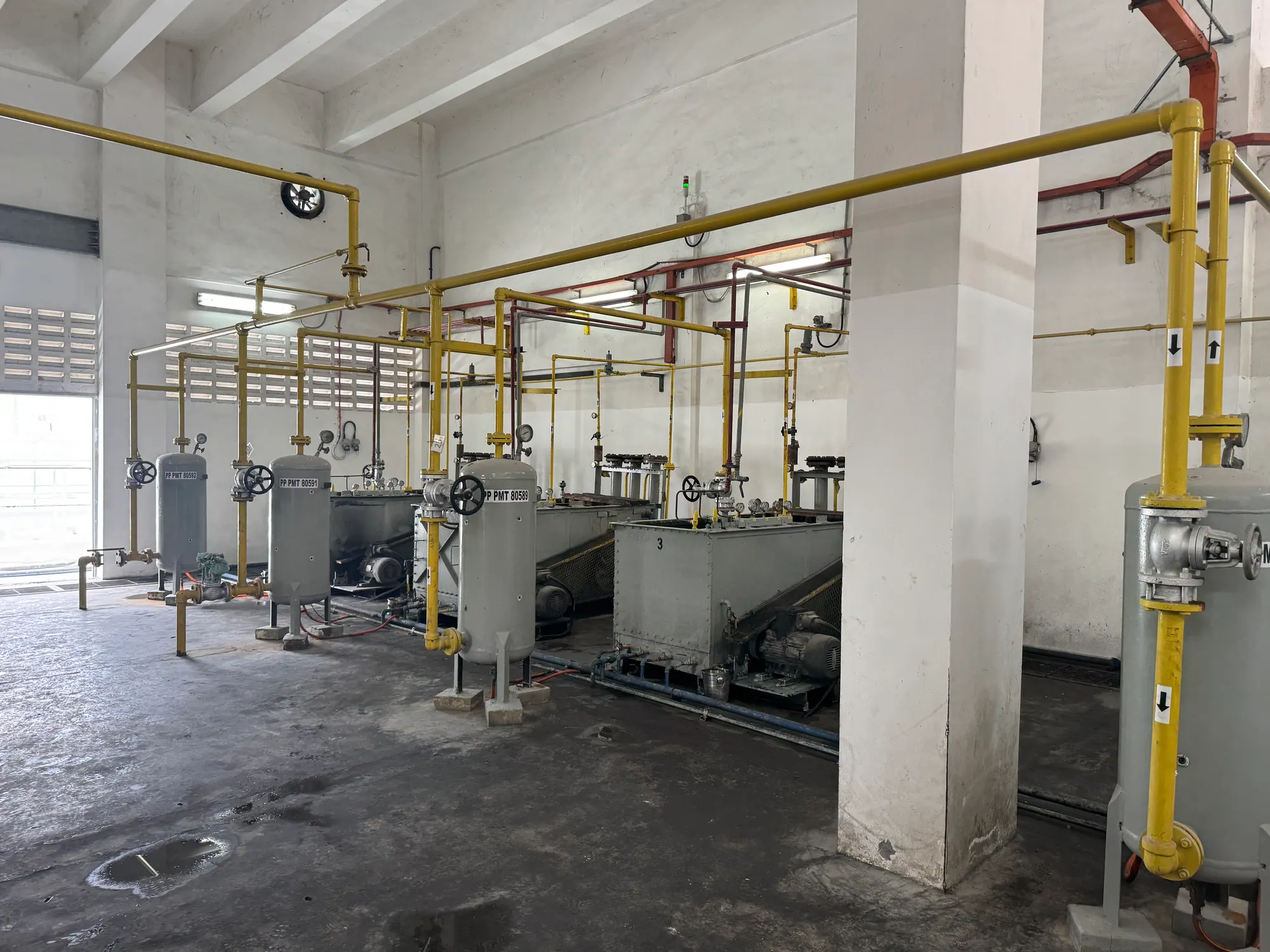
- Cylinder supply strengths
- No capital
- On-site generation strengths
- Lower unit cost at volume
- Decisive variable
- Steady consumption
- Second decisive variable
- Required purity
- What KIGL does
- Fills cylinder gas and builds acetylene plants
The question behind the question
Nobody actually wants a gas plant. They want gas, reliably, at the lowest total cost, and at some volume, making it yourself becomes the cheaper way to get it.
Where that point sits is a real calculation, worth doing properly rather than being talked into or out of.
What each side is good at
| Cylinder supply | On-site generation | |
|---|---|---|
| Capital | None | Substantial |
| Unit cost of gas | Higher | Lower at volume |
| Operators | None needed | Trained operators required |
| Maintenance | Supplier's problem | Yours |
| Licensing and inspection | Supplier's burden | Yours |
| Delivery dependency | Real | None |
| Flexes with demand | Easily | Poorly — it idles or is short |
| High purity, small volume | Often cheaper | Expensive |
The four variables that decide it
1. Steady consumption — not peak
This is the one people get wrong. A plant sized to your busiest hour idles most of the week and never repays its capital. Compare average continuous demand against the plant that would meet it, and cover peaks from cylinders or storage.
2. Required purity
This matters more than flow, and it surprises people. Raising the purity requirement can multiply a plant's size, energy use and cost, while the same step in a cylinder supply may be nothing more than a different fill.
3. How continuous the demand is
A plant running two shifts a day pays back. A plant running four hours on Tuesdays does not.
4. Whether you can actually run it
A generating plant needs trained operators, a maintenance regime, and someone who will answer to an inspector. If that capability does not exist and will not be built, the rest is academic — operating an acetylene plant sets out what is genuinely involved.
The costs that get left out
Comparing gas price against gas price is how year two goes wrong. Include:
- Electricity — on PSA plants this dominates running cost
- Sieve or media replacement — not small, not optional
- Compressor maintenance — the largest mechanical item
- Operator time and training
- Licence, inspection and compliance burden
- Floor space, and what else it could be doing
- Backup supply, because most critical installations keep cylinders anyway
Start with cylinders. Let them do the sizing study.
If you are unsure, this is almost always the right sequence:
- Take cylinder supply and run it for a year
- Use the invoices as a measured consumption record — real demand, real pattern, real peaks
- Size the plant against that record, not against an estimate
Buying a plant on an estimate is exactly how plants end up oversized, and an oversized plant is worse than none: it carries the capital, the maintenance and the licence burden while running at a fraction of the efficiency it was costed at. There is a working method for acetylene specifically on sizing an acetylene plant.
Ask someone with an interest on both sides
KIGL fills cylinder gas and builds acetylene plants. That does not make us disinterested, but it does mean the answer is not settled in advance by what we happen to sell. Tell us what you use, how steadily, and at what purity, and we will tell you which side of the line you are on — including when the answer is to keep buying cylinders.
Sources
Cylinder supply or on-site generation — frequently asked questions
What actually decides the crossover?
Steady consumption, not peak. A plant sized to your busiest hour idles most of the week and never repays its capital. Compare your average continuous demand against the plant that would meet it, and cover the peaks from cylinders or storage.
Does purity change the answer?
Considerably, and more than flow does. Raising the purity requirement can multiply a generating plant's size, energy consumption and cost, while the same step in a cylinder supply may be nothing more than a different fill. Very high purity in modest quantity is where cylinders stay ahead indefinitely.
What costs get forgotten in the comparison?
Electricity, which dominates PSA running cost; sieve or media replacement; compressor maintenance; operator time and training; the licence and inspection burden; and floor space. People compare gas price against gas price and are then surprised by the operating line in year two.
What if the supply is critical?
Then reliability may decide it rather than cost. A plant removes delivery dependency, which is valuable if you are far from a filling works or on difficult roads. But it introduces a single point of failure on your own site, so most critical installations keep a cylinder or manifold backup regardless — and that backup is part of the cost.
Can I start with cylinders and change later?
Yes, and it is usually the sensible path. Cylinder supply gives you a measured consumption record, which is exactly the data needed to size a plant properly. Buying a plant on an estimate is how plants end up oversized. Use the first year of invoices as your sizing study.
Who should I ask for an honest answer?
Someone with an interest on both sides. A company selling only plants will find the crossover conveniently close; a company selling only gas will find it comfortably far away. KIGL both fills cylinders and builds acetylene plants, which at least means the answer is not settled in advance by what we happen to sell.
Enquiries
Request a quotation
State the gas or equipment, the quantity or capacity, and your location. KIGL will confirm the grade, the cylinder or plant size, and whether the location can be served from Noonmati, or through our agent network.