
Guide
Hydrogen safety data explained: a 4 to 75 % flammable range an invisible flame and the same 0.02 mJ spark as acetylene
Hydrogen (UN 1049) is flammable in air from 4 to 75 % by volume, ignites from a 0.02 mJ spark, the same minimum ignition energy as acetylene, and shares gas group IIC with it. It is 14 times lighter than air, burns with a near-invisible flame and embrittles high-strength steel. Ventilate high.
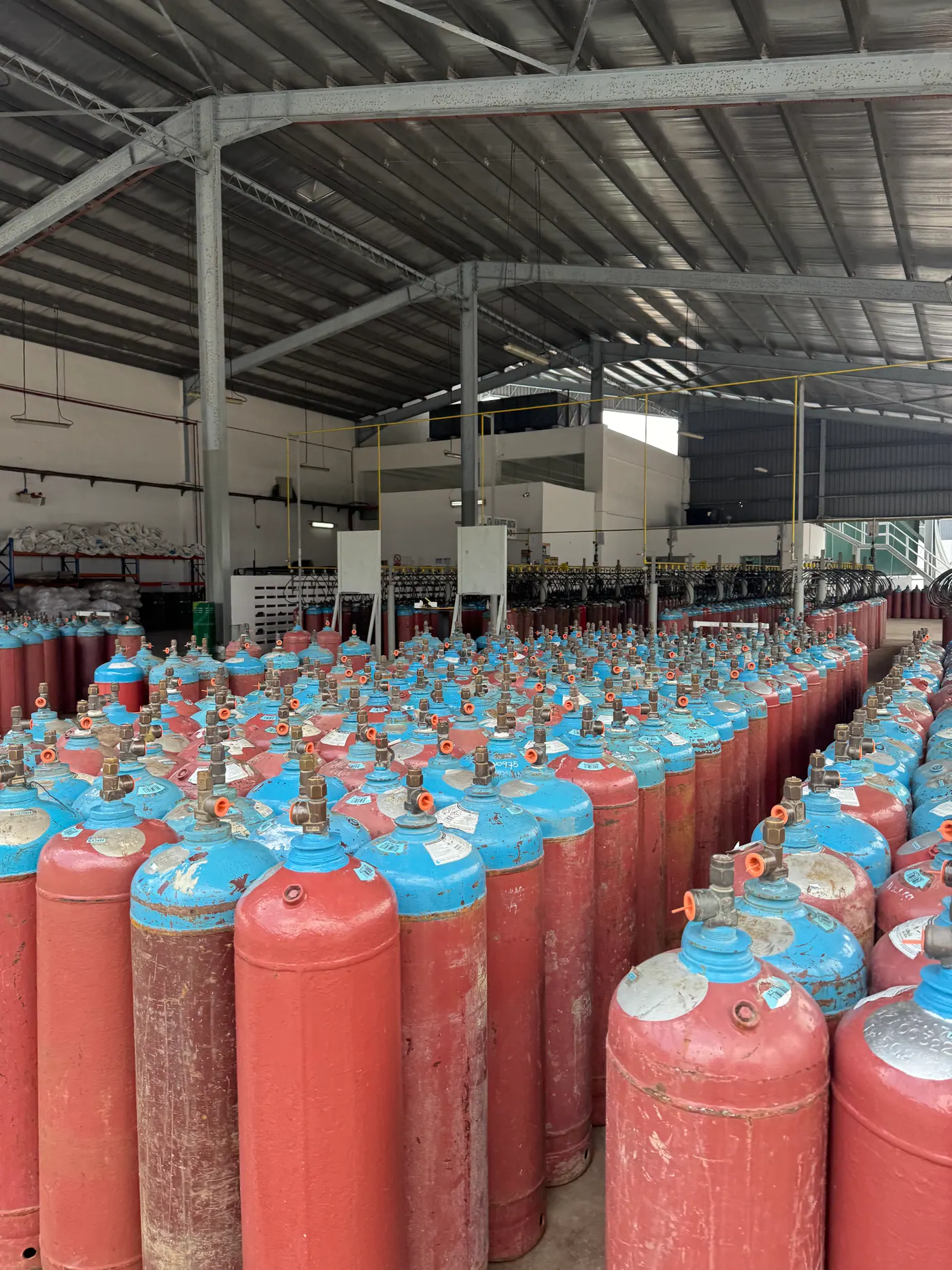
- Transport identity
- UN 1049
- Flammable range in air
- 4 to 75 % by volume; in oxygen about 4 to 95 %
- Minimum ignition energy
- About 0.02 mJ
- Explosion group
- Group IIC under IS/IEC 60079
- Density and buoyancy
- 0.0899 kg/m³ at 0 °C; relative density 0.07
Hydrogen and acetylene are the two gases that electrical engineers put in the same box, Group IIC, and for the same reason: both ignite from a spark of about 0.02 millijoules, a discharge too small to feel. Everything else about hydrogen's safety data sheet follows from three further numbers: a flammable range of 4 to 75 % in air, a density one-fourteenth that of air and a flame that gives off almost no light. This page explains the figures behind the sheet at /sds/hydrogen and what each means on a shop floor.
What the SDS classification means
| Item | Value | Source |
|---|---|---|
| UN number | 1049 (compressed gas); 1966 (refrigerated liquid) | UN Model Regulations; IS 4379:2021 Table 1 |
| Transport class | 2.1 flammable gas | UN Model Regulations |
| GHS classification | Flammable Gas Category 1A (H220, extremely flammable gas); Gas under pressure (H280 or H281) | UN GHS |
| Pictograms | GHS02 flame; GHS04 gas cylinder | UN GHS |
| CAS number | 1333-74-0 | NIST Chemistry WebBook |
| Molar mass | 2.016 g/mol | NIST Chemistry WebBook |
| Boiling point | −252.8 °C at 1 atm | NIST Chemistry WebBook |
| Critical temperature and pressure | −240.0 °C; 13.0 bar | NIST Chemistry WebBook |
| Gas density | 0.0899 kg/m³ at 0 °C and 1 atm; relative density 0.07 (air = 1) | NIST Chemistry WebBook |
| Flammable limits in air | 4 to 75 % by volume | NIOSH Pocket Guide |
| Flammable limits in oxygen | about 4 to 95 % by volume | EIGA and CGA hydrogen guidance |
| Autoignition temperature | about 560 to 574 °C in air, depending on test method | IEC 60079-20-1 data; USCG CHRIS |
| Minimum ignition energy | about 0.02 mJ | IEC 60079-20-1 and NFPA 2 data |
| Explosion group and temperature class | IIC, T1 | IEC 60079-20-1 |
The H220 statement, "extremely flammable gas", is the highest flammability category the GHS has, and hydrogen earns it on the width of its range rather than any one limit. The lower limit of 4 % is not unusually low; methane's is 5 % and acetylene's 2.5 % (IS 14814:2023 cl 4.5.3.1). What sets hydrogen apart is the upper limit of 75 %, which means a hydrogen-rich pocket that would be too rich to burn for methane or LPG remains explosive. Among common fuel gases only acetylene, with an upper limit of 82 % (IS 14814:2023 cl 4.5.3.2), has a wider range.
Three numbers that define the fire hazard
The flammable range, 4 to 75 %
When a leak mixes with air, the mixture passes through its flammable range as it dilutes. For LPG that window is roughly 2 to 10 %, so most of the plume is either too rich or too lean; for hydrogen the window spans 71 percentage points and nearly the whole plume can burn. In practice this means a hydrogen leak of any size in a confined space must be assumed to be an explosive atmosphere until proved otherwise.
The ignition energy, 0.02 mJ
EIGA Doc 123 Table 1 gives acetylene's minimum ignition energy in air as 0.019 mJ; hydrogen's is the same to within the precision of the measurement. For scale, the static discharge from a person walking across a dry floor in synthetic clothing can carry 10 mJ or more, and a mechanical spark from a dropped steel tool far more than that. The consequence is that hydrogen is treated exactly as acetylene is for static control: everything bonded and earthed, conductive flooring, no synthetic outer clothing in filling areas. The reasoning and the earthing figures are set out under acetylene, static electricity and minimum ignition energy and apply unchanged.
The burning velocity
Hydrogen's laminar burning velocity in air is around 3 m/s, against roughly 0.4 m/s for methane. A hydrogen flame front therefore accelerates fast in any congested or confined space and the deflagration can transition to detonation; the detonable range in air is commonly given as about 18 to 59 %. A hydrogen explosion in a building is a far more destructive event than an LPG explosion of the same gas volume.
The invisible flame
Hydrogen burns to water vapour. With no carbon there is no soot, and it is soot that makes a flame yellow and radiant. A hydrogen flame in daylight is a faint blue shimmer at best and radiates so little heat that a person can be within a metre of a substantial jet fire and feel almost nothing until they are in it. Hydrogen plant operators have historically carried a broom ahead of them to find flames; the straw ignites before the hand does. The modern equivalents are thermal imaging cameras and ultraviolet or triple-infrared flame detectors, which see the water-vapour emission that the eye cannot. A hydrogen leak that is burning is, paradoxically, the safer condition; a leak that is not burning is accumulating.
Rules that matter
With a relative density of 0.07, hydrogen rises at once and disperses in the open within seconds, which makes an outdoor hydrogen leak the least dangerous of any fuel gas. Indoors the same buoyancy is the problem. Hydrogen collects under roofs, in ceiling voids, at the top of cabinets and enclosures, in the crowns of pipework and under the canopy of a filling bay, exactly where nobody looks and where a light fitting or a roof fan motor is waiting. The rules are the mirror image of those for argon and LPG:
Where hydrogen goes: up
- Vent hydrogen rooms at the highest point, with no pockets in the roof structure.
- Mount gas detectors high, alarmed at 10 % of the lower flammable limit (0.4 % hydrogen) and tripping at 25 %.
- Keep every item of roof-level electrical equipment certified for Group IIC or outside the zone.
- Never cap a hydrogen vent line; it must discharge upward, above the roof, away from intakes.
Hydrogen also has a Joule-Thomson inversion temperature below ambient, so unlike most gases it warms slightly rather than cools when it expands through a leak. The effect is small.
Embrittlement
Hydrogen molecules dissociate on a steel surface and the atoms diffuse into the lattice, where they gather at inclusions and crack tips and reduce the steel's ductility. High-strength, quenched-and-tempered and hardened steels are the most susceptible; the effect increases with pressure and with the steel's tensile strength. Cylinder steels for hydrogen are therefore selected against IS/ISO 11114-4, the Indian adoption of the test method for steels resistant to hydrogen embrittlement. The Gas Cylinders Rules, 2016, Rule 23(3), add a chemistry requirement that is easy to miss: before hydrogen, carbon monoxide, coal gas or methane is filled, the gas must contain less than 0.02 g/m³ of moisture at NTP, because moisture accelerates both corrosion and hydrogen uptake inside the cylinder.
Indian specification, colour and licensing
The Indian product standard is IS 1090:2002, Compressed hydrogen — Specification, reaffirmed in 2023; IS 16749:2018 adopts ISO/TR 15916 on basic safety considerations for hydrogen systems, and IS 16253:2016 covers stationary hydrogen detection apparatus. Industrial hydrogen cylinders are identified under IS 4379:2021 Table 7 by a Signal red (537) RAL 3001 body with the shoulder in the ground colour, the same red family as LPG, propane and coal gas, and, as for flammable gases generally, the valve outlet is left-hand threaded (Gas Cylinders Rules, 2016, Rule 4(3); IS 3224:2021).
For licensing, hydrogen is a flammable non-toxic gas: Rule 44(b)(i) allows up to 25 cylinders or 200 kg, whichever is less, for own use without a licence. Storage for sale or trading requires a Form F licence, applied for after a no-objection certificate from the District Authority (Rule 48(1)), with flameproof earthed electrical fittings and no smoking or naked flames in the premises; a testing station handling hydrogen needs the 2 m industrial fencing at a minimum of 15 m in Schedule IV. The standards position is set out on the hydrogen standards page and the practical handling routine under hydrogen safety and handling.
Rules that matter
Rules to apply
- Treat every hydrogen leak indoors as an explosive atmosphere; ventilate from the top and isolate at the cylinder.
- Bond and earth everything the gas touches; no synthetic outer clothing in filling and manifold areas.
- Specify Group IIC for all electrical equipment in the zone, including roof fans and lights.
- Detect flames with instruments, not eyes; never advance into a suspected leak area with hands outstretched.
- Use only cylinders, valves, regulators and arrestors rated for hydrogen service; check the next-test date on the ring between valve and neck before accepting a cylinder; a cylinder whose periodic retest is due must not be charged or transported (Gas Cylinders Rules, 2016, Rule 26).
- Read Sections 2, 7, 9, 10 and 14 of the SDS before the first delivery; the guide on how to read an industrial gas SDS explains each.
The full sheet at /sds/hydrogen carries the first-aid, fire-fighting and transport sections that this explainer leaves to the SDS.
Hydrogen safety data explained — frequently asked questions
Is hydrogen gas flammable?
Yes, extremely. Hydrogen (UN 1049, Class 2.1) burns in air at any concentration from 4 to 75 % by volume and ignites from a spark of about 0.02 mJ, the same minimum ignition energy as acetylene. It shares gas group IIC with acetylene, burns with a near-invisible flame and is 14 times lighter than air, so leaks rise and collect under roofs.
Why is hydrogen more dangerous to ignite than LPG or methane?
Three numbers. Its flammable range in air is 4 to 75 %, against roughly 2 to 10 % for LPG and 5 to 15 % for methane, so almost any leak mixture will burn. Its minimum ignition energy is about 0.02 mJ, around a tenth of that of methane, so the static on a dry glove will light it. And its laminar burning velocity is several times that of methane, so a hydrogen deflagration builds pressure fast and readily transitions to detonation in a confined space.
Can you see a hydrogen flame?
In daylight, barely. Hydrogen burns to water vapour with almost no soot, so the flame emits little visible light and little radiant heat. Workers have walked into hydrogen flames. The traditional check is a broom or a piece of paper held at arm's length ahead of you; the modern one is a thermal camera or an ultraviolet flame detector. Never approach a suspected hydrogen leak with bare hands extended.
Why do hydrogen and acetylene share Group IIC?
IEC 60079 groups gases by how easily a flame passes through a narrow gap and how little energy ignites them. Both hydrogen and acetylene have a maximum experimental safe gap below 0.5 mm and an ignition energy near 0.02 mJ, so both demand the most robust flameproof enclosures and the lowest-energy intrinsically safe circuits. IIC certification covers both gases for explosion group, but the temperature class must also suit the gas. Flashback arrestors differ: IS 11006 Table 2 tests each fuel gas with its own mixture, so an arrestor must be rated for its gas.
Where does leaked hydrogen go?
Up, fast. At one-fourteenth the density of air it rises and collects under roofs, in ceiling voids, at the top of enclosures and in the high points of pipework. Detectors and vents belong at the highest point of a hydrogen room, which is the opposite of the rule for argon, CO₂ and LPG. In the open it disperses within seconds; the danger is any roof, canopy or cabinet that traps it.
How does hydrogen embrittle steel cylinders and pipe?
Atomic hydrogen diffuses into steel and makes high-strength and hardened grades brittle, so cracks grow under loads the steel would otherwise carry. This is why cylinder steels for hydrogen must be suited to hydrogen service, and why IS/ISO 11114-4 exists to test steels for resistance to hydrogen embrittlement. Ordinary mild steel at low pressure is little affected.
Do hydrogen cylinders need a PESO licence?
Hydrogen is a flammable non-toxic gas. Rule 44(b)(i) of the Gas Cylinders Rules, 2016 allows up to 25 cylinders or 200 kg of gas, whichever is less, for own use without a licence; above that a licence is needed, and storage for sale or trading needs a Form F licence, with flameproof electrical fittings and a strict ban on smoking and naked flames in the premises. Hydrogen cylinders are Signal red (537), RAL 3001, under IS 4379:2021.
Is hydrogen toxic?
No. Hydrogen is a simple asphyxiant only, and because it rises so fast it rarely builds an oxygen-deficient layer at breathing height except in a closed roof space. The hazard is fire and explosion, not poisoning. Liquid hydrogen at −253 °C adds cold burns and the ability to condense air on uninsulated surfaces, producing an oxygen-enriched liquid next to a fuel.
References
- Bureau of Indian Standards. (2002). Compressed hydrogen; IS/ISO 11114-4 (IS 1090:2002, Third Revision).
- Bureau of Indian Standards. (2018). Basic safety considerations for hydrogen systems (IS 16749:2018).
- Bureau of Indian Standards. (2021). Identification of the contents of industrial gas cylinders (IS 4379:2021, Second Revision).
- Compressed Gas Association. (n.d.). — Hydrogen (CGA G-5).
- EIGA — hydrogen safety documents and Doc 123 Code of Practice Acetylene (Table 1 ignition energy), European Industrial Gases Association
- Government of India. (2016). Gas Cylinders Rules, 2016 (G.S.R. 1081(E)). Petroleum and Explosives Safety Organisation.
- Linstrom, P. J., & Mallard, W. G. (Eds.). (n.d.). NIST Chemistry WebBook (NIST Standard Reference Database 69). National Institute of Standards and Technology. [Hydrogen thermophysical properties] https://webbook.nist.gov/cgi/cbook.cgi?ID=C1333740
- NIOSH Pocket Guide to Chemical Hazards — Hydrogen (flammable limits 4 to 75 %)
Enquiries
Request a quotation
State the gas or equipment, the quantity or capacity, and your location. KIGL will confirm the grade, the cylinder or plant size, and whether the location can be served from Noonmati, or through the agent network.