
Guide
Carbon dioxide safety data explained: why CO₂ is a toxic gas and an oxygen meter will not save you
Carbon dioxide (UN 1013) is not flammable, and not a simple asphyxiant: it acts on the breathing centre, so 4 % is dangerous and 10 % causes unconsciousness even with oxygen present. The 8-hour exposure limit is 5,000 ppm (0.5 %). Dry ice at −78.5 °C, 57 bar cylinder pressure and static are further hazards.
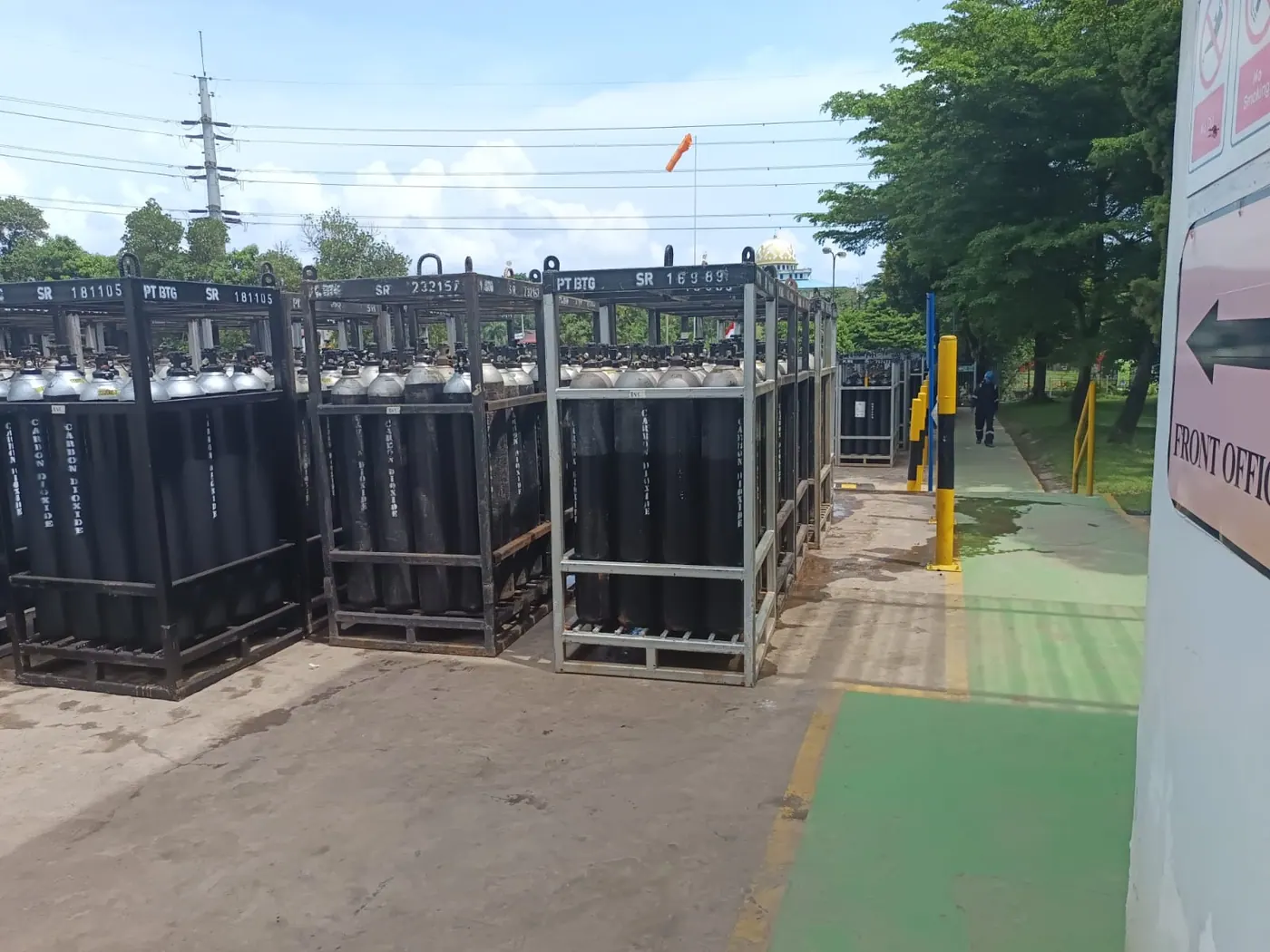
- Transport identity
- UN 1013
- Occupational exposure limit
- 5
- Physiological effect
- Breathing rate roughly doubles at 3 %; dizziness and headache within minutes at 4 to 5 %; unconsciousness within about a minute above 10 %
- Density and phase
- 1.977 kg/m³ at 0 °C
- Cylinder pressure
- About 57 bar at 20 °C and about 72 bar at 30 °C as a liquefied gas; the Gas Cylinders Rules
Carbon dioxide is the one common industrial gas whose safety data sheet is routinely misread. It sits in the same transport class as nitrogen and argon, it carries the same single gas-cylinder pictogram, and the Gas Cylinders Rules, 2016 group it with the non-flammable non-toxic gases for licensing. None of that makes it harmless. Carbon dioxide has a direct physiological action of its own, an occupational exposure limit of 5,000 ppm, and a lethal concentration that leaves plenty of oxygen in the air. This page explains the numbers behind the sheet at /sds/carbon-dioxide, and why an oxygen monitor is the wrong instrument for a CO₂ store.
What the SDS classification means
| Item | Value | Source |
|---|---|---|
| UN number | 1013 (gas); 2187 (refrigerated liquid); 1845 (carbon dioxide, solid, or dry ice) | UN Model Regulations; IS 4379:2021 Table 1 |
| Transport class | 2.2 non-flammable, non-toxic gas; dry ice Class 9 | UN Model Regulations |
| GHS classification | Gas under pressure, liquefied gas (H280); refrigerated liquefied (H281) for the liquid | UN GHS |
| CAS number | 124-38-9 | NIST Chemistry WebBook |
| Molar mass | 44.01 g/mol | NIST Chemistry WebBook |
| Sublimation point | −78.5 °C at 1 atm (no liquid phase at atmospheric pressure) | NIST Chemistry WebBook |
| Triple point | −56.6 °C at about 5.2 bar absolute (5.1 atm) | NIST Chemistry WebBook |
| Critical temperature and pressure | 31.0 °C; 73.8 bar | NIST Chemistry WebBook |
| Vapour pressure of the liquid | about 35 bar at 0 °C; 57 bar at 20 °C; 72 bar at 30 °C | NIST Chemistry WebBook |
| Gas density | 1.977 kg/m³ at 0 °C and 1 atm; relative density 1.53 (air = 1) | NIST Chemistry WebBook |
| Gas from 1 kg | about 0.55 m³ at 20 °C and 1 atm | Ideal-gas calculation from molar mass |
| Carbon dioxide in normal air | about 420 ppm (0.042 %) | Atmospheric monitoring data |
Three of these numbers set the character of the gas. The relative density of 1.53 means CO₂ is the heaviest of the common gases and pools in pits, cellars, cold rooms and the bottom of tanks. The critical temperature of 31.0 °C means that in an Indian cylinder it is a liquid under its own vapour pressure for most of the year and a dense supercritical fluid on a hot afternoon. And the 5,000 ppm exposure limit, which nitrogen and argon do not have at all, marks it as a gas with a toxic action.
Toxic, not merely an asphyxiant
Nitrogen and argon harm only by displacing oxygen; the body does not react to them. Carbon dioxide is different because it is the gas the body uses to control breathing. Dissolved in blood, it forms carbonic acid, and the respiratory centre in the brain responds to the resulting change in acidity by driving breathing harder. Add CO₂ to inhaled air and that control system is overdriven: breathing rate and depth climb, then headache, sweating, confusion and loss of consciousness follow, all with normal oxygen available.
| CO₂ in air (% v/v) | ppm | Effect on a healthy adult |
|---|---|---|
| 0.04 | 420 | Outdoor air |
| 0.1 to 0.2 | 1,000 to 2,000 | Poorly ventilated room; drowsiness with long exposure |
| 0.5 | 5,000 | 8-hour occupational exposure limit (ACGIH TLV, OSHA PEL) |
| 1 | 10,000 | Slight increase in breathing rate; headache with prolonged exposure |
| 2 | 20,000 | Breathing rate up by about half; headache after some hours |
| 3 | 30,000 | Breathing roughly doubles; headache; short-term exposure limit |
| 4 to 5 | 40,000 to 50,000 | NIOSH IDLH at 4 %; breathing about four times normal, dizziness, confusion and headache within minutes |
| 5 to 10 | 50,000 to 100,000 | Severe breathlessness, loss of judgement, unconsciousness within minutes |
| Above 10 | over 100,000 | Unconsciousness in about a minute or less; death if not removed |
These effects, as tabulated by EIGA and NIOSH, occur in air that still contains over 19 % oxygen. That is the reason an oxygen monitor gives false comfort in a CO₂ store: a leak that takes a room to 5 % CO₂ reduces the oxygen reading from 20.9 % to about 19.9 %, above the usual 19.5 % alarm, while the occupants are already in danger. Rooms where CO₂ is stored, piped or produced, including beverage cellars, fire-suppression protected rooms, cold stores using dry ice and the carbonation plant at a bottler, need a dedicated carbon dioxide sensor, typically alarmed at 0.5 % and 1.5 % by volume, mounted low.
Pressure, liquid and the empty cylinder that reads full
A CO₂ cylinder contains liquid with vapour above it. The gauge reads the vapour pressure of that liquid, which is a function of temperature alone: about 57 bar at 20 °C, rising to about 72 bar at 30 °C and climbing steeply towards the 73.8 bar critical pressure as the cylinder approaches 31 °C. The pressure is the same whether the cylinder is full or nearly empty; it falls only when the last of the liquid has gone. Contents are therefore checked by weighing, which is why the tare weight is stamped on the shoulder and why the cylinder pressure does not show contents guide treats CO₂ alongside acetylene.
The steep rise in pressure with temperature is also why the Gas Cylinders Rules, 2016 are specific about the relief device. Rule 4(2) requires the valve on a carbon dioxide cylinder to carry a safety release consisting of a softened copper disc arranged to burst between 200 and 220 kg/cm². A cylinder left in the sun on a lorry bed or against a furnace wall relies on that disc, and a disc that bursts releases the entire contents as a jet of gas and snow in seconds; keeping cylinders shaded and away from heat is the working control. The filling ratio, which sets how much liquid may be put in so that the cylinder never becomes hydraulically full as it warms, is governed by IS 15975:2020 and the Rules rather than by the older filling-ratio standards.
Fast discharge has a second effect: the expanding gas cools so sharply that the valve and regulator frost up and solid CO₂ snow can block the outlet. A CO₂ regulator that stops passing gas on a cold morning is usually iced, not faulty, and heated regulators exist for high-flow duty.
Rules that matter
Solid carbon dioxide forms when the liquid is let down to atmospheric pressure, where no liquid phase exists; the snow is pressed into blocks or pellets at −78.5 °C. Its UN number is 1845, and it has three hazards of its own:
Dry ice
- Cold burns on contact; handle with insulated gloves and tongs, never bare hands.
- Pressure. One kilogram sublimes to about 0.55 m³ of gas at room temperature, so dry ice sealed in a bottle, a drum or a closed cool-box will burst it.
- Accumulation. The gas is heavy and invisible. Ten kilograms of dry ice in a closed vehicle produce 5.5 m³ of CO₂; in a 3 m³ car cabin that is a lethal concentration long before it has all sublimed. Dry ice travels in a ventilated load space, never a passenger compartment, and a cold room where it has been kept is ventilated before entry.
Static electricity on fast release
Carbon dioxide has one hazard that no other inert gas shares and that the acetylene trade learned the hard way. The 1968 C.P.I. code, Safety in the Production and Use of Acetylene, Paris, records that when carbonic acid gas emerges directly or in too large a quantity from the wide-open valve of a cylinder, static electricity appears and discharges as sparks capable of causing serious explosions. The mechanism is the charge carried by the solid CO₂ particles that form in the expanding jet.
Three modern Indian and European rules address it. EIGA Doc 237, the acetylene generator operating code, permits only nitrogen for purging and prohibits CO₂ on static-electricity grounds (clause 6.1, cross-referenced to EIGA SAC NL 76). The Gas Cylinders Rules, 2016 Form E conditions for acetylene filling plants state that carbon dioxide fire extinguishers shall not be used on flammable gas fires because of the static-electricity risk, and require dry chemical powder instead. And IS 14814:2023 cl 9.2 allows carbon dioxide to extinguish an acetylene flame, while barring water spray and soda-acid or pressurised-water type extinguishers on a fire in a calcium carbide store or generator hopper. The point for a CO₂ user is simpler: never discharge a CO₂ cylinder fast into a space that may contain flammable vapour, and always release it through a regulator.
Indian specification and colour
The product standard is IS 307:2024, Carbon dioxide — Specification, with Grade 1 for reagent and welding use and Grade 2 for beverages, fire extinguishers, refrigeration and general commercial purposes. Both grades limit carbon monoxide to 10 ppm, oil to 5 ppm by weight and arsenic to 0.5 mg per normal cubic metre, and both must pass the tests for acid and sulphur dioxide and for phosphine and hydrogen sulphide. IS 307 excludes medical carbon dioxide, which the Indian Pharmacopoeia covers. The grade purity percentages are deliberately not quoted here, because the foreword and the printed table of the copy KIGL has read disagree, and the edition detail is on the carbon dioxide standards page.
Industrial CO₂ cylinders are identified under IS 4379:2021 Table 7 by a Graphite Black RAL 9011 body, a White or Aluminium RAL 9006 shoulder and a Graphite Black band; medical CO₂ is French grey (630) throughout under IS 3933:2021. For licensing, Rule 44(b)(ii) of the Gas Cylinders Rules, 2016 allows up to 200 non-flammable non-toxic cylinders for own use without a licence. The uses that drive demand, from MIG shielding to carbonation and fire suppression, are set out under uses of carbon dioxide gas, and the product itself at /carbon-dioxide-gas.
Rules that matter
Rules to apply
- Fit a carbon dioxide monitor, not just an oxygen monitor, wherever CO₂ is stored or used indoors; alarm at 0.5 % and 1.5 %.
- Check contents by weight; the gauge reads temperature, not quantity.
- Keep cylinders out of the sun and away from heat; the bursting disc is the last line, not a working control.
- Release CO₂ only through a regulator, and never as a purge or an extinguishant on flammable gas.
- Treat dry ice as a pressure source and an asphyxiant: insulated gloves, vented containers, never in a passenger cabin.
- Apply the full permit procedure in inert gas confined-space entry to any cellar, tank or pit where CO₂ can collect.
The full sheet at /sds/carbon-dioxide carries the first-aid, fire-fighting and transport sections that this explainer leaves to the SDS.
Carbon dioxide safety data explained — frequently asked questions
Why is carbon dioxide called toxic when it is in every exhaled breath?
Because it is the gas the body uses to regulate breathing, and excess of it overloads that control. Carbon dioxide dissolves in blood to form carbonic acid; as the level rises, breathing and pulse accelerate, then headache, confusion and unconsciousness follow, all while the oxygen content of the air may be entirely normal. Nitrogen and argon kill only by removing oxygen; carbon dioxide harms at 4 % with 20 % oxygen still present.
Is CO₂ flammable?
No. Carbon dioxide is already fully oxidised, so it neither burns nor supports burning, which is why it is used in fire extinguishers. Its hazards are different: it is toxic at a few per cent in air, well before it displaces enough oxygen to asphyxiate, and a fast discharge from a cylinder can build up static charge. The exposure section of this page gives the limits.
Will my oxygen monitor warn me of a CO₂ leak?
No, and this is the most important point on the page. A carbon dioxide leak that takes a room to 5 % CO₂ reduces the oxygen reading from 20.9 % to only about 19.9 %, above the 19.5 % alarm, yet 5 % CO₂ causes dizziness and headache within minutes and 10 % causes unconsciousness. Anywhere CO₂ is stored or piped indoors needs a dedicated carbon dioxide monitor alarmed at 0.5 % and 1.5 %.
What is the exposure limit for carbon dioxide?
The ACGIH threshold limit value and the OSHA permissible exposure limit are both 5,000 ppm, or 0.5 %, as an 8-hour time-weighted average, with a short-term limit of 30,000 ppm (3 %). NIOSH sets the concentration immediately dangerous to life or health at 40,000 ppm, or 4 %. For comparison, outdoor air is about 420 ppm and a stuffy meeting room 1,000 to 2,000 ppm.
Why does a carbon dioxide cylinder read the same pressure until it is nearly empty?
Because the cylinder holds liquid CO₂ with vapour above it, and the gauge reads the vapour pressure of the liquid, which depends only on temperature: about 57 bar at 20 °C whether the cylinder is full or a quarter full. Contents are known only by weight. The same is true of the acetylene cylinder, for a different reason, and the guide on cylinder pressure and contents explains both.
How dangerous is dry ice?
Solid CO₂ is at −78.5 °C and burns skin on contact; handle it with insulated gloves. One kilogram sublimes to about 0.55 m³ of gas, so 10 kg in a closed car or a cold room produces 5.5 m³ of heavy, invisible gas that pools at floor level. Never carry dry ice in a passenger compartment, never store it in a sealed container, which will burst, and never enter a cold room where it has been kept without ventilating first.
Why must CO₂ not be used to purge acetylene equipment or fight a gas fire?
Because fast-flowing CO₂ generates static electricity. The 1968 C.P.I. acetylene code recorded that carbon dioxide discharged directly from a wide-open cylinder valve produces sparks on discharge that have caused serious explosions; EIGA Doc 237 permits only nitrogen for purging acetylene generators for the same reason; and the Gas Cylinders Rules, 2016 Form E conditions bar CO₂ extinguishers on flammable-gas fires in acetylene plants, requiring dry chemical powder instead.
What grades and colours apply to CO₂ cylinders in India?
The product standard is IS 307:2024, which carries Grade 1 for reagent and welding use and Grade 2 for beverages, fire extinguishers and refrigeration; both limit carbon monoxide to 10 ppm and oil to 5 ppm by weight. Industrial CO₂ cylinders are Graphite Black with a White or Aluminium RAL 9006 shoulder and a black band under IS 4379:2021; medical CO₂ is French grey throughout under IS 3933:2021.
References
- Bureau of Indian Standards. (2021). Colour identification of gas cylinders and related equipment for medical use (IS 3933:2021).
- Bureau of Indian Standards. (2021). Identification of the contents of industrial gas cylinders (IS 4379:2021, Second Revision).
- Bureau of Indian Standards. (2024). Carbon dioxide — Specification (IS 307:2024, Third Revision).
- European Industrial Gases Association. (n.d.). — Hazards of inert gases and oxygen depletion, and EIGA safety information on carbon dioxide physiological hazards (EIGA Doc 44).
- Government of India. (2016). Gas Cylinders Rules, 2016 (G.S.R. 1081(E)). Petroleum and Explosives Safety Organisation.
- Linstrom, P. J., & Mallard, W. G. (Eds.). (n.d.). NIST Chemistry WebBook (NIST Standard Reference Database 69). National Institute of Standards and Technology. [Carbon dioxide thermophysical properties] https://webbook.nist.gov/cgi/cbook.cgi?ID=C124389
- NIOSH Pocket Guide to Chemical Hazards — Carbon dioxide (IDLH 40,000 ppm)
- Occupational Safety and Health Administration. (n.d.). Carbon dioxide permissible exposure limit, Table Z-1 (29 CFR 1910.1000).
Enquiries
Request a quotation
State the gas or equipment, the quantity or capacity, and your location. KIGL will confirm the grade, the cylinder or plant size, and whether the location can be served from Noonmati, or through the agent network.