
Guide
The oxy-fuel gas daily safety checklist: before you light while you work, when you stop, and the fire watch afterwards
An oxy-fuel daily safety check covers four stages: before lighting (cylinders upright and chained, hoses and arrestors sound, joints leak-tested), while working (no oxygen in the air, sparks controlled), every stop (valves closed), and after work (fire watch for some hours, as the C.P.I. 1968 code requires). Eye protection follows IS 8520.
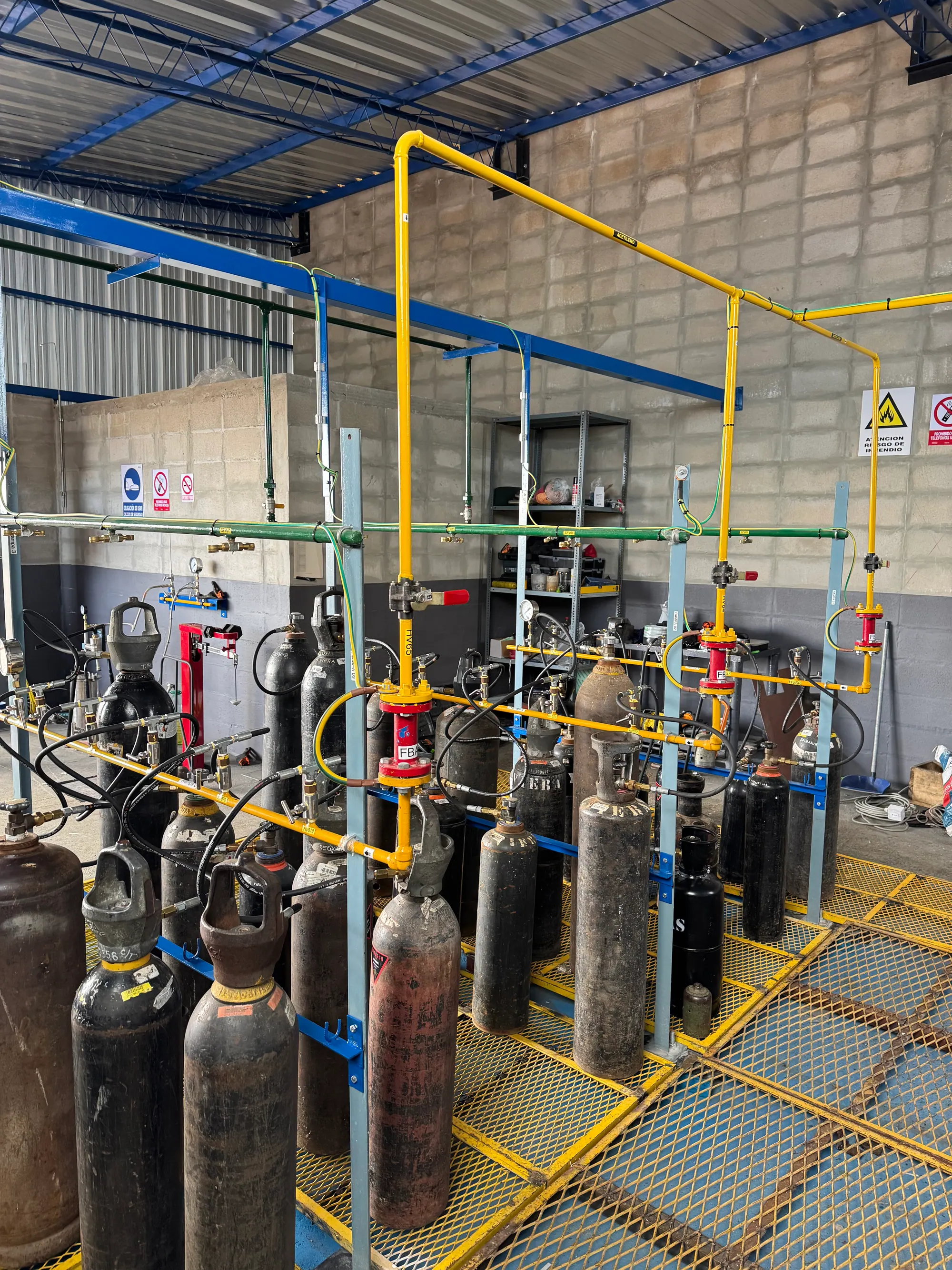
- Cylinder valve
- Open the acetylene cylinder valve slowly
- Interruptions
- During interruptions in work
- Oxygen enrichment
- Workmen's clothes and cleaning products ignite at an oxygen content of only 25 to 30 %; never ventilate with oxygen
- Fire watch
- Where combustibles are hidden from the welder
- Acetylene pressure
- Not more than 0.612 atm
Most oxy-acetylene accidents are not caused by exotic failures. They are caused by an ordinary step skipped on an ordinary day: a cylinder left unchained, a hose with a cut nobody looked at, a valve left open over lunch, a fire that started behind a partition an hour after everyone went home. A checklist exists to make the ordinary steps automatic. This one is built from IS 14814:2023, the Gas Cylinders Rules 2016 and the C.P.I. 1968 safety code, whose workshop rules are still the most complete set in print.
The checklist at a glance
| Stage | Check | Source |
|---|---|---|
| Before lighting | Cylinders upright, chained, valves and test ring sound | GCR 2016 Rule 9; IS 14814 cl 7.3.1 |
| Before lighting | Arrestors to IS 11006 on both gases; hoses sound; clamps not wire | IS 11006:2011; C.P.I. 1968 Ch. VI §4.1 |
| Before lighting | Joints leak-tested with a bubble-forming fluid; oxygen-compatible fluid on oxygen joints | C.P.I. 1968 Ch. IV §3; IMCA Safety Flash 02/14 |
| Before lighting | Combustibles cleared or covered; extinguisher at hand | C.P.I. 1968 Ch. VI §4.2 |
| Lighting | Pilot flame or friction lighter, never matches; each hose purged | C.P.I. 1968 Ch. VI §4.1, Ch. III §5.2.1 |
| Working | Acetylene not above 0.612 atm; no oxygen released into the air | IS 14814 cl 7.2.1; C.P.I. 1968 Ch. VI §4.2 |
| Every stop | Torch valves then cylinder valves closed | C.P.I. 1968 Ch. V §3 |
| After work | Fire watch for some hours where combustibles are hidden | C.P.I. 1968 Ch. VI §4.2 |
| Always | Eye protection to IS 8520; clothing to IS 6994 (Part 6) | IS 14814:2023 |
Before you light
The cylinders
Both cylinders stand upright and are chained or held in a trolley so they cannot fall; a dissolved acetylene cylinder that has been lying down stands for about half an hour before use (IS 14814:2023 cl 7.3.1). Read the next test date on the metal ring between valve and neck; if it is past, the cylinder is not used (Gas Cylinders Rules 2016, Rule 9). The valve key is on the acetylene spindle, because the C.P.I. code requires the valve to be closable at once if the gas catches fire. No oil or grease on any valve, regulator or fitting (the Rule 9 cylinder label warning). Acetylene and oxygen are not stored together (IS 14814 cl 7.3.3); in use, the two cylinders on one trolley are a matched set, not a store.
The equipment
Regulators of the right gas, with left-hand fuel connections and right-hand oxygen. A flashback arrestor to IS 11006:2011 at the outlet of each regulator and a non-return valve at the torch inlet on each gas. Hoses red for fuel, blue for oxygen, without cuts, burns or soft spots, fixed with clamps or crimped ferrules and never with wire; the C.P.I. code's words were clamping collars, not iron wire. Nozzle clean, undamaged and right for the job. Details are on the hoses page and the regulator page.
The leak test
Open the cylinder valves slowly, the acetylene valve not more than one and a half turns (IS 14814 cl 7.3.3). Set the working pressures. With the torch valves shut, brush a bubble-forming leak-detection fluid on every joint from cylinder valve to torch. On the oxygen side use a fluid made for oxy-fuel service, not household soap or anything containing oil or grease (IMCA Safety Flash 02/14). Bubbles mean a leak; close the cylinder, release pressure, remake the joint, test again. Never test with a flame. The method is on acetylene leak detection.
The surroundings
The C.P.I. code's fire-prevention list: move combustible materials a sufficient distance from the work, or protect them with metal sheets or fire blankets; cover combustible floors with sand or tiles, or wet them; keep the right extinguishers ready. Check below and behind the work, through gratings and into openings where sparks will fall. For work inside tanks, boilers, pits or other confined spaces, arrange ventilation and a person outside watching, and use only oil-free and grease-free clothing, preferably flame-retardant.
The person
Goggles or a face shield with welding filters to IS 8520, the standard IS 14814:2023 names. The 1965 literature notes that gas welding needs goggles or hand shields rather than arc-welding helmets, provided they protect against heat, light, sparks and particles and have no light leaks. Clothing to IS 6994 (Part 6):2021, no synthetic fabrics, sleeves and collar closed, no oil on clothing; leather gloves for handling cylinders.
Rules that matter
Lighting
- Purge each hose briefly, one gas at a time, so each holds only its own gas. The C.P.I. code's rule was to let the gas escape for a few moments before lighting so that any oxygen or air in the pipe is eliminated.
- Light with a friction lighter or a pilot flame, never a match or a cigarette lighter held in the hand.
- Open the torch acetylene valve a little and light it; then add oxygen to a neutral flame, as set out on the flame types page. Follow the blowpipe maker's sequence where it differs.
- Never let a torch deliver unlit acetylene, and never let oxygen escape uncontrolled from a torch before lighting or after extinguishing (C.P.I. 1968).
Rules that matter
While working
- Acetylene at the regulator outlet not above 0.612 atm, about 9 psi (IS 14814:2023 cl 7.2.1). Most work needs far less.
- No oxygen into the air. The C.P.I. code records that clothing and cleaning products ignite at an oxygen content of only 25 to 30 %, and that much of the cutting oxygen in a confined space enriches the atmosphere instead of burning iron. Never use oxygen to ventilate, cool or dust down.
- Keep hoses out of the spark stream and off gangways; bring them in from behind and to the right, as the C.P.I. code advised.
- A pop at the tip is a warning: stop, clean or cool the nozzle. A hiss or squeal is a sustained backfire: shut both torch valves at once. Sources and blowpipe makers differ on which to close first (fuel or oxygen); learn and follow the maker's instruction for your torch before you need it. Both are covered on backfire, sustained backfire and flashback.
- Fume: the 1965 literature concludes that oxy-acetylene work is not dangerous from the toxicity angle except when working in poorly ventilated confined spaces; galvanised, lead-painted or cadmium-plated work and degreasing solvents are the exceptions and need extraction or respirators.
Every stop
The C.P.I. code states that during interruptions in work, or when the cylinder is set aside as empty, the valve must be closed so that no gas or combustible solvent vapour escapes. Close the torch valves, then the cylinder valves. Never hang a connected torch in a cupboard, tool locker or closed box; the C.P.I. code names that specifically, because a weeping valve fills the enclosure.
Shutting down
- Torch valves closed in the blowpipe maker's order (codes differ: C.P.I. 1968 acetylene first; some makers oxygen first).
- Both cylinder valves closed.
- Each torch valve opened briefly in turn to vent its hose and regulator, then closed.
- Regulator adjusting screws wound out.
- Hoses coiled on their holder, off the floor.
- Cylinder caps on if the cylinders go back to store; store upright, apart from oxygen.
Afterwards: the fire watch
The C.P.I. code's rule is that where combustible materials near the work are concealed from the welder, for instance behind a wooden partition covered with mortar, a watch is kept throughout the work and for some hours afterwards. Sparks lodge in timber, insulation, cable trays and dust and can smoulder for an hour or more before flaming. Walk the area below and around the work before leaving, and leave someone responsible for it.
Containers that held fuel
Never weld or cut a drum, tank or pipe that has held petrol, oil or any flammable material until it has been made safe. The C.P.I. code's procedure is to empty it completely and identify what it held; clean it thoroughly; fill it with water up to the point where the flame will be applied, or inert it with nitrogen introduced slowly through a regulator; and isolate it physically from any connected system, because closing valves is not sufficient. Any vessel that has contained acetylene is to be treated as containing an explosive mixture.
Rules that matter
Rules to apply
- Check, leak-test and clear the area before every first light of the day.
- Arrestors on both gases, clamps not wire, valve key on the spindle.
- Never release oxygen into the air; never a match; never a torch in a cupboard.
- Valves closed at every break; full shut-down at the end of the day.
- Fire watch for some hours where combustibles may be hidden.
KIGL supplies flashback arrestors and the dissolved acetylene behind this checklist, and the cylinder side of it is covered on handling acetylene cylinders.
— frequently asked questions
What should I check before lighting an oxy-acetylene torch?
Cylinders upright and chained, valves and caps undamaged, test date in date. Regulators, flashback arrestors and hoses free of oil, damage and wire fixings. Arrestors fitted on both gases at the regulators. Every joint leak-tested after pressurising with a bubble-forming fluid, on oxygen joints one made for oxy-fuel service rather than household soap. Fire extinguisher and water at hand, combustibles cleared or covered, and eye protection to IS 8520 on before the flame is lit.
How should I light the torch?
With a friction lighter or a pilot flame, never a match, as the C.P.I. 1968 code directs. Set the working pressures, purge each hose briefly so that only its own gas is in it, open the acetylene valve on the torch a little, light it, then add oxygen to a neutral flame. Follow the blowpipe maker's lighting sequence where it differs. Never let the torch deliver acetylene unlit.
Do I have to close the cylinder valves during a tea break?
Yes for any break longer than a few minutes, and always when leaving the work area. The C.P.I. 1968 code requires the valve to be closed during interruptions in work so no gas or acetone vapour can escape. Close the torch valves first, then the cylinder valves, and never hang a lit or connected torch in a cupboard, locker or closed box.
What is the correct shut-down sequence?
Close the torch valves in the order the blowpipe maker specifies; codes differ (the C.P.I. 1968 code put acetylene first, some makers put oxygen first). Close both cylinder valves. Open the torch valves again briefly to vent the hoses and regulators, one gas at a time, then close them. Wind out the regulator adjusting screws so the diaphragms are unloaded. Coil the hoses on their holder off the floor, and fit the cylinder caps if the cylinders are going back to store.
Why is a fire watch needed after welding has finished?
Because sparks and heat travel into places the welder cannot see. The C.P.I. 1968 code requires a watch throughout the work and for some hours afterwards where combustible material is concealed, for instance behind a mortared wooden partition. Smouldering timber, insulation or dust can take an hour or more to break into flame after the torch has gone cold.
Can I use oxygen to blow dust off my clothes or to freshen the air in a tank?
Never. The C.P.I. 1968 code strictly forbids using oxygen for ventilation, and records that clothing and cleaning products ignite at an oxygen content of only 25 to 30 %. Oxygen soaked into overalls stays there for some time; a single spark then sets the operator alight. Use compressed air for cleaning and forced air for ventilation.
What eye protection is needed for gas welding and cutting?
Goggles or a face shield with welding filters to IS 8520, the standard IS 14814:2023 names. The 1965 literature notes that gas welding and cutting need goggles or hand shields rather than the helmets arc welding requires, provided they protect against heat, light, sparks and particles and have no light leaks. Choose the filter shade for the job from the standard.
How do I weld or cut on a container that held fuel or oil?
Only after it has been emptied, its previous contents identified, the container cleaned thoroughly, and either filled with water up to the work point or inerted with nitrogen introduced slowly through a regulator; that is the C.P.I. 1968 four-step procedure. Isolate it physically from any connected system: the code says closing valves is not sufficient. Treat any container that held acetylene as holding an explosive mixture.
References
- Bureau of Indian Standards. (2023). Acetylene — Code of Safety (IS 14814:2023, First Revision).
- C.P.I. (1968). Safety in the production and use of acetylene. Paris.
- Government of India. (2016). Gas Cylinders Rules, 2016 (G.S.R. 1081(E)). Petroleum and Explosives Safety Organisation.
- IS 8520 Guide for selection of industrial safety equipment for eye, face and ear protection, Bureau of Indian Standards
- Occupational Safety and Health Administration. (n.d.). Oxygen-fuel gas welding and cutting (29 CFR 1910.253).
Enquiries
Request a quotation
State the gas or equipment, the quantity or capacity, and your location. KIGL will confirm the grade, the cylinder or plant size, and whether the location can be served from Noonmati, or through the agent network.