
Guide
Indian gas cylinder colour codes under IS 4379 and their limits
IS 4379 sets the ground colours and neck bands identifying industrial gas cylinders in India: oxygen black, acetylene maroon, nitrogen French grey with a black band, argon peacock blue, hydrogen signal red, carbon dioxide black with a white band. Shade numbers come from IS 5, which is what makes them reproducible.
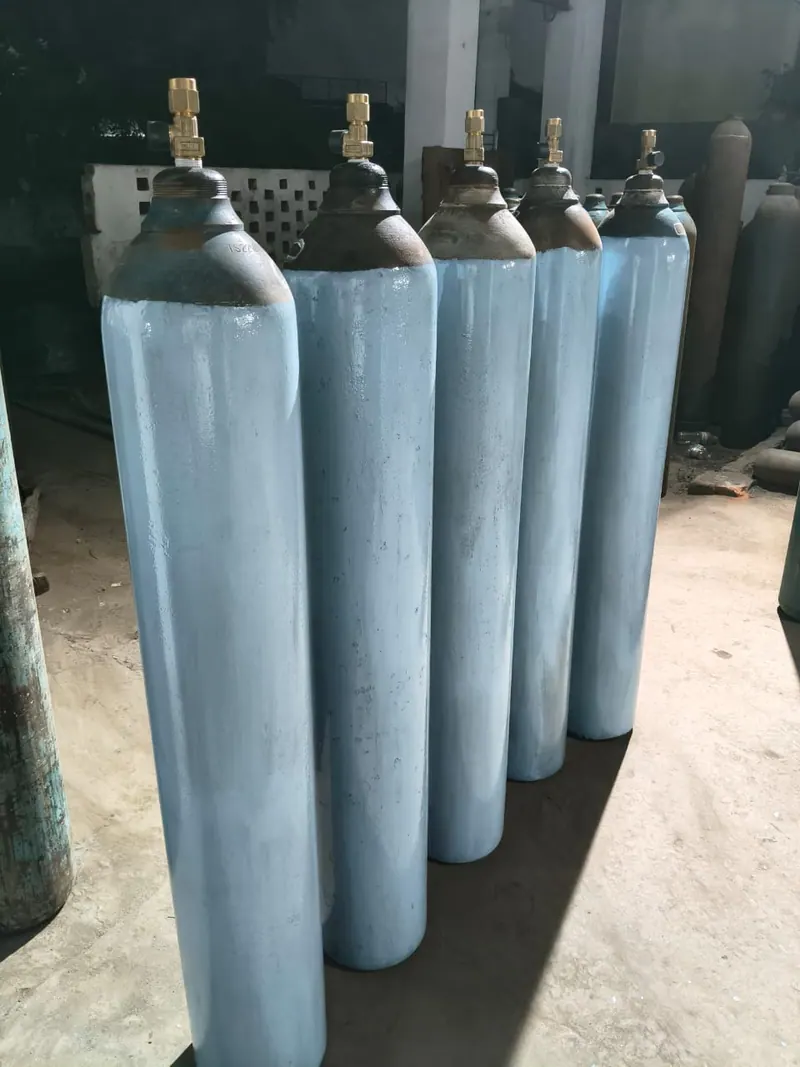
- Standard
- IS 4379:1981
- Shade numbers
- Taken from IS 5
- Oxygen
- Black
- Acetylene
- Maroon
- Argon
- Peacock blue
What IS 4379 does
IS 4379:1981, Identification of the contents of industrial gas cylinders, sets the ground colour and neck band that identify what is inside an Indian gas cylinder.
The important detail is that the standard specifies shade numbers from IS 5, the ready-mixed paint standard — not colour names. "Peacock blue" is an opinion. Shade 103 is something a paint supplier can be held to, in any state, from any supplier. That is what makes the scheme work.
The colours
| Gas | Ground colour | Band |
|---|---|---|
| Oxygen | Black | — |
| Acetylene | Maroon | — |
| Nitrogen | French grey | Black neck band |
| Argon | Peacock blue (shade 103) | — |
| Hydrogen | Signal red (shade 537) | — |
| Carbon dioxide | Black | White band |
KIGL industrial oxygen cylinders are black with a white shoulder band. That is what our cylinder records and our own stock photographs show.
Rules that matter
Here is the part that matters more than the table.
Colour identifies a cylinder at a distance. It does not identify the contents.
The limit of the whole system
- Signal red is shared Hydrogen, LPG, methane, propane and butane are all signal red. The colour tells you fuel gas, not which fuel gas — see hydrogen safety and handling.
- Black is shared Oxygen and carbon dioxide are both black grounds, separated only by a band that can be painted over, worn away or obscured by a sticker.
- Paint fades, and cylinders get repainted — sometimes correctly, sometimes not.
- Imported cylinders follow other schemes IS 4379 does not align with every international standard, and oxygen in particular is coded differently elsewhere.
The stamped marking on the shoulder and the label are what identify the gas. The colour is for sorting stock, segregating oxidisers from fuel gases across a yard, and spotting at a glance that something is in the wrong bay.
What to do when they disagree
If the colour, the band, the label and the stamping do not all agree:
- Do not connect it to anything
- Quarantine it, clearly marked
- Return it to the supplier
- Do not reason your way to which one is right
A cylinder whose identity is in doubt has no safe use. This is one of the few areas where there is no judgement call to make.
Where the colour scheme sits with the rest
Colour is one of four things that identify a cylinder, and the weakest of them:
| What it tells you | How reliable | |
|---|---|---|
| Stamped marking | Gas, standard, test dates, tare weight | Permanent |
| Label | Contents, hazard, supplier | Reliable unless removed |
| Valve outlet | Gas family — fuel or oxidiser | Physical, hard to defeat |
| Colour | Gas family at a distance | Fades, shared, repaintable |
The standards page for IS 4379 sets out the scheme in full.
Sources
Indian gas cylinder colour codes under IS 4379 — frequently asked questions
Is the colour enough to identify a cylinder?
No, and treating it as though it were is a serious mistake. Colour is a distance cue for sorting and segregating stock. Several gases share a colour — signal red covers hydrogen, LPG, methane, propane and butane — and paint fades, gets overpainted and gets repurposed. The stamped marking and the label are what identify the contents.
Why are shade numbers used rather than colour names?
Because a name is an opinion and a number is a specification. Shade numbers come from IS 5, the ready-mixed paint standard, so two paint suppliers in different states produce the same colour. Peacock blue is a description; shade 103 is something a supplier can be held to.
What does a neck band mean?
It distinguishes gases that share a ground colour, or marks a particular grade or purity. Nitrogen is French grey with a black neck band; carbon dioxide is black with a white band. The band is part of the identification, so a cylinder whose band has been painted over is no longer identified.
Do Indian colours match international ones?
Not reliably. IS 4379 is an Indian standard and does not align with every international scheme — oxygen in particular is coded differently in some countries. If you handle imported cylinders, never assume the colour means what it means locally. Read the stamping.
What if a cylinder's colour and marking disagree?
Treat the cylinder as unidentified, quarantine it, and return it to the supplier. Do not connect it to anything, and do not decide which of the two is correct by reasoning about it. A cylinder whose identity is in doubt has no safe use.
Does KIGL follow IS 4379?
Yes — cylinders are identified to IS 4379 across the range. KIGL industrial oxygen cylinders are black with a white shoulder band, which is what our own cylinder-tracking records and the photographs of our stock show.
Enquiries
Request a quotation
State the gas or equipment, the quantity or capacity, and your location. KIGL will confirm the grade, the cylinder or plant size, and whether the location can be served from Noonmati, or through our agent network.